The destruction of the Kakhovka dam
Nova Kakhovka, Kherson region
On the night of 6 June 2023 a blast destroyed the Kakhovka dam, held by russia since the first day of the invasion. About 620 km² of the south was flooded, and the reservoir that was its main water source was all but gone in two weeks. Ukraine is investigating a war crime and ecocide.
Timeline
- 24 February 2022 russian troops capture Nova Kakhovka and the Kakhovka dam
- 6 June 2023, 2:35 and 2:54 a.m. Seismic stations record signals of explosions near the dam, and it is destroyed
- 6–9 June 2023 Water floods about 620 km² in four regions
- 11 June 2023 More than 3,700 people have been evacuated from the Kherson and Mykolaiv regions; ICC representatives visit the flooded Kherson region
- 18 June 2023 The Kakhovka reservoir has all but ceased to exist
- October 2023 A young willow forest covers the bed of the former reservoir
- 6 June 2024 A russian colonel general is notified that he is suspected of blowing up the dam
A reservoir gone in two weeks
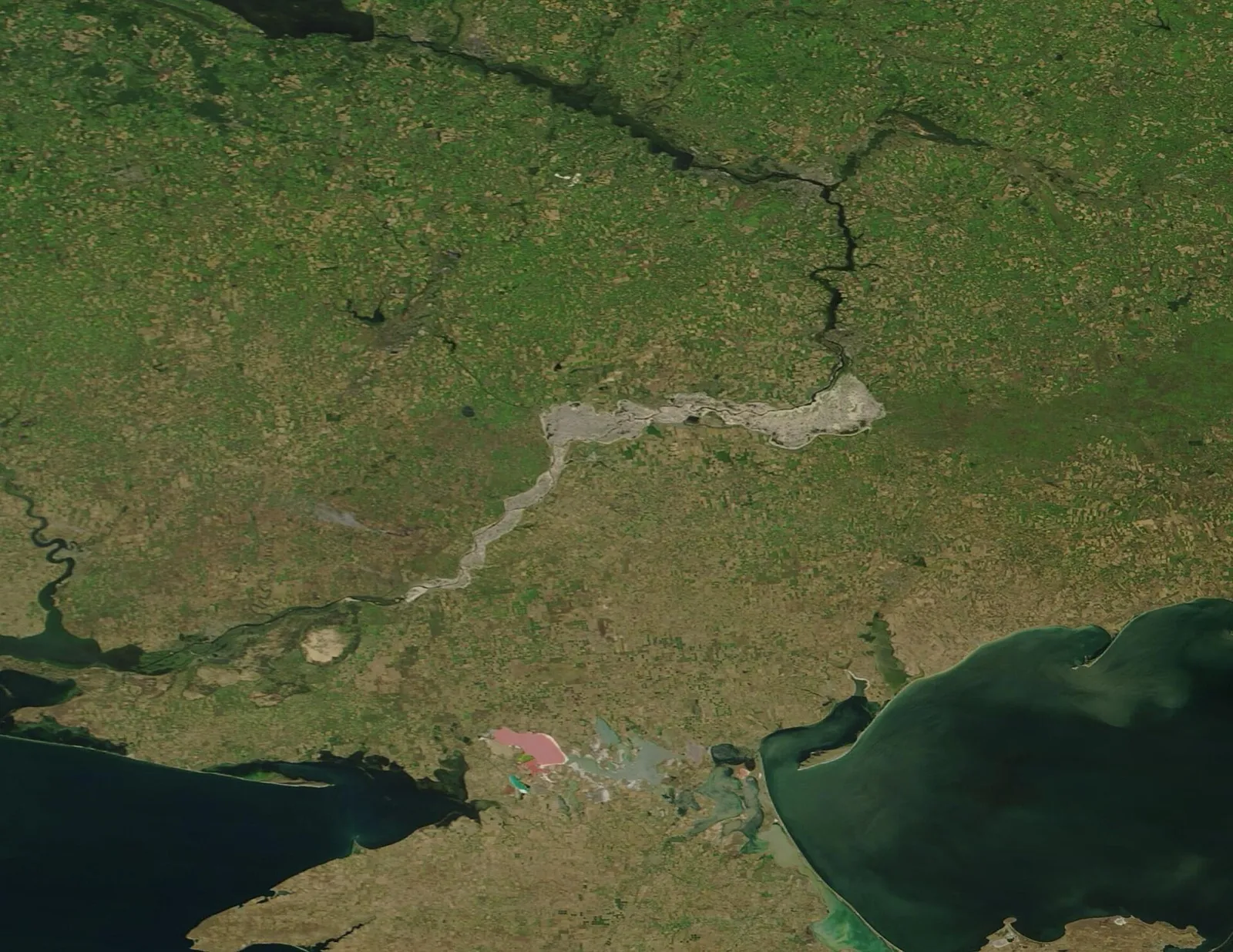
The Kakhovka reservoir held more than 18 cubic kilometres of water and was the main source of water for southern Ukraine. In the night of 6 June 2023 an explosion destroyed its dam at Nova Kakhovka. The water rushed down the Dnipro and flooded dozens of villages and towns, including part of Kherson. By 18 June the reservoir had all but disappeared.
A dam under occupation
russian troops seized Nova Kakhovka and the dam on the very first day of the full-scale invasion, 24 February 2022. Within three days russia had water flowing again down the North Crimean Canal to occupied Crimea. After the liberation of Kherson in November 2022 the dam stood right by the front line: the right bank of the Dnipro was Ukrainian, the left bank still occupied.
The night the water came
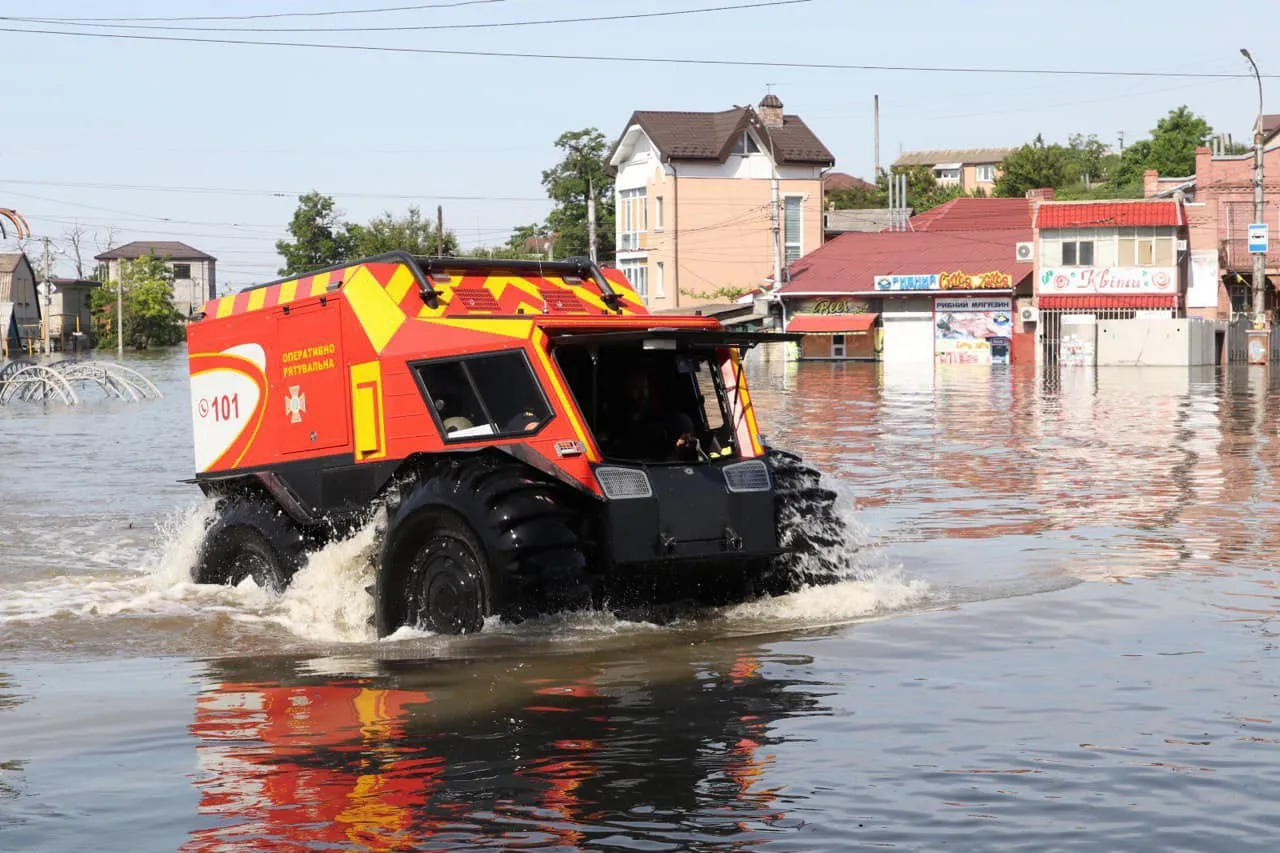
Seismic stations in Romania and Ukraine picked up signals near the dam at 2:35 and 2:54 a.m. local time. NORSAR, the Norwegian seismology centre, concluded that they looked like an explosion, not like an ordinary dam failure. Water covered about 620 square kilometres in four regions, and about 100,000 people were directly affected. Investigators count 66 flooded towns and villages in the Kherson and Mykolaiv regions. People were taken out by boat and all-terrain vehicle, and by 11 June more than 3,700 had been evacuated from the two regions. Interior Minister Ihor Klymenko said russian troops were shelling Kherson all the while, including the places where people were being evacuated.
Who blew up the dam
The dam was destroyed while russia held it. Reporters from The New York Times worked with engineers on satellite and seismic data and concluded that the dam was unlikely to have simply collapsed. Most likely, explosives were placed in a maintenance passage through its concrete base, reachable from the machine hall. Ukrainian prosecutors are investigating the destruction as a violation of the laws and customs of war (Article 438 of the Criminal Code) and as ecocide (Article 441). On 11 June 2023 representatives of the International Criminal Court visited the flooded Kherson region with Prosecutor General Andrii Kostin, but could not reach the dam itself on the occupied bank. In June 2024 the SBU and prosecutors notified the russian colonel general Oleg Makarevich that he was a suspect: investigators say he gave the order to blow up the dam.
A region without water
The reservoir supplied drinking water to about a million people and fed the canals and irrigation of the south. The flood swamped more than a thousand possible sources of pollution, and polluted fresh water reached the Black Sea. The occupied Zaporizhzhia nuclear plant drew its cooling water from the reservoir. On 6 June the IAEA’s Director General, Rafael Grossi, said there was no immediate risk to the plant, but that the cooling pond next to it had to stay intact. The Ukrainian government and the UN put the damage and losses at almost 14 billion dollars.
A forest on the bottom
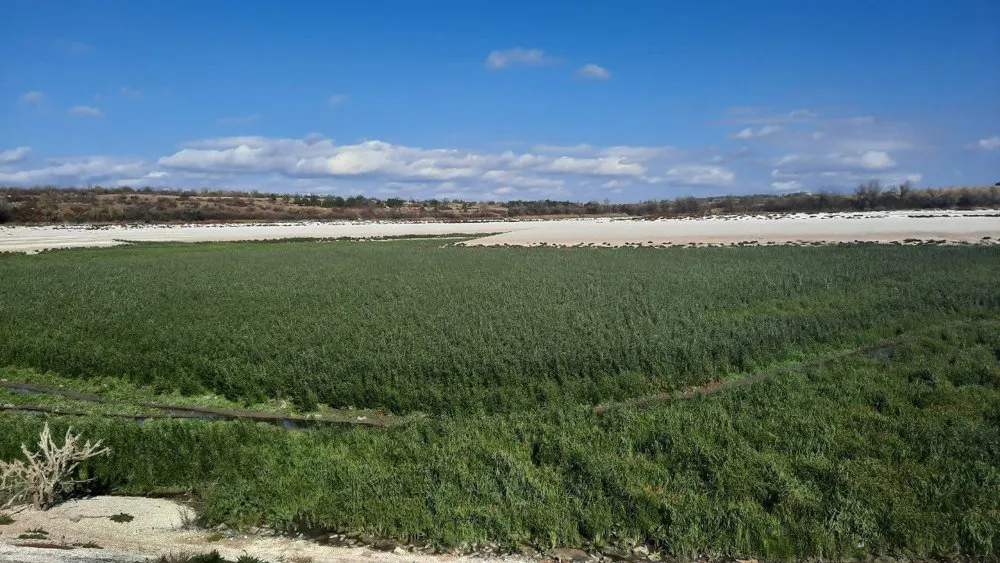
Only three weeks after the dam was blown up, seedlings sprouted on the bare bed of the reservoir, and by October a willow forest about 2.5 metres tall covered almost all of it. The botanist Anna Kuzemko says the willow seeds were carried by the water itself. Ivan Moysienko, a botanist from Kherson, says this type of forest is protected under the Bern Convention and proposes a nature reserve there.
Debates and assessments
How many people died is still not known. According to the UN, 29 people died on Ukrainian-held territory by 10 July 2023, and in 2024 Ukrainian investigators spoke of at least 35 civilians killed. The occupation authorities admitted 59 deaths on the left bank. But the Associated Press found that in occupied Oleshky alone the dead numbered at least in the hundreds, and concluded that the occupiers deliberately undercounted the victims. How to classify the destruction is also debated. Ecocide has been a crime in Ukraine’s Criminal Code since 2001, but its definition is rather vague and such cases have rarely reached court. The Rome Statute, under which the International Criminal Court works, has no crime of ecocide, and Ukrainian investigators say more expert assessments are needed before such a charge.
Why it matters today
The destruction of the Kakhovka dam showed that in war even water can become a weapon: in one night a million people lost their source of drinking water, and the nature of a whole region changed. Rescuers and police took people out of flooded homes even under shelling. Ukraine is investigating the destruction as a war crime and ecocide so that the harm done to people and to nature does not go unpunished. And the forest that grew on the bottom is a reminder that the land recovers, and that what it becomes next is up to us.