1985–2018
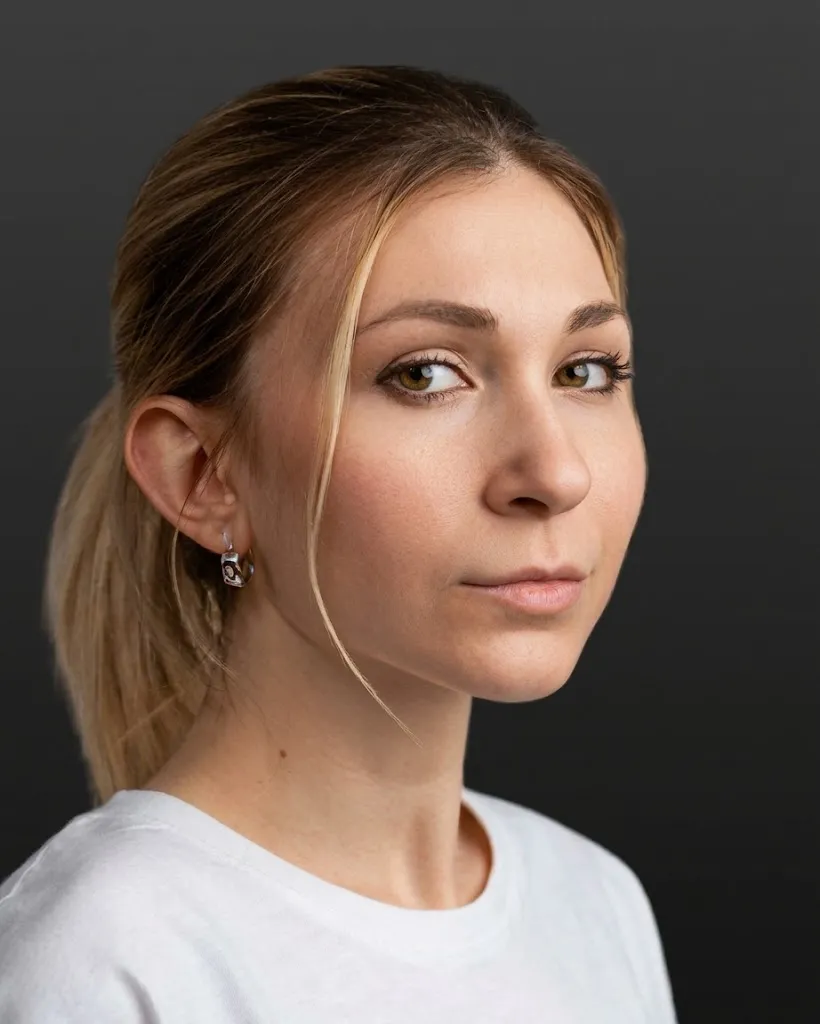
Kateryna Handziuk
Anti-corruption activist from Kherson
“Who ordered Katia Handziuk?” People have asked it at rallies for years. A Kherson activist and city official, she exposed corruption in local government and the police. In 2018 she was attacked with acid and died three months later. As of 2026, her case is still in court.
Key accomplishments
- Co-founded the MOST citizen journalism agency and the website most.ks.ua (2012), which tracked public procurement
- Took part in the Euromaidan in Kherson and stood up to attempts to start a “Russian Spring” in the city
- Helped displaced people; worked at the office of the UN High Commissioner for Refugees (UNHCR)
- Member of the Kherson regional and city (2014) councils; from 2016, acting manager of affairs of the Kherson city council’s executive committee
The question on the placards
“Who ordered Katia Handziuk?” That is the name of a civic movement, and the question has been asked at rallies for years. Kateryna Handziuk was a Kherson activist and city council official who exposed corruption in local government and the police.
The Kherson woman who followed the money
Kateryna was born in Kherson on 17 June 1985. She graduated from Kherson State University and the Kyiv National Economic University. From 2003 she was an activist of the Batkivshchyna party and led its regional youth organisation, Batkivshchyna Moloda. In 2004 she took part in the Orange Revolution, and later she was elected to the Kherson regional council. In 2012 she co-founded the MOST citizen journalism agency and the website most.ks.ua. Over time the site focused on how public money was spent: on monitoring public procurement. The agency made a series of investigative programmes called “Yest predel”. In 2017 one of them told previously unknown facts about the life of Vladyslav Manher, head of the Kherson regional council. Manher sued the journalist and asked for a symbolic 1 hryvnia in moral damages.
Maidan, displaced people, city hall
Kateryna took part in the Euromaidan in Kherson and stood up to attempts to start a “Russian Spring” in the city. She looked after displaced people and worked at the office of the UN High Commissioner for Refugees. In 2016 she became a volunteer with Itchy Trigger Finger Ukrainians, a group that made patriotic advertising for people in occupied Crimea. In May 2014 she was elected to the Kherson city council, and in 2016 she studied at the National Academy for Public Administration under the President of Ukraine and became acting manager of affairs of the council’s executive committee, as well as an adviser to the mayor. She spoke out publicly about corruption in local government and the police. In 2018 a list appeared on social media of 223 people in the Kherson region who since 2014 had received police permits for non-lethal guns on the strength of press cards. Kateryna pointed out that the region simply didn’t have that many journalists, so the documents were most likely fake. The police said they had found no violations. One of her last disputes with the authorities followed a large forest fire in the Oleshky district. Kateryna claimed that the forest was being set on fire on purpose so that everything that didn’t burn could be cut down and sold, and she posted photos on Facebook of trucks loaded with charred logs.
The attack
Kateryna Handziuk was attacked in Kherson on 31 July 2018 and doused with acid. She was taken to Kyiv for treatment, and over three months she underwent more than ten operations. From hospital she recorded a video address: in the past year there had been 40 attacks on civic activists in Ukraine, and not one of the people who ordered them had been named. “Worst of all, I know half of the people on this list personally,” Kateryna said. Kateryna Handziuk died on 4 November 2018. She was 33.
What the courts decided
In 2019 the five men who carried out the attack admitted their guilt, made plea deals and were sentenced to between three and six and a half years in prison. On 26 June 2023 the Dniprovskyi District Court of Kyiv found Vladyslav Manher, the former head of the Kherson regional council, and Oleksii Levin guilty of organising the attack and sentenced each of them to 10 years in prison. Manher said he was not guilty, and the verdict was appealed.
As of June 2026, the Kyiv Court of Appeal had not finished the case, so the verdict had not taken legal effect and the presumption of innocence applied to the defendants. In three years the panel of judges changed four times.
Why it matters today
Kateryna Handziuk showed that keeping watch on public money is every citizen’s job, not only officials’. She did not stay silent about corruption, and not even the attack silenced her: from her hospital bed she talked about justice and the rule of law, which, in her words, “today no one is treating.” The US Embassy nominated her for the Woman of Courage award: in 2019 the US State Department gave Kateryna a posthumous special honour, and the embassy in Kyiv named her the 2019 Ukrainian Woman of Courage. In 2022 a street in Kyiv was named after her. People have kept her question alive: the “Who Ordered Katia Handziuk?” movement goes on following the trial. Anyone who checks where public money goes, or demands a fair trial, carries on her work.