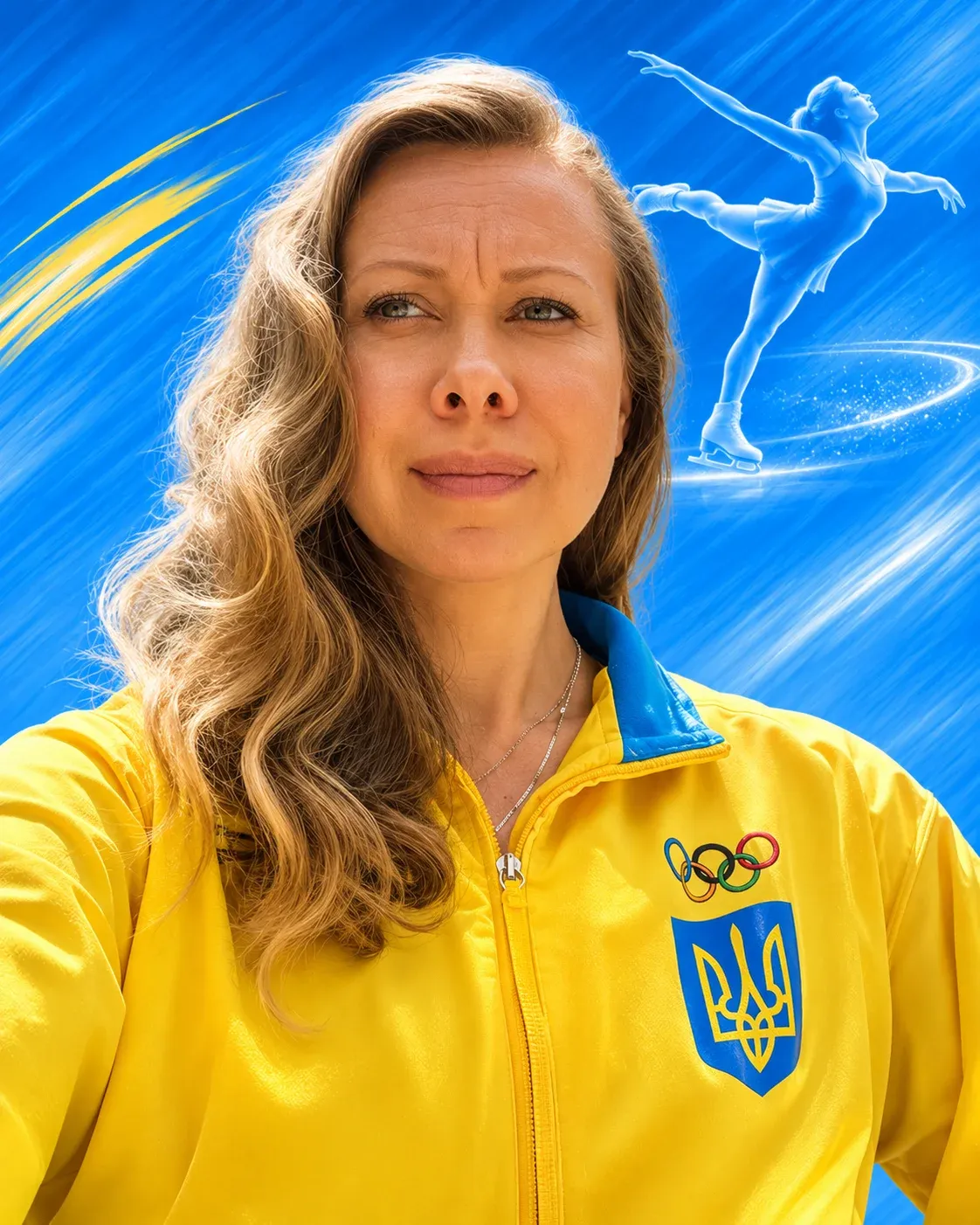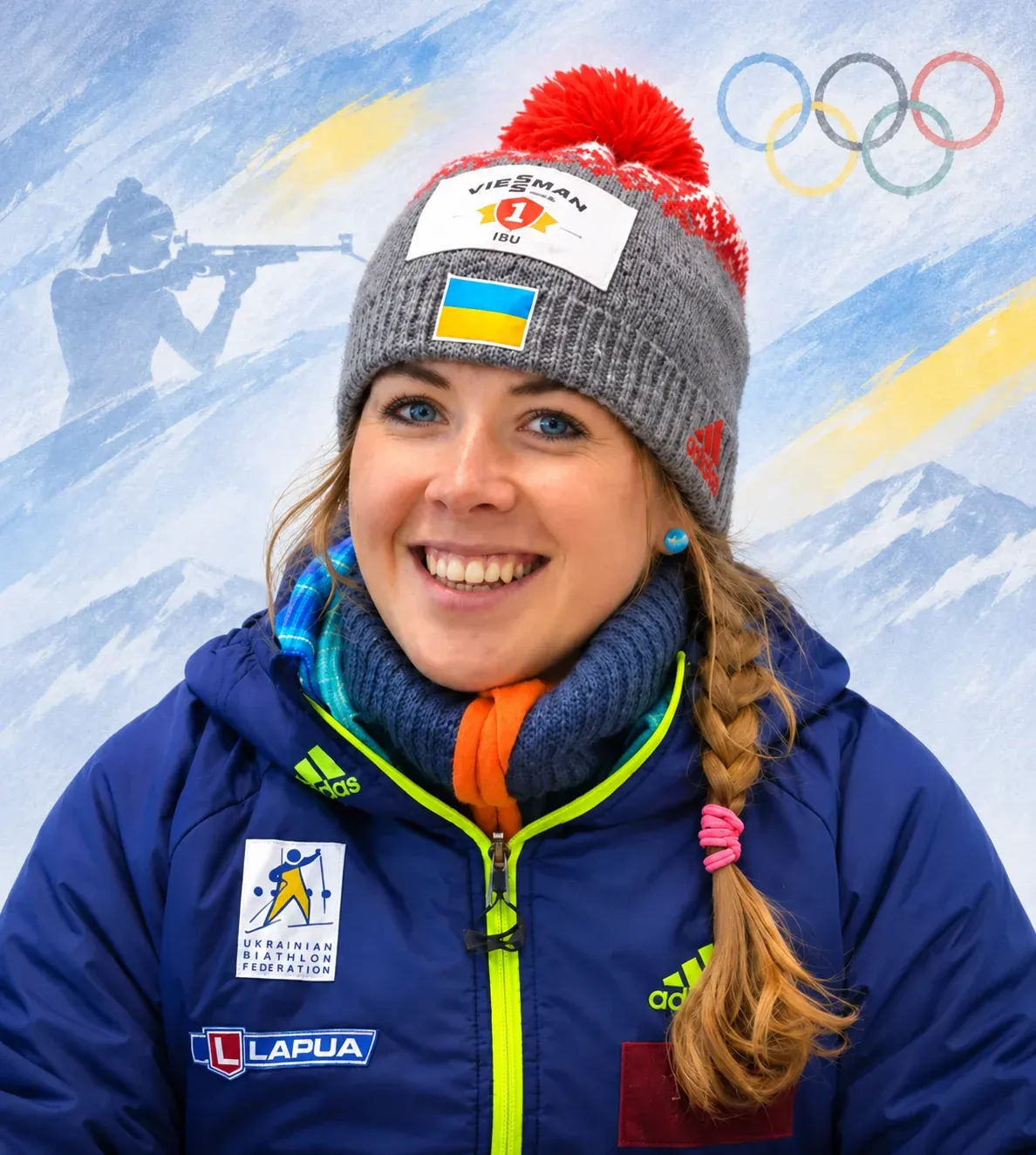
Olena Pidhrushna
Biathlete, Olympic champion
February 2014: Ukraine is living through the Maidan, and in Sochi four Ukrainian women line up for the Olympic relay. Olena Pidhrushna skis the anchor leg and crosses the line first. It was Ukraine's first Winter Olympic gold in 20 years. A year earlier she had become world champion.
Key accomplishments
- Olympic champion in the relay (Sochi, 2014), skiing the anchor leg
- World sprint champion (Nové Město na Moravě, 2013), with relay silver and pursuit bronze at the same championships
- Five-time European champion (2009–2012), six World Cup race wins
- Competed at three Olympic Games (2010, 2014, 2022); Ukraine's flag bearer at the opening of the 2018 Games and the closing of the 2022 Games
- Deputy minister of youth and sports (2014–2015)
- Holder of all three classes of the Order of Princess Olga: 3rd (2013), 2nd (2014) and 1st (2021)
The anchor leg
Ukraine’s women’s biathlon team lined up for the Olympic relay in Sochi on 21 February 2014, shortly after the bloodshed on the Maidan in Kyiv. The favourites were russia and Norway; Ukraine was given an outside chance of bronze at best. Vita Semerenko, Yuliia Dzhyma and Valia Semerenko handed the anchor leg to Olena Pidhrushna with a lead of almost half a minute, and she brought the team home to gold. None of the four had the fastest time on her leg, but all of them skied steadily: it was a team win. It was Ukraine’s first Winter Olympic gold in 20 years, since the figure skater Oksana Baiul won in 1994.
The athletes knew little of what was happening at home during the Games. “If we had known the whole truth, who knows what state of mind we’d have been in, and it’s not certain we could have won the relay,” Pidhrushna recalled.
From Legnica to Ternopil
Olena Pidhrushna was born on 9 January 1987 in the Polish town of Legnica, where her father was serving in a Soviet army unit. In 1990 the family returned to the Ternopil region, and Olena went to school in Ternopil. In the fifth grade a teacher asked who wanted to try biathlon, and she said yes at once: the day before, she had watched Olena Zubrylova from Ternopil win a medal at an international race on TV. She trained at the biathlon base in the village of Pidhorodne outside Ternopil. Later she qualified as a PE teacher at Ternopil Pedagogical University and went on to postgraduate study at the Lviv University of Physical Culture.
World champion
At the European Championships between 2009 and 2012 Pidhrushna won five titles. In 2013, at the World Championships in Nové Město na Moravě in the Czech Republic, she won the sprint and also took silver in the relay and bronze in the pursuit. She competed at three Olympic Games, and in 2018 she carried Ukraine’s flag at the opening ceremony.
The ministry and the comeback
Pidhrushna became deputy minister of youth and sports in April 2014. That summer russian media spread a fake story that she had become a sniper in the ATO zone; she received threats and deleted her social media accounts. In March 2015 she left the post and went back to biathlon: she won more World Championship medals in relays, and at the 2022 Beijing Olympics she carried Ukraine’s flag at the closing ceremony.
On 28 March 2026, at the Ukrainian Championships in Bukovel, Olena Pidhrushna and Vita Semerenko officially retired. As of March 2026 she holds the rank of major in the National Guard of Ukraine.
Why it matters today
The Olympic gold won by Olena Pidhrushna and her teammates came in the days when Ukraine was fighting for its dignity on the Maidan, and it was the country’s first Winter Olympic gold in 20 years. That win showed that Ukraine can win at the Olympics as a team, where everyone does her part steadily and without panic. After the fakes and the threats, Pidhrushna went back to her sport and carried Ukraine’s flag at the Olympics twice more. For anyone training in Ukraine today, her story is proof that a cool head and trust in your team can bring gold even in the country’s hardest days.