The occupation of Crimea
Autonomous Republic of Crimea and Sevastopol, Ukraine
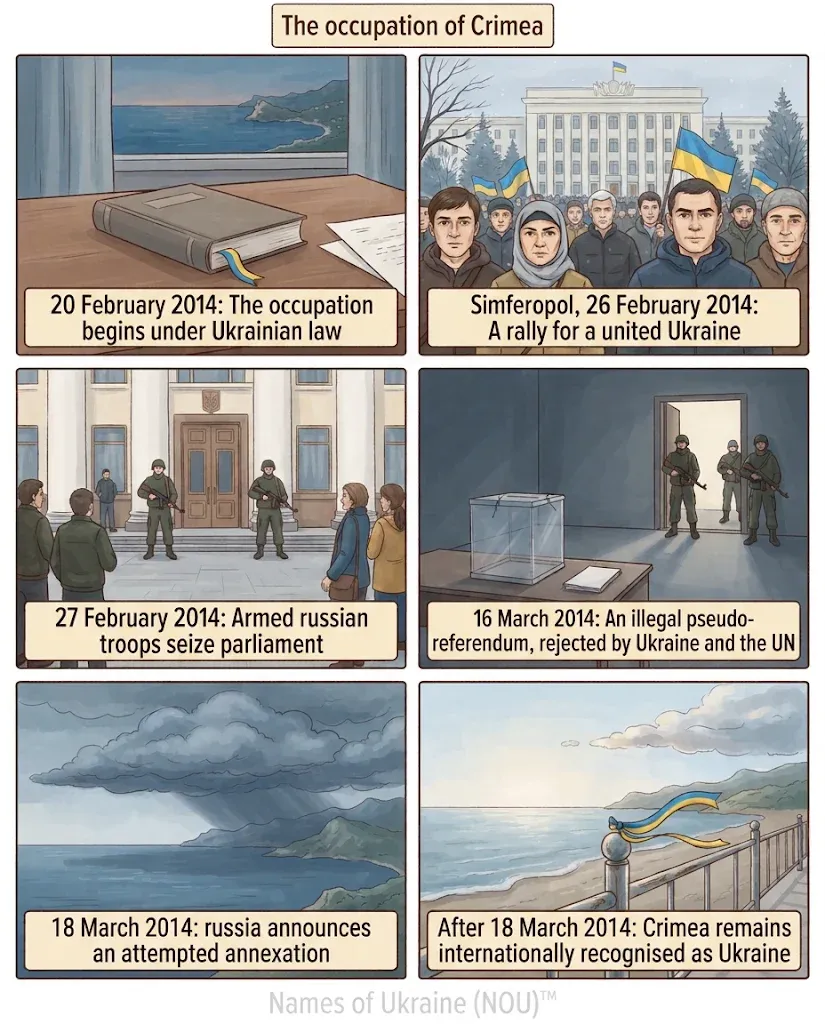
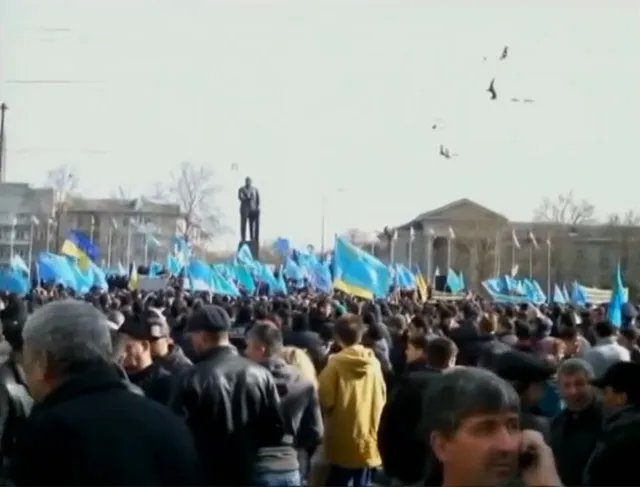
On 26 February 2014, Crimean Tatars and other supporters of Ukraine gathered outside Crimea’s parliament. Russian troops seized the building overnight into 27 February. Ukrainian law sets 20 February as the start of the occupation; the peninsula has remained under Russian control since then.
Timeline
- 20 February 2014 Ukrainian law sets this as the beginning of russia’s temporary occupation of Crimea
- 26 February 2014 A rally in Simferopol supports Ukraine’s territorial integrity
- 27 February 2014 Armed russian troops seize Crimea’s parliament and government buildings
- 4 March 2014 About 250 Ukrainian servicemen from Belbek airfield march unarmed, with flags, towards russian troops
- 16 March 2014 The occupying authorities hold an illegal pseudo-referendum, rejected by Ukraine and the UN
- 18 March 2014 The russian authorities announce an attempted annexation of Crimea
- 25 March 2014 russian forces seize the minesweeper Cherkasy, the last ship under the Ukrainian flag on Donuzlav
- 27 March 2014 The UN General Assembly calls on all states not to recognise any change in Crimea’s status
Crimeans came out to defend the peninsula’s connection to Ukraine. Russian troops seized its parliament. The occupation of Crimea began in February 2014 and continues today.
A rally for a united Ukraine
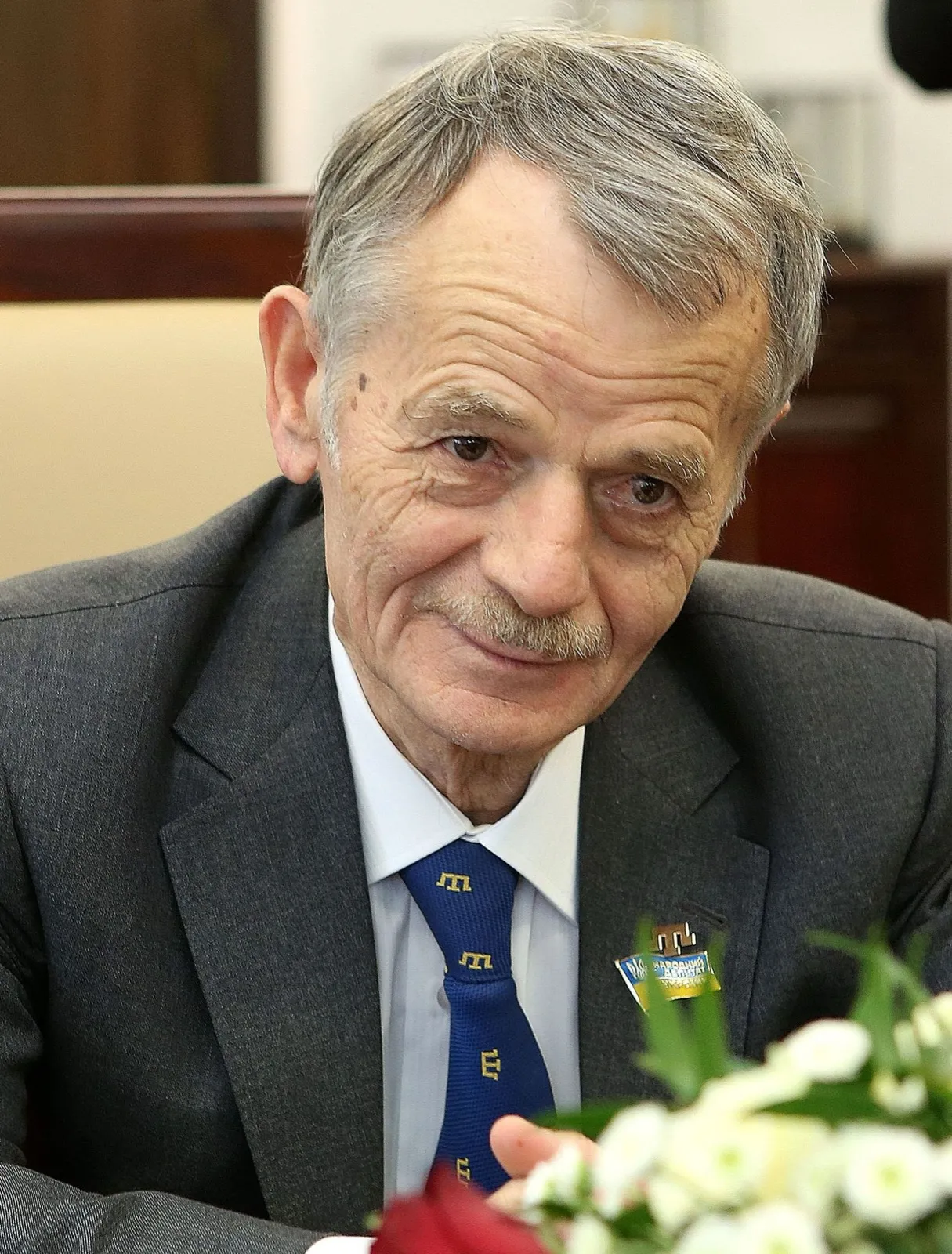
On 26 February 2014, Crimean Tatars and other supporters of Ukraine gathered outside the parliament of the Autonomous Republic of Crimea in Simferopol. They opposed the peninsula’s separation from Ukraine. By estimates, up to 10,000 people came to the rally for a united Ukraine, against about 700 at a pro-russian one. Since 2020, Ukraine has marked 26 February every year as the Day of Resistance to the Occupation of the Autonomous Republic of Crimea and the City of Sevastopol. Mustafa Dzhemilev was among the leaders of the Crimean Tatar people who defended its place within Ukraine.
Overnight into 27 February, armed russian troops without insignia seized Crimea’s parliament and government. They blocked Ukrainian military units and key facilities. Under the control of the occupying forces, Crimean lawmakers appointed a new government and announced a “referendum” on the peninsula’s status.
Unarmed, but under the flag
On 4 March 2014, about 250 Ukrainian servicemen from Belbek airfield near Sevastopol walked unarmed towards the russian soldiers who had taken over the airfield. Colonel Yuliy Mamchur led the column. They carried Ukraine’s national flag and their regiment’s historic banner and sang the national anthem; the russians answered with warning shots. On 22 March, when russian special forces stormed the base, the Ukrainians again went out to meet the attackers unarmed, and Mamchur was arrested.
To trap Ukrainian ships in Donuzlav Bay, the russians scuttled several of their own ships across its exit. The crew of the minesweeper Cherkasy refused their demands and twice tried to break out between the sunken hulls. The Ukrainian sailors on Donuzlav held out for about three weeks, and in the end Cherkasy was the only warship there still under the Ukrainian flag. On the evening of 25 March, russian forces seized the minesweeper, but even then the crew refused to lower the flag.
An attempt to change borders
On 16 March, the occupying authorities held a vote that Ukraine’s Constitution and international law did not permit. Ukraine rejected its results. Two days later, russia announced the annexation of Crimea, but the peninsula remained internationally recognised as part of Ukraine. On 27 March, the UN General Assembly, by 100 votes to 11 with 58 abstentions, called on all states not to recognise any change in Crimea’s status on the basis of this “referendum”.
The occupation changed everyday life for Crimeans. The russian authorities persecute people for supporting Ukraine, with Crimean Tatars particularly targeted. Ukraine and international organisations call for an end to human rights violations and for the peninsula to return to Ukrainian control. In 2021, Kyiv hosted the first summit of the Crimea Platform, an international format on Crimea initiated by Ukraine.
Debates and assessments
Ukrainian law sets 20 February 2014 as the start of the temporary occupation. International and news accounts often identify 27 February, when troops took over parliament and government buildings, as the start of the overt seizure of power. These are different markers: one is the legal date set for the beginning of the occupation, the other the day key institutions were openly seized.
Why it matters today
The resistance of Crimeans showed that occupation did not mean people had agreed to lose Ukraine. The UN resolution and Ukrainian law confirm that force cannot change internationally recognised borders. Restoring Crimea means protecting its residents’ rights and restoring Ukraine’s territorial integrity.