1863–1930
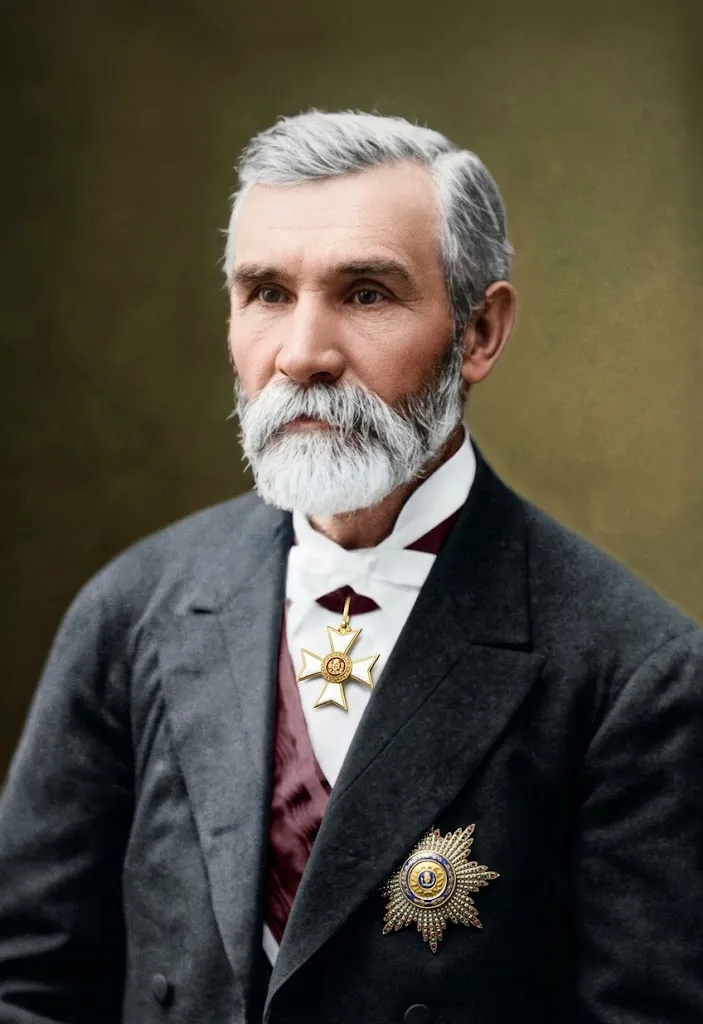
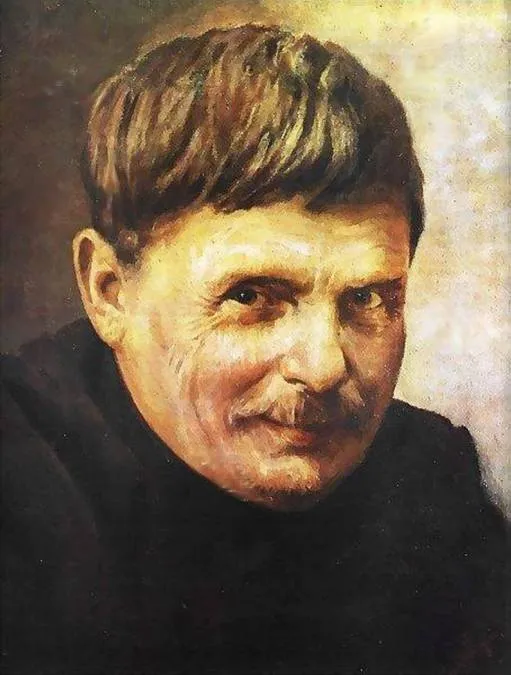
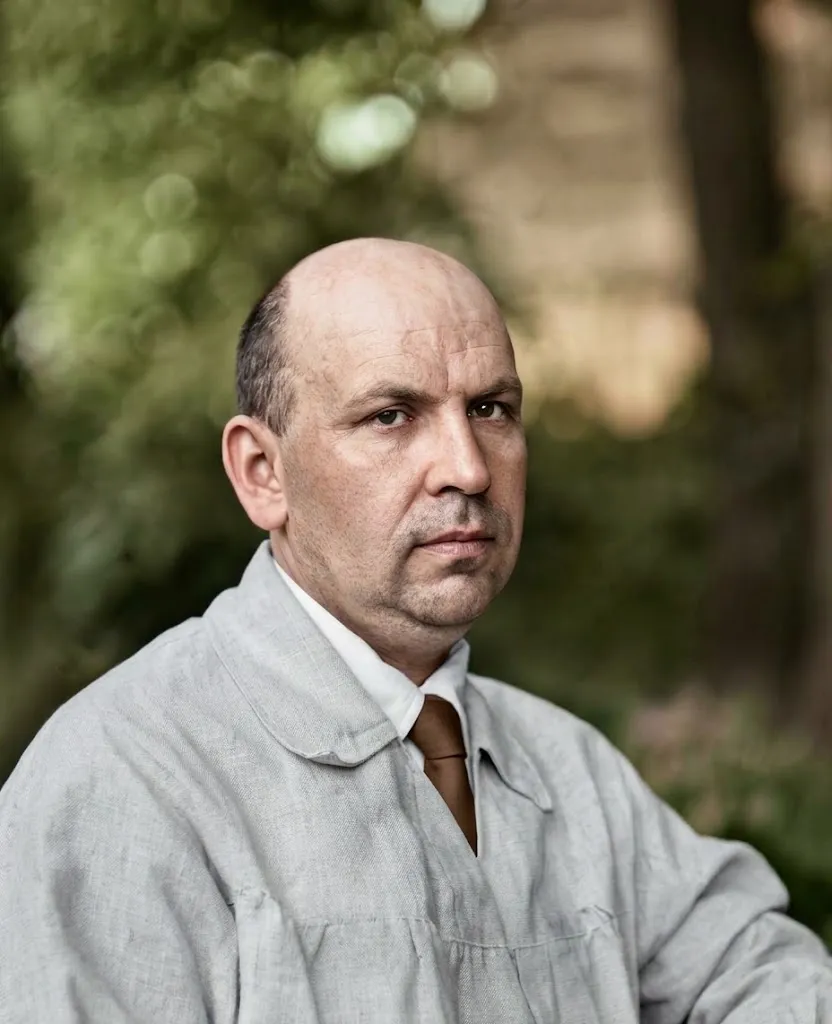
Vladyslav Horodetskyi
Architect of the House with Chimaeras
Elephants, rhinos and giant frogs on the roof: the House with Chimaeras on Kyiv’s Bankova Street still stops passers-by. Its architect, Vladyslav Horodetskyi, a Pole from Podillia, built a museum, a church and a Karaite kenesa in Kyiv, and spent his last years working in Tehran.
Key accomplishments
- The Museum of Antiquities and Arts in Kyiv (1897–1900; now the National Art Museum of Ukraine)
- The Karaite kenesa on Yaroslaviv Val (1898–1900; now the House of Actors)
- St Nicholas Church on Velyka Vasylkivska Street (1899–1909)
- The House with Chimaeras at 10 Bankova Street (1901–1903)
- The Shah’s palace, a railway station, a theatre and a hotel in Tehran
A nobleman from Podillia
Vladyslav Horodetskyi was born in 1863 in the village of Sholudky in Podillia (now the Vinnytsia region), into a Polish noble family. His full Polish name was Leszek Dezydery Władysław Horodecki. He studied at the Academy of Arts in St Petersburg and graduated in 1890. He lived and worked in Ukraine for most of his life, above all in Kyiv.
The Kyiv he built
At the end of the 19th century Kyiv was growing fast, and Horodetskyi became one of its most prominent architects. He designed the City Museum of Antiquities and Arts in a Neo-Greek style (1897–1900); the patron Nikola Tereshchenko gave large sums towards the building. Today it is the National Art Museum of Ukraine. For the Karaite community Horodetskyi built a kenesa in a Moorish style (now the House of Actors), and for Catholics the Neo-Gothic Church of St Nicholas. He also worked far beyond Kyiv: in Cherkasy, Uman, Simferopol and Yevpatoriia. On top of that, he designed jewellery, women’s dresses, theatre costumes and sets.
The House with Chimaeras
His strangest building stands on a steep slope at 10 Bankova Street. From Bankova it has three storeys; from the other side, six. The façades are covered with sculptures of elephants, rhinos, lions, antelopes and eagles, and giant frogs sit on the roof. The Art Nouveau house was built in 1901–1903, and its sculpted decoration was made by Elio Sala.
Hunter and traveller
Horodetskyi went on long hunting expeditions to the South Caucasus, Central Asia and the Altai, and gave his trophies to the Kyiv Hunting Museum, which he had helped to found. His farthest trip took him to Africa, to Kenya, where he hunted at the foot of Kilimanjaro.
Warsaw and Tehran
In 1920 Horodetskyi emigrated to Poland. There he worked at the Ministry of Public Works and restored the Vyshnevetskyi Palace in Vyshnivets, in today’s Ternopil region. From 1928 he was chief architect of the syndicate building railways in Persia. In Tehran he designed the Shah’s palace, a railway station, a theatre and a hotel. Horodetskyi died in Tehran on 3 January 1930.
Why it matters today
Vladyslav Horodetskyi, a Pole from Podillia, gave Kyiv buildings that still shape the centre of the city. He built for the city’s museum as well as for Karaites and Catholics, and so his buildings show that Kyiv was already a city of many cultures. The House with Chimaeras proves that architecture can be bold and witty, and it still surprises everyone who walks down Bankova Street. His life shows that someone from another nation who spent most of his life in Ukraine can give a city its face.