The Christianization of Kyivan Rus’
Kyiv
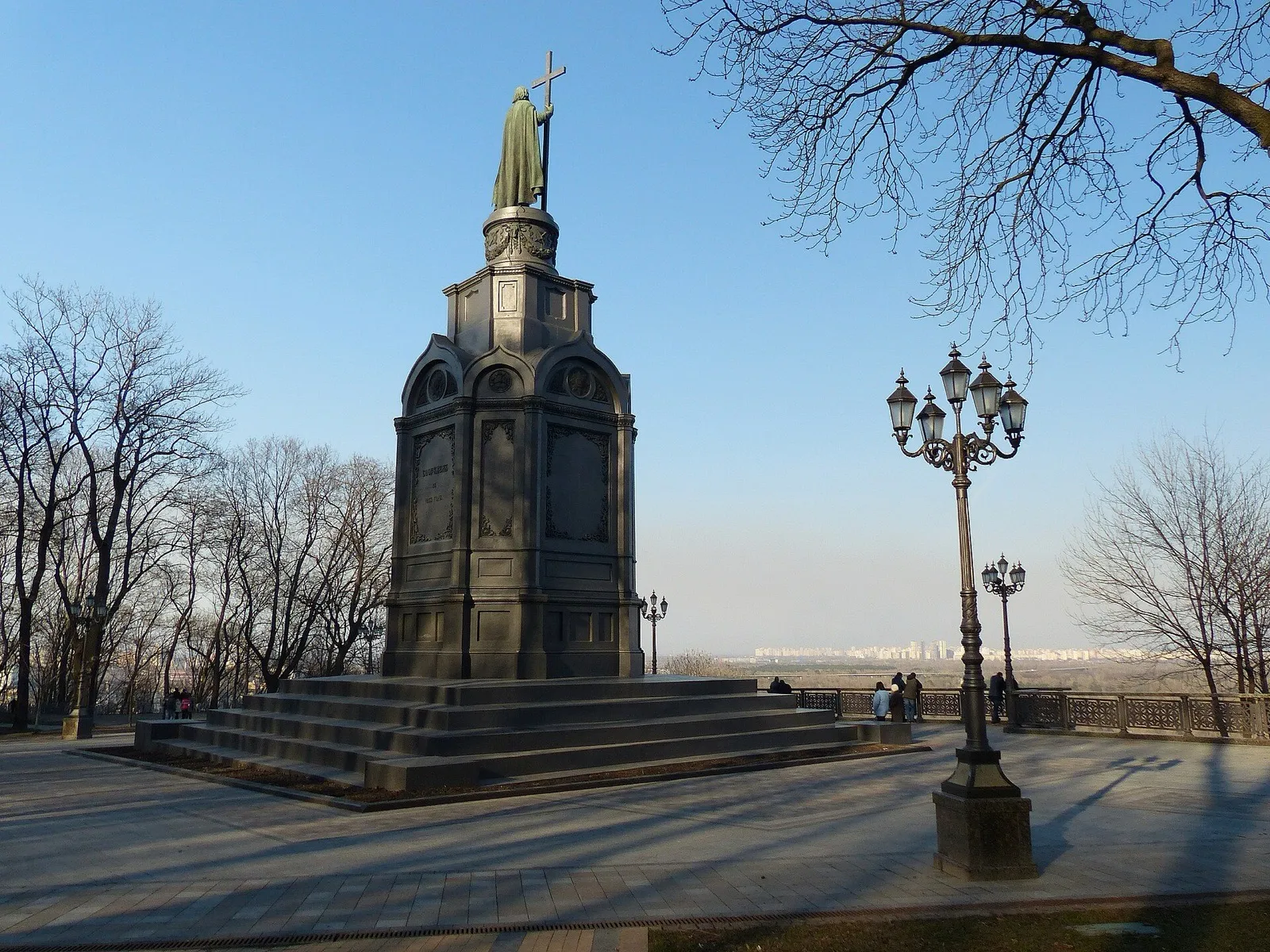
In the late 980s Prince Volodymyr of Kyiv was baptized and ordered the people of Kyiv to be baptized too. The traditional date is 988. There were Christians in Rus’ before, but this decision by Kyiv brought writing, schools and stone churches, and made Rus’ part of Christian Europe.
Timeline
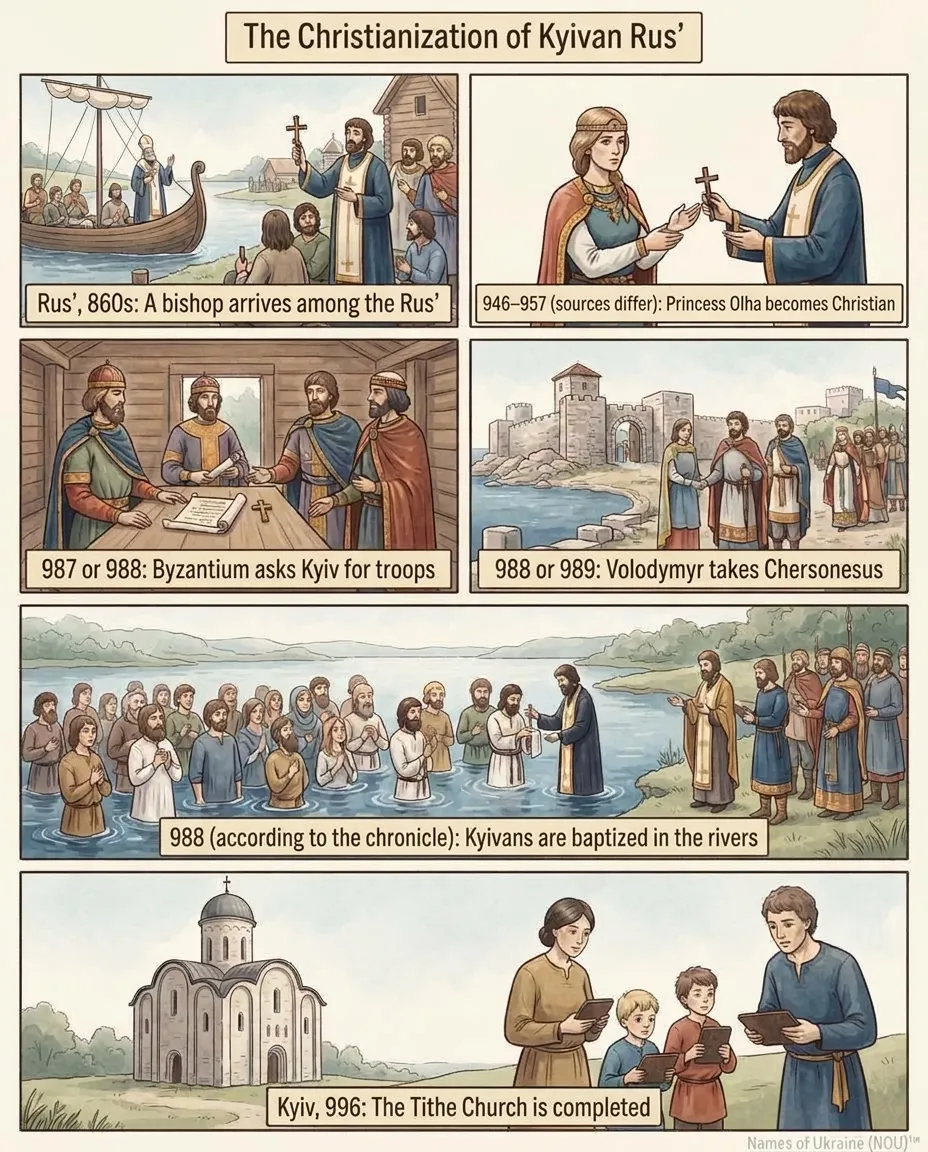
- 860s First reports of some of the Rus’ being baptized; Constantinople sends a bishop to Rus’
- 946–957 (sources differ) Princess Olha becomes a Christian
- 987 or 988 Emperor Basil II asks Volodymyr for troops against the rebel Bardas Phokas
- 988 or 989 Volodymyr takes Chersonesus (Korsun) in Crimea and marries Princess Anna
- 988 (according to the chronicle) The mass baptism of the people of Kyiv in the waters of the Pochaina and the Dnipro
- 996 The Tithe Church of the Mother of God is completed in Kyiv
- 1051 At Yaroslav the Wise’s will, bishops in Kyiv make Ilarion metropolitan
- 15 July 2024 The Day of the Baptism of Rus’-Ukraine and Ukrainian Statehood Day are marked on 15 July for the first time
How could one decision by a prince of Kyiv change the letters people would write in, the churches they would build and the family Kyiv would marry into? In the late 980s Volodymyr the Great was baptized and ordered his people to be baptized too. This became known as the Christianization, or Baptism, of Rus’. It is traditionally dated to 988, and its day, 15 July, is now also Ukrainian Statehood Day.
Christians before the baptism
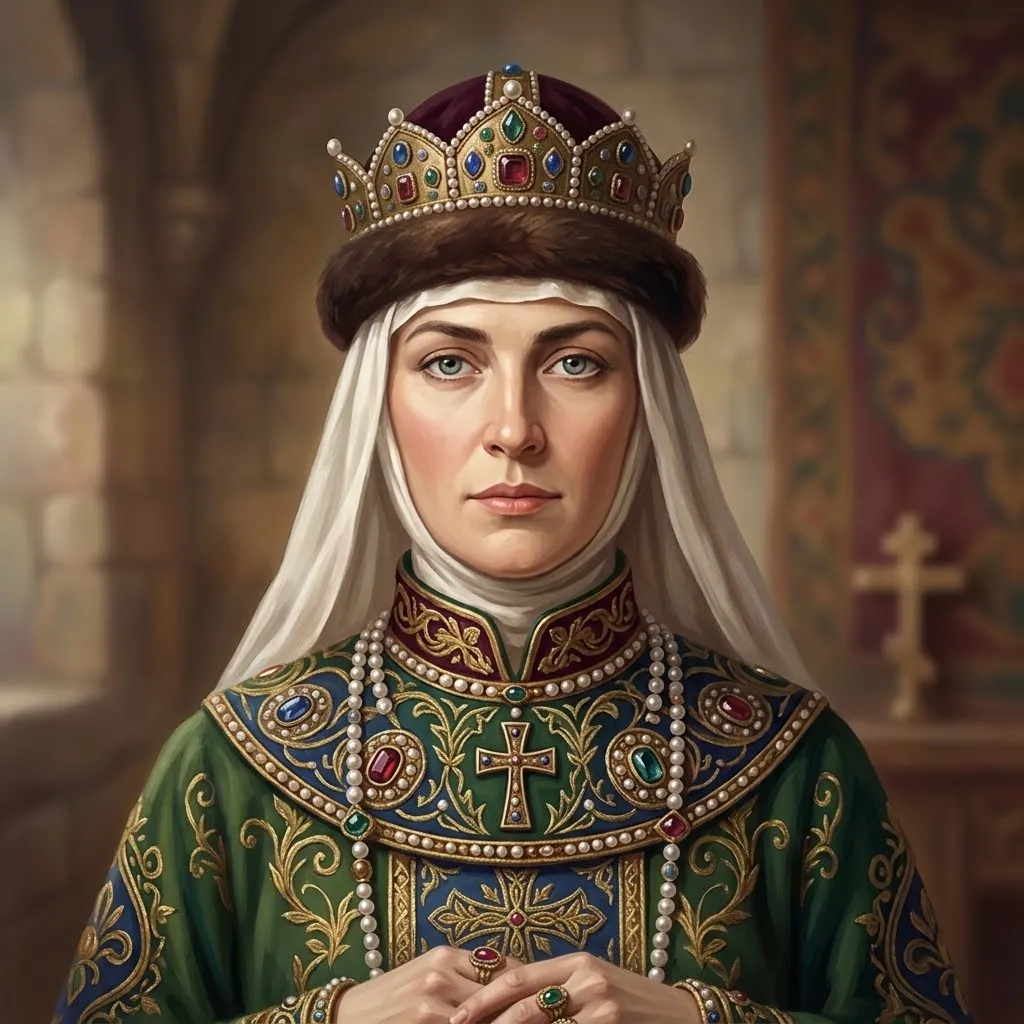
Christianity did not come to Rus’ in a single day. As early as the 860s some of the Rus’ were baptized, and Constantinople sent them a bishop. Volodymyr’s grandmother, Princess Olha, also became a Christian: sources date her baptism to between 946 and 957 and place it in Kyiv or in Constantinople. Her son Sviatoslav stayed a pagan, so Christianity did not become the faith of the state then.
The prince who looked for a faith
Early in his reign Volodymyr tried to unite the state around the old gods and set up idols in Kyiv, with Perun at their head. Later he chose Christianity. The chronicle tells how the prince heard envoys of different faiths and sent his own men to see how people prayed in other lands. Scholars see this story as more of a literary tale, though Volodymyr probably did know his neighbours’ faiths.
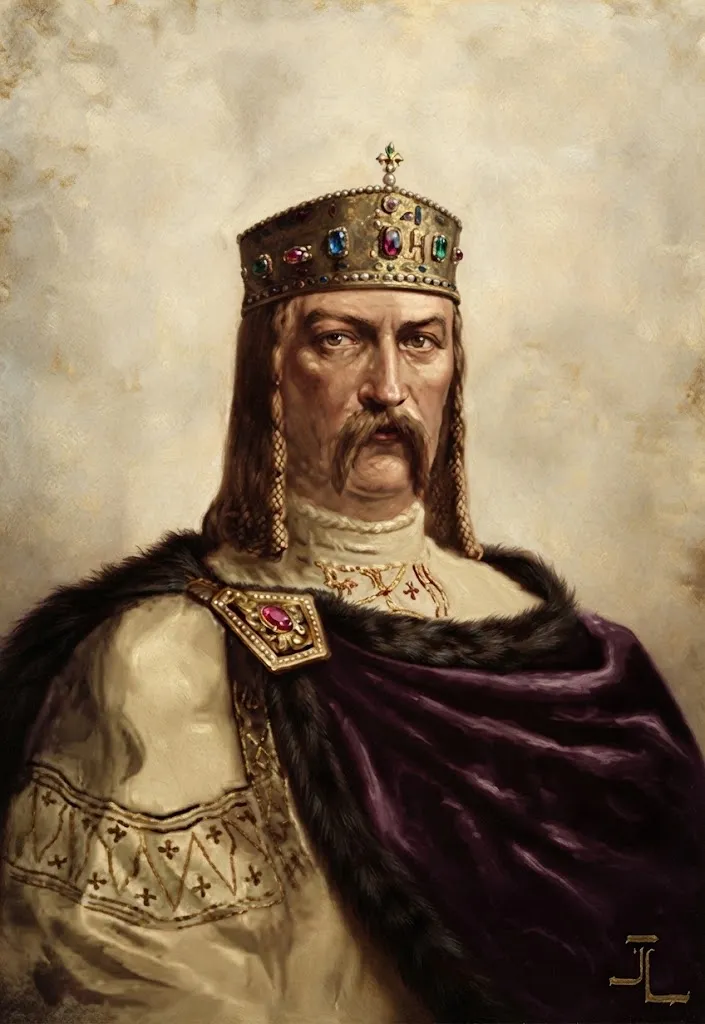
High politics settled it. In 987 or 988 the Byzantine emperor Basil II asked Kyiv for troops against the rebel general Bardas Phokas. Volodymyr agreed on condition that the emperor give him his sister Anna as a wife. Basil set a condition of his own: the prince had to be baptized together with his people. When Byzantium was slow to keep its promise, Volodymyr took its city of Chersonesus in Crimea, known in Rus’ as Korsun. The prince was baptized with the name Vasylii and became the emperor’s brother-in-law, and Kyiv gained great prestige.
Kyiv goes down to the river
Back from Korsun, Volodymyr had the idols thrown down. Then, the chronicle says, he announced that anyone who did not come to the river the next day would be his enemy. Priests from Korsun baptized the people of Kyiv in the waters of the Pochaina and the Dnipro. The baptism was also a test of loyalty to the prince.
A faith that came slowly
Christianity did not become everyone’s faith within a few years. The strongest resistance was in the north, especially in Novgorod, where, according to later accounts, people were baptized by force. Uprisings against the new faith still broke out in the northeast in the 11th century. Old customs lived on for a long time alongside church feasts. Even Metropolitan Ilarion, who praised Volodymyr, admitted that some were baptized “not out of love but out of fear of the ruler”.
Churches, schools, books
In Kyiv Volodymyr built the Tithe Church of the Mother of God, completed in 996. It got its name because the prince gave a tenth of his income to it. Both Princess Anna and Volodymyr himself were buried there. The prince also founded schools where people were taught to read and write. Services were held in Slavonic, a language people understood, and writing in the Cyrillic alphabet spread across Rus’.
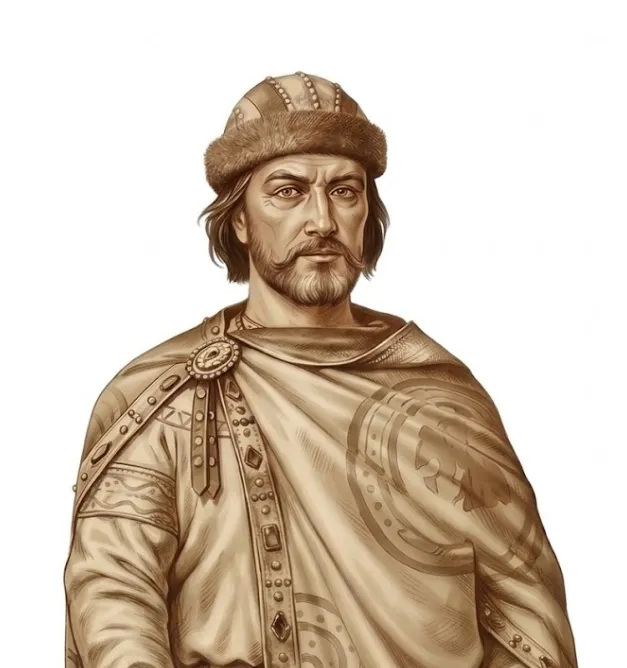
Yaroslav the Wise carried on his father’s work. Ilarion wrote that Yaroslav “completes what was left unfinished” by Volodymyr, and that he raised the Cathedral of Holy Wisdom, St Sophia, in Kyiv, which had no equal “in all the northern lands”. In 1051, at Yaroslav’s will, bishops made Ilarion metropolitan: for the first time the church of Rus’ was led not by a Greek sent from Constantinople but by one of its own, chosen in Kyiv.
Debates and assessments
The exact year is still debated. The chronicle gives 988; historians most often speak of 987–989, and some move the Korsun campaign and the mass baptism to 989 or 990. Nor is there agreement on where Volodymyr himself was baptized. The chronicle says Korsun, but notes that others named Kyiv or Vasyliv (now Vasylkiv). Some modern scholars lean towards Kyiv.
Views on the reasons differ too. Some historians stress statecraft: an alliance with Byzantium, a marriage into the imperial family, a faith that could unite different lands. Others also see a personal choice by a prince who already knew Christians in his own family. That the baptism was not entirely voluntary is admitted both by medieval writers and by modern scholars.
Moscow appeared only around 1147, a century and a half after the baptism, yet today russia presents itself as the only heir of Rus’. The centre of Rus’, and the place of its baptism, was Kyiv.
Why it matters today
The Christianization of Rus’ was a choice made by Kyiv: by a prince of Kyiv, in Kyiv, for his own state. It brought writing, schools, books and stone churches that still stand, and made Rus’ part of the Christian world of Europe. That is why Ukraine marks the Day of the Baptism of Rus’-Ukraine together with its Statehood Day: a thousand-year tradition of Ukrainian statehood began with decisions made in Kyiv. Anyone who reads, learns and builds today carries on work that began then.