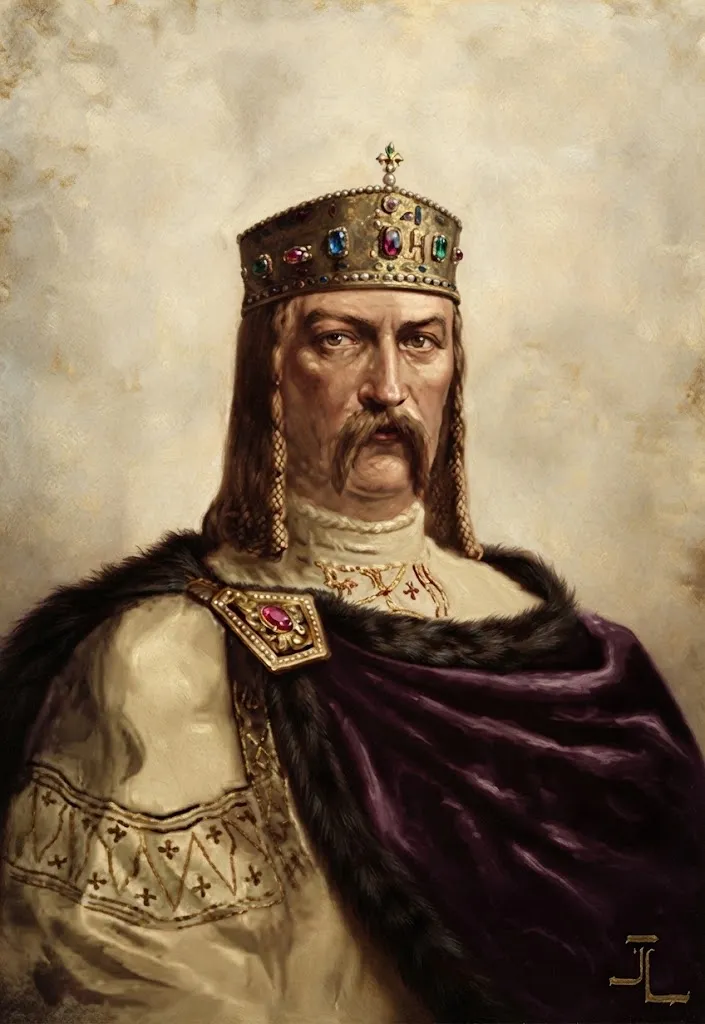
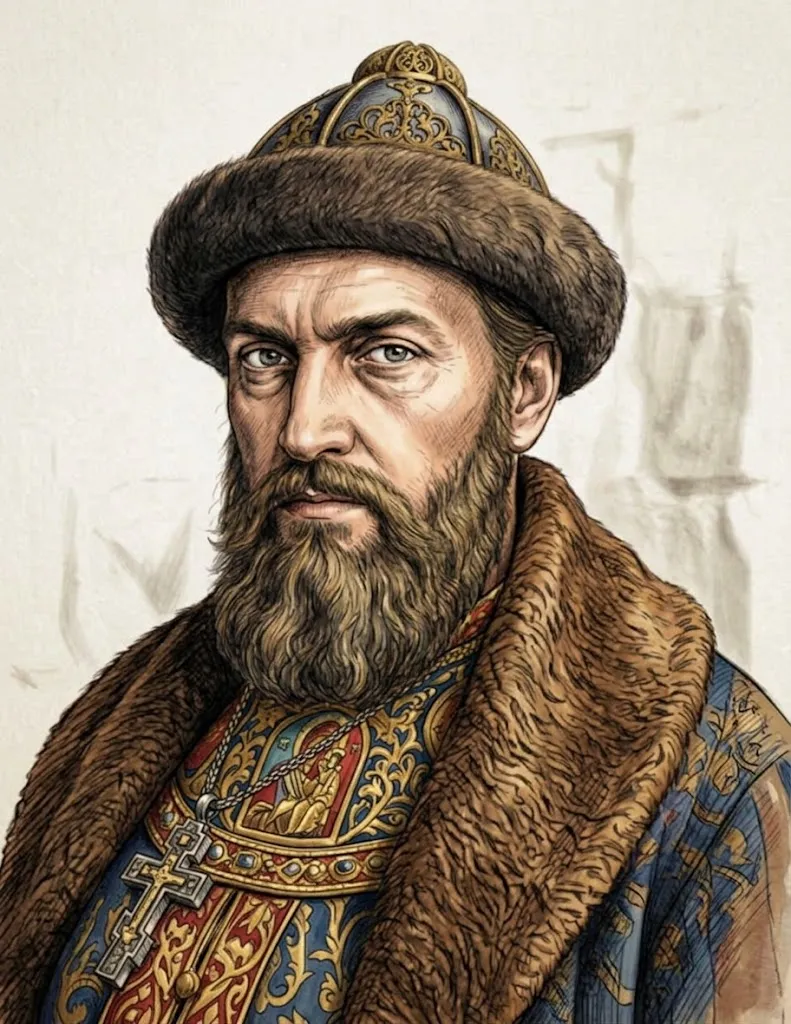
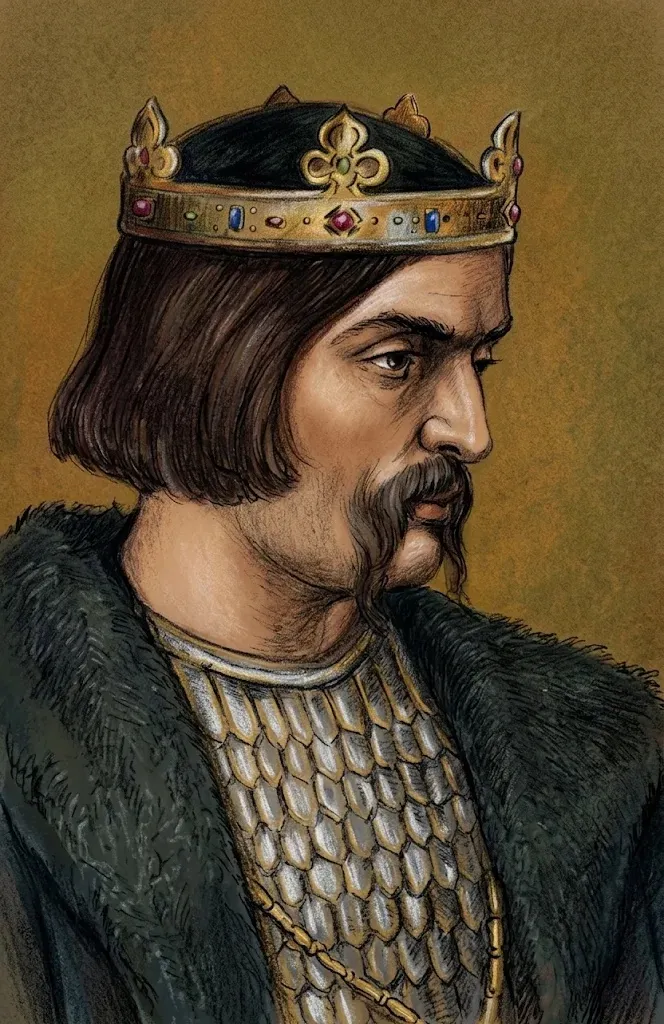
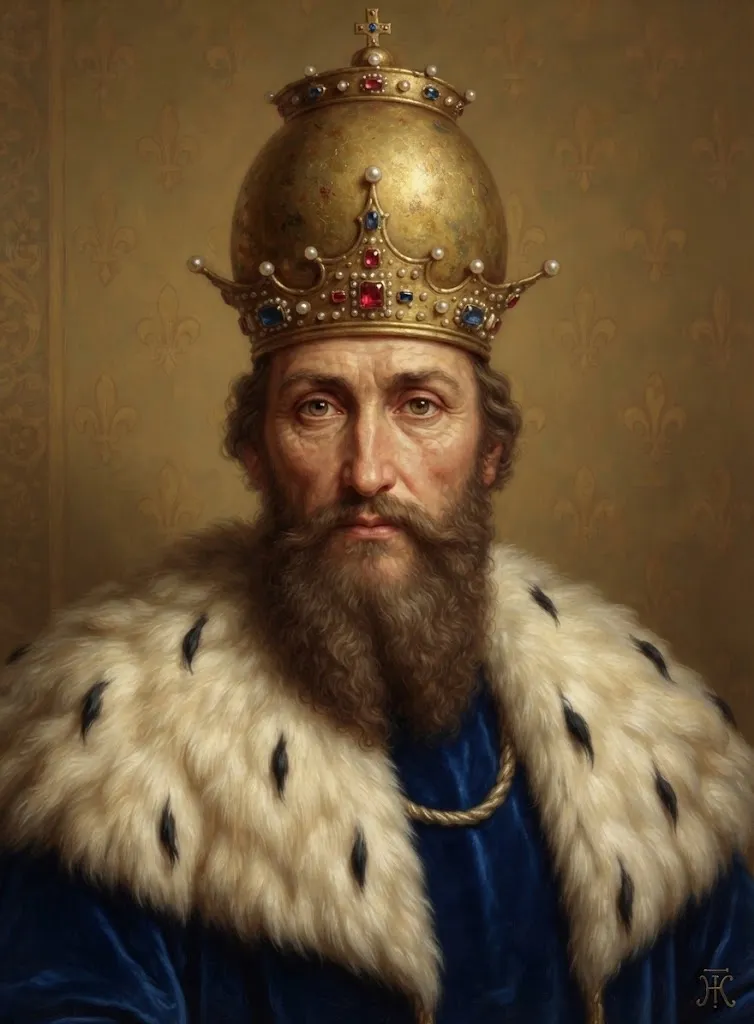
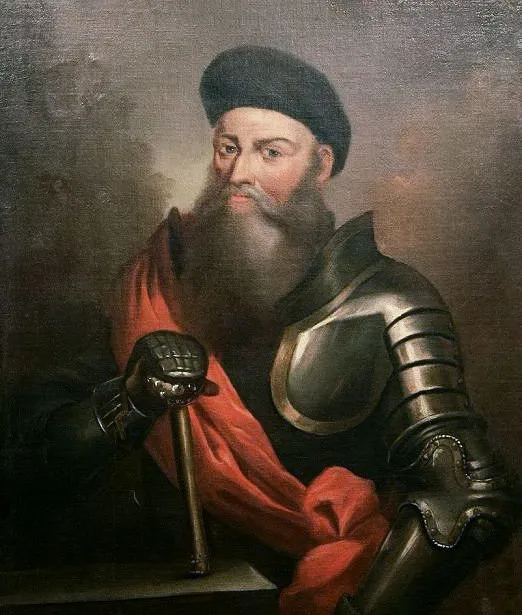
Yaroslav the Wise
“Father-in-law of Europe”
Why was a prince of Kyiv nicknamed the “father-in-law of Europe”? Yaroslav the Wise married his daughters to the kings of France, Norway and Hungary, gave Rus’ the law code Rus’ Justice and, according to the chronicle, founded Saint Sophia in Kyiv.
Key accomplishments
- The law code Rus’ Justice, the first written law of Kyivan Rus’
- Built the Golden Gate in Kyiv; according to the chronicle, founded Saint Sophia Cathedral
- Founded a library and schools; promoted book learning and the copying of books
- Dynastic marriages of his children with the rulers of France, Norway, Hungary and other countries
A prince who had to fight for Kyiv
Yaroslav was the son of Volodymyr the Great and Princess Rohnida of Polatsk. In his father’s lifetime he ruled Rostov and, from 1010, Novgorod, which became his main power base. The throne didn’t simply pass to him when his father died: he won a long struggle for Kyiv. Yaroslav walked with a limp, and his enemies mocked him for it: at Liubech in 1016, a commander of his brother and rival Sviatopolk shouted to the Novgorodians, “Why have you come with this limper?” A study of his bones showed that as a child he had dislocated his right leg and later broken it below the knee. From 1019 until his death Yaroslav ruled as Grand Prince of Kyiv. For ten years, in 1026–1036, he shared Rus’ with his brother Mstyslav, splitting it along the Dnipro. In 1030, between Lake Peipus and the Baltic, he founded the town of Yuriev and named it after his baptismal name, Yurii. Today it is Tartu in Estonia.
Laws, books and stone
Yaroslav was a builder. He raised the Golden Gate and new fortifications, and Kyiv became an architectural rival of Constantinople. According to the chronicle, Yaroslav founded Saint Sophia; some scholars believe Volodymyr had already begun building it. The chronicler writes that the cathedral stands on what was once a field outside the city, where Yaroslav defeated the Pechenegs besieging Kyiv.
At Saint Sophia Yaroslav founded a school and a library. He read books “often by day and by night,” the chronicler writes, and gathered many scribes who translated and copied books. The prince placed these books in Saint Sophia.
Another part of his legacy isn’t made of stone. The Rus’ Justice is the first known written law code of Rus’, and its oldest part is tied to Yaroslav’s name.
“Father-in-law of Europe”
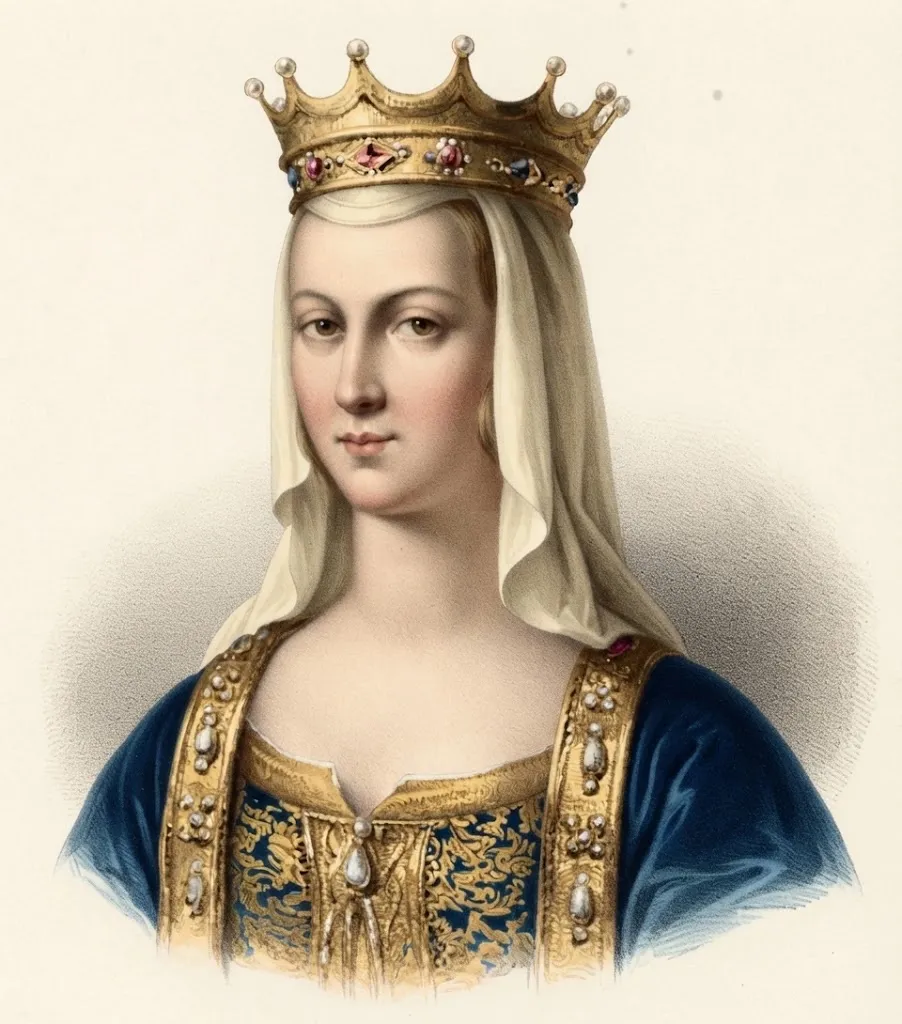
Yaroslav was also known for his diplomacy. His daughters became queens: Anna of France, Yelyzaveta of Norway, Anastasiia of Hungary. Yaroslav’s Kyiv was also a refuge for exiles: King Olaf II of Norway and Harald Hardrada, later king of Norway too, sought shelter at his court. It was Harald who married Yelyzaveta. That is why he is called the “father-in-law of Europe.”
Why it matters today
Yaroslav showed that a state’s strength lies not only in its army but in its laws, learning and culture. Written law, a school and a library, the stone Saint Sophia that still stands: he built things meant to outlive him. Because of them, Kyiv became a city that Europe reckoned with, not just its neighbours. He won Kyiv in a long struggle, yet he is remembered for what he built, and that choice, to build and not only to fight, is still worth following; little wonder his portrait is on the 2-hryvnia banknote.