The deportation of the Crimean Tatars (Sürgünlik)
Crimea
In three days in May 1944 the Soviet authorities deported the entire Crimean Tatar people from Crimea: more than 180,000 people in the first wave alone. Thousands died on the way and in exile, and they could return home only 45 years later. Ukraine has recognised the deportation as genocide.
Timeline
- 11 May 1944 The USSR State Defence Committee adopts secret decree No. 5859ss “On the Crimean Tatars”
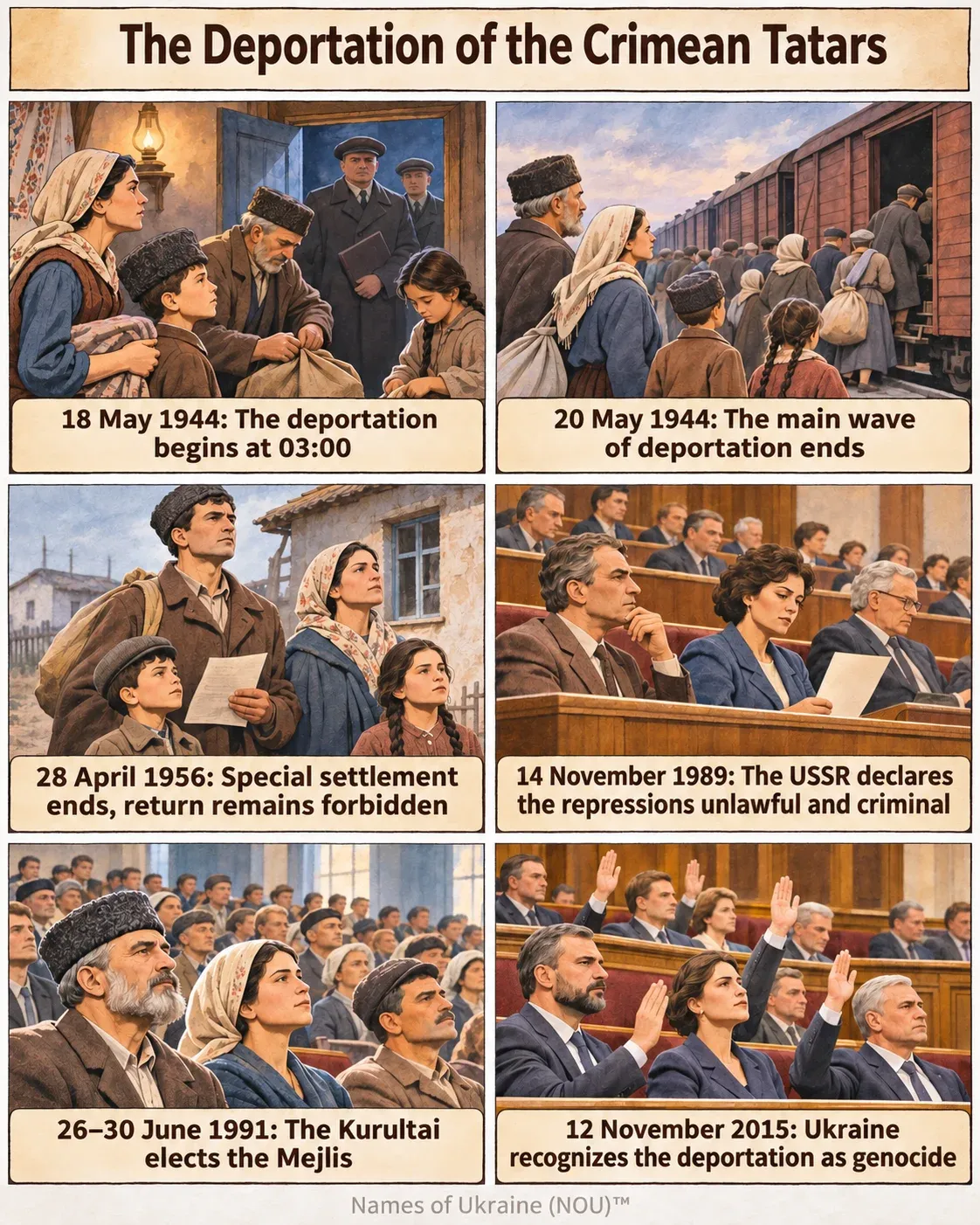
- 18 May 1944 The deportation begins at 3 a.m.; 32,000 NKVD personnel take part
- 20 May 1944 The main wave is over: 180,014 people have been taken away in 67 trains, most of them to Uzbekistan
- 28 April 1956 The special settlement regime is lifted, but return to Crimea is still forbidden
- 5 September 1967 A decree drops the blanket charge of treason against “citizens of Tatar nationality”, but gives no right to return
- 14 November 1989 The USSR Supreme Soviet declares the repressions against deported peoples unlawful and criminal
- 26–30 June 1991 The Second Kurultai in Simferopol elects the Mejlis, led by Mustafa Dzhemilev
- 12 November 2015 Ukraine’s parliament recognises the deportation as genocide and makes 18 May a Day of Remembrance
Crimean Tatars have one word for it: Sürgünlik, “exile”. At three in the morning on 18 May 1944, men of the NKVD, the Soviet secret police, came to their homes all over Crimea. Families were given anything from a few minutes to half an hour to pack. In three days almost an entire people, who had lived on the peninsula for centuries, was taken away.
A verdict without a trial
In the spring of 1944 the German occupiers were driven out of Crimea. After reports of supposed mass desertion by Crimean Tatars from the Red Army, the interior commissar Lavrentiy Beria proposed to Stalin that they be removed, and on 11 May the USSR State Defence Committee adopted secret decree No. 5859ss “On the Crimean Tatars”. The whole people, women, children and the elderly included, was branded as traitors. There is no evidence of mass desertion, and most of those who had really collaborated with the occupiers had already been tried individually. Meanwhile thousands of Crimean Tatars were fighting in the Red Army, among them the pilot Amet-Khan Sultan, twice Hero of the Soviet Union. Some historians link the deportation not only to this pretext but also to Stalin’s plans towards Turkey and the Black Sea straits.
Three days in May
Some 32,000 NKVD personnel took part in the operation. Officially a family could take up to 500 kilograms of belongings; in practice most managed to gather 20–30. By 20 May, 180,014 people had been taken from Crimea in 67 trains. More than two-thirds ended up in Uzbekistan; the rest were scattered across Kazakhstan, the Urals and other regions. Among them was the six-month-old Mustafa Dzhemilev, who grew up in exile.
The road into exile
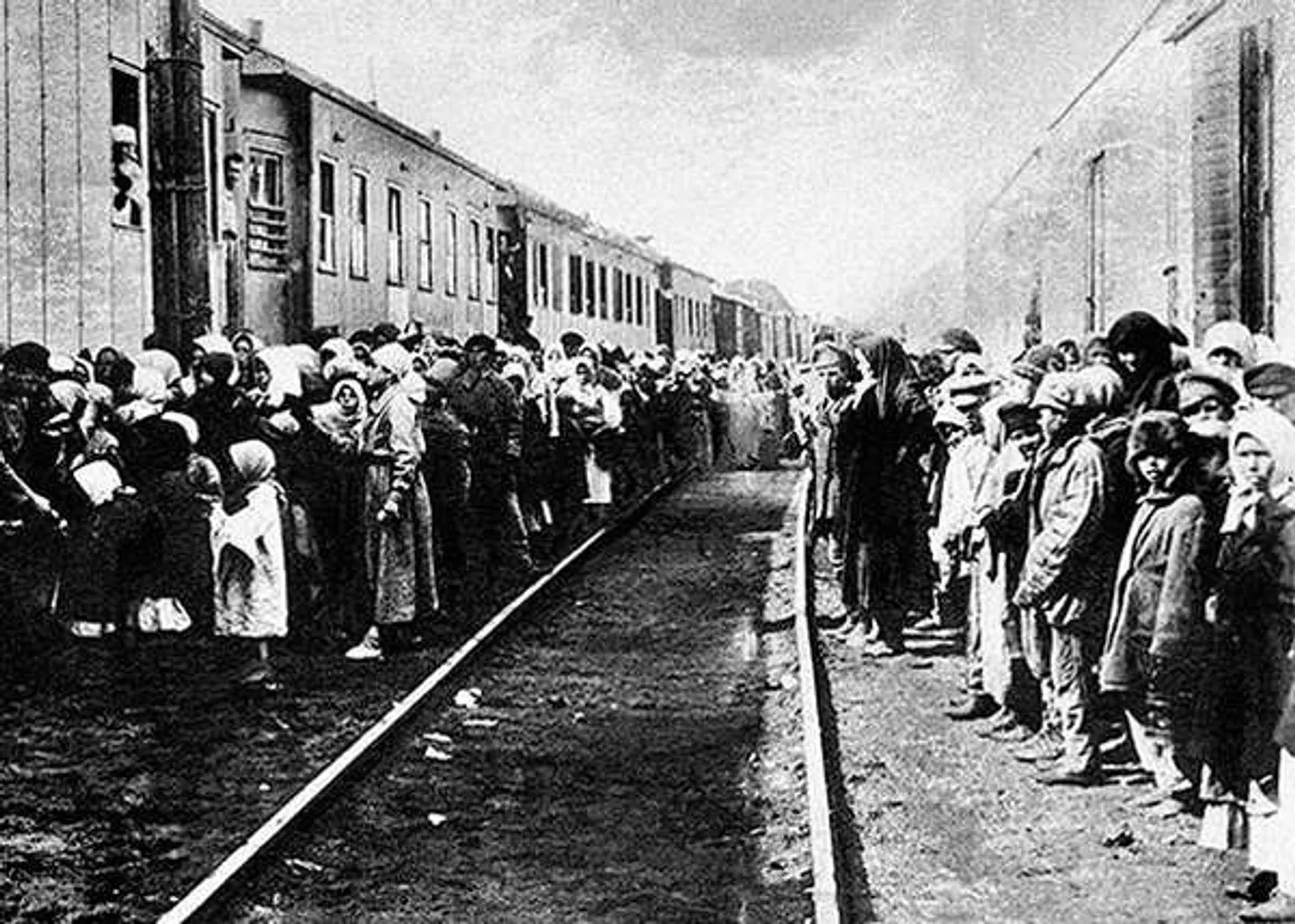
The trains took about three weeks to reach the places of exile. People were packed into overcrowded freight wagons short of water and food, and researchers estimate that some 8,000 of them died on the way. “For a month people were practically not fed and were denied water. Many could not bear it and simply died. They were not even allowed to bury them, so the bodies were literally thrown out of the wagons,” says the Crimean Tatar historian Gulnara Abdulaieva.
The state took the deportees’ houses, livestock and property, settlers from other parts of the USSR were moved into their homes, and in 1946 Crimea lost its autonomy. Next came the erasing of the people’s memory: mosques were closed or turned into warehouses and shops, and most Crimean Tatar names of towns and villages were replaced, so that Karasubazar, for example, became Bilohirsk. The biggest wave of renaming, more than a thousand names, came on 18 May 1948, the fourth anniversary of the deportation.
Life as special settlers
At their destinations the deportees became “special settlers”: they could not leave their settlement without permission, had to report for registration every month, and faced criminal charges if they fled. Estimates of those who died of hunger, disease and exhaustion in the first years range from 15 to 46 per cent of the deportees. Even front-line soldiers were not allowed home after demobilization: in 1945–1946, 8,995 Crimean Tatar servicemen were sent into exile, and only later could they rejoin their families.
On 28 April 1956 the special settlement regime was lifted, but return to Crimea was still forbidden. A decree of 5 September 1967 dropped the blanket charge of treason, yet it cleared “citizens of Tatar nationality” rather than the Crimean Tatar people, and gave no right to return. Those who went back to Crimea anyway were driven out again.
The road home
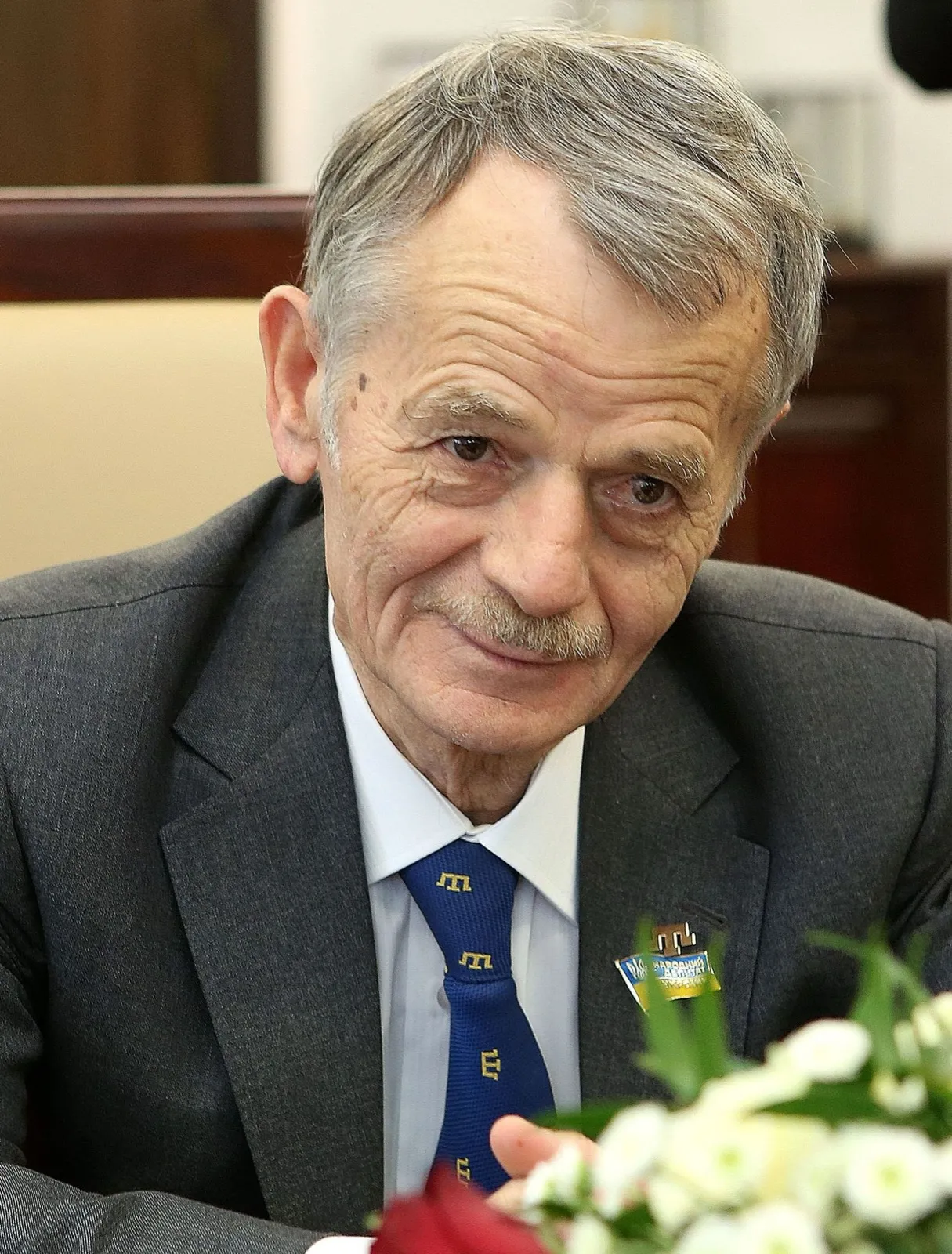
Crimean Tatars did not give up. At first they wrote petitions to the authorities; later younger activists took a bolder line, and Mustafa Dzhemilev spent about 15 years in Soviet captivity for it in all. General Petro Hryhorenko took their side and called the deportation genocide.
The movement peaked in the late 1980s, with tent camps on land in Crimea. On 14 November 1989 the USSR Supreme Soviet declared the repressions against forcibly resettled peoples unlawful and criminal, and on 28 November it approved findings that recognised the Crimean Tatars’ right to return to Crimea. By May 1990 more than 83,000 Crimean Tatars were living there. In the summer of 1991 the Second Kurultai, the national congress, elected the Mejlis, the people’s representative body, with Dzhemilev at its head.
Memory and new persecution
On 12 November 2015 Ukraine’s parliament recognised the 1944 deportation as genocide of the Crimean Tatar people and made 18 May a Day of Remembrance of its victims. In the same resolution it called the russian authorities’ systematic pressure on Crimean Tatars since the start of the occupation of Crimea in 2014 a policy of ethnocide. In 2016 an occupation court banned the Mejlis, and russia’s Supreme Court upheld the ban. That same year the world heard about Sürgünlik from the Eurovision stage, when Jamala won with her song “1944”. As of March 2026, according to Ukraine’s Foreign Ministry, russia was holding 159 Crimean Tatars on politically motivated charges. The largest group of those prosecuted are defendants in the “Hizb ut-Tahrir” cases: as of February 2025, according to the Crimean Tatar Resource Center, 122 people had been charged, 119 of them Crimean Tatars. At the same time the peninsula’s population is changing: by various estimates, some one million russian citizens have moved to Crimea since 2014, while about 500,000 local residents have left, among them some 50,000 Crimean Tatars.
Debates and assessments
The exact number of those deported and of those who died has never been established. According to official NKVD figures, the main wave took away 180,014 people; counting those sent to the Gulag, those mobilised for forced labour and those deported later, Ukrainian historians arrive at about 200,000, and activists of the national movement at 238,500. Estimates of deaths in the first years of exile range from 15 to 46 per cent; the highest, almost half of the deportees, is also given by Ukrainian state sources. The Soviet declaration of 1989 called the deportation unlawful and criminal, but not genocide; Ukraine’s parliament recognised it as genocide in 2015.
Why it matters today
The deportation was meant to tear the Crimean Tatars from their land, but the people kept their language, their memory and their will to return. Decades of peaceful struggle showed that justice can be won even from a state that denied it for years. That Crimean Tatars are again persecuted in occupied Crimea is a reminder of why this memory must be kept. Everyone who lights a candle on 18 May for the victims of Sürgünlik keeps this story from falling silent.