The Brotherhood of Saints Cyril and Methodius crushed
Kyiv and Saint Petersburg
A secret circle in Kyiv imagined open education, the abolition of serfdom and a union of equal Slavic peoples. In the spring of 1847, the imperial authorities arrested its members; Taras Shevchenko received the harshest punishment, including a ban on writing and drawing.
Timeline
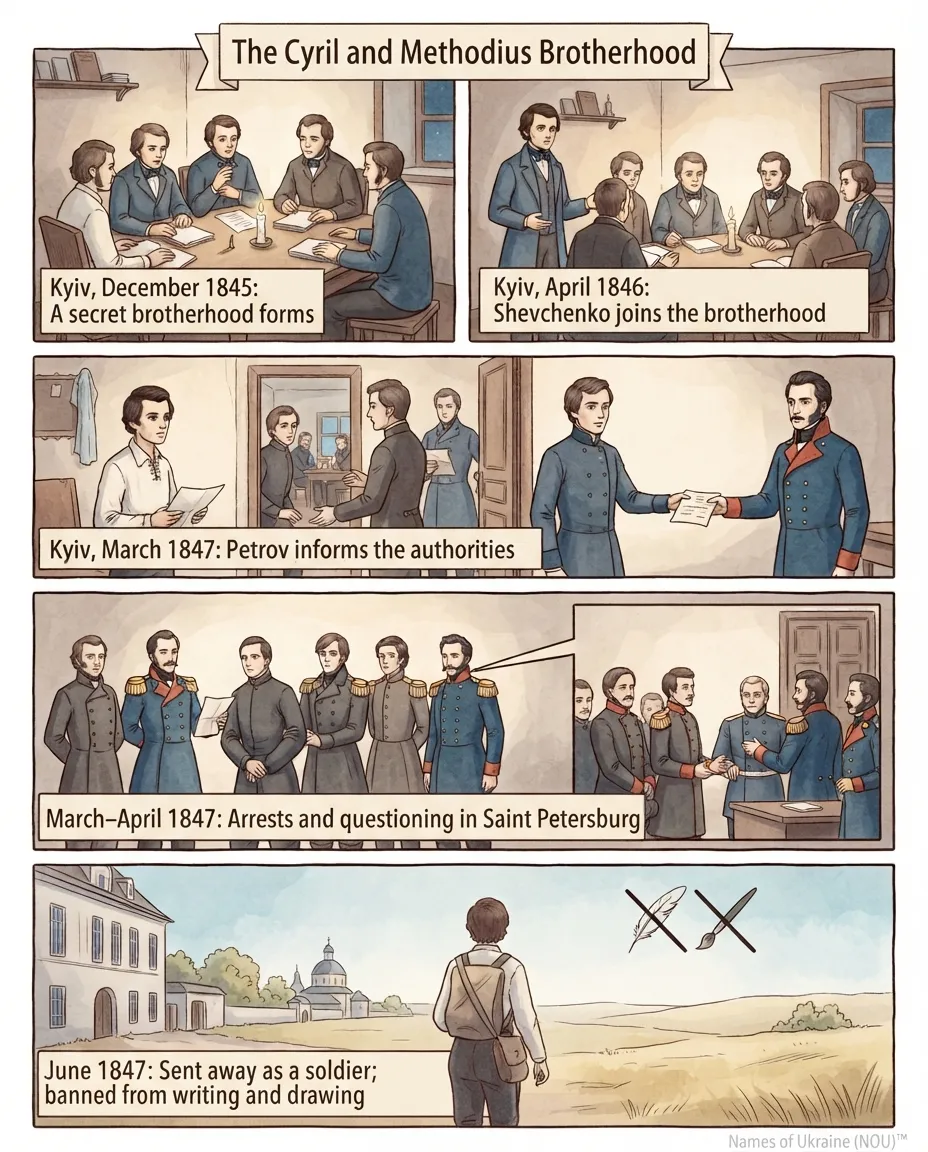
- December 1845 The secret Brotherhood of Saints Cyril and Methodius is formed in Kyiv
- April 1846 Taras Shevchenko joins the society
- March 1847 A denunciation by Oleksii Petrov exposes the brotherhood to the authorities
- March-April 1847 Members are arrested and taken to Saint Petersburg for questioning
- June 1847 Shevchenko is sent as a soldier to the Orenburg Corps and forbidden to write or draw
An idea of a free Ukraine
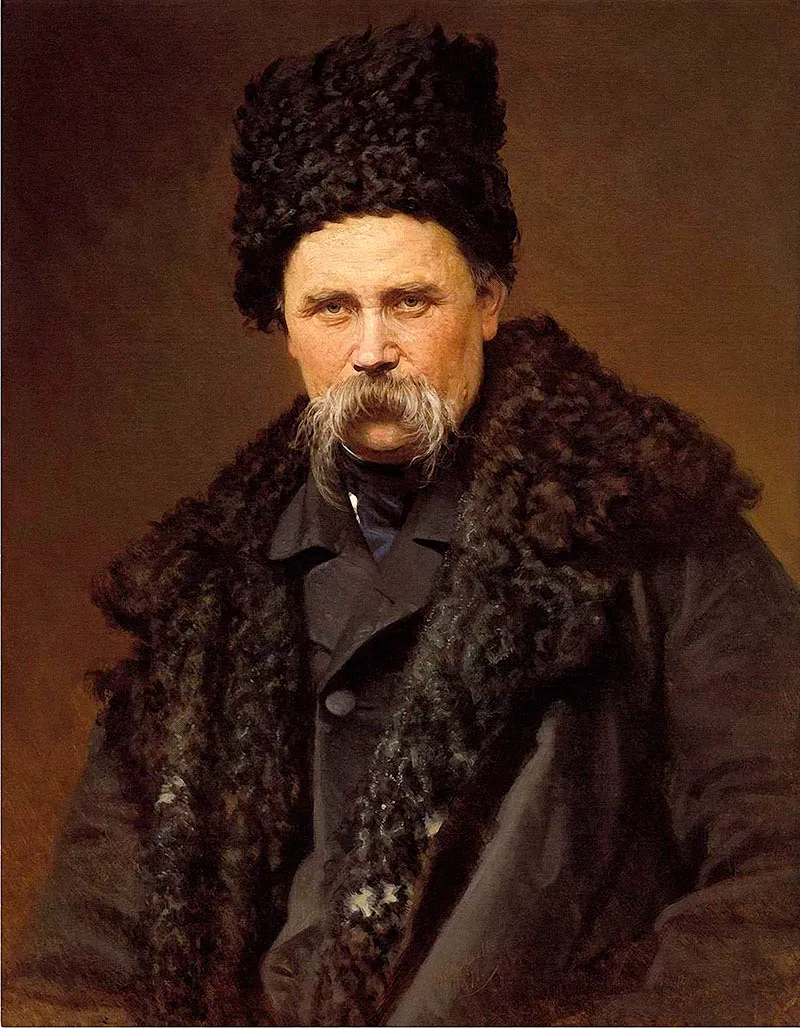
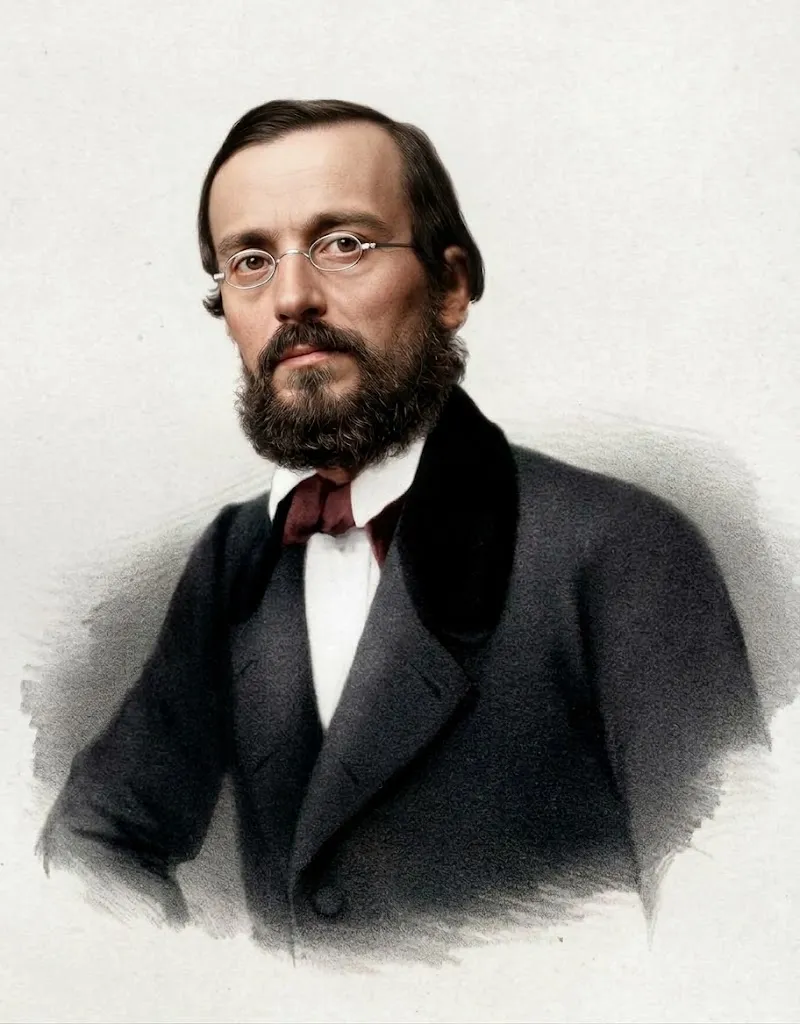
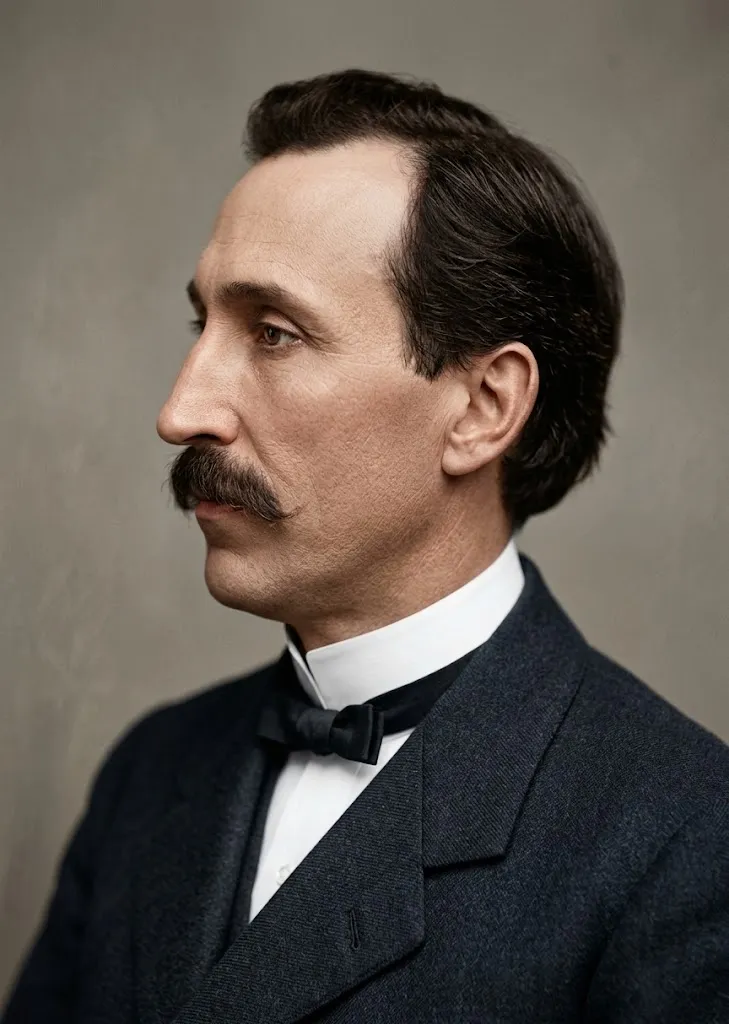
The brotherhood formed in Kyiv in late 1845. Its founders included historian Mykola Kostomarov and writer Panteleimon Kulish; Taras Shevchenko joined in April 1846. Members discussed a society based on Christian principles, the abolition of serfdom, public education and equality among Slavic peoples. The Books of Genesis of the Ukrainian People set out these ideas in biblical language: Ukraine was to play a leading role in a federation of Slavic peoples, with Kyiv as its capital.
Arrests and punishment
Student Oleksii Petrov overheard the brotherhood’s political discussion in November 1846 and later informed the authorities. Members in Kyiv came under surveillance and were arrested; others were detained in different cities. The investigation took place in Saint Petersburg, and punishments were imposed administratively, without an open trial. Kostomarov was exiled to Saratov and Kulish to Tula.
Shevchenko received the harshest sentence. Tsar Nicholas I personally added a ban on writing and drawing to the sentence. In the first days of exile, Shevchenko defied it by copying his cycle In the Dungeon into a small secret notebook and hiding it in his boot. The ban was aimed at his creative work, but it could not erase his poems or art.
Debates and assessments
Sources use both names for the group: “brotherhood” and “society.” The society had no formal membership criteria, so its exact size cannot be established. The only known testimony on its size gives an estimate of about 100 people. Kostomarov and Bilozersky favoured moderate reform, while Shevchenko used revolutionary slogans. The crackdown did not end the Ukrainian movement: the brotherhood’s ideas continued through literature, education and civic work.
Why it matters today
The brotherhood joined Ukrainian cultural work to a demand for social and political change. Though it lasted only briefly, its program put human freedom and education at the centre of the society its members wanted to build. The imperial ban did not silence Shevchenko; his words became part of Ukraine’s struggle for freedom.