The Orange Revolution
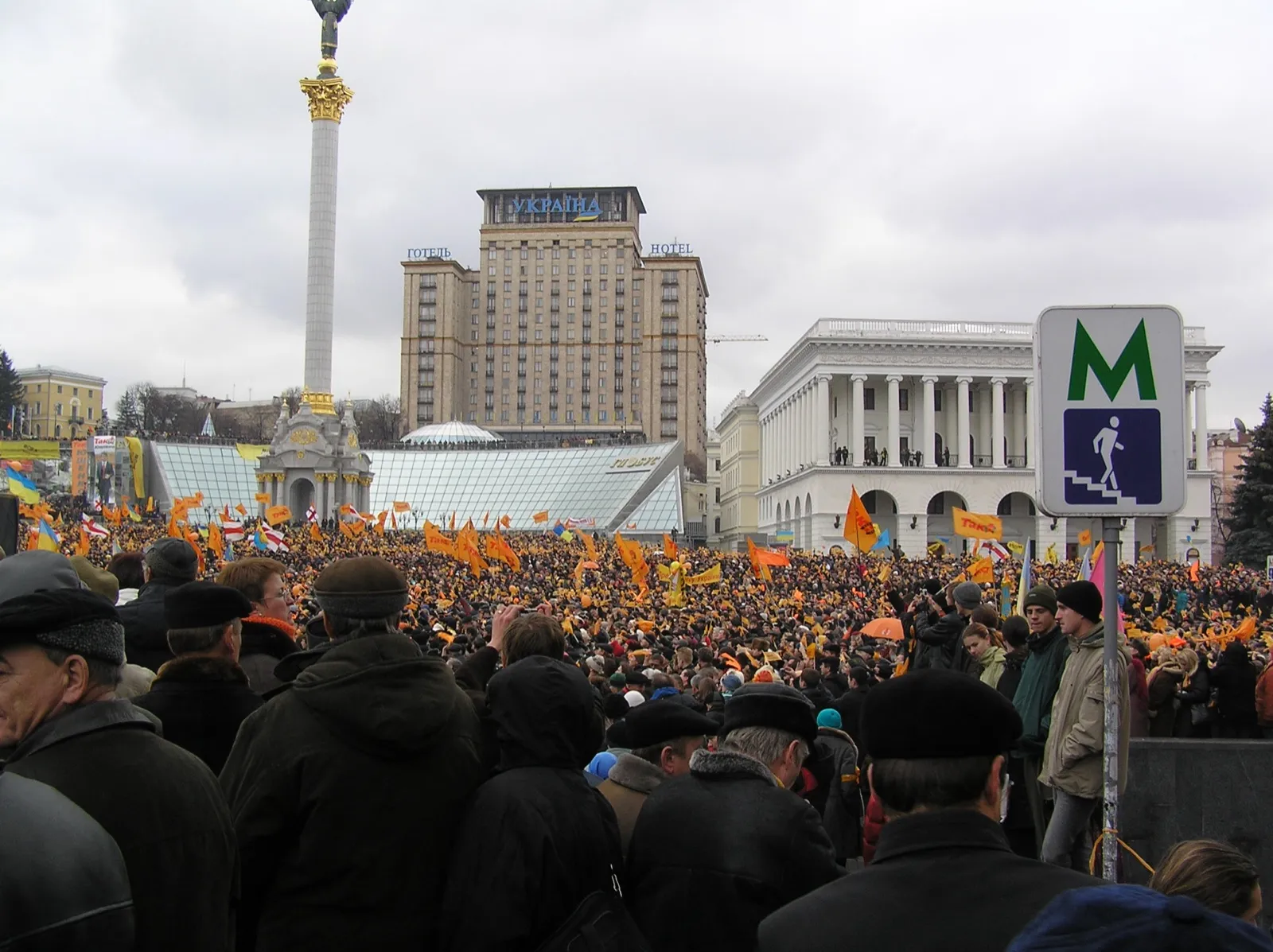
Maidan Nezalezhnosti (Independence Square), Kyiv
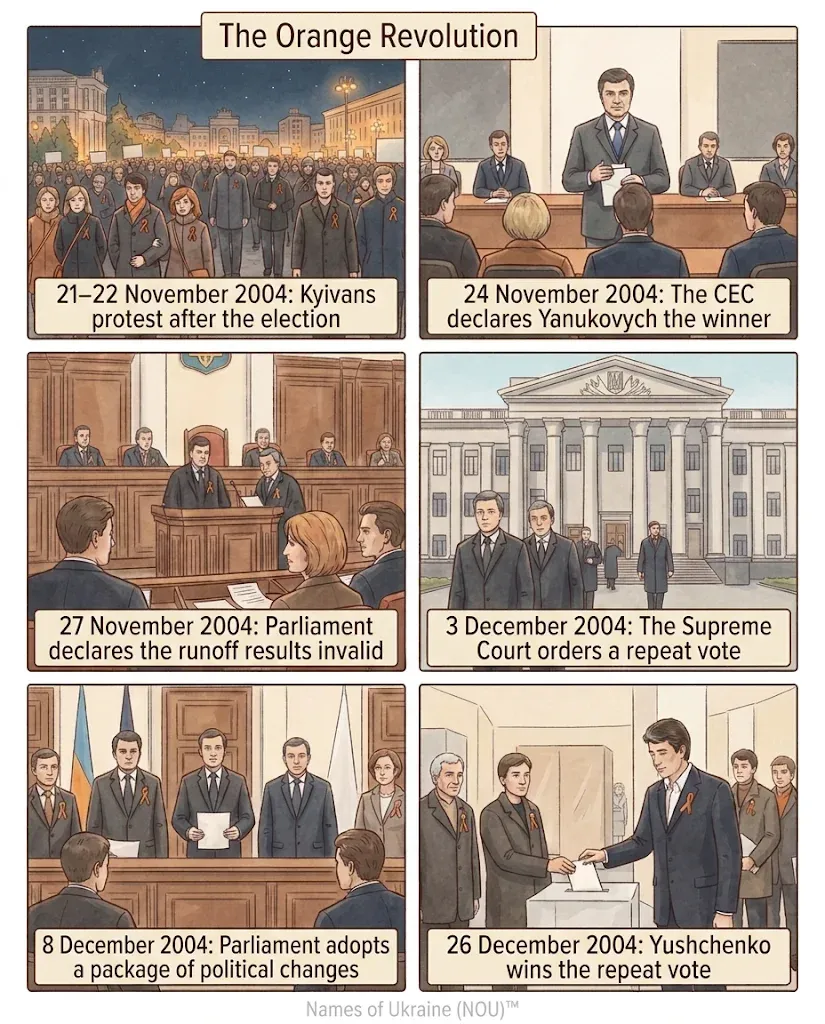
The authorities declared Viktor Yanukovych the winner of the 2004 election, and hundreds of thousands of people in orange ribbons came out on the Maidan and would not go home. Twelve days later the Supreme Court threw out the runoff, and Viktor Yushchenko won the repeat vote.
Timeline
- 5 September 2004 After a dinner with the heads of the SBU security service, presidential candidate Viktor Yushchenko falls seriously ill; doctors later find dioxin poisoning
- 31 October 2004 First round: Yushchenko 39.87%, Viktor Yanukovych 39.32%
- 21 November 2004 Runoff; that evening about 30,000 Kyivans come out on the Maidan against fraud
- 22 November 2004 About 100,000 people are on the Maidan, and voters from across the country start to arrive
- 24 November 2004 The Central Election Commission declares Yanukovych the winner, 49.5% to 46.6%
- 27 November 2004 Parliament declares the runoff results invalid
- 3 December 2004 The Supreme Court orders the runoff to be held again
- 8 December 2004 Parliament passes a package: a new election commission, changes to the election law and a constitutional reform
- 26 December 2004 Repeat runoff: Yushchenko 51.99%, Yanukovych 44.2%
- 23 January 2005 Yushchenko is sworn in as President of Ukraine in parliament
The election commission declared one candidate the winner, and hundreds of thousands of people came out on the country’s main square to say they had voted for the other. They stayed on the Maidan until the Supreme Court ruled that the true result could not be known and ordered the vote to be held again. Those 12 days of protest, from 22 November to 3 December 2004, became known as the Orange Revolution.
Why orange
Supporters of the opposition candidate Viktor Yushchenko, leader of Our Ukraine, marked themselves out in orange: flags, ribbons, scarves. His rival was Prime Minister Viktor Yanukovych, the candidate backed by the authorities.
It was a brutal campaign. On 5 September 2004, after a secret dinner with the heads of the Security Service of Ukraine, Yushchenko fell seriously ill and was flown to a clinic in Austria. Pro-government media put his illness down to overeating. In December doctors at the Rudolfinerhaus clinic in Vienna said there was no doubt: it was dioxin poisoning, most likely in his food. The poison left his face permanently scarred.
An election nobody believed
The first round on 31 October left the two almost level: 39.87% for Yushchenko, 39.32% for Yanukovych. Just before the vote russia’s president Vladimir Putin came to Kyiv and backed his candidate on Ukrainian television, while russian TV channels, widely watched in Ukraine at the time, campaigned for Yanukovych.
After the runoff on 21 November, the election commission said Yanukovych had won by 812,000 votes. At the same time, turnout in the Donbas had risen by 843,000 people since the first round, reaching 96.7% in Donetsk oblast. OSCE observers called turnout of over 98.5% in some Donetsk districts “unrealistic and highly suspicious”, and reported a sharp rise in home voting and pressure on public-sector workers and students. The National Exit Poll gave Yushchenko 52.9% and Yanukovych 44.2%. On 24 November the commission announced the opposite: 49.5% for Yanukovych, 46.6% for Yushchenko.
The Maidan stays
On the evening of 21 November about 30,000 Kyivans came out on Independence Square; the next day there were about 100,000, and people began arriving from all over the country. By 23 November 400 tents stood along almost the whole length of Khreshchatyk. Many other cities had “maidans” of their own. Estimates of the crowd in Kyiv on the biggest days range from 300,000 to a million. In all, sociologists estimate, 5–6 million people took part in the protests.
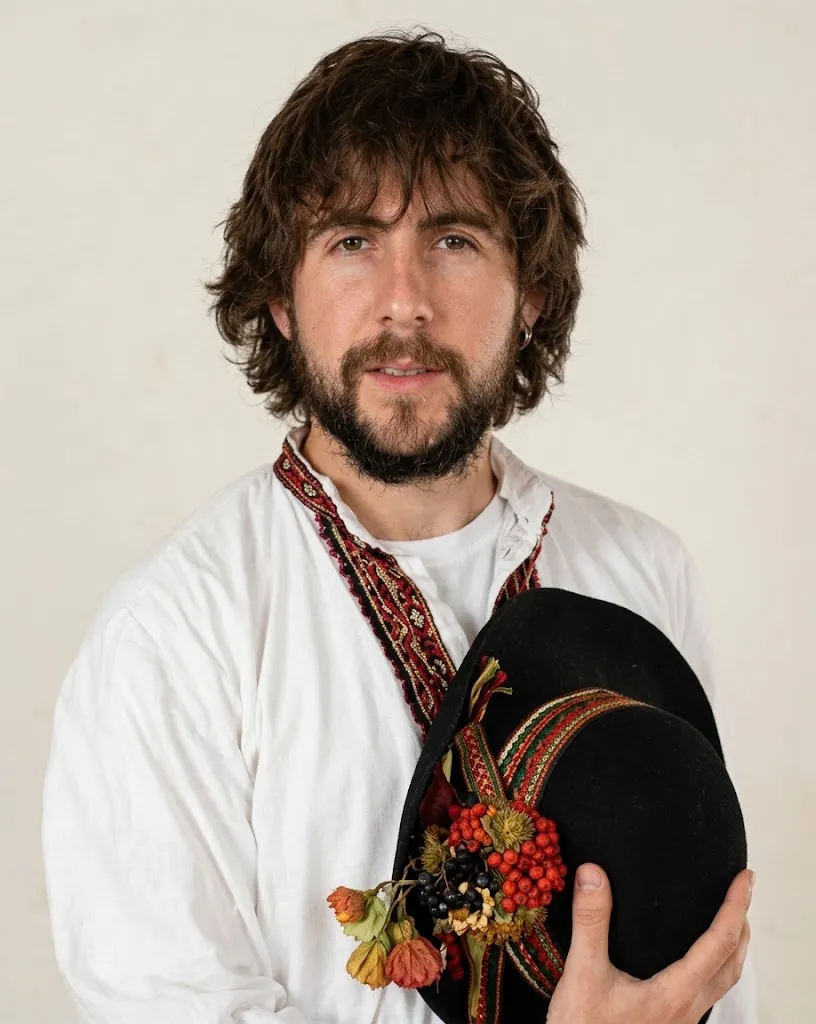
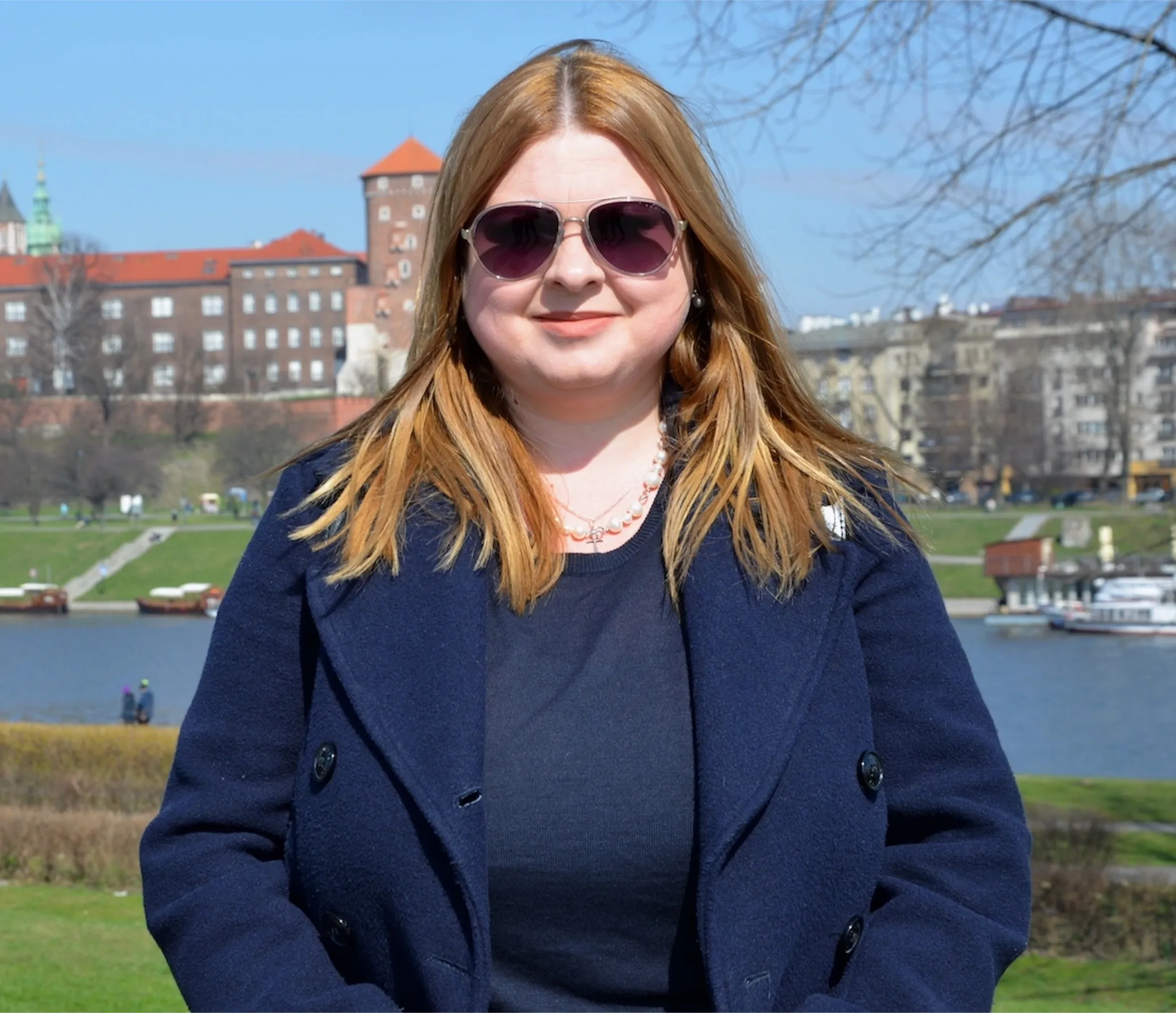
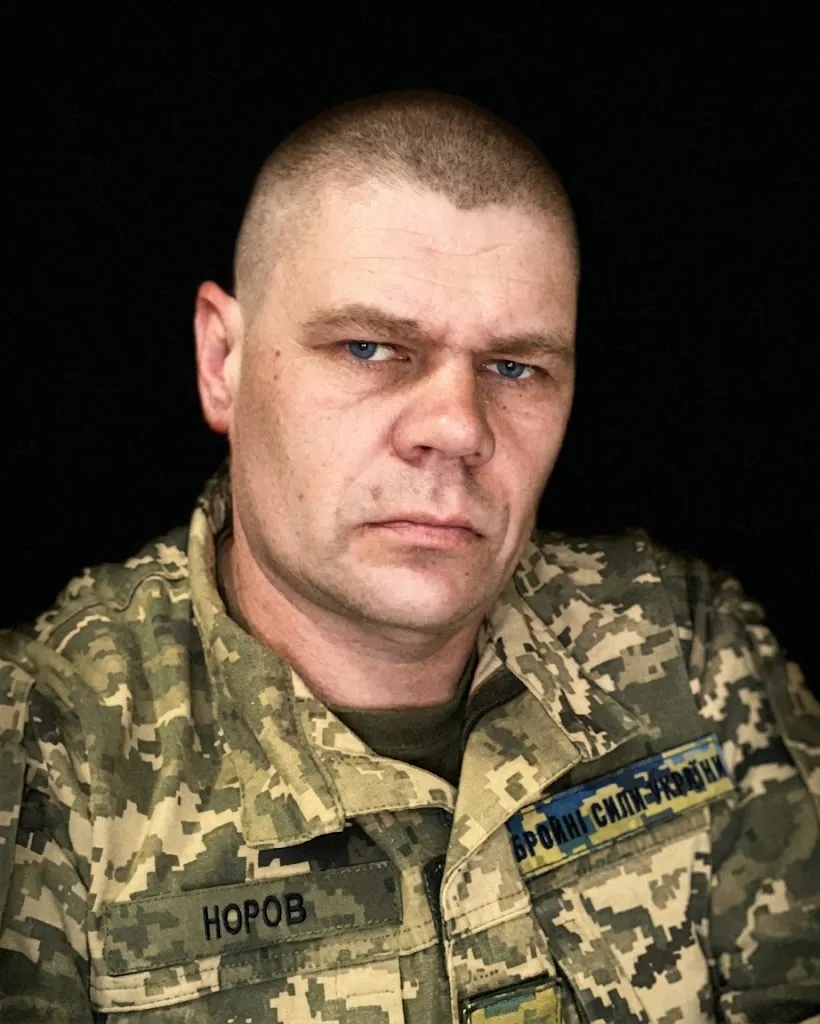
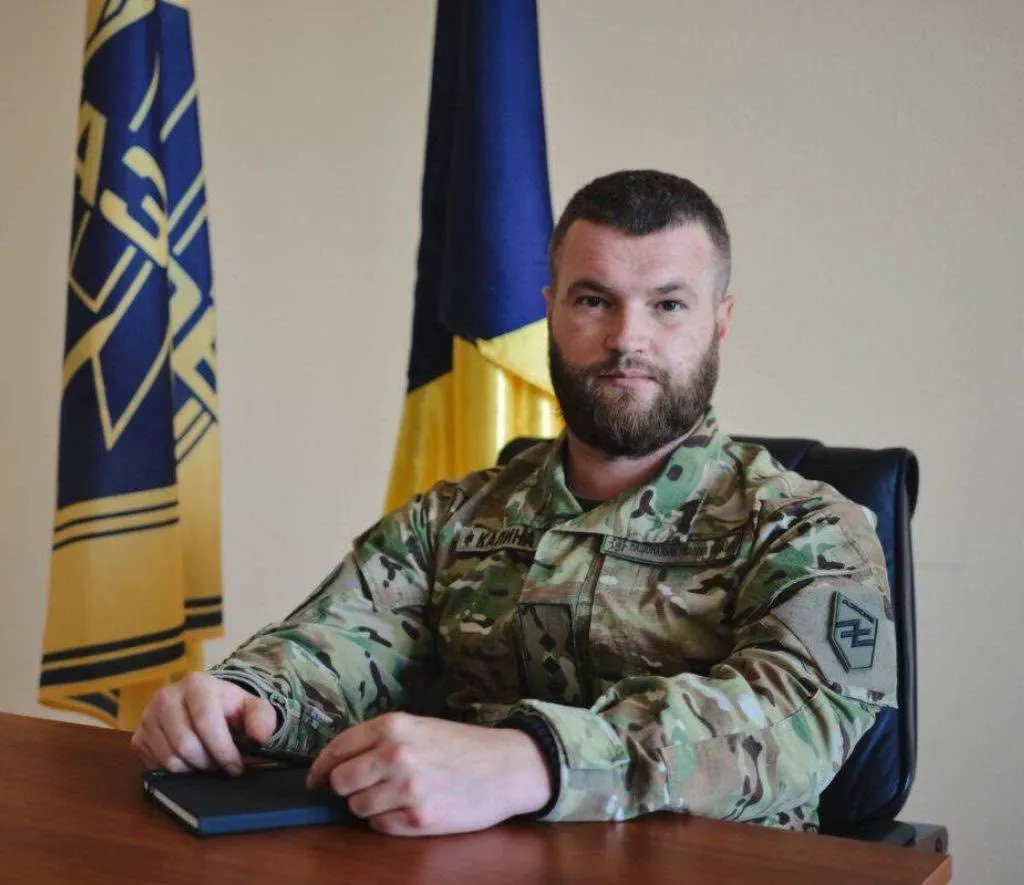
Bohdan Solchanyk, a Lviv student and an activist of the youth group Pora!, helped bring students out for the revolution. Kateryna Handziuk from Kherson took part too. Among those who joined were also two future defenders of Ukraine, Andrii Norov and Sviatoslav Palamar.
From 26 November protesters blockaded the presidential administration, the government and parliament, and some state bodies, among them diplomats and the SBU, refused to obey the authorities.
A ruling with no appeal
On 27 November parliament, by 323 votes, declared the runoff results invalid and passed a vote of no confidence in the election commission. At the initiative of Polish President Aleksander Kwaśniewski, a round table met at the Mariinskyi Palace with leaders of international organisations and other states, but its first two rounds settled nothing. Then on 3 December the Supreme Court ruled that the voters’ real will could not be established, so the runoff had to be held again on 26 December. There was no appeal against the ruling.
The key deal came only at the third round, on 6–7 December, and on 8 December parliament passed it as one package: a new election commission, changes to the election law and a constitutional reform. It was a compromise: Kuchma accepted a new election law and a new commission, and Yushchenko accepted that the centre of power would shift from the president to parliament and the government. On 26 December Yushchenko won with 51.99% of the vote to Yanukovych’s 44.2%. On 23 January 2005 he was sworn in at parliament with his hand on the Constitution and the Bible, while thousands of people in central Kyiv listened to his speech in the open air. Since 2014, 21 November has been Ukraine’s Day of Dignity and Freedom, in memory of both revolutions.
Debates and assessments
Some scholars write that this was not a revolution in the full sense: the regime, its elite and its ruling ideas were not replaced. It is nevertheless considered a landmark in Ukraine’s political history.
The country was divided. In early December pollsters at the Razumkov Centre found 45% supported the protests and 40% condemned them. In all three votes Yushchenko won the 16 oblasts of the west and centre and Kyiv, and Yanukovych the 8 oblasts of the south and east, Crimea and Sevastopol. The Supreme Court’s ruling was backed by 61.9% of those polled: from 39.6% in the east to 91.8% in the west.
Many who took part were later disappointed. The winners fell out: in September 2005 Yushchenko dismissed Yulia Tymoshenko’s government, in 2006 Yanukovych became prime minister again, and in 2010 president. The constitutional reform was revoked in 2010 and restored in 2014, after the Revolution of Dignity. Some argue that from then on populism, incompatible with deep reform, took hold of politics.
The role of russia is a debate of its own. Putin twice congratulated Yanukovych on his victory before the results were announced. Researchers write that Yanukovych’s campaign was planned and run by russian “political technologists”, and that they also controlled the so-called transit server through which, according to the opposition, the vote data were altered. The host of the September dinner after which Yushchenko fell ill left for Moscow, and Ukraine could not get him extradited.
Why it matters today
The Orange Revolution showed that Ukrainians’ votes cannot be quietly rewritten: millions of people peacefully defended their choice and won a fair repeat vote through parliament and the courts. It woke up Ukraine’s civil society and set an example for those who, nine years later, came out for the Revolution of Dignity. The disappointment that followed was a lesson too: freedom does not end with a victory on the square; it has to be defended every day. Anyone who votes today, watches the count or calls those in power to account carries on what began on the Maidan in 2004.