The Valuev Circular
Saint Petersburg
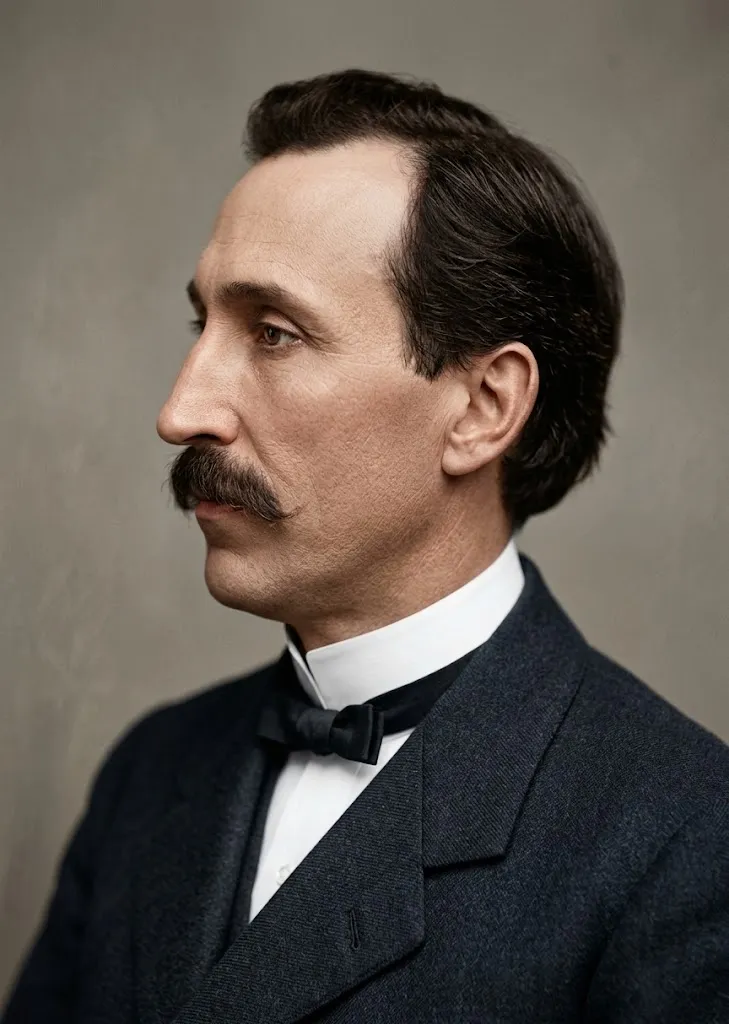
“Never existed, does not exist and cannot exist”: that is what a secret circular of the minister Petr Valuev said of the Ukrainian language in 1863. It banned religious, school and popular books in Ukrainian, allowing only fiction. Ukrainian publishing in the russian empire all but stopped.
Timeline
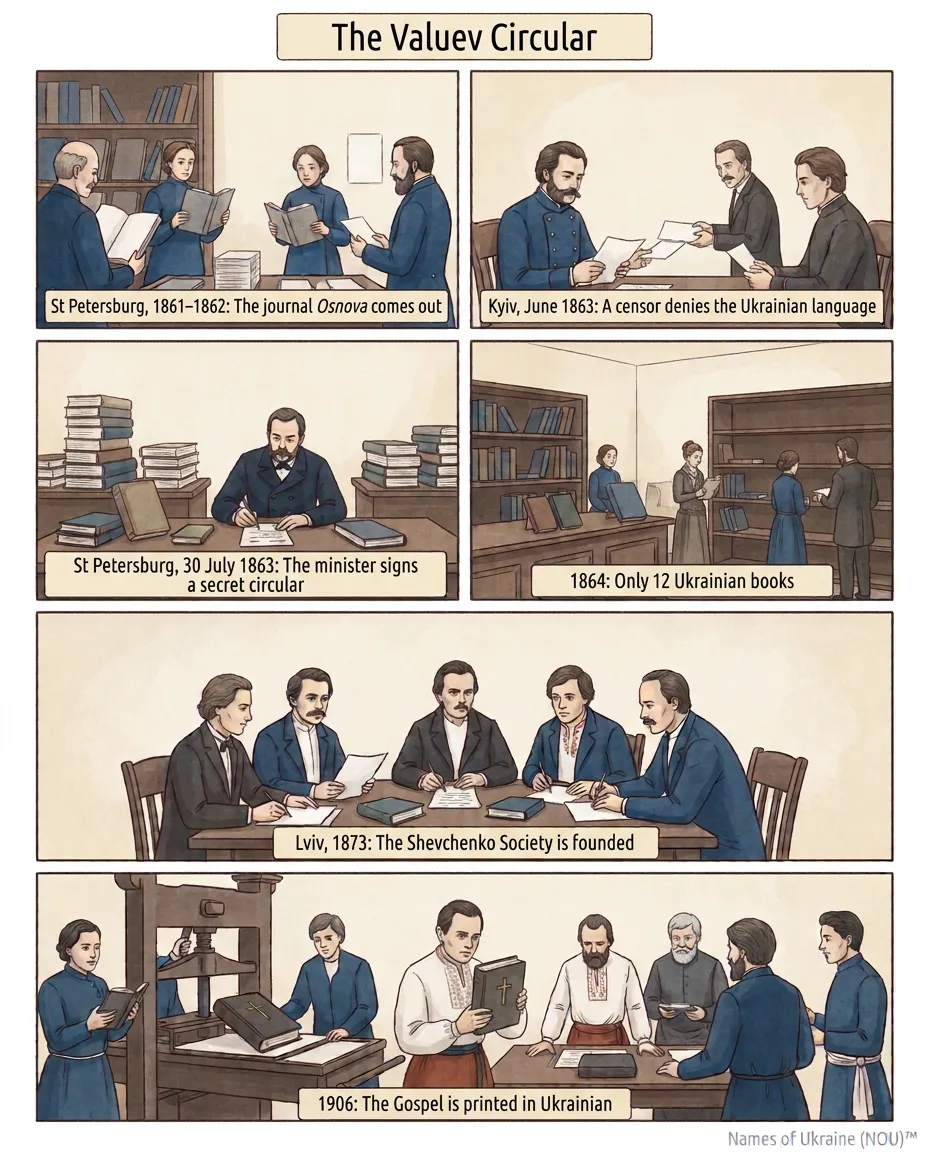
- 1861–1862 The Ukrainian journal Osnova comes out in St Petersburg
- January 1863 The Polish January Uprising against the russian empire begins
- June 1863 The Kyiv censor Orest Novytskyi writes to Valuev that there is no separate “Little Russian language”
- 30 (18) July 1863 The interior minister Petr Valuev signs the secret circular
- 1864 Only 12 Ukrainian books come out, against 40 in 1862
- 1873 The Shevchenko Society is founded in Lviv
- 1876 The Ems Ukaz bans even translations into Ukrainian, stage performances and bringing Ukrainian books in from abroad
- 1906 Pylyp Morachevskyi’s Gospel translation is at last printed
“Never existed, does not exist and cannot exist”
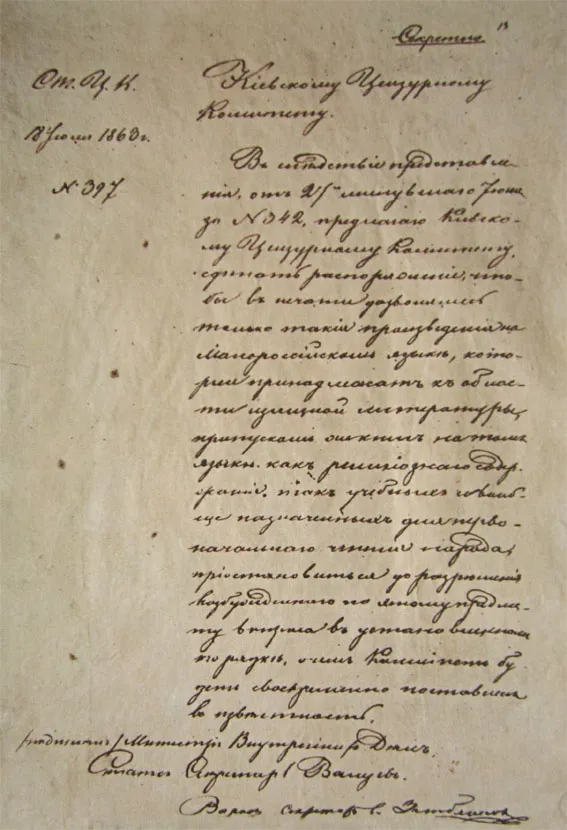
Can a language be abolished by order? In 1863 the russian empire tried. On 30 July (18 July in the old calendar) the interior minister Petr Valuev signed a secret circular for the censors. It said that “no separate Little Russian language has existed, exists or can exist”, and that Ukrainian was really just russian spoiled by Polish influence. The words were taken almost unchanged from a letter by Orest Novytskyi, head of the Kyiv Censorship Committee.
The Ukrainian word reaches the people
Pressure on the Ukrainian word began long before 1863: as early as 1720 a decree of Peter I in effect banned printing books in literary Ukrainian and ordered church books to be checked against Moscow editions so that there would be “no difference” in them. In the early 1860s more and more books were coming out in Ukrainian. The journal Osnova was published in St Petersburg, Ukrainian primers appeared, and the language was slowly finding its way into schools. Pylyp Morachevskyi translated the four Gospels into Ukrainian and asked the Synod to print them. Meanwhile, in January 1863, the Poles rose against the empire. The authorities feared the Ukrainians would follow, and the Ukrainian movement was branded a “Polish intrigue” in the press.
What the circular banned
The censors were told not to pass religious books, textbooks or books for the “first reading of the common people” in Ukrainian. Only fiction was allowed. Tsar Alexander II approved the circular, and it was sent to the censorship committees in Kyiv, Moscow, St Petersburg and other cities. The ban was meant to be temporary, but it lasted for decades.
Empty shelves
In 1862, 40 Ukrainian books came out in the russian empire; in 1863, 15; in 1864, 12; and after 1865 almost none. Censors often stopped any Ukrainian book, even though fiction was allowed on paper. The Sunday schools, where ordinary people learned to read, were closed. At the same time Ukrainophiles were invited into well-paid state posts in the Kingdom of Poland to work against the Polish movement; among them was the writer Panteleimon Kulish. Morachevskyi’s Gospel had to wait until 1906 to be printed.
From the circular to the Ems Ukaz
Ukrainians did not fall silent: they wrote fiction, worked on the literary language and compiled dictionaries. The centre of Ukrainian publishing moved to Austrian Galicia, and in 1873 the Shevchenko Society was founded in Lviv. Then in 1876 the Ems Ukaz carried the ban on and made it wider: now not only original works but also translations could not be printed in Ukrainian, plays and concerts in Ukrainian were banned, and Ukrainian books could no longer be brought in from abroad. Restrictions on the Ukrainian word in the russian empire lasted more than 40 years, until 1905–1906.
Debates and assessments
Historians disagree about what pushed the authorities to issue the circular. Some scholars see the request to print Morachevskyi’s Gospel as the immediate trigger. Others, such as the linguist Andrii Danylenko, argue that the translation was not the main cause and that the ban was largely shaped by the Polish uprising. Other motives are named too: fear of the Ukrainophiles and of peasant unrest, and disputes over Church Slavonic in church services. The writer and scholar Volodymyr Dibrova believes the circular cost Ukraine at least two generations of Ukrainian readers, but failed to destroy the Ukrainian movement.
Why it matters today
The Valuev Circular showed that the empire saw a threat in a primer, a Gospel and a simple book for a peasant in his own language. A language that supposedly “never existed, does not exist and cannot exist” was banned precisely because it was alive and growing. Ukrainians did not give up: they kept writing, compiled dictionaries, printed books in Lviv and lived to see the bans fall. Every book, lesson or song in Ukrainian today is something the empire once tried to stop by decree.