The Ems Ukaz
Bad Ems, Germany
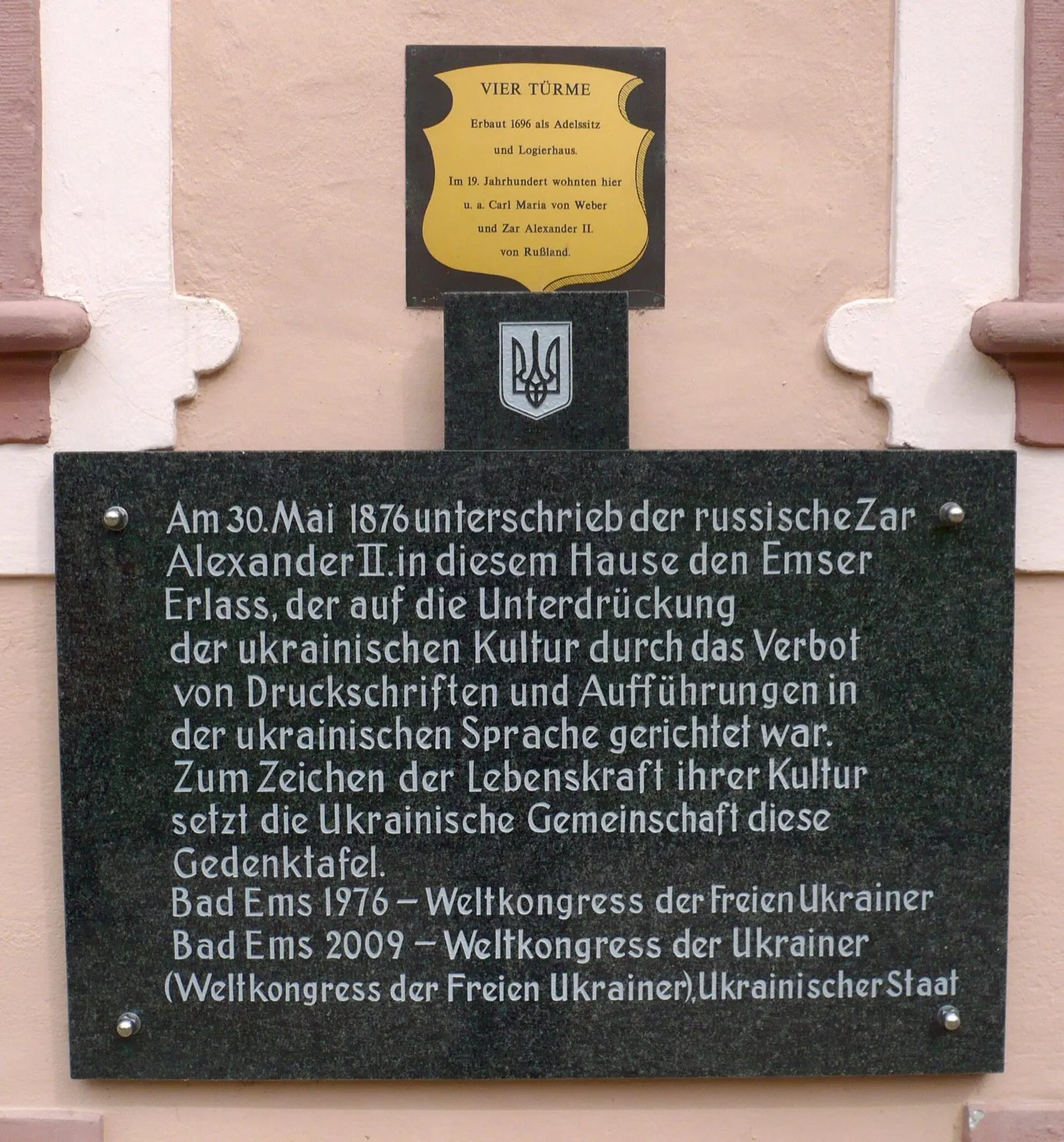
On 30 May 1876, at a spa in Ems, Germany, Tsar Alexander II secretly banned printing Ukrainian books, bringing them in from abroad, staging Ukrainian plays and even printing Ukrainian words under sheet music. The ban lasted almost 30 years.
Timeline
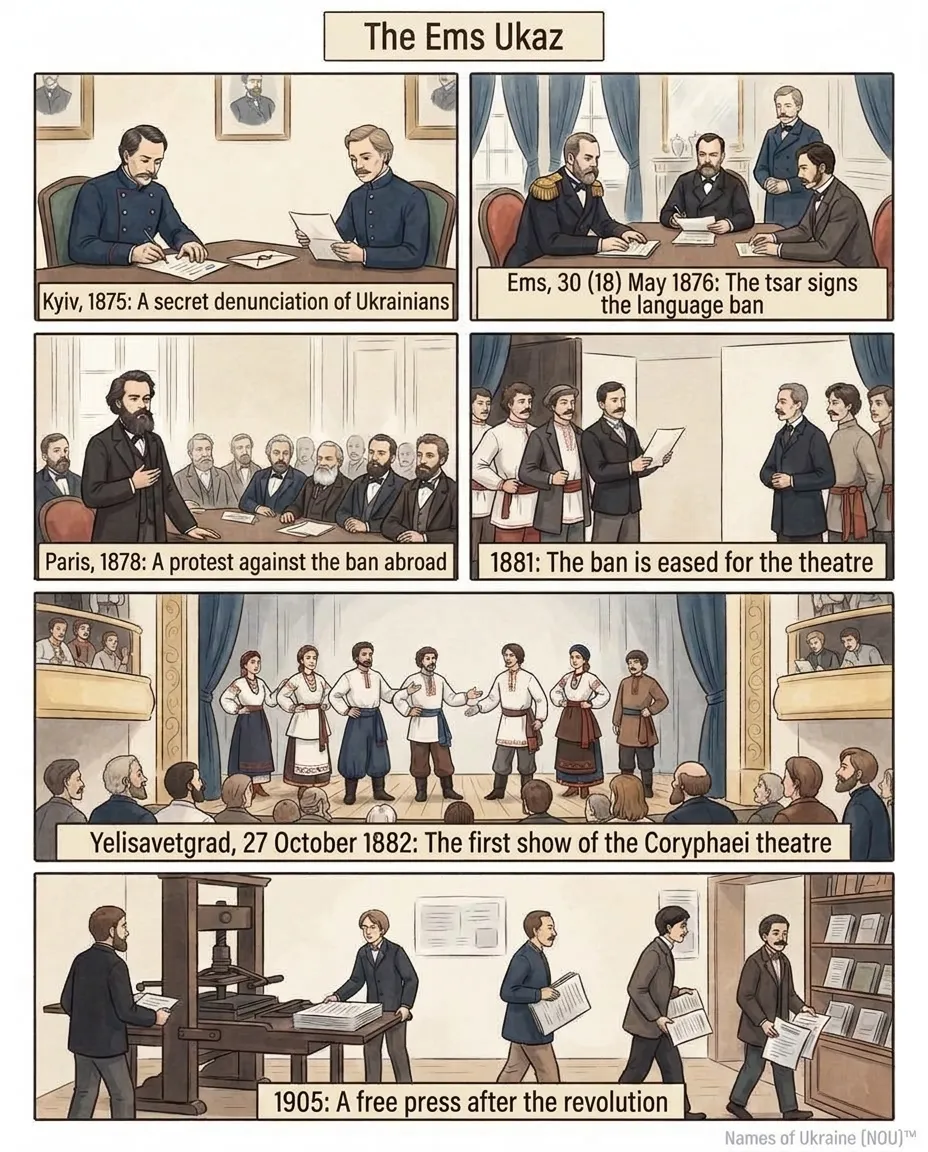
- 1875 After a denunciation by Mikhail Yuzefovich, the tsar orders a special conference to investigate “Ukrainophilism”
- 30 (18) May 1876 In Ems, Alexander II approves the conference’s secret decision, which became known as the Ems Ukaz
- 1878 Mykhailo Drahomanov tells the International Literary Congress in Paris about the decree
- 1881 Ukrainian plays are allowed again, but only with a governor’s special permission
- 27 October 1882 Marko Kropyvnytskyi’s troupe stages Natalka Poltavka in Yelysavethrad
- 1905 The St Petersburg Academy of Sciences advises the government to lift the restrictions on the Ukrainian printed word
- 30 (17) October 1905 A manifesto on political freedoms: the decree loses its force, though it is never repealed
Imagine not being allowed to print a book, put on a play or even print the words of a song under its music in your own language. That is what Emperor Alexander II secretly ordered on 30 (18) May 1876, while taking the waters at the German spa of Ems. It became known as the Ems Ukaz, and for almost 30 years it kept the Ukrainian word under lock and key in the russian empire.
The denunciation that started it
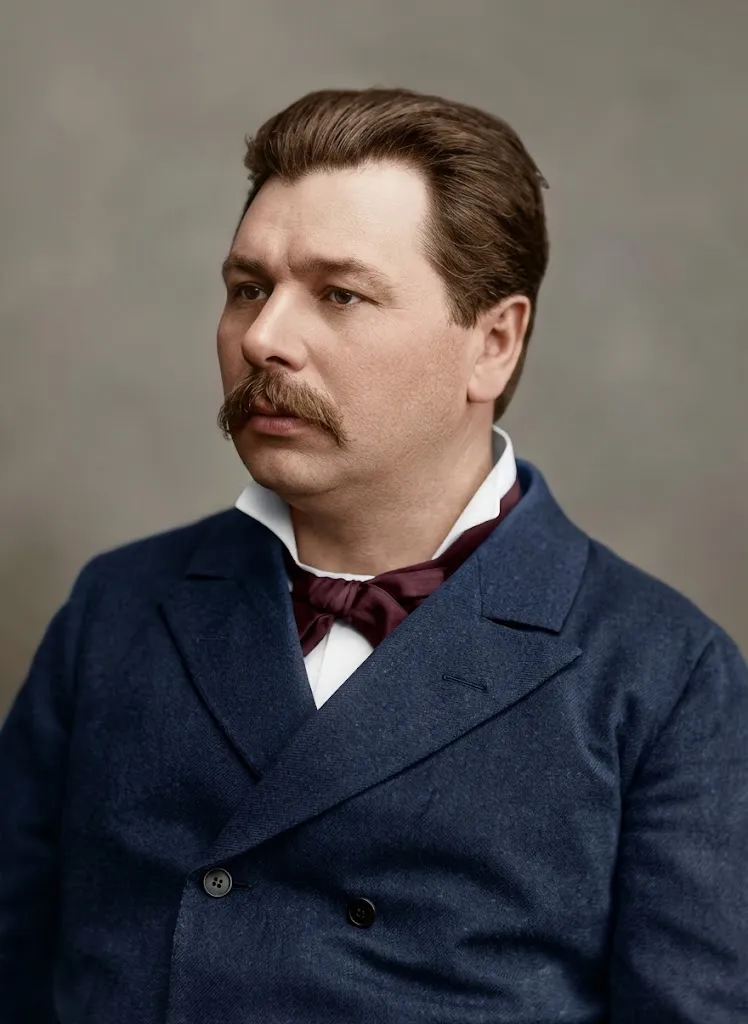
In 1875 Mikhail Yuzefovich, an assistant to the head of the Kyiv school district, denounced the “Ukrainophiles”: people who studied and developed the Ukrainian language and culture. On the tsar’s orders, ministers and the head of the secret police met as a special conference to investigate the movement. Yuzefovich drafted its decision himself, so people at the time called the decree “Yuzefovich’s law”. Strictly speaking it was not a law but a conference decision approved by the tsar, which is why historians also call it the Ems Act. It added to the Valuev Circular of 1863, which had already banned Ukrainian schoolbooks and religious books.
What the decree banned
The decree banned printing original works and translations in Ukrainian, bringing Ukrainian books in from abroad, staging Ukrainian plays, and holding concerts of Ukrainian songs and public readings. Ukrainian books were to be cleared out of school libraries, and children were not to be taught in Ukrainian. Only old historical documents could still be printed, and literature only in russian spelling and with a censor’s approval. The decree was secret, and the authorities never published its full text.
The ban even reached sheet music: song words in Ukrainian could not be printed under the notes. Yet Mykola Lysenko still wrote his operas only in Ukrainian. One number shows the effect: in 1877 not a single Ukrainian book came out in the russian empire.
A blow to the Kyiv Hromada
The decree struck the Kyiv Hromada, a secret circle of Ukrainian intellectuals, and its friends. The hromadas were banned, and in Kyiv the newspaper Kievskii telegraf was closed, along with the branch of the Geographical Society that Pavlo Chubynskyi, who wrote the words of Ukraine’s anthem, had helped found. Chubynskyi and Mykhailo Drahomanov were branded dangerous “agitators”, banned from living in Ukraine or in the capitals, and put under secret watch.
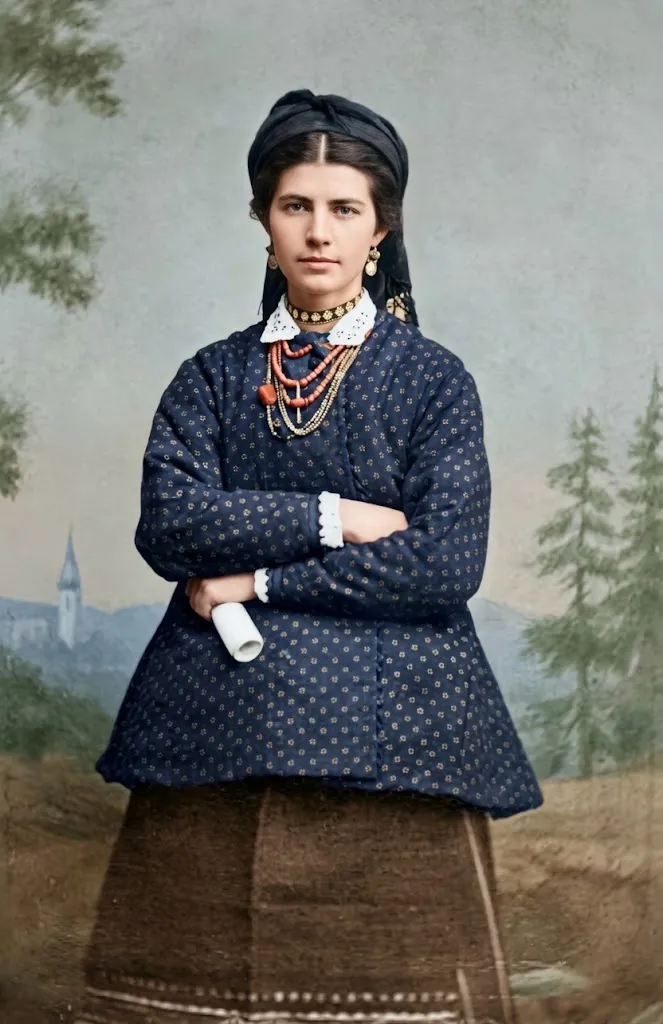
Drahomanov lost his post at Kyiv University and settled in Geneva, to speak to Europe on behalf of the Hromada from there. In 1878, at the International Literary Congress in Paris, he told the world about the Ems Ukaz. Geneva was also where, in 1880, Panas Myrnyi and his brother published their novel Do Oxen Low When Their Mangers Are Full?, which could not be printed at home.
The stage falls silent, then returns
For five years after the decree Marko Kropyvnytskyi acted in operetta in russian, because Ukrainian plays were banned. In 1881 the ban was eased: Ukrainian plays were allowed again, but a governor had to approve each performance, and troupes playing only in Ukrainian stayed banned. In the same year Oleksandr Konyskyi published the almanac Luna, the first Ukrainian publication in russian-ruled Ukraine after the decree.
In the autumn of 1881 Kropyvnytskyi turned a russian troupe in Kremenchuk into a Ukrainian one, and on 27 October 1882 in Yelysavethrad (today Kropyvnytskyi) his troupe performed Natalka Poltavka. That day is seen as the birthday of Ukrainian professional theatre.
How the ban fell
In the early 20th century Ukrainians campaigned to have the decree lifted. In 1905 the St Petersburg Academy of Sciences backed them: in a report “On lifting the restrictions on the Little Russian printed word”, the academicians advised the government to end the ban. That same year Olena Pchilka was part of a Ukrainian delegation in St Petersburg that demanded the head of government, Sergei Witte, end the ban on Ukrainian printing and schools.
On 30 (17) October 1905, during the revolution, Tsar Nicholas II signed a manifesto on political freedoms, including freedom of speech. Ukrainian newspapers and publishers of Ukrainian books soon appeared. The Ems Ukaz lost its force without any announcement, but it was never officially repealed.
Why it matters today
The Ems Ukaz shows that the empire feared not weapons but books, songs and plays in people’s own language. For almost 30 years the Ukrainian word was banned, yet Ukrainians printed books abroad, brought their theatre back to the stage and kept pushing until the ban fell. The language we hear today at school, in the theatre and in books survived thanks to them. Looking after it carries on their work.