Daria Bilodid
Judoka, two-time world champion
At 17 she beat the Olympic champion, and then the reigning world champion in the final. That is how Daria Bilodid from Kyiv became the youngest world champion in judo history, in Baku in 2018. She went on to win a second world title and an Olympic bronze in Tokyo.
Key accomplishments
- Olympic bronze medallist (Tokyo, 2021)
- Two-time world champion (Baku, 2018; Tokyo, 2019); the youngest world champion in judo history
- Two-time European champion (Warsaw, 2017; Zagreb, 2024, in the 57 kg class) and silver medallist (Lisbon, 2021)
- European Games winner (Minsk, 2019); best female judoka of the 2019–2020 season according to the International Judo Federation
- Honoured Master of Sport of Ukraine (2018); Order of Princess Olga, 3rd (2019) and 2nd (2021) class
Seventeen and gold
Can you be the best in the world at 17? On 20 September 2018 in Baku, 17-year-old Daria Bilodid stepped onto the mat at the World Championships in the under-48 kg class. In the semi-final she beat the Olympic champion, Argentina’s Paula Pareto, and in the final she threw the reigning world champion, Japan’s Funa Tonaki, for ippon with her trademark ouchi-gari. It was her 30th win in a row. That made Bilodid the youngest world champion in judo history and the first Ukrainian woman to win the title. After the final she ran off the mat in tears and into the arms of her mother, who was coaching her from the side of the mat.
Judo in the family
Daria Bilodid was born on 10 October 2000 in Kyiv. Her parents didn’t want her to take up judo and sent her to rhythmic gymnastics first. But after her very first judo session, Daria decided it would be her life. Her coaches were her own parents: she is the daughter and pupil of Hennadii Bilodid and of her mother. She first became a world champion at 14: in 2015 in Sarajevo she won the cadet world title in the under-44 kg class. That made her the second-youngest cadet world champion in history: only Japan’s Sarah Asahina, in 2011, had been younger, and by just three days. In 2017, at 16, she won the European Championships in Warsaw. In the 2018 season, before Baku, she had already won five events on the International Judo Federation’s World Tour.
A second title and an Olympic bronze
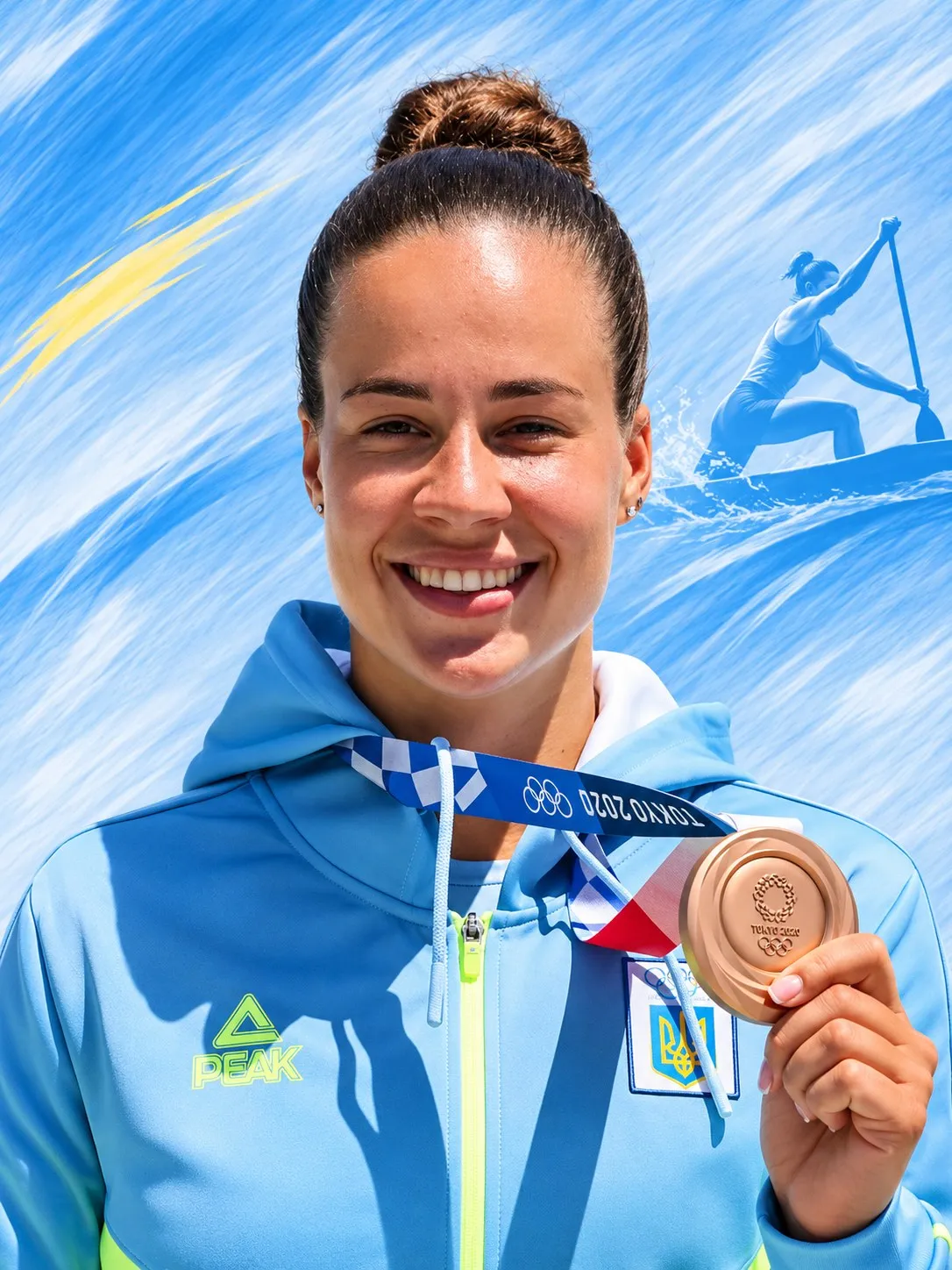
Bilodid became world champion again in Tokyo in 2019, the youngest two-time world champion in judo history. The International Judo Federation named her the best female judoka of the 2019–2020 season. At the Tokyo Olympics in 2021 she won a bronze medal: Ukraine’s first of those Games, and the first Olympic medal in the history of Ukrainian women’s judo.
A new weight
Later Bilodid moved up to the under-57 kg class, and in 2024 in Zagreb she became European champion for the second time. At the Paris Olympics she lost in the round of 16 and shared ninth place. After Paris she took a break from competition and tried football: on 18 April 2025 she made her debut for Kharkiv’s Metalist 1925, coming on in the 87th minute of a Ukrainian league match against Zhytomyr’s Ladomyr (won 6-0); in the 90th minute she took a shot, but she was offside. In August 2026 she returned to training with Ukraine’s national judo team.
Why it matters today
Bilodid proved that a Ukrainian can be the best in the world at 17 and beat people who had been at the top for years. She was the first Ukrainian woman to raise Ukraine’s flag over a world judo championship, and she showed girls that this sport is for them too. Her path began with her parents as coaches, a reminder that champions are made by daily work and the support of people close to them. For anyone just stepping onto the mat, her story is proof that age is no barrier to great wins.