Oleksandra Oliynykova
Tennis player, Ukraine’s voice on court
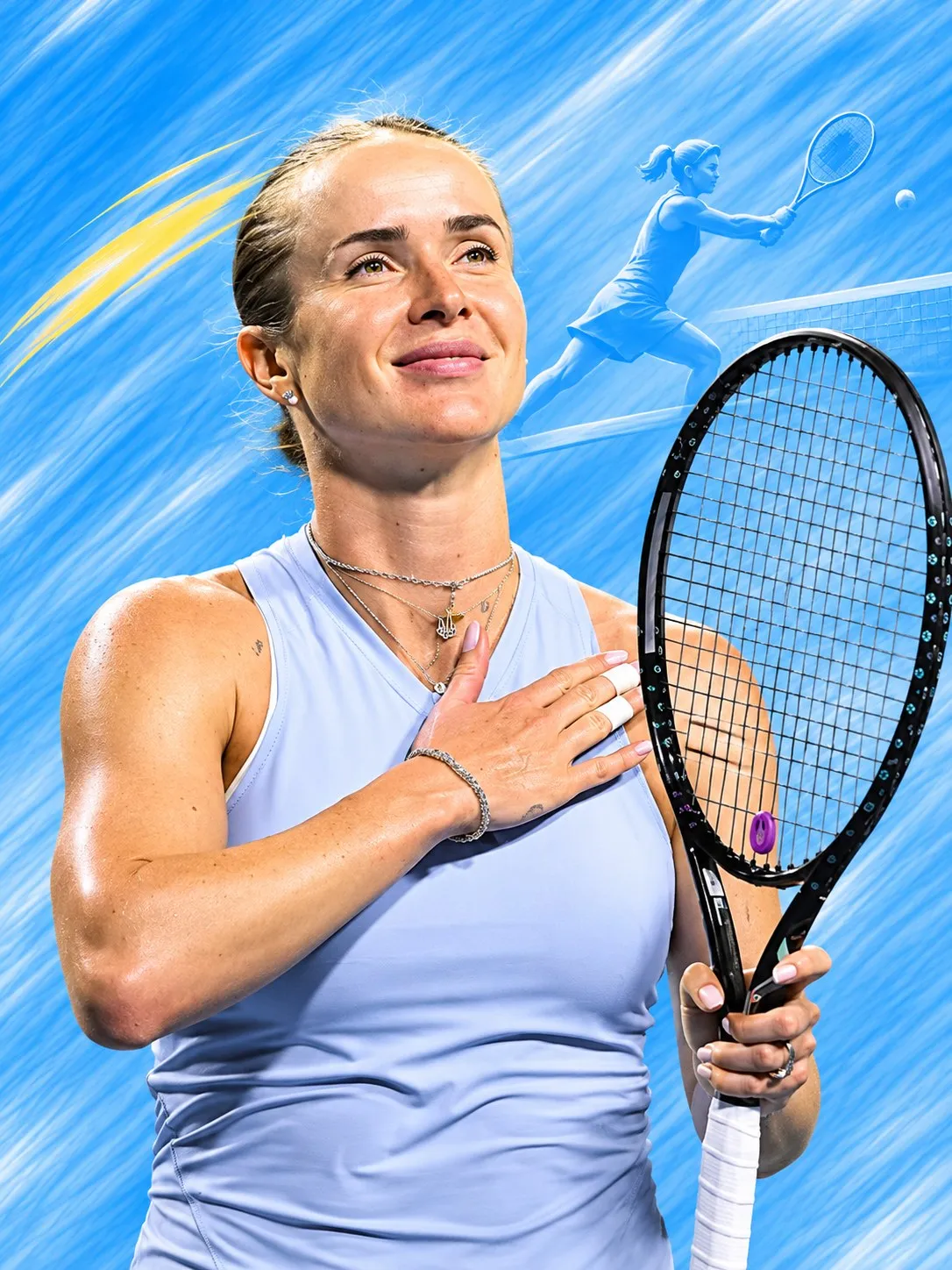
As a child she played under the Croatian flag, then took back her Ukrainian citizenship. Kyiv-born Oleksandra Oliynykova has become Ukraine’s voice in tennis: at tournament after tournament she speaks out about russia’s aggression, and she raises money for the unit her father and coach fights in.
Key accomplishments
- Three WTA 125 titles in the 2025 season: Tolentino, Tucumán, Colina
- Grand Slam debut at the 2026 Australian Open against defending champion Madison Keys
- Third round at Roland-Garros (2026)
- World No. 41 (2026), her career high as of November 2026
- Co-founder of drones4ua.org, a fundraiser for drones for Ukraine’s armed forces
A Croatian flag, a Ukrainian passport
Oleksandra Oliynykova was born in 2001 in Kyiv. When she was ten, her family left for Croatia: her father, Denys Oliynykov, had come under pressure for protesting against Viktor Yanukovych’s government. A coin chose the country: only her father had a Schengen visa, and of the places they could reach, only Croatia and Serbia had a tennis tradition. Her father tossed a coin, and Croatia won. There she took up tennis seriously and, to make her way in the sport easier, became a Croatian citizen. In 2018 she won her first ITF title under the Croatian flag. In 2021, before the full-scale invasion, she decided to take back her Ukrainian citizenship.
The year it all came together
Her father, who had coached her since she was 16, went back to Ukraine in 2024 and joined the armed forces. She started travelling to tournaments on her own. In 2025 Oliynykova won three WTA 125 titles and broke into the world top 100. She was 24 years and 10 months old, the oldest Ukrainian ever to debut in the top 100, and the 21st Ukrainian to reach it. In January 2026, at the Australian Open, she played her first ever main-draw match at WTA level, against the defending champion, Madison Keys. She led 4–0 in the first set but lost 6–7, 1–6. Her father watched from Ukraine. Her first WTA main-draw win came soon after, on 1 February 2026 in Cluj-Napoca, Romania: the match against Mayar Sherif lasted 2 hours 56 minutes, and she came back from 1–3 down in the third set to win 6–7, 6–4, 6–4.
Ukraine’s voice on court
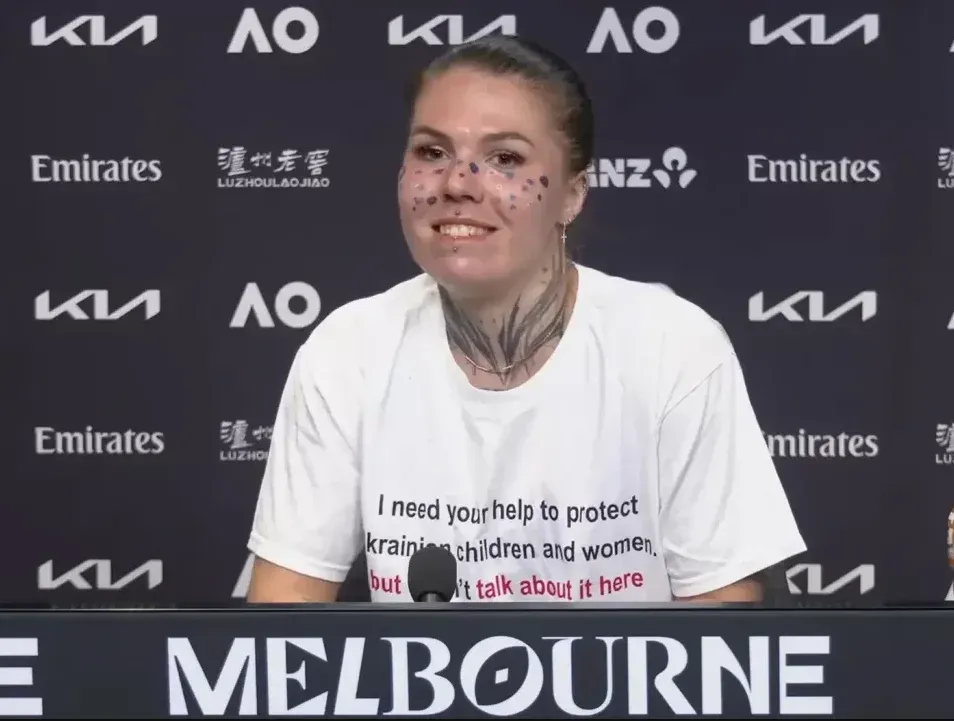
As of 2026, Oliynykova lived and trained in Kyiv. Before the Australian Open she described her flat during the blackouts: no electricity, no water, no heat. She came to her press conference in Melbourne in a T-shirt that read: “I need your help to protect Ukrainian children and women, but I can’t talk about it here.” Since then, at every tournament, she has reminded reporters and fans of the war russia started against Ukraine, and she doesn’t shake hands with russian or Belarusian opponents.
In April 2026 Oliynykova played for Ukraine’s team in the Billie Jean King Cup for the first time: she beat Poland’s Linda Klimovičová 6–4, 6–1, winning the fourth point as Ukraine beat Poland 4–0. At Roland-Garros in 2026 she reached the third round together with Elina Svitolina, Marta Kostyuk and Yuliia Starodubtseva: only the second time in the Open era that four Ukrainian women had reached that stage of a Grand Slam. There she lost to russia’s Diana Shnaider, and afterwards spoke about the war again: she won’t stay silent, because her future is in Ukraine. That year she climbed to No. 41 in the world, her career high.
Money for her father’s unit
Oliynykova uses her fame to raise money for the unit her father serves in. In the summer of 2026 she planned a charity auction for it in Toronto, but the WTA cancelled it under its rules on player credentials. That same summer she gave all her Toronto prize money to the army: 18,420 dollars, about 829,000 hryvnias, shared between two units that fight with aerial and ground drones.
Why it matters today
Oliynykova could have stayed a Croatian player, but in 2021, before the full-scale invasion, she chose Ukraine. She plays for Ukraine at the biggest tournaments and won’t let the world get used to the war: “Some players are tired to speak about this now. I’m not.” By training in Kyiv even without electricity or heat, she shows that Ukraine lives and competes in spite of the war. She turns her fame into help for the unit her father serves in, and shows that an athlete can be her country’s voice.