The Battle of Poltava
Poltava, Ukraine
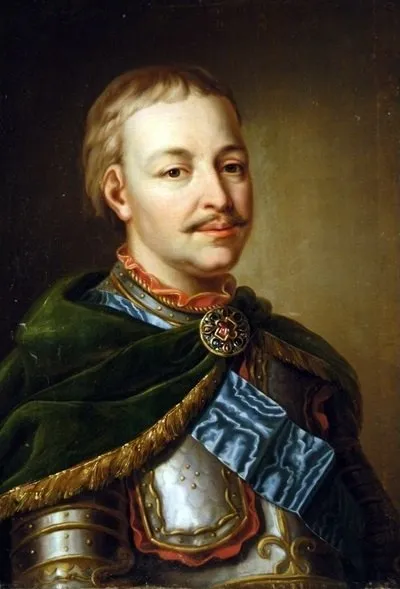
Ukrainian Cossacks served on both sides in the Poltava campaign. On 8 July 1709, Peter I’s army defeated Charles XII, Ivan Mazepa’s ally. After the defeat, the tsar tightened his control over the Hetmanate.
Timeline
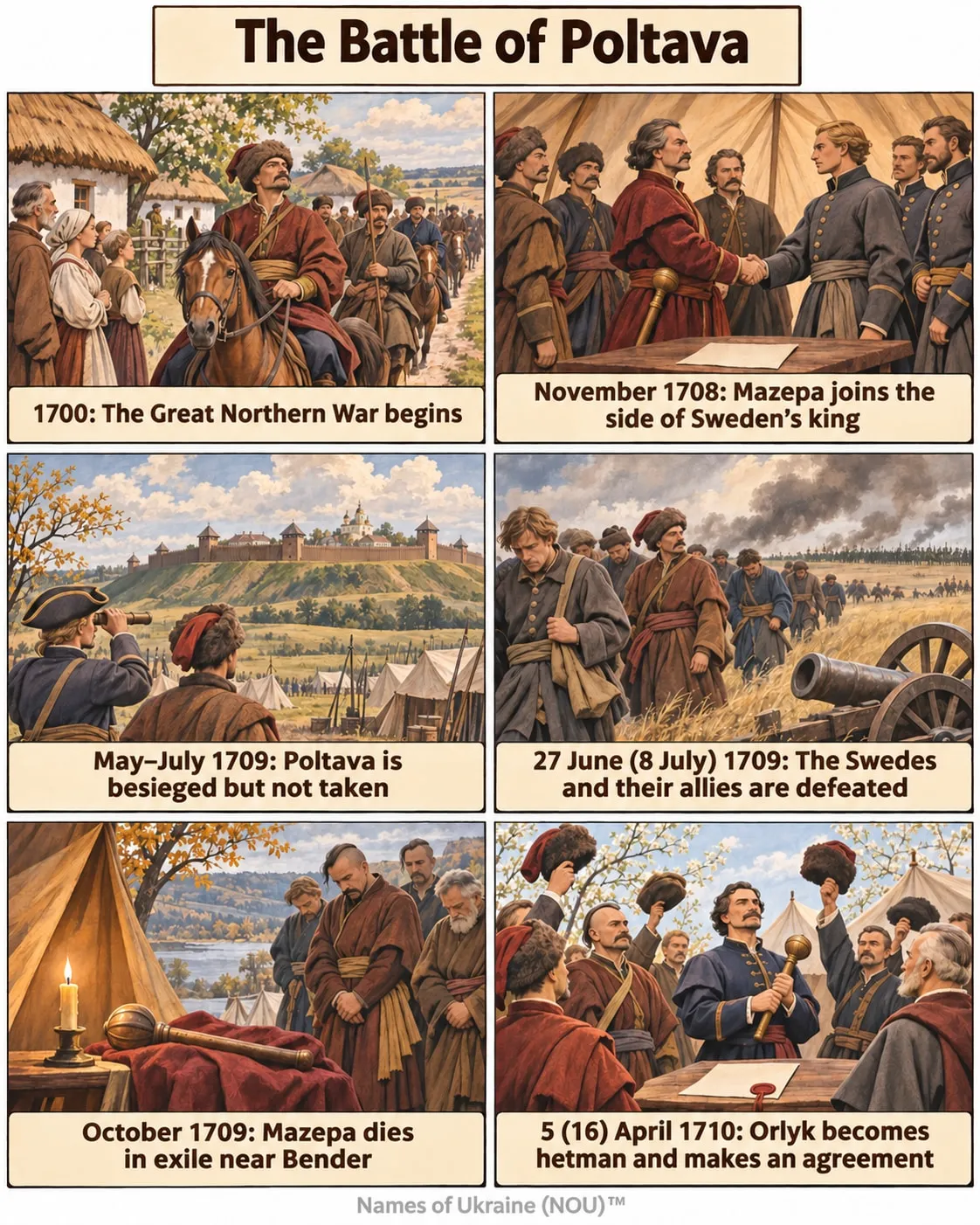
- 1700 The Great Northern War begins between Sweden and its opponents, including Muscovy
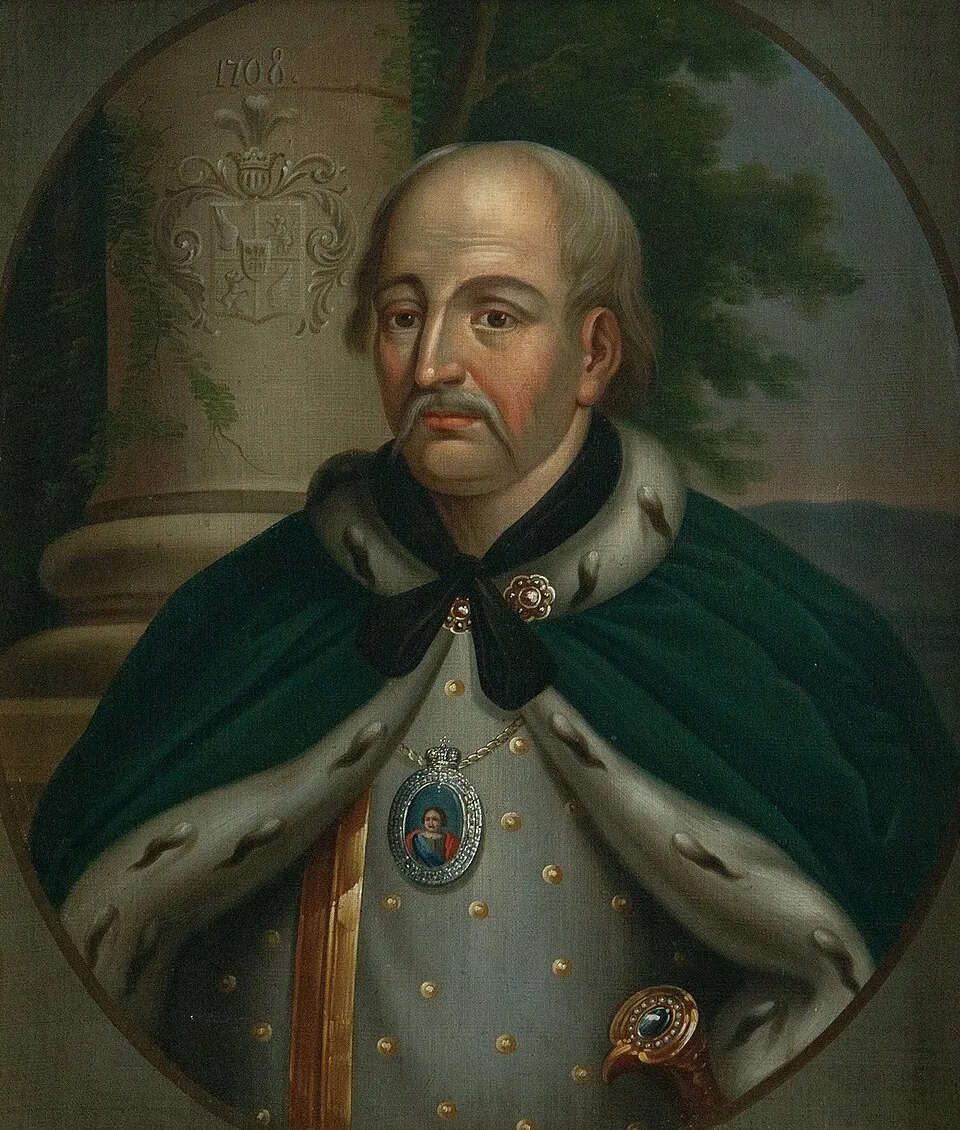
- November 1708 Ivan Mazepa joins the side of Sweden’s King Charles XII
- May–July 1709 Swedish and Cossack forces besiege Poltava but fail to take the city
- 27 June (8 July) 1709 Peter I’s army defeats the Swedes and their allies at Poltava
- October 1709 Mazepa dies in exile near Bender
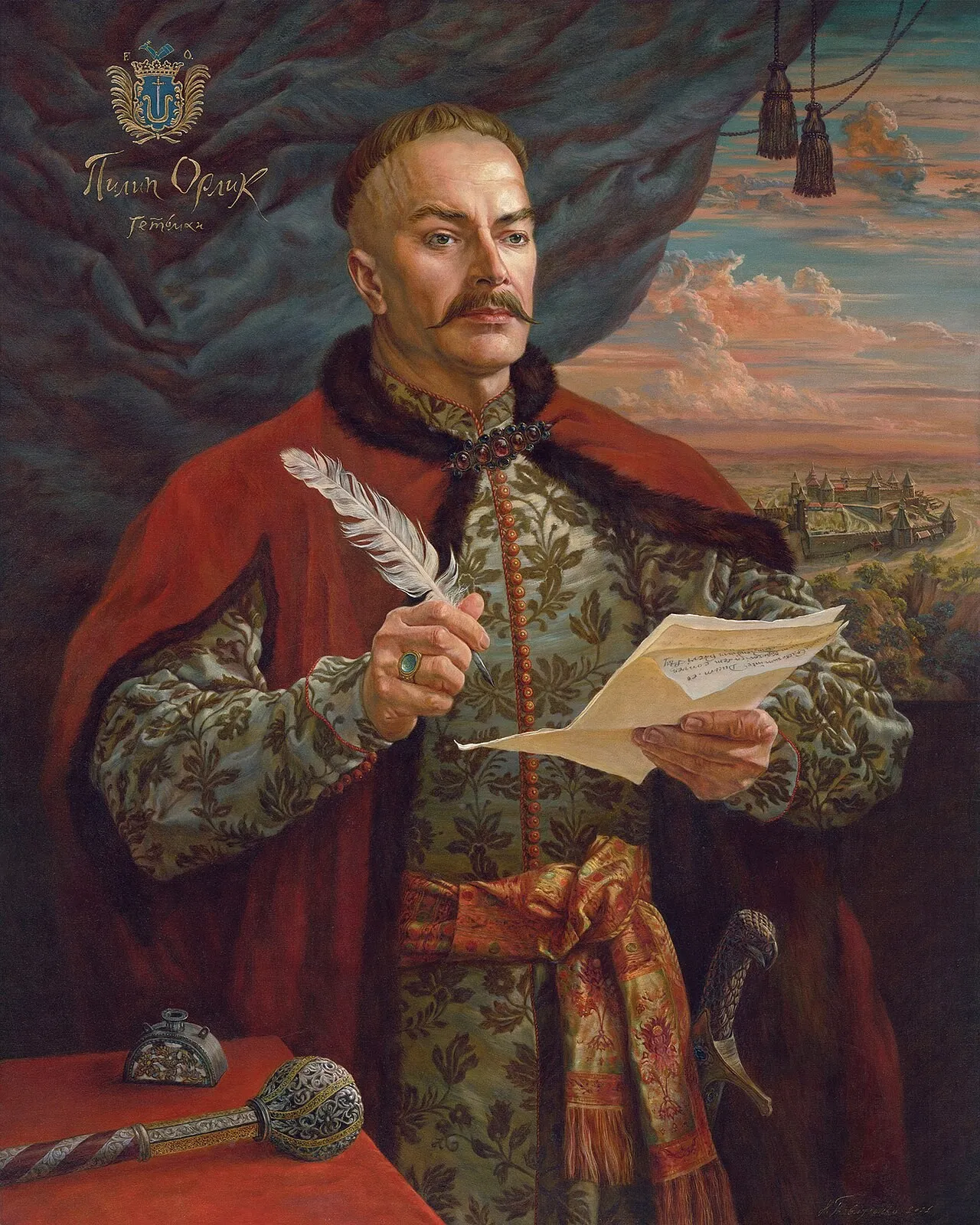
- 5 (16) April 1710 Pylyp Orlyk becomes hetman in exile and makes an agreement on the rights of the Zaporozhian Host
In the spring of 1709, companies from the southern part of the Poltava Regiment helped the Zaporozhians reach the forces of Ivan Mazepa and Charles XII. A Muscovite garrison held the city of Poltava itself. By the time the Swedes and Zaporozhians reached the city, both armies had Cossack allies.
An alliance for the Cossack state
The Great Northern War began in 1700 as a struggle between Sweden and a coalition of states for influence in the Baltic region. Cossack regiments were made to fight far from home. Seeing the autonomy of the Hetmanate under threat, Mazepa negotiated an alliance with Charles XII and openly joined his side in autumn 1708. The Zaporozhians, led by their elected commander Kost Hordiienko, joined the alliance at Velyki Budyshcha in the spring of 1709.
The siege of Poltava lasted into early July. The Zaporozhians took part in the siege, while some of Mazepa’s Cossacks operated across the Vorskla River. Cossacks under Hetman Ivan Skoropadskyi, an ally of Peter I, blocked the Swedish route to Right-Bank Ukraine.
Defeat and its consequences
The battle took place on 27 June in the Julian calendar (8 July in the Gregorian calendar). Charles XII had suffered a foot wound before the battle, and the Swedish army was outnumbered and outgunned. After the defeat, the Swedes and their allies retreated towards the Dnipro. At Perevolochna, Mazepa, Charles XII and Hordiienko crossed the river with some of their troops and reached Ottoman territory. On 11 July the bulk of the retreating Swedish army surrendered at Perevolochna.
The Great Northern War continued until 1721. After Poltava, Skoropadskyi asked the tsar to confirm Cossack rights. Peter I placed a resident, his own representative, at the hetman’s court to supervise the Cossack government. In exile, Pylyp Orlyk continued to defend the rights of the Zaporozhian Host. In 1710 he made the agreement now known as Pylyp Orlyk’s Constitution.
Debates and assessments
The Battle of Poltava is often called a turning point in the Great Northern War: the victory weakened Sweden and strengthened Muscovy, which later became the russian empire. For Ukraine, its consequences also included the loss of autonomous rights and tighter outside control.
Imperial accounts called Mazepa a traitor to the tsar. Ukrainian historians explain his alliance with Sweden as an attempt to protect the Hetmanate’s rights and Cossack state. Sources document Cossack involvement on both sides of the campaign. Historians differ on which Cossack units fought in the main battle itself.
Why it matters today
Poltava became a symbol of the cost Ukraine paid in trying to preserve its political freedom. After the defeat, Cossack leaders did not abandon self-government: Orlyk continued the struggle through diplomacy and a legal pact. The story helps us see the fight for freedom as a society’s right to choose its own future, not as “treason.”