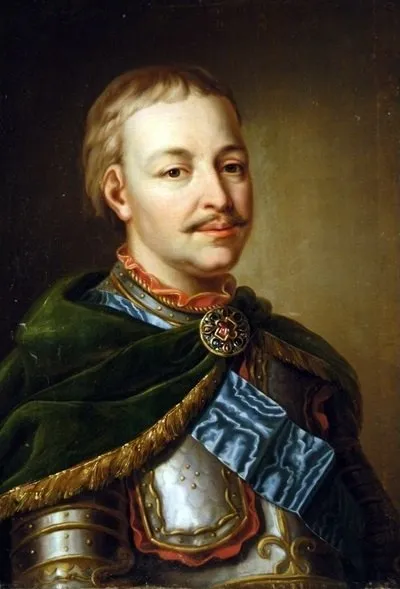
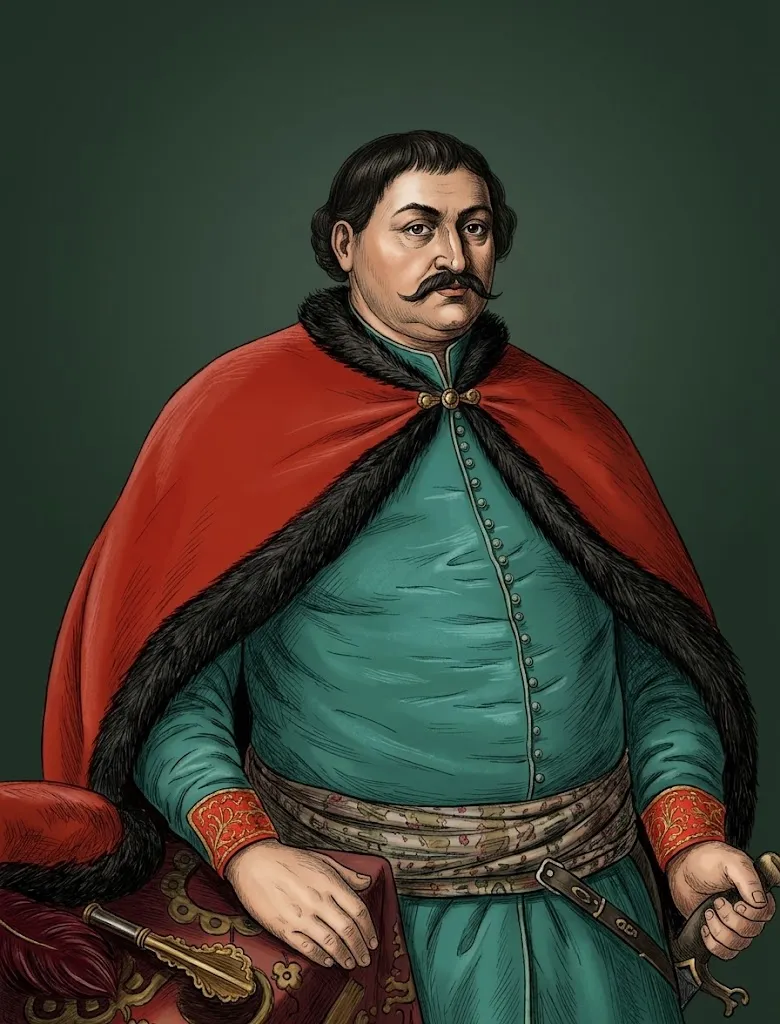
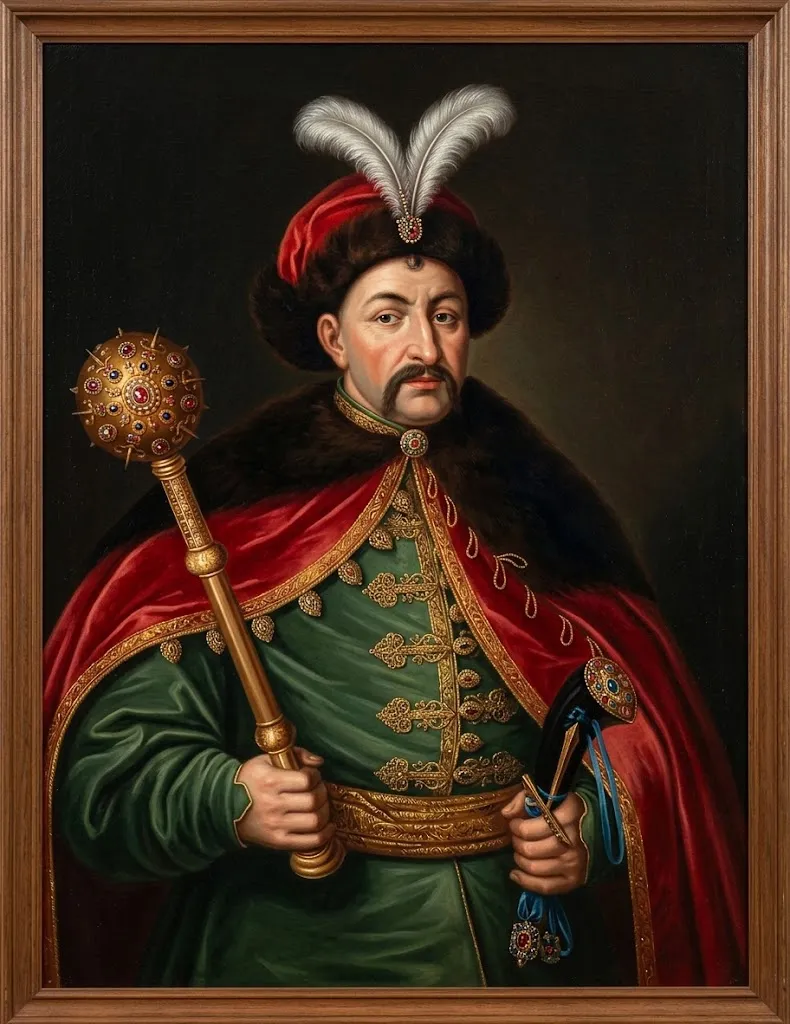
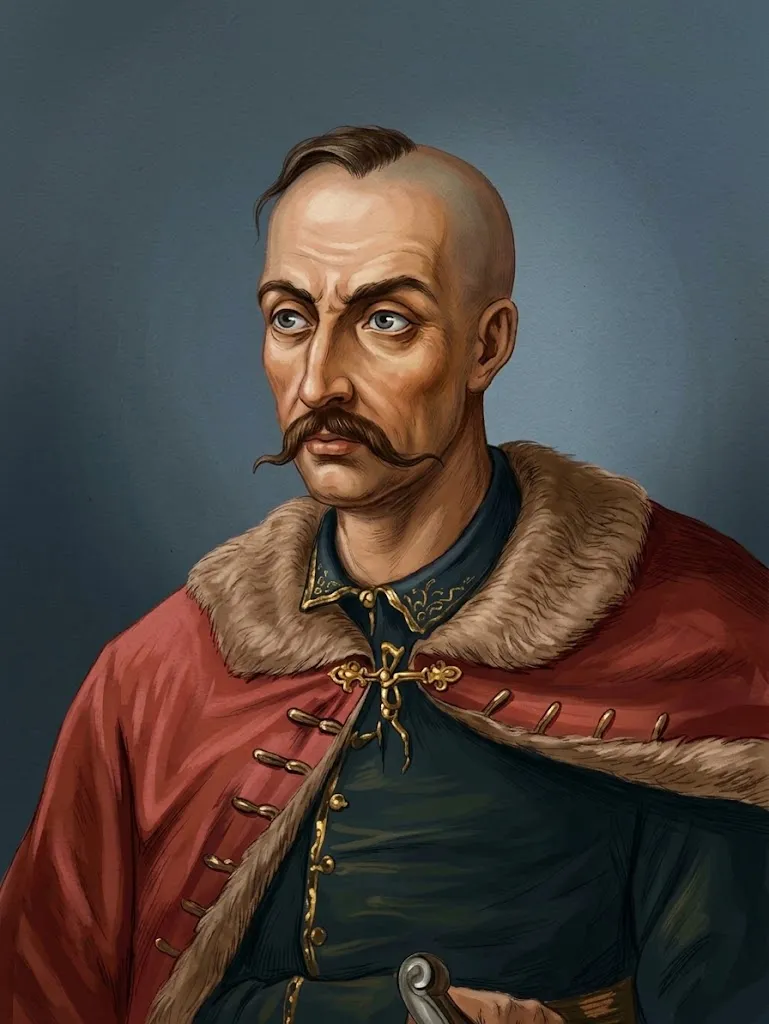
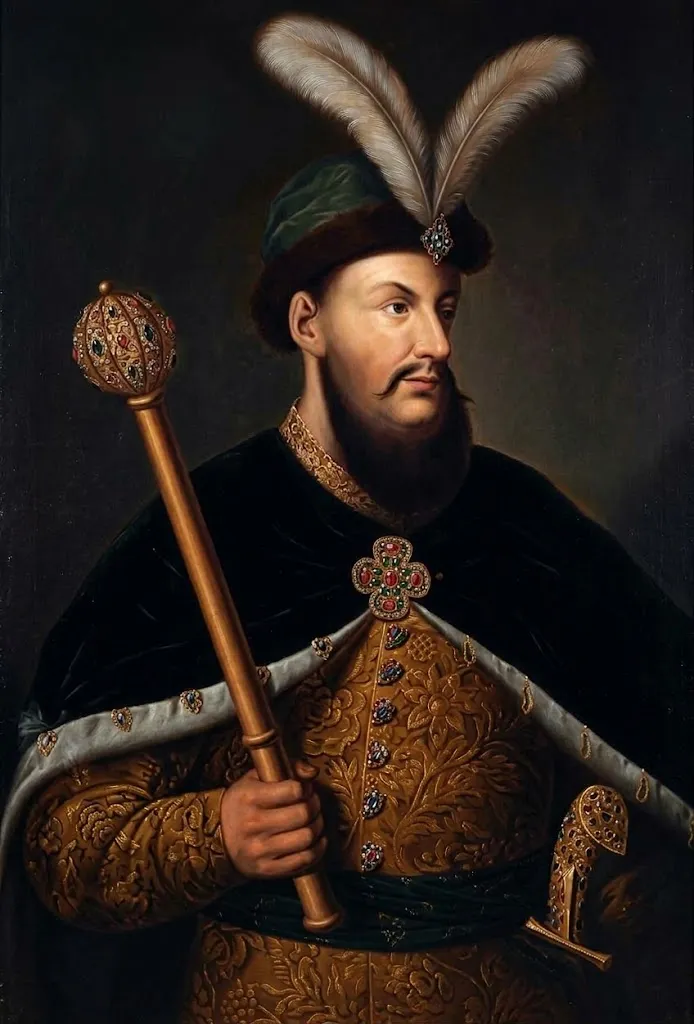
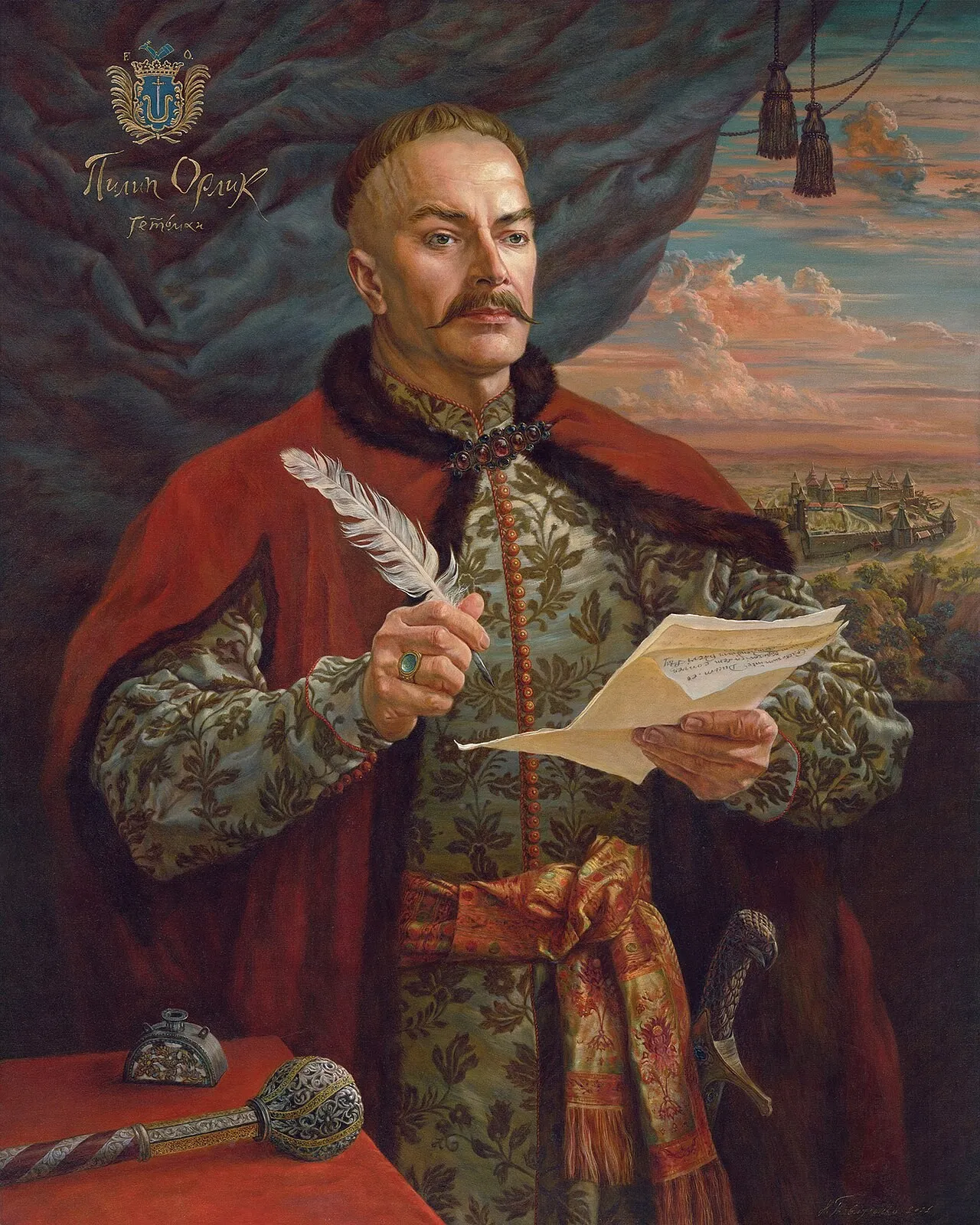
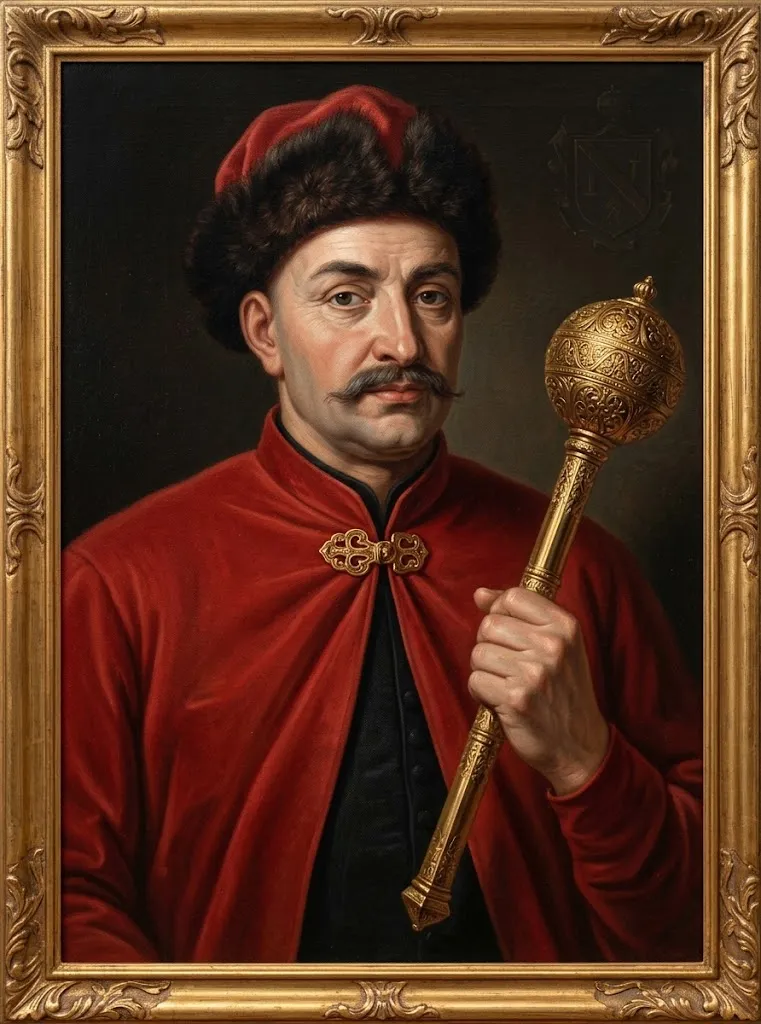
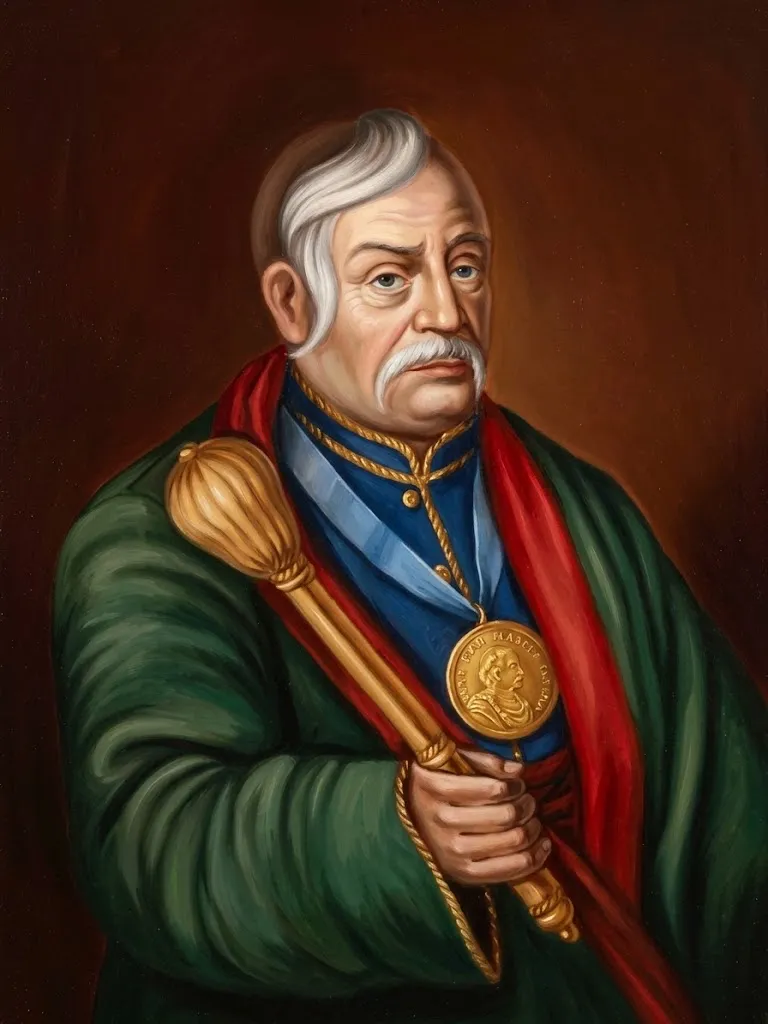
Ivan Skoropadskyi
Hetman, Mazepa’s successor
He was elected hetman a few days after Baturyn was destroyed, and within six weeks he let its people settle on the ruins again. For 14 years Ivan Skoropadskyi led the Hetmanate under Peter I’s watch, and to the end he kept asking the tsar to respect Cossack rights.
Key accomplishments
- Hetman of the Zaporozhian Host on both banks of the Dnipro (1708–1722)
- Colonel of Starodub (1706–1708)
- Submitted the Reshetylivka Articles of 1709 to Peter I: 14 points on the Hetmanate’s rights
- Allowed the people of ruined Baturyn to settle on the site of the town again
- Built a stone church of St John the Baptist in Starodub (1720)
A hetman elected by the ashes
Imagine this: Menshikov’s troops have just destroyed the hetman’s capital, Baturyn, together with its people. A few days later, in Hlukhiv, surrounded by russian regiments, a new hetman is elected: 62-year-old Ivan Skoropadskyi. Within six weeks he issues a decree allowing Baturyn’s ruined townspeople to settle on the site of the town again. For a newly elected hetman this was a risky move: it could anger both Menshikov and the tsar himself.
From clerk to colonel
Ivan Skoropadskyi was born in Uman in 1646. After the town was laid waste in 1674, he moved to Left-Bank Ukraine and began as a clerk in the chancery of Hetman Ivan Samoilovych. He went on to become regimental secretary in Chernihiv and then one of the hetman’s senior officers. He carried the hetmans’ missions to Moscow, the Crimea, Poland and the Zaporozhian Sich. In 1706 Ivan Mazepa made him colonel of Starodub.
Between Mazepa and the tsar
In the autumn of 1708 Mazepa went over to King Charles XII of Sweden and called on Skoropadskyi to join him. Skoropadskyi did not follow him and went to Hlukhiv, where the tsar had summoned the officers. At the council on 17 November 1708 he declined the mace, as custom required, pleading his age, and put forward the Chernihiv colonel Pavlo Polubotok instead. But it was Skoropadskyi who was proclaimed hetman. Peter I never fully trusted him, and Hlukhiv became the new hetman capital. In 1709 Skoropadskyi led Cossack regiments at Poltava on the tsar’s side.
Fourteen points for the tsar
After Poltava the hetman handed Peter I a petition of 14 points, the Reshetylivka Articles. He wanted the tsar to set down the Hetmanate’s rights and liberties in clear terms. Peter answered with general promises, never approved the articles and confirmed Skoropadskyi as hetman only in 1710. A tsar’s resident kept watch on the hetman, russian regiments were stationed in Ukraine, and in 1709 the Zaporozhian Sich was destroyed on the tsar’s orders. Skoropadskyi wrote to Peter again and again, asking him to ease the burden on Ukrainians.
The last journey to Moscow
Early in 1722 the old and ailing hetman set out for Moscow to defend the rights of Ukrainians within the empire. The journey achieved nothing. In May, Peter I set up the Little Russian Collegium, whose russian officials took over the hetman’s powers. Ivan Skoropadskyi died in Hlukhiv on 14 July 1722. He was buried at the Hamaliivka Monastery, founded by his wife Anastasiia.
Debates and assessments
For a long time Skoropadskyi was seen as a weak and compliant hetman. He did not follow Mazepa, and the tsar, by a widely held view, chose him precisely because he considered him a weaker politician than other officers. Under his rule Moscow’s grip on the Hetmanate tightened, and his protests changed little. He became the largest landowner in the Hetmanate, and under him commoners who complained about the powerful were punished. Other scholars point out that the hetman sought to preserve the “Cossack order” and appealed to rights won as far back as Bohdan Khmelnytskyi, and that as a devout man he firmly defended the rights of churches and monasteries. In his first decrees after 1708 he called Mazepa a traitor, but over the years that label disappears from his documents.
Why it matters today
Ivan Skoropadskyi raised no uprising, but he led the Hetmanate through its hardest years, after Baturyn and Poltava. He kept the hetman government in place, reminded the tsar again and again of the rights won under Khmelnytskyi, and, already ill, travelled to Moscow to defend them. His example shows that fighting for your own state is not only about battles: it is also the stubborn, everyday defence of your rights, even when the power is on the other side.