1925–2015
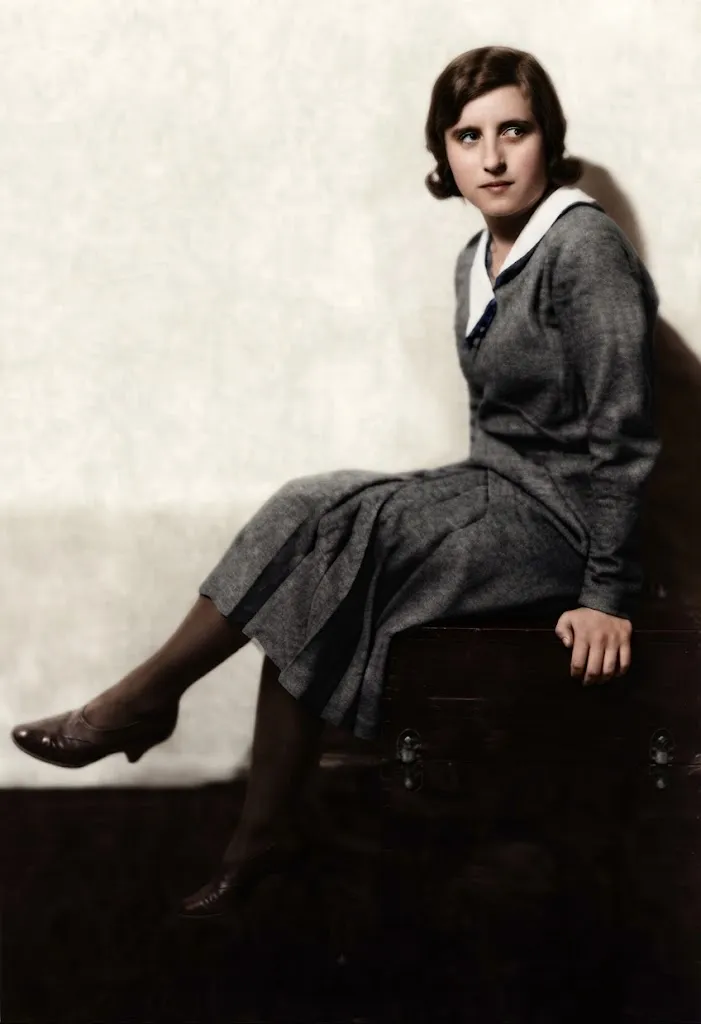
Hanna Popovych
Underground courier and typist «Ruzha»
When Soviet troops surrounded the hideout, 26-year-old «Ruzha» shielded her commander with her body and lost her left arm. Hanna Popovych was a courier and typist for the Ukrainian underground near Nadvirna; she was captured twice and served ten years in Soviet camps. The film Zhyva tells her story.
Key accomplishments
- Courier for the Ukrainian underground from 1943; led the women’s courier network in the village of Chornyk
- Typist in the hideout of Luka Hrynishak «Dovbush»; in 1951 she shielded her commander during a raid
- Political prisoner: ten years in camps in the Kemerovo and Irkutsk regions and in Mordovia (1954–1964)
- Her life inspired Taras Khymych’s film Zhyva (2016)
The girl from Zelena
Hanna Popovych was born on 29 May 1925 in the village of Zelena near Nadvirna, then part of Poland, one of five children. In 1943 she joined the underground: she collected food and clothes for the insurgents, carried messages, and later led the women’s courier network in the village of Chornyk. In late 1944 she was seized in a roundup for collecting food for the insurgents, beaten and held in Nadvirna for about two weeks, then released. The war took almost all her family: two brothers fell in the ranks of the UPA, a third died in a Soviet prison, and in 1947 Soviet troops killed her mother.
The typist in the hideout
Later «Ruzha», as she was known in the underground, became a typist for the security service of the Nadvirna OUN leadership. She lived in the hideout of Luka Hrynishak «Dovbush», typing documents and keeping house. On 16 June 1951 MGB troops surrounded the hideout. Hanna shielded her commander with her body, and a bullet shattered her left arm. She was captured wounded, and at the Nadvirna hospital the arm was amputated. But on 10 July insurgents freed her right from the hospital.
Trial and camps
On 17 May 1954 «Ruzha» was captured in another hideout, on Mount Berezovachka. She spent almost two years under investigation in Stanislav, and in February 1956 a military tribunal tried her together with «Dovbush» and other members of the underground. «Dovbush» was shot; Hanna was sentenced to 25 years, later cut to ten. She served them in camps in the Kemerovo and Irkutsk regions and in Mordovia, and was released on 17 May 1964.
A life under watch
She was barred from returning to the Carpathian foothills. Hanna made her life with Pavlo Matveiko, a former political prisoner, and settled in the village of Zalissia near Zolochiv, where the KGB kept watch on her. In independent Ukraine the director Taras Khymych set out to make a film about her, Zhyva (“Alive”); Hanna gave the project her blessing and saw excerpts. She died in March 2015, in her 90th year, and in 2016 the film was shown at the Ukrainian pavilion in Cannes.
Why it matters today
At 26, Hanna Popovych shielded her commander and paid for it with her arm, and then with ten years in the camps. Her life shows that the underground that fought for an independent Ukraine also rested on young women, couriers and typists, who carried the messages and kept the documents. The Soviet state watched her for decades; today people know her story thanks to the film Zhyva. She is a reminder of the price paid for the freedom Ukraine is defending today.