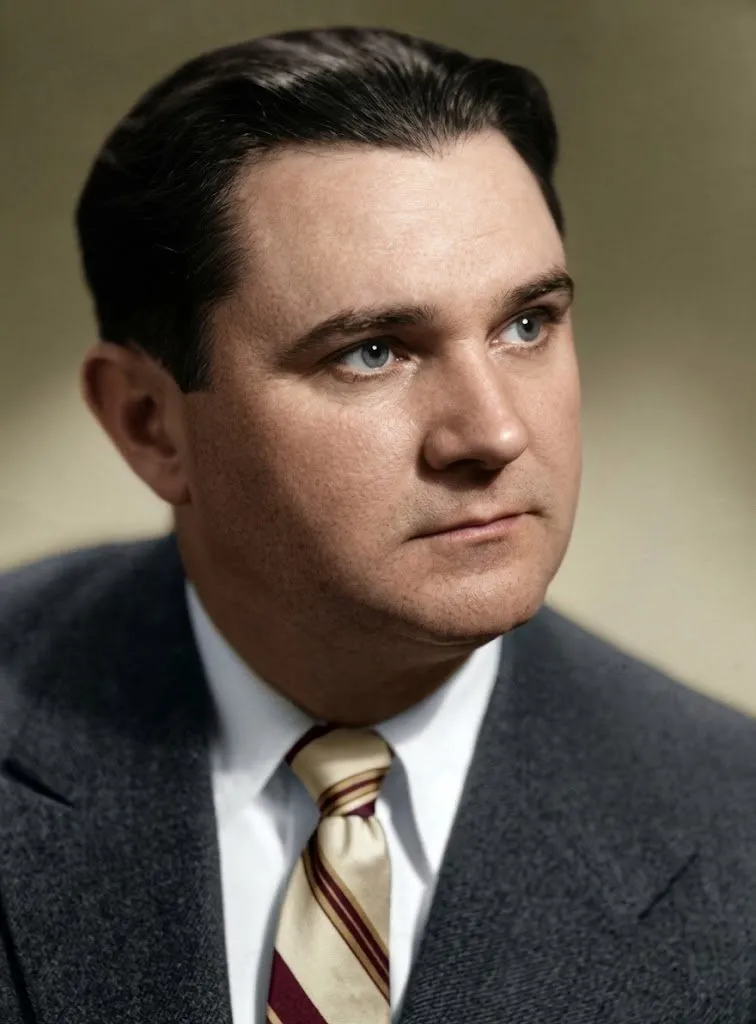
Kateryna Yushchenko
Programmer, creator of Address language
In 1955 Kateryna Yushchenko from Chyhyryn co-created the Address language, one of the world's first programming languages. Expelled from university at 17 as the daughter of an "enemy of the people", she stayed in science and became the first in the USSR to earn a doctorate for work in programming.
Key accomplishments
- The Address programming language (1955, with Volodymyr Koroliuk), used for more than 20 years to program many computers
- The textbook Elements of Programming (1961, with Borys Hnedenko and Volodymyr Koroliuk), translated in East Germany, Hungary and France
- The first Doctor of Physical and Mathematical Sciences in the USSR for work in programming (1966)
- Head of the programming theory department at the Institute of Cybernetics (1962–1990), founder of a school of theoretical programming
- A compiler for the Ural-1 computer (1962)
- Two State Prizes of the Ukrainian SSR (1978, 1991), the USSR Council of Ministers Prize (1984), the V. Hlushkov Prize (1985), the Order of Princess Olga, 3rd class (1999)
Expelled, but not stopped
Did you know that one of the world’s first programming languages was created by a woman who was thrown out of university at 17 and still could not be kept from science? Kateryna Rvachova was born in 1919 in Chyhyryn into a family of teachers. In 1937, during her first year at Kyiv University, her father, a history teacher, was arrested as a “bourgeois nationalist”, and later her mother was sentenced too. As the daughter of an “enemy of the people”, Kateryna was expelled.
But she did not give up her studies: a university far away in Samarkand, Uzbekistan, took her in, and she graduated in Tashkent in 1942. During the war she worked as a shot-firer in a coal mine, and in 1944 she returned to Ukraine to teach school.
From probability theory to the first computer
The mathematician Borys Hnedenko took her into the Lviv branch of the Institute of Mathematics in 1946. In 1950 Yushchenko moved to Kyiv to head a laboratory of computing methods. Just outside Kyiv the MESM was running, the first computer in continental Europe. Its working memory held only 31 numbers and 63 instructions, so every program was a puzzle of its own.
A language that set programs free
Yushchenko and Volodymyr Koroliuk developed the Address language in 1955, before Fortran, COBOL and ALGOL appeared. A program written in it no longer depended on where in memory it sat. The language could handle “addresses of the second rank”: an address that points to another address. Her son, the researcher Yurii Yushchenko, sees this as a forerunner of pointers, which are usually credited to the American Harold Lawson (1964). For more than 20 years the Kyiv, Dnipro, Ural-1 and other computers were programmed in the Address language.
A school of Kyiv programmers
Yushchenko, Hnedenko and Koroliuk published the textbook Elements of Programming in 1961, later translated into several languages. In 1966 she became the first person in the USSR to earn a doctorate in physics and mathematics for work in programming. With Viktor Hlushkov she was among the founders of the Institute of Cybernetics, where she headed the programming theory department for 28 years. She trained 11 doctors of science and worked at the institute to the end of her life. Kateryna Yushchenko died in Kyiv in 2001.
Why it matters today
Kateryna Yushchenko showed that Kyiv could change how people talk to machines: her Address language was one of the first in the world. She did not break when she was denied an education because her family was repressed, and she came back to science just as programming was being born. Her textbook and her school trained generations of programmers, whose work grew into Kyiv’s computing tradition. Anyone who writes code in Ukraine today carries on what she began on a machine with room for 31 numbers.