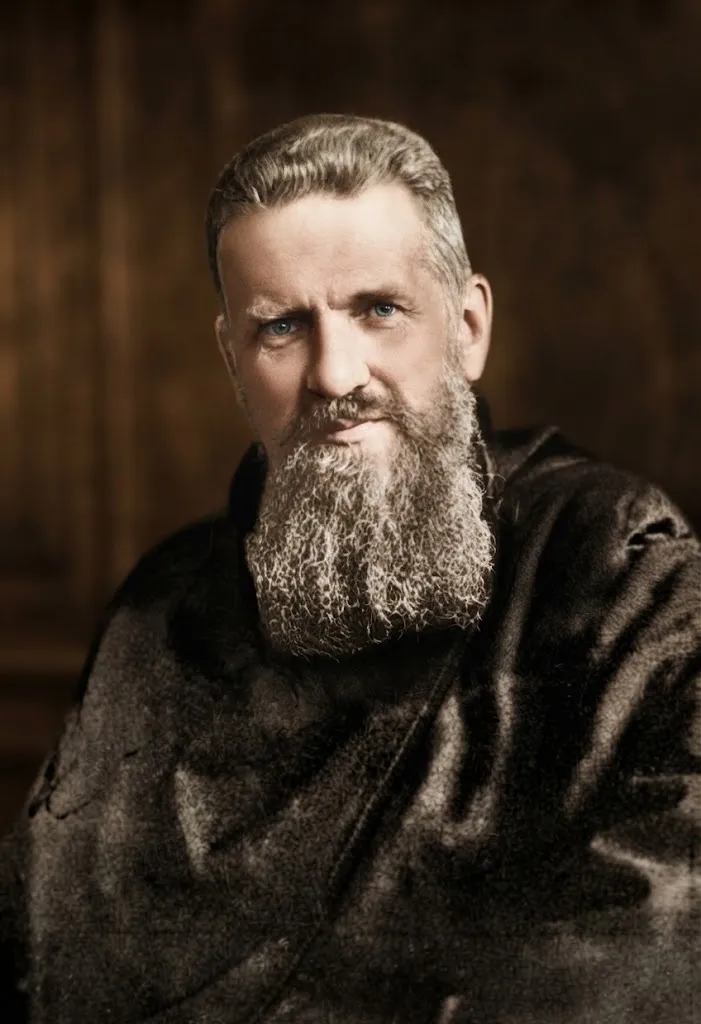
1933–2017
Liubomyr Huzar
Head of the UGCC 2001–2011, cardinal
He was secretly made a bishop so that, if the underground Church were wiped out, he could enter the USSR posing as a tourist and rebuild it. Liubomyr Huzar went on to return to Ukraine, become a cardinal and, in 2005, move the UGCC’s seat to Kyiv.
Key accomplishments
- Major Archbishop of the Ukrainian Greek Catholic Church (2001–2011), cardinal from 2001
- Moved the seat of the head of the Church from Lviv to Kyiv in 2005
- Doctoral thesis on the ecumenism of Metropolitan Andrei Sheptytskyi (1972)
- Proposed a Council of Ukrainian Churches of St Volodymyr’s Baptism in 2008
- Co-founder of the First of December Initiative Group
A bishop disguised as a tourist
In 1977 Yosyf Slipyi, head of the Ukrainian Greek Catholic Church (UGCC), secretly ordained Liubomyr Huzar a bishop without papal approval. The secrecy had a purpose: if the Soviet authorities destroyed the Church’s underground hierarchy in Soviet Ukraine, Huzar could travel there posing as a tourist and help restore it. So for many years he did not act as a bishop.
From Lviv to Stamford and Rome
Huzar (also spelled Lubomyr Husar) was born in 1933 in Lviv. In 1944 his family fled the advancing Red Army to Austria, and in 1949 they moved to the United States. He studied theology, was ordained a priest in 1958, taught at the seminary in Stamford, Connecticut, and served as chaplain at Soyuzivka, a Ukrainian community resort.
In 1969 Huzar moved to Rome to assist Slipyi. There he wrote a doctoral thesis on the ecumenism of Metropolitan Andrei Sheptytskyi, and later became abbot of a Studite monastery near Castel Gandolfo.
Back to Kyiv
In 1993 Huzar returned to Ukraine, and in 1996 Pope John Paul II confirmed his rank as bishop. In 2001 the Synod elected him Major Archbishop, and that same year he became a cardinal. In 2005 he moved the seat of the head of the Church from Lviv to Kyiv.
He stressed the Church’s social teaching, backed civil society and sought dialogue with the Orthodox churches. In 2011, losing his sight, he retired, but he stayed in public life and co-founded the First of December Initiative Group. Huzar died on 31 May 2017 and was buried in the crypt of the Patriarchal Cathedral of the Resurrection of Christ in Kyiv.
Why it matters today
Huzar brought the UGCC’s seat back to Kyiv and proposed a path towards unity among the Ukrainian churches of the Kyivan tradition. In 2024 the head of the UGCC, Sviatoslav Shevchuk, announced the start of the process for his beatification.