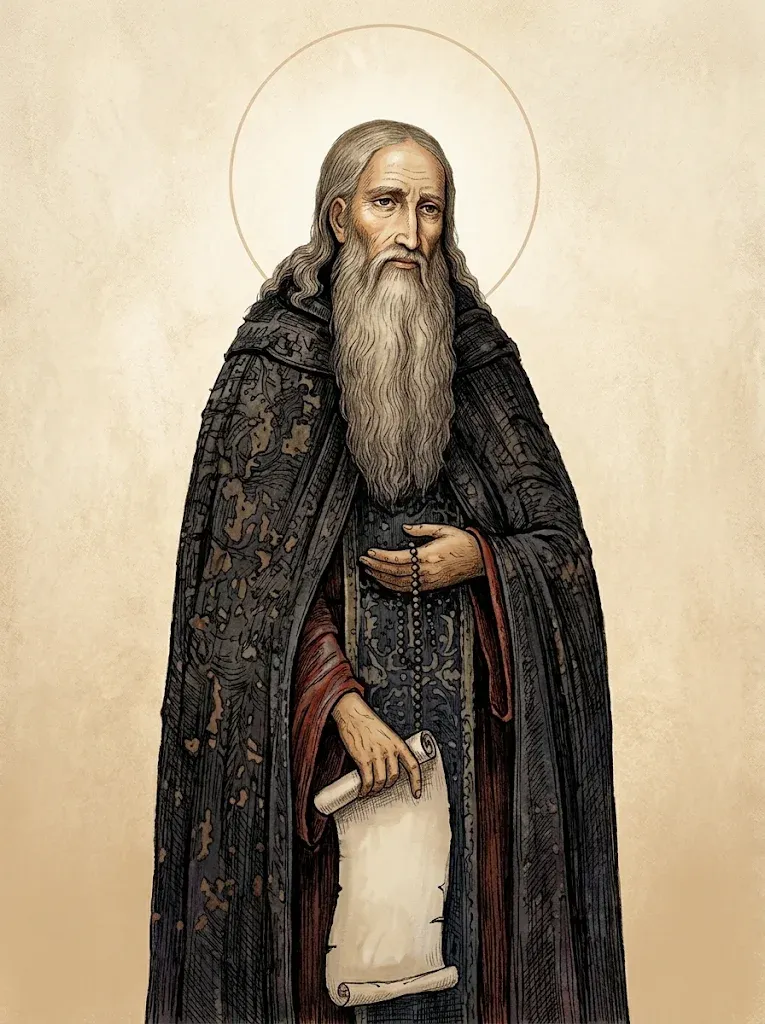
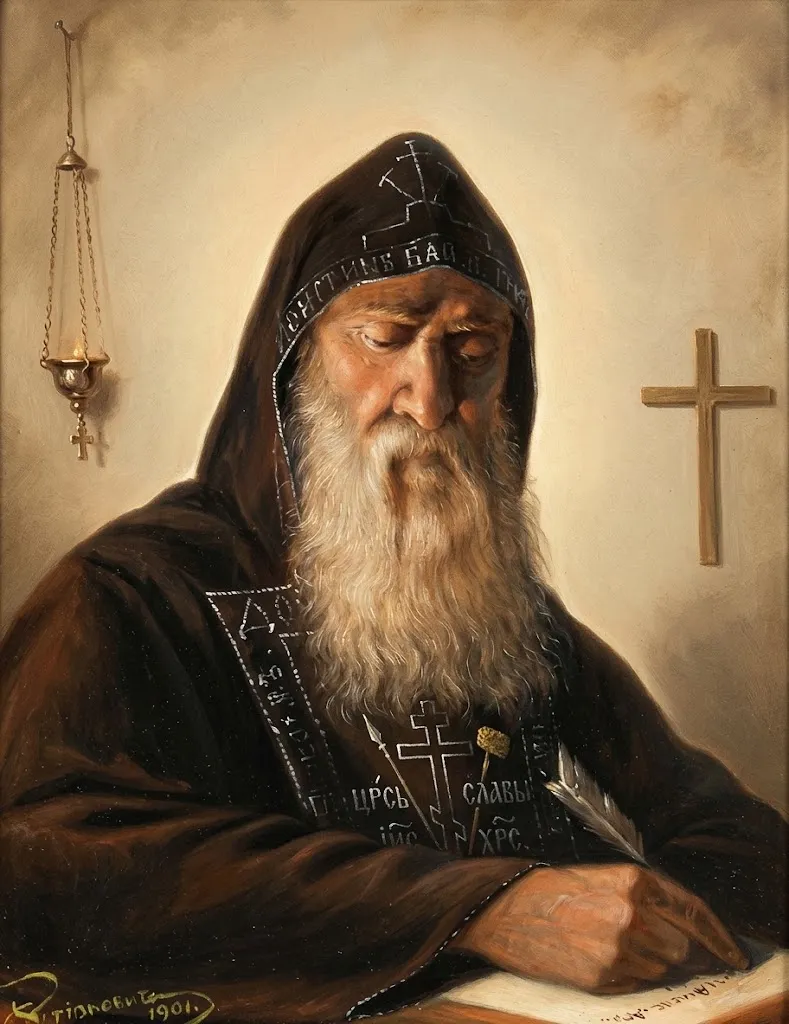
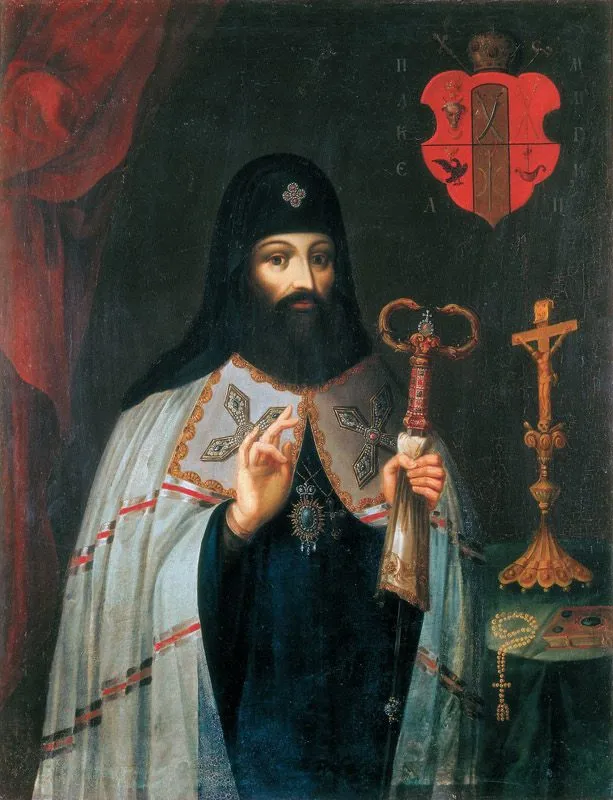
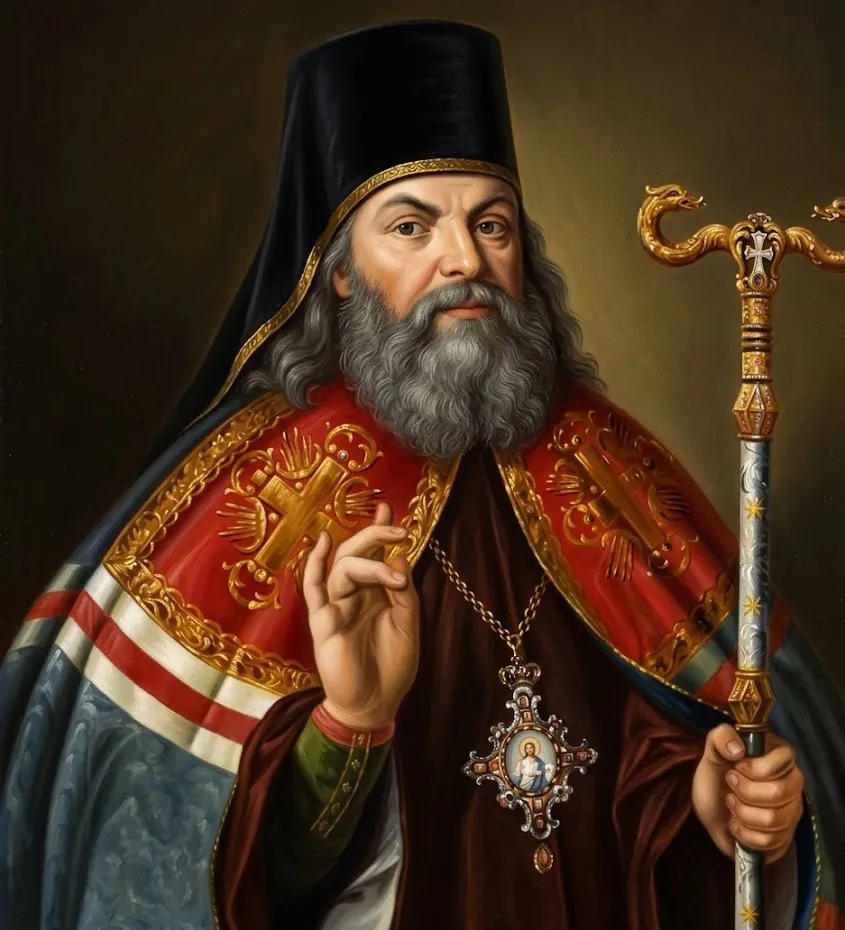
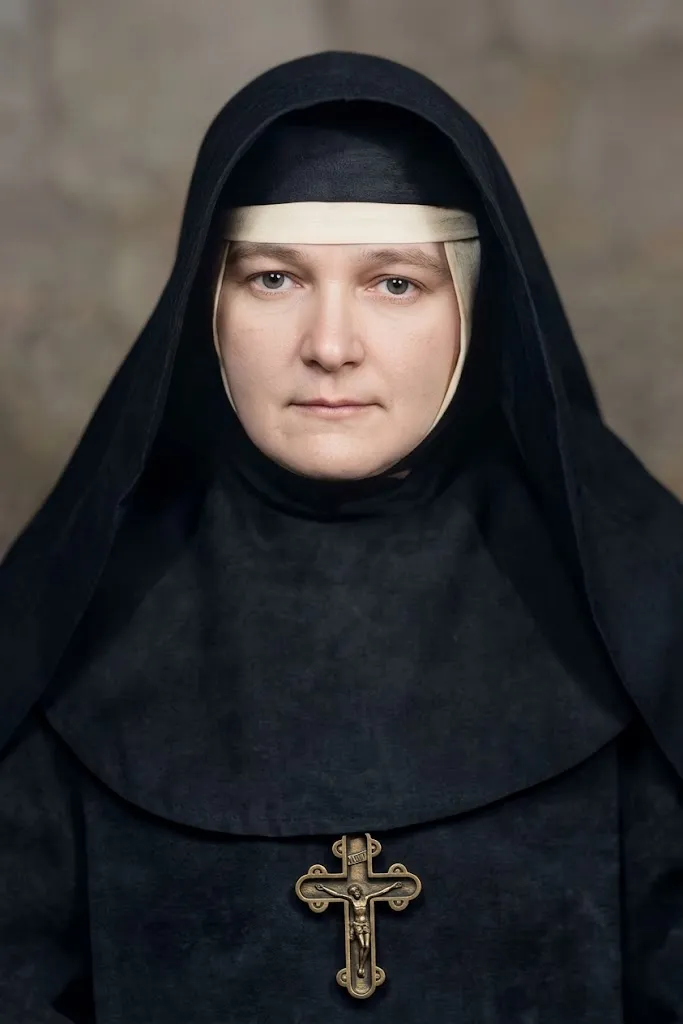
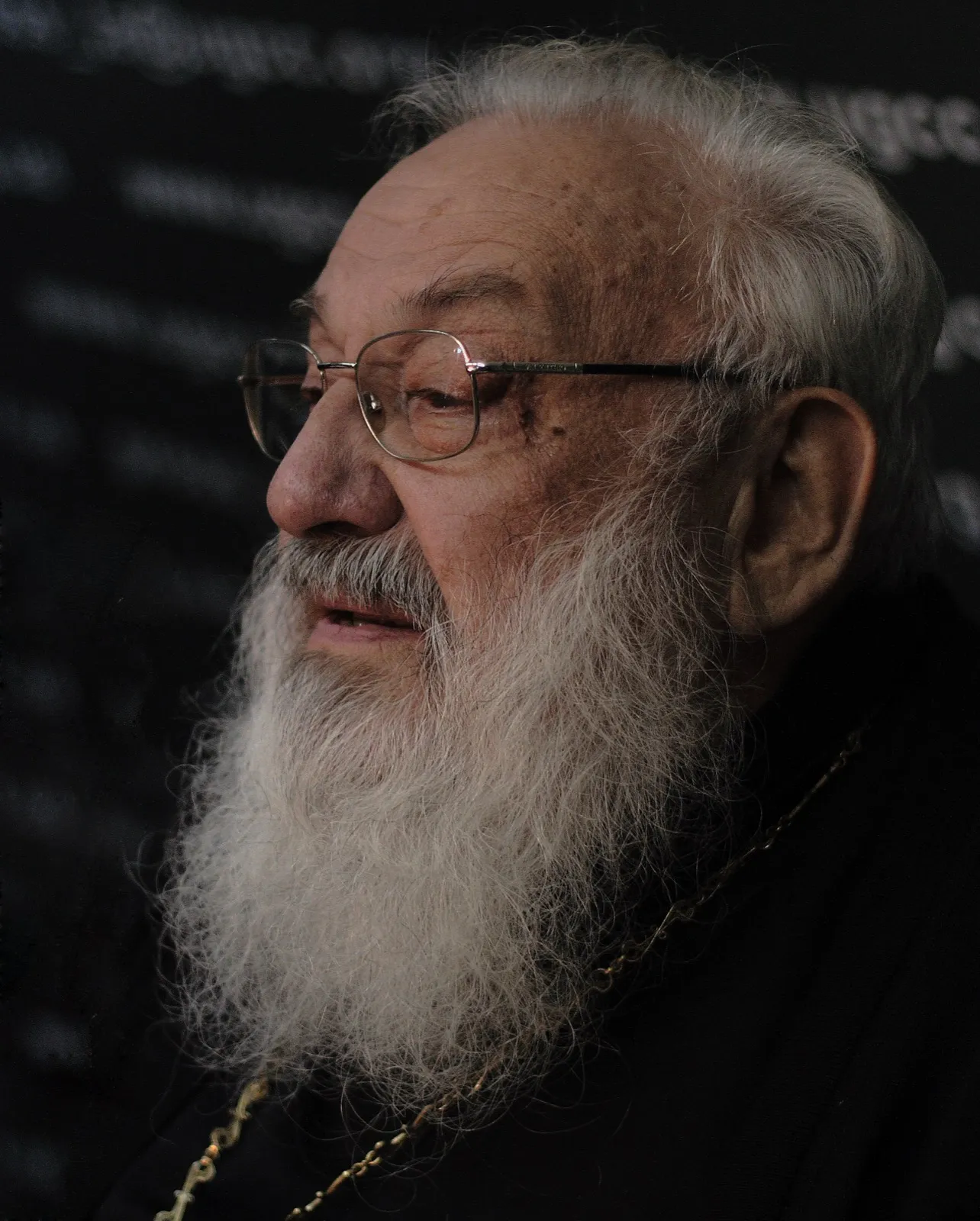
Feodosii Pecherskyi
Abbot of the Cave Monastery
A monk who challenged a prince: Feodosii Pecherskyi condemned Sviatoslav’s seizure of the Kyiv throne. He organized communal monastic life and began the construction of the Dormition Cathedral.
Key accomplishments
- Succeeded Varlaam as abbot of the Cave Monastery around 1062
- Introduced the Studite rule for communal monastic life
- Initiated the construction of the Dormition Cathedral in 1073
- Condemned Sviatoslav’s removal of Iziaslav from the Kyiv throne
From Vasyliv to a cave above the Dnipro
Almost everything we know about Feodosii Pecherskyi comes from the Life that Nestor wrote after his death. It is a saint’s life, intended to give monks an example to follow. Details of everyday life sit alongside accounts of miracles, so it needs to be read both as a historical source and as a religious work. In English, Feodosii is also known as Theodosius of the Caves.
He was born in Vasyliv, now Vasylkiv in the Kyiv region, around 1036; the exact year is unknown. He grew up in Kursk, where his family had moved. In the mid-1050s he came to Kyiv and joined Antonii Pecherskyi. They lived in a cave above the Dnipro with Nikon. This small community grew into the Cave Monastery.
Rules for living together
How could a group of hermits become a monastery whose members took responsibility for one another? After succeeding Varlaam as hegumen, or abbot, around 1062, Feodosii set about organizing the community’s life.
He introduced the Studite rule, drawn from Byzantine monastic tradition. It governed worship, readings, shared meals and daily life. The monastery became a community with a common rule, and other monasteries across Rus’ adopted its model. The reform is often dated to 1070, although researchers place its introduction more broadly in the 1060s–1070s.
Help beyond the monastery walls
Living as a community also meant caring for people outside it. According to the Life, Feodosii established a courtyard near the monastery for people who were poor or ill, setting aside a tenth of the monastery’s resources for them.
Nestor also shows the abbot doing ordinary work: carrying water, helping with bookmaking and chopping wood. These episodes convey the example the author wanted readers to follow: a leader serves the community and encourages others to work by taking part himself.
Challenging a prince
Princely support did not guarantee the abbot’s agreement. When Sviatoslav Yaroslavych removed his elder brother Iziaslav from the Kyiv throne in 1073, Feodosii openly condemned the act. He supported Iziaslav and urged the brothers to reconcile.
The abbot later reached a compromise with Sviatoslav and accepted help towards building the monastery’s church. In that same year, 1073, work began on the stone Dormition Cathedral at Feodosii’s initiative. He did not live to see it completed: he died on 3 May 1074. In 1108 his name was entered in a church commemoration list across Rus’; his canonization is associated with that year.
Debates and assessments
The Life preserves a portrait of Feodosii shaped within his own monastic community. Its details cannot always be independently checked. His literary legacy also presents problems: sermons, prayers and letters are attributed to him, but his authorship of some works, including the letters to Iziaslav, remains disputed.
Why it matters today
Feodosii helped establish a tradition of communal monastic life that spread from Kyiv across Rus’. It joined prayer with work and support for people beyond the monastery. His dispute with Sviatoslav shows that spiritual authority could call a prince to account. His story offers a concrete example of responsibility: building a community, sharing its work and speaking about injustice even to someone whose help it needs.