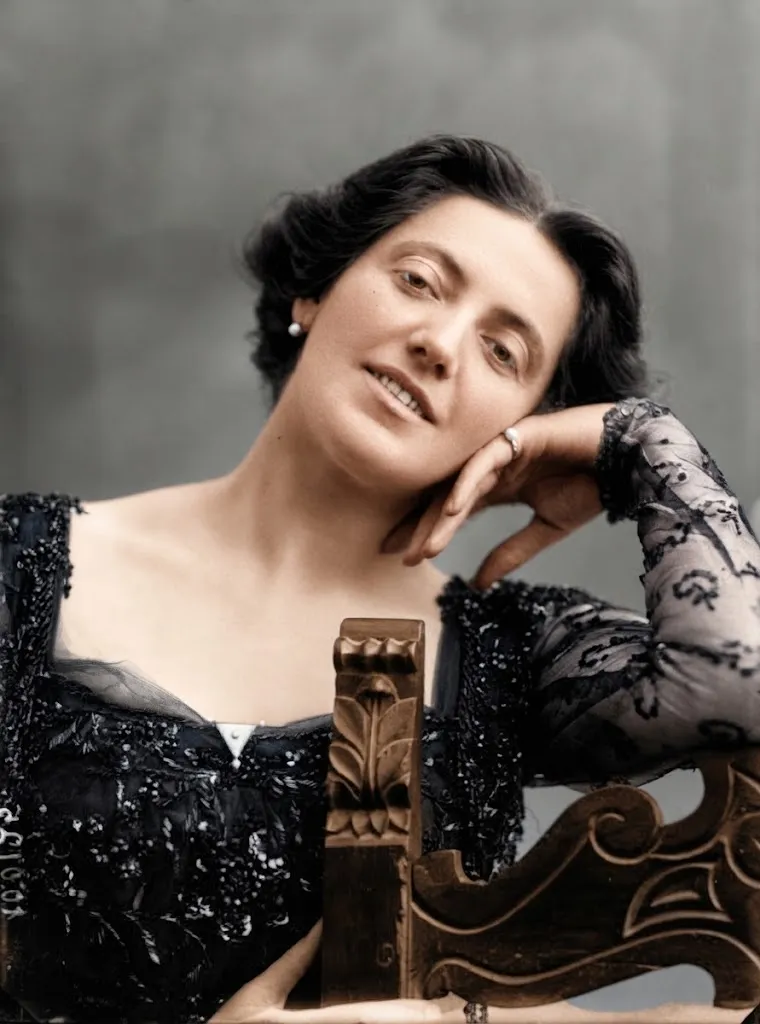
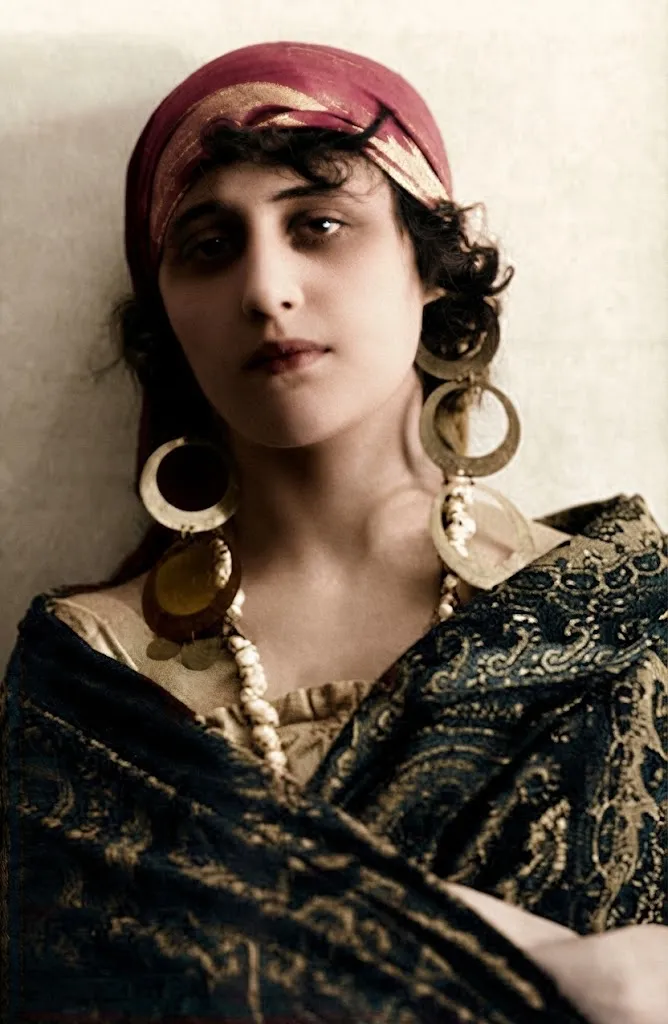
Mariia Zankovetska
Actress, star of Ukrainian theater
She first played Natalka in Natalka Poltavka with an amateur group, and in 1882 she made her professional debut in the very same role. For 40 years Mariia Zankovetska was a star of Ukrainian theater, creating more than 30 roles.
Key accomplishments
- Made her debut on 27 October 1882 in Yelysavethrad as Natalka in Ivan Kotliarevskyi’s Natalka Poltavka, in Marko Kropyvnytskyi’s troupe
- More than 30 roles in the Ukrainian repertoire, including Halia in Nazar Stodolia and Kharytyna in The Hired Girl
- In 1906, with Mykola Sadovskyi, founded a troupe that in 1907 became the first permanent Ukrainian theater in Kyiv
- In 1897, at the congress of stage workers in Moscow, demanded an end to restrictions and censorship on Ukrainian theater
- In 1918 she headed her own troupe in Nizhyn
- People’s Artist of the Ukrainian SSR (1923)
One role, a first time twice
Mariia Adasovska was born in 1854 in the village of Zanky in the Chernihiv region, into a noble family, and she had a fine mezzo-soprano voice. As early as 1874–1875 she acted with an amateur group in Nizhyn, and that is where she first played Natalka in Ivan Kotliarevskyi’s Natalka Poltavka. In 1875 she married an officer (until 1888 her surname was Khlystova), lived with him in the fortresses of Bender and Sveaborg near Helsinki, and took singing lessons there. In Sveaborg she became one of the founders of an amateur drama circle.
Her husband promised in writing to let her go on stage, but only on the Ukrainian one. Under the Ems Ukaz, which banned Ukrainian plays, that seemed impossible. But once Ukrainian plays were allowed again, in October 1882 she left to join Kropyvnytskyi’s troupe on a three-month permit, and she never went back to her husband.
On 27 October 1882 in Yelysavethrad (now Kropyvnytskyi) she made her professional debut with Marko Kropyvnytskyi’s troupe. The role was the same, Natalka. The name was new, a stage name: Zankovetska.
Forty years on stage
The best Ukrainian troupes were her stage from then on: those of Kropyvnytskyi, Mykhailo Starytskyi, Mykola Sadovskyi, Panas Saksahanskyi and Ivan Karpenko-Karyi. She created more than 30 roles, among them Halia in Taras Shevchenko’s Nazar Stodolia and Kharytyna in Karpenko-Karyi’s The Hired Girl. She toured with the troupes to Saint Petersburg, Moscow and other cities of the empire, and her contemporaries ranked her alongside Sarah Bernhardt and Eleonora Duse. People urged her to move to the russian stage, Anton Chekhov among them, but she stayed with the Ukrainian one and even shamed him for asking. In 1902 Vsevolod Meyerhold offered her a season in Kherson, and once again she said no, staying loyal to the Ukrainian repertoire. And in 1897, at the First All-russian Congress of Stage Workers in Moscow, she demanded an end to the heavy, humiliating restrictions and censorship that Ukrainian theater suffered.
In 1906 in Poltava, together with Sadovskyi, she founded a troupe that in 1907 became the first permanent Ukrainian theater in Kyiv, and in 1918 she led her own troupe in Nizhyn. On 14 May 1918 the Council of Ministers of the Ukrainian State granted her a lifetime pension. She last appeared on stage in December 1922, at a celebration of her 40 years in the theater. In 1923 she was named People’s Artist of the Ukrainian SSR. She died in Kyiv in 1934.
Why it matters today
Zankovetska showed that Ukrainian theater could have an actress of world rank. She could have gone to the russian stage, but she chose the Ukrainian one and proved that you can act in Ukrainian and be ranked alongside Sarah Bernhardt. For 40 years she brought the Ukrainian classics to the stage, from Kotliarevskyi to Karpenko-Karyi, and the theater she founded with Mykola Sadovskyi gave the Ukrainian stage a home of its own. Anyone who acts, sings or writes in Ukrainian today carries on her choice; her name is carried by a Ukrainian drama theater that was born in Kyiv, worked in Zaporizhzhia, spent the war in Tobolsk and has been in Lviv since 1944.