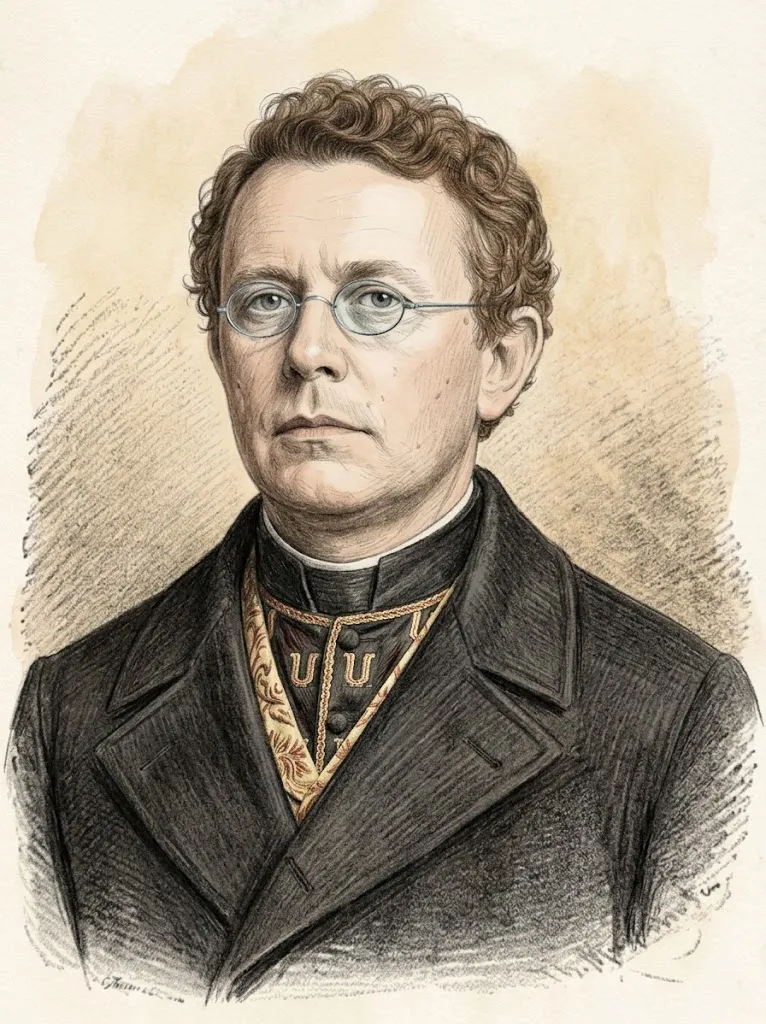
Petro Nishchynskyi
Composer and translator of Homer
The chorus The Grey Cuckoo and the first complete Ukrainian Odyssey share one creator. Petro Nishchynskyi brought together folk song, theatre and ancient Greek literature, widening the possibilities of Ukrainian culture.
Key accomplishments
- Composed Vechornytsi, including the chorus The Grey Cuckoo
- Made the first complete Ukrainian translation of the Odyssey from ancient Greek
- Translated Sophocles’ Antigone and six books of Homer’s Iliad
A song and Homer at one desk
What connects the chorus The Grey Cuckoo with the wanderings of Odysseus? Petro Nishchynskyi wrote the music and words of the first and translated the second into Ukrainian. For him, folk song and ancient Greek poetry were not separate worlds: both deserved careful work in Ukrainian.
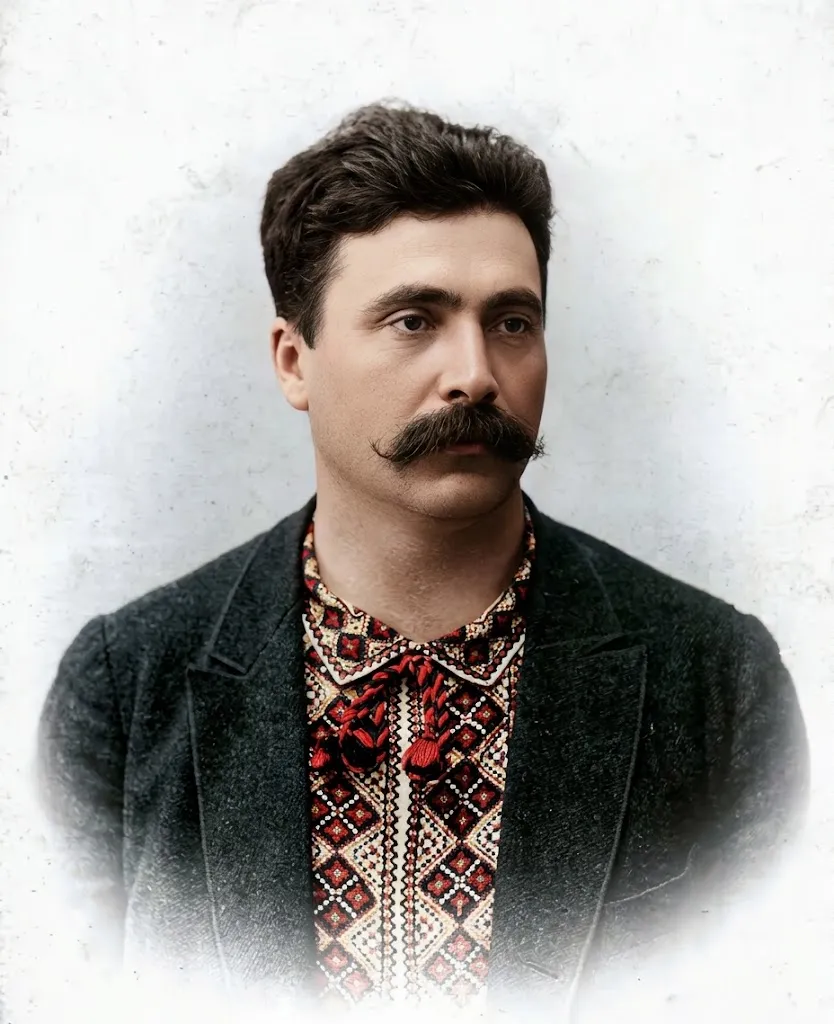
He was born in 1832 in Nemenka, in today’s Vinnytsia region, to the family of a church attendant. He studied at religious schools and the seminary in Kyiv and sang in choirs. His musical education came through practice as well as books: his own voice was his first instrument.
From a choir to Athens
Singing opened the way to Greece. In 1850, Nishchynskyi travelled to Athens with a religious mission. He sang in a church choir and attended the university, graduating with a master’s degree in 1856.
Greek became the foundation of his teaching and translation. Back from Greece, he taught languages in secondary schools, including those in Odesa, Ananiv and Berdiansk. In Odesa he even founded a Greek-language journal, Ermis. His connection was with a living language and culture as well as ancient texts.
A theatre that found its voice
A scene written for a play can take on a life of its own. That happened with Vechornytsi (Evening Gatherings), which Nishchynskyi composed in 1875 for Taras Shevchenko’s Nazar Stodolia. Marko Kropyvnytskyi’s theatrical circle first performed the musical scene in Yelysavethrad, now Kropyvnytskyi.
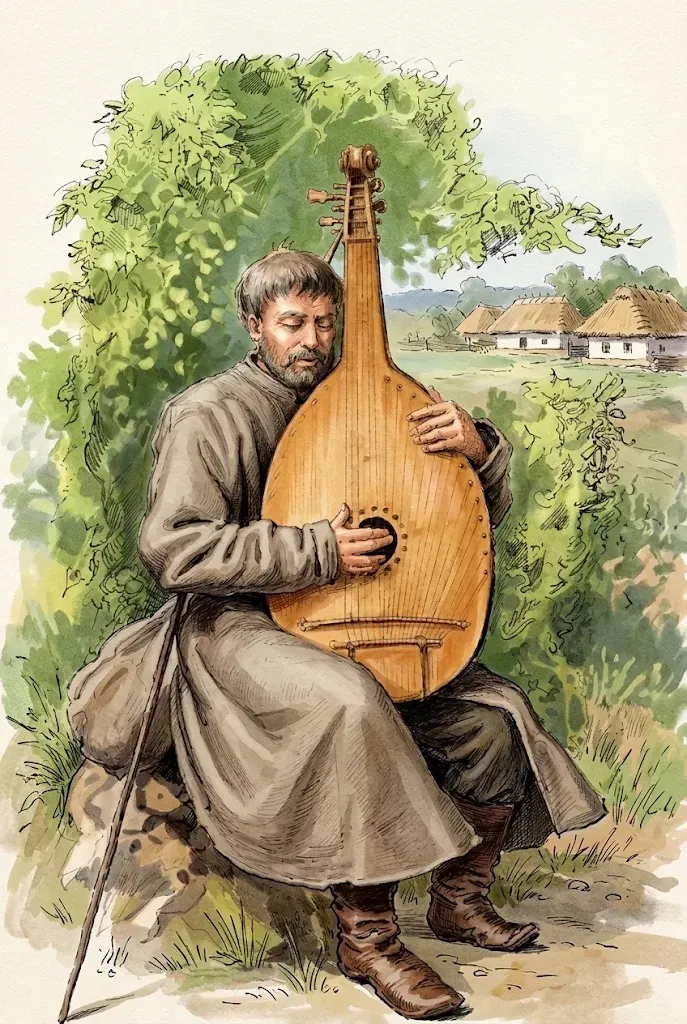
Its best-known numbers included the men’s chorus The Grey Cuckoo, a song about captive Cossacks. Nishchynskyi also arranged traditional Cossack songs, including Baida and Oi huk, maty, huk. He did more than collect melodies: he shaped them for choirs and the stage. He also wrote art songs, including Porada, so his music reached beyond the chorus and theatre.
Passing on knowledge mattered alongside his own writing. He taught musical theory and composition to Mykola Arkas. Through pupils, his work reached beyond the pieces he composed himself.
Odysseus speaks Ukrainian
Nishchynskyi translated all 24 books of the Odyssey in hexameter, the verse form of the Greek original. In 1887, censors banned his Ukrainian translation. Ukrainian translations were prohibited in the russian empire, so the book appeared in Lviv under the pen name Petro Baida, in two parts in 1889 and 1892. It was the first complete Ukrainian translation made directly from ancient Greek. The pen name echoed the Cossack song Baida, which Nishchynskyi had arranged himself.
His translation of Sophocles’ Antigone had appeared earlier, in 1883. He also translated six books of the Iliad, rather than the whole poem. His work opened ancient literature to Ukrainian readers in their own language.
From 1880, Nishchynskyi lived with his daughter in Voroshylivka, in the Vinnytsia region; he died there on 16 March 1896. His music and translations left two routes into Ukrainian: listening and reading.
Why it matters today
Nishchynskyi showed that Ukrainian could carry both a folk chorus and Homer’s hexameter. His translations brought world classics to readers in their own language, while his music brought folk song onto the theatre stage. He widened what Ukrainians could read and sing in their language.