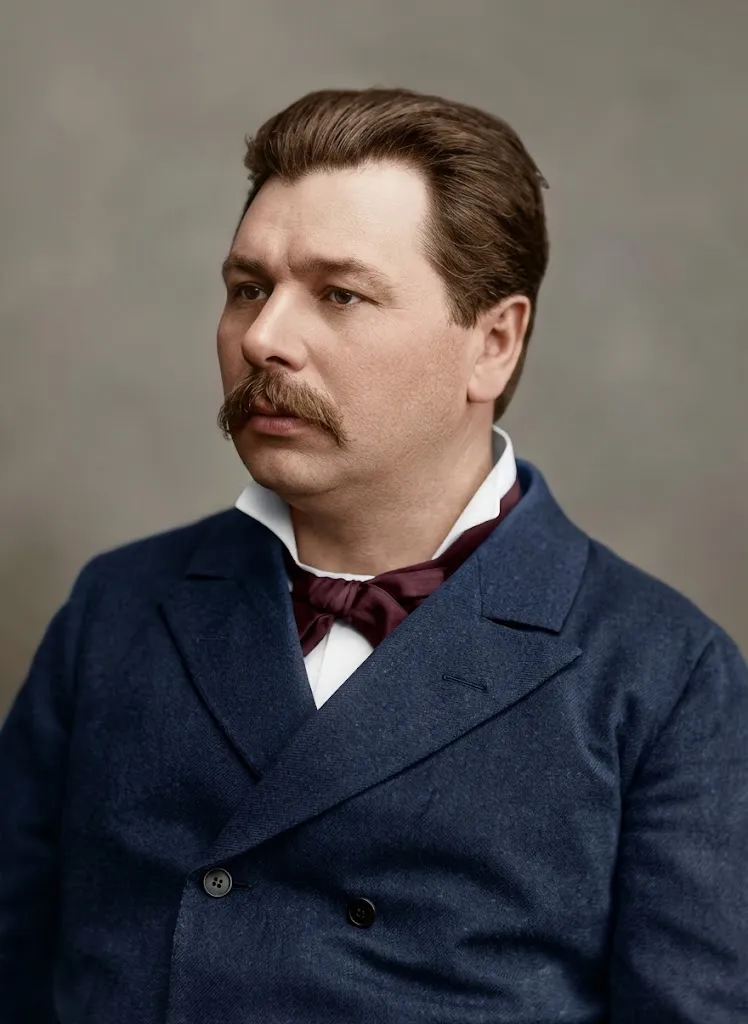
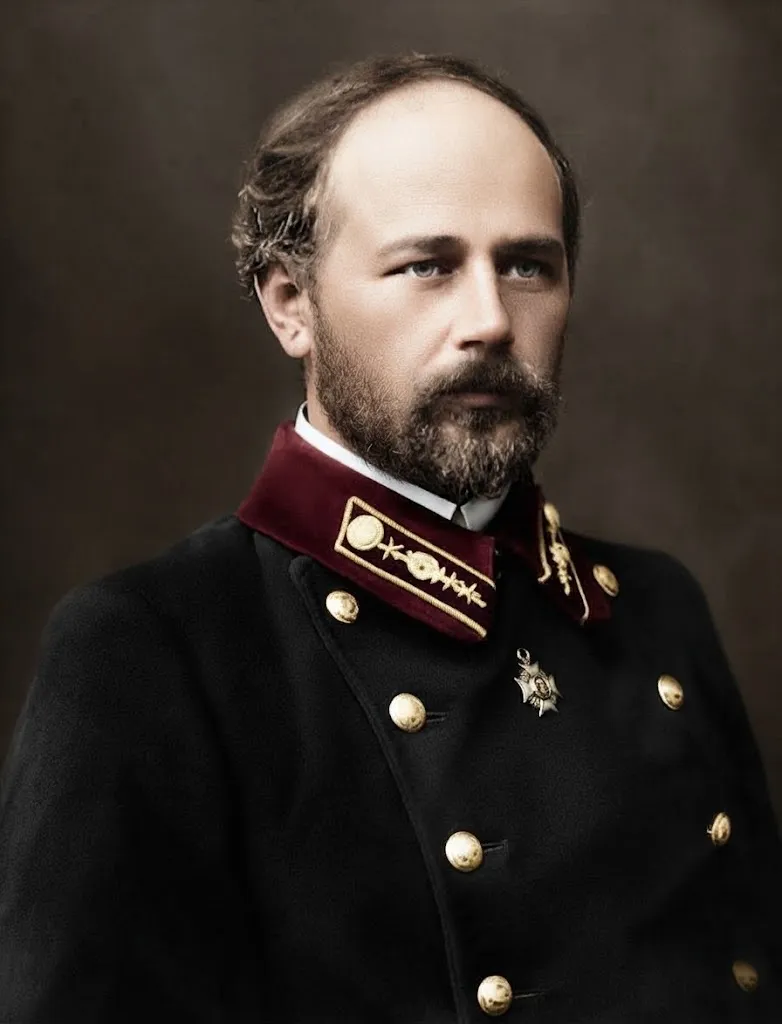
Mykhailo Kravchenko
Kobzar who sang of 1905
You can still hear his voice: in 1908 a blind kobzar from Sorochyntsi sang dumy into a phonograph. Mykhailo Kravchenko performed in Kharkiv, St Petersburg and Kyiv, and when a punitive detachment crushed the uprising in his village in 1905, he made his own dumy about it.
Key accomplishments
- Author of the dumy Black Sunday in Sorochyntsi and On the Sorochyntsi Events of 1905, about the crushing of a peasant uprising
- Performed at the Cottage-Industry Exhibition in St Petersburg and the 12th Archaeological Congress in Kharkiv (1902), the 13th Archaeological Congress in Katerynoslav (1905) and the Shevchenko jubilee concert in Kyiv (1911)
- His dumy were recorded by Opanas Slastion, Volodymyr Korolenko and Filaret Kolessa (on phonograph, 1908); Kolessa's cylinders were digitised in 2013
- Teacher of the kobzars Petro Huz and Fedir Kushneryk
The boy who lost his sight
What lay ahead for a village boy who went blind at fifteen? Often, the kobza. Mykhailo Kravchenko was born in 1858 in Sorochyntsi, near Myrhorod, into a peasant family, and as a child learned rope-making from his father. After an illness took his sight, he went to study with the Myrhorod kobzar Samiilo Yashnyi, and later with Fedir Hrytsenko-Kholodnyi. Playing the kobza paid poorly, so all his life Kravchenko also wove cords to support his family.
A village kobzar on the big stage
The Myrhorod artist and ethnographer Opanas Slastion took notice of him in the early 1900s. Slastion wrote down his dumy (the long epic songs of the kobzars), published an article about him in 1902 and drew five portraits of him. That same year Kravchenko sang at the Cottage-Industry Exhibition in St Petersburg and at the Archaeological Congress in Kharkiv, where Hnat Khotkevych put on the performance of kobzars and lirnyks. Kravchenko told Khotkevych that the police hounded kobzars, who hid from them like thieves, and that under this pressure he had forgotten many of his dumy.
Dumy about “Black Sunday”
Most of his dumy told of Cossacks and Turkish captivity: Marusia Bohuslavka, The Three Brothers of Samara, the captives’ laments. Then in December 1905 the peasants of Sorochyntsi itself rose up, and a punitive detachment put the uprising down with great brutality. Kravchenko witnessed it and made two dumy about the events: Black Sunday in Sorochyntsi and On the Sorochyntsi Events of 1905. The writer Volodymyr Korolenko took down the first from him, and Slastion the second.
A voice on a wax cylinder
The musicologist Filaret Kolessa came from Lviv to Myrhorod in the summer of 1908, bringing a phonograph. The trip was paid for by Lesya Ukrainka and her husband Klyment Kvitka. Kolessa recorded several dumy and songs from Kravchenko and published their melodies in his collection Melodies of Ukrainian Folk Dumy. In 2013 Kolessa’s wax cylinders were digitised, and now anyone can hear Kravchenko’s voice.
The last years
The kobzar also sang at the Shevchenko jubilee concert in Kyiv in 1911. Poverty and constant travel wore down his health, and in the spring of 1917 Mykhailo Kravchenko died in his native Sorochyntsi. Slastion gave his last kobza to the Myrhorod museum of local history, where it is still kept. His pupils, among them the kobzars Petro Huz and Fedir Kushneryk, carried his dumy on, and Maksym Rylskyi later dedicated a poem to him, “Kravchenko at Korolenko’s”.
Why it matters today
Kravchenko showed that the duma was not a museum piece: a kobzar could sing of his own village’s pain just as earlier kobzars had sung of the Cossacks. He kept the old dumy alive while the authorities hounded kobzars, and passed them on to his pupils. Thanks to the recordings of his voice, we can still hear how a true kobzar’s duma sounded. Anyone who sings today about what their land has lived through is walking his road.