Roman Ratushnyi
Civic activist and scout
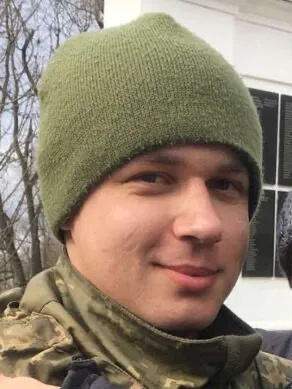
At 16 he joined the Maidan, and later won a ruling from the European Court of Human Rights that his rights had been violated. Roman Ratushnyi saved Kyiv’s Protasiv Yar from developers. A scout with the Kholodnyi Yar Brigade, call sign “Seneca”, he was killed near Izium in 2022, aged 24.
Key accomplishments
- Took part in the Euromaidan; was among those hurt when the Berkut riot police attacked students on the night of 30 November 2013
- One of the applicants in Shmorgunov and Others v. Ukraine: in 2021 the European Court of Human Rights found he had been ill-treated and the investigation was not effective
- Founded the “Protect Protasiv Yar” initiative (2019) and led the NGO of the same name
- Won back Protasiv Yar’s green-space status (2020)
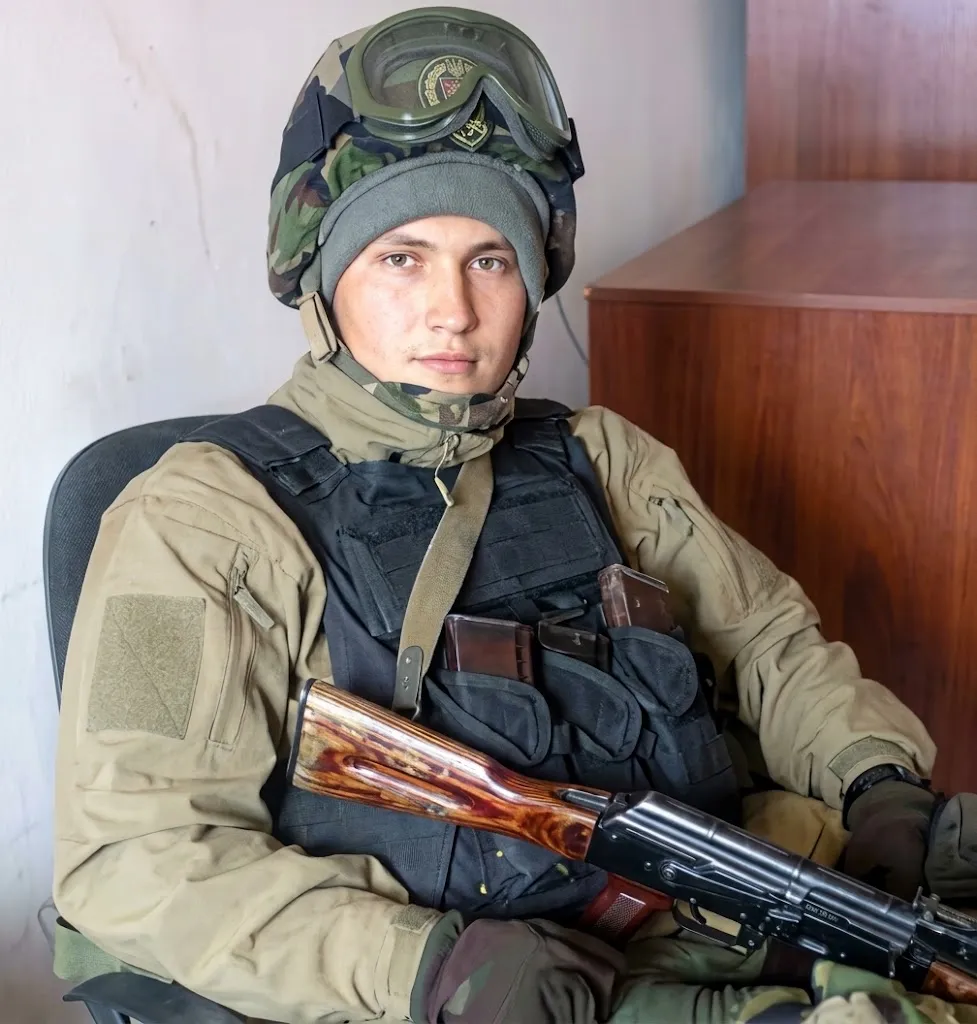
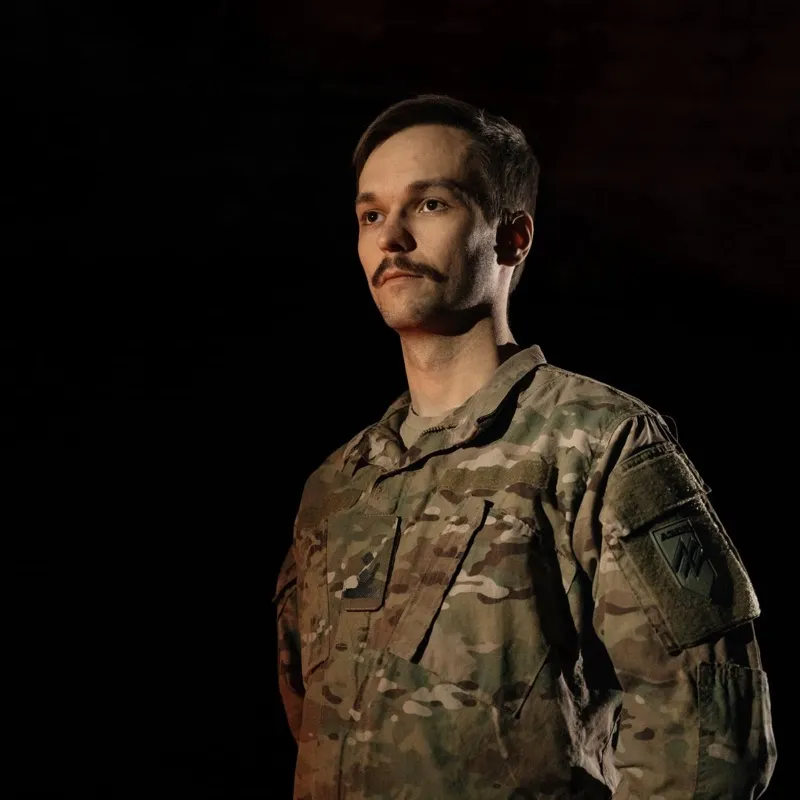
- A scout in the 93rd Kholodnyi Yar Brigade from the first days of the invasion; defended Kyiv, helped liberate Trostianets, fought in Sumy and Kharkiv regions
- Order for Courage, 3rd class (posthumously, 2022)
The Maidan at 16, and a win in Strasbourg
Roman Ratushnyi joined the Revolution of Dignity at 16. On the night of 30 November 2013 the Berkut riot police attacked students, and Roman was among those hurt; on 11 December he was beaten again. He didn’t stay silent: he took his case to the European Court of Human Rights. In 2021 the court ruled that he had been ill-treated, that the investigation had not been effective and that his right to peaceful assembly had been violated.
Roman was born in 1997 in Kyiv, the son of Taras Ratushnyi, a journalist and activist in the “Save Old Kyiv” movement, and the writer Svitlana Povaliaieva. In 2012 he entered the Finance and Law College, where he studied law.
The mafia on one map
After the Maidan Ratushnyi worked as a journalist. In 2015 he mapped the international links between the russian and Ukrainian mafias: about a thousand people, all from public data. Today this is called OSINT.
Tents against tower blocks
Three 40-storey towers on the slopes of Protasiv Yar in central Kyiv: that was the developer’s plan when, in 2019, Ratushnyi recorded a video appeal to Kyiv residents. He gathered activists who camped there in tents and kept watch to stop the developer’s machinery. That is how the “Protect Protasiv Yar” initiative began. When the community decided to set up an NGO, it was Roman who agreed to lead it, and the court cases became his second job. The activists were threatened, but they held their ground. In 2020 Roman was invited to Brussels to meet the European Endowment for Democracy and the head of the European Commission’s Support Group for Ukraine, and after that the harassment stopped. The same year Protasiv Yar got its green-space status back, and the building permit was ruled unlawful.
Call sign “Seneca”
From the first days of the full-scale invasion Ratushnyi defended Kyiv. Then, with the 93rd Separate Mechanized Brigade “Kholodnyi Yar”, he helped liberate Trostianets and fought as a scout in the Sumy and Kharkiv regions. His call sign was “Seneca”. Roman Ratushnyi was killed near Izium in the Kharkiv region on 9 June 2022, aged 24. His fellow soldiers set up the aerial reconnaissance unit he had planned and named it “Seneca”.
A will for Ukraine
Even his will was for Ukraine: he left part of his military pay to the Taras Shevchenko House-Museum, a bandurist capella and Ukrainian media. The museum’s share paid to treat a 200-year-old mulberry tree that remembers the poet. A street in Kyiv’s Solomianskyi district (formerly Volgogradska) and the Protasiv Yar reserve bear his name; since 2023 a festival in his memory has been held there every year, and law students receive a scholarship named after him.
Why it matters today
Roman Ratushnyi showed that a handful of people who care can save a piece of green Kyiv if they don’t back down. “Only self-organisation will save us from the end of the world,” he said, and he lived by it, from the Maidan at 16 to defending Kyiv from the first days of the full-scale war. On the square, in court and at the front he stood up for what Ukrainians stood for before him and still do today: the right to be free in their own country. Anyone who defends their park, street or city follows in his footsteps.