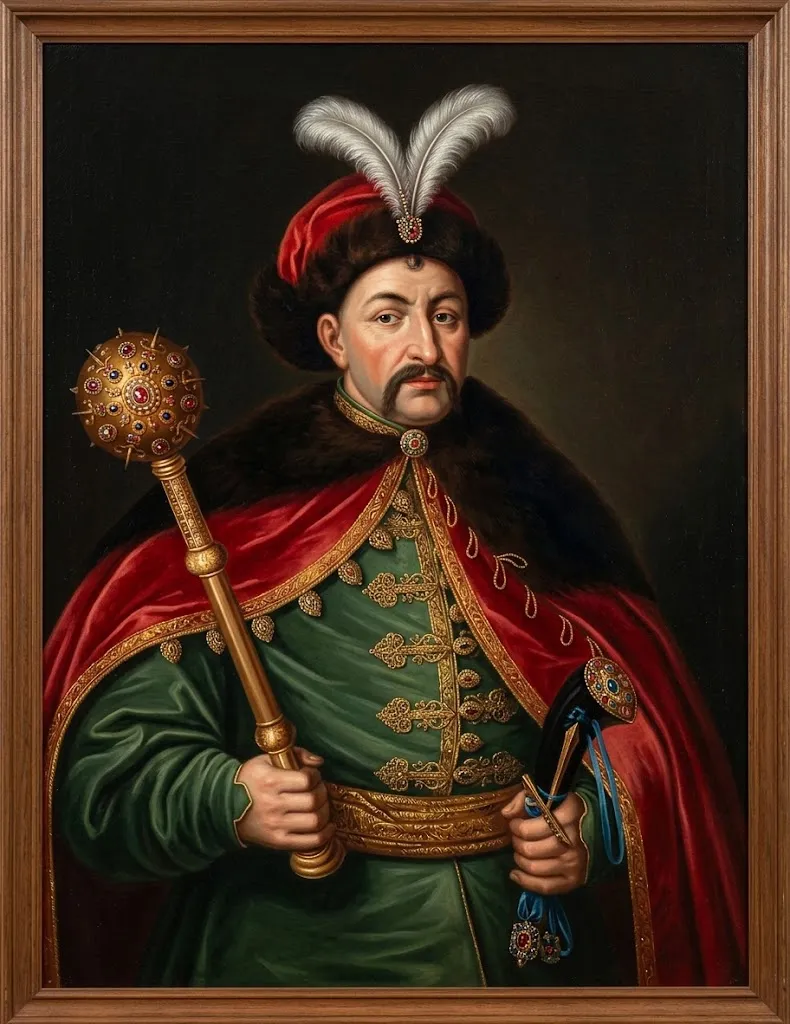
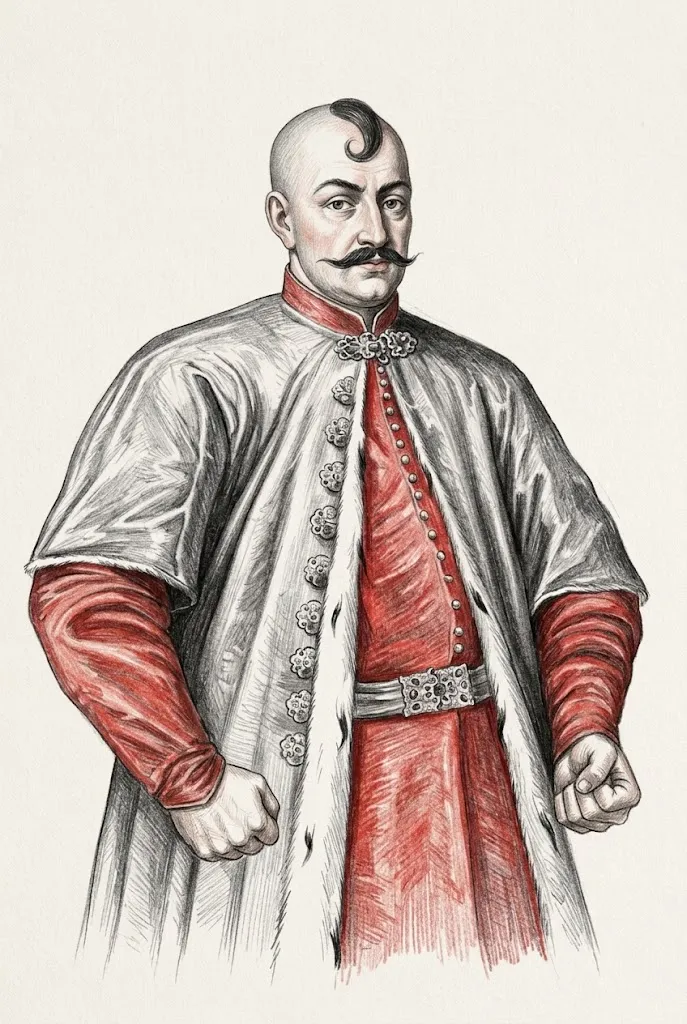
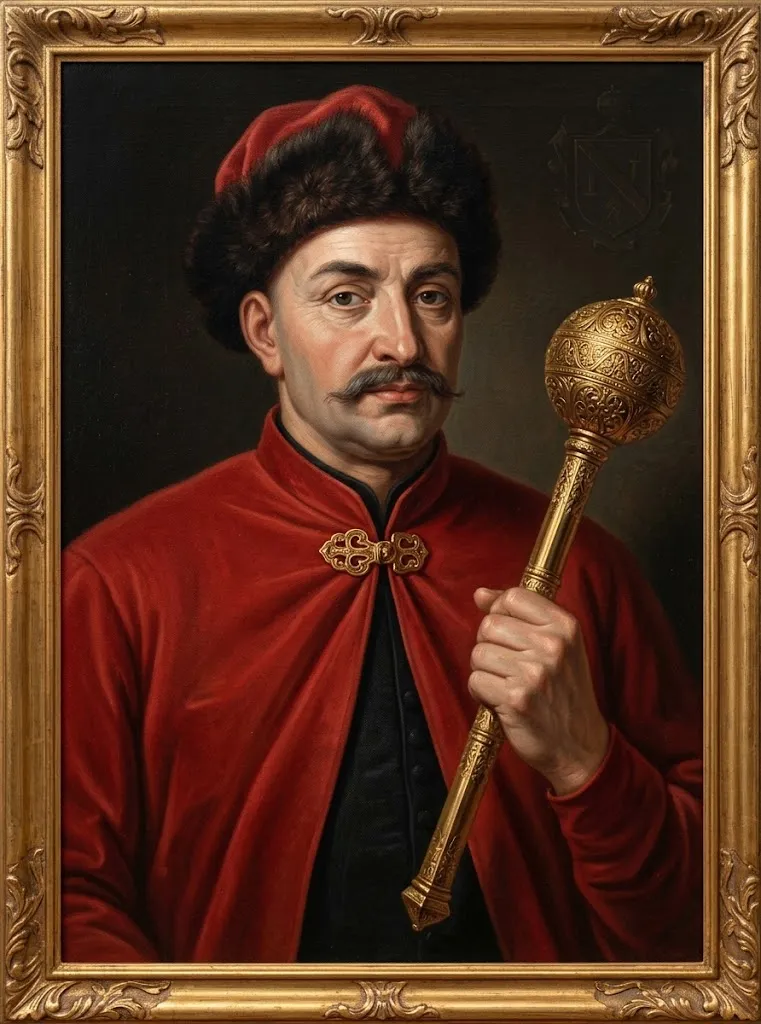
c. 1560–1597
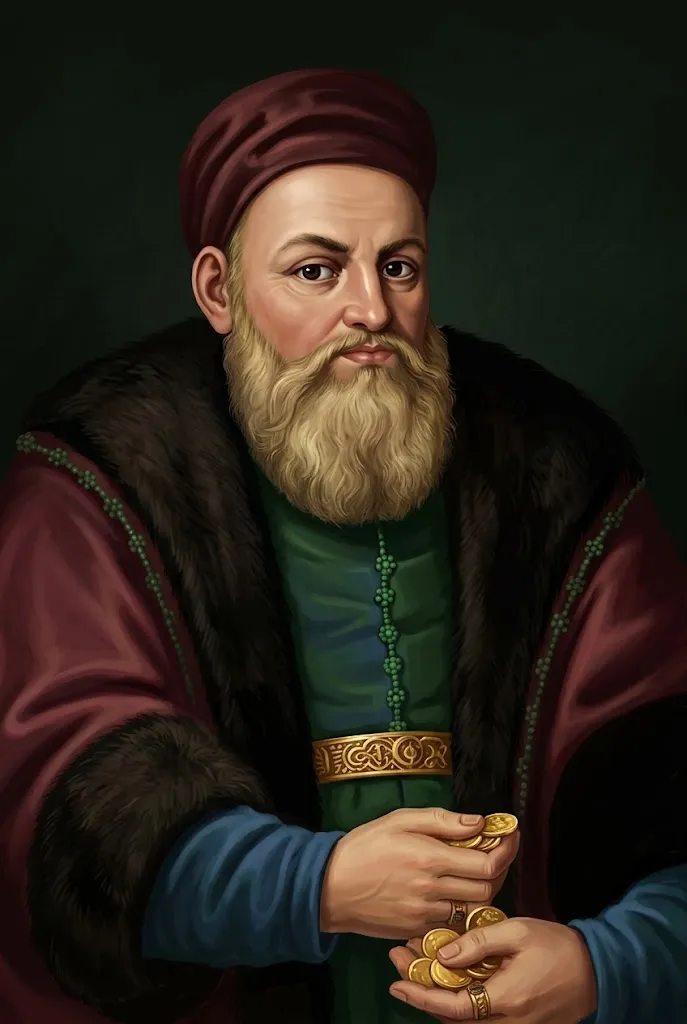
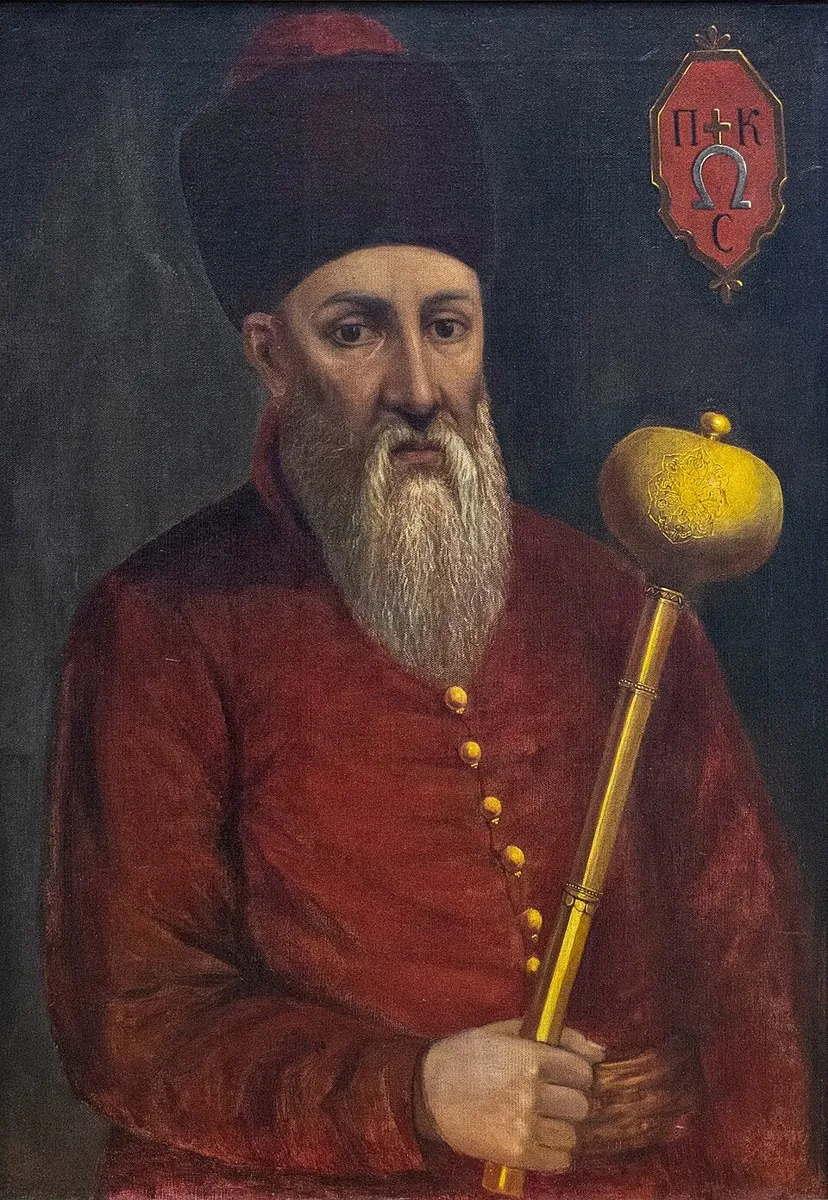
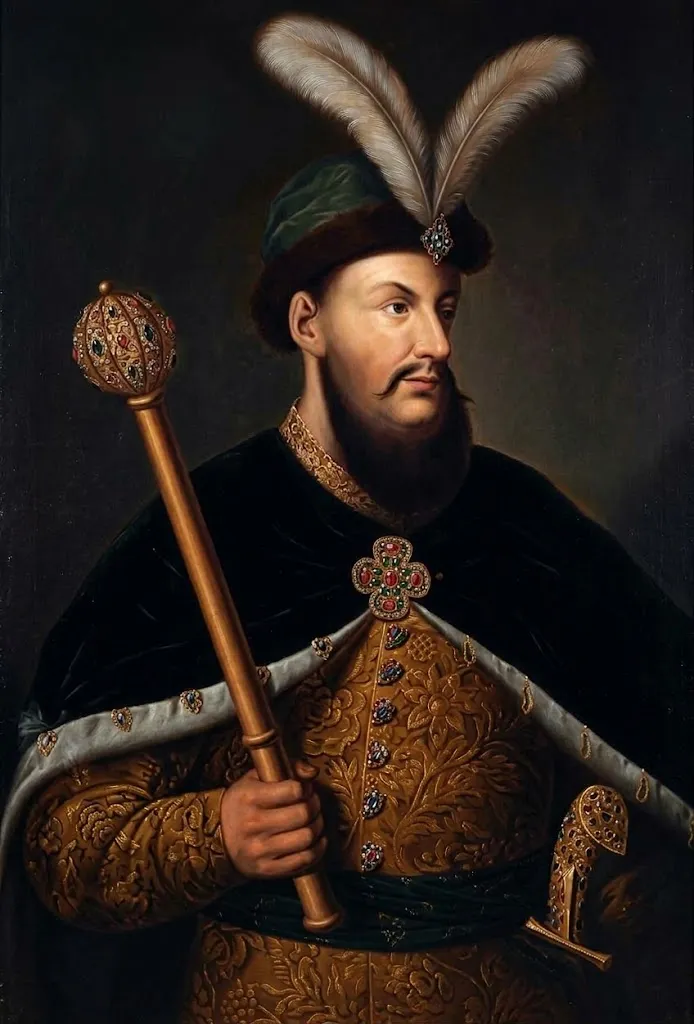
Severyn Nalyvaiko
Cossack leader of the 1594–96 uprising
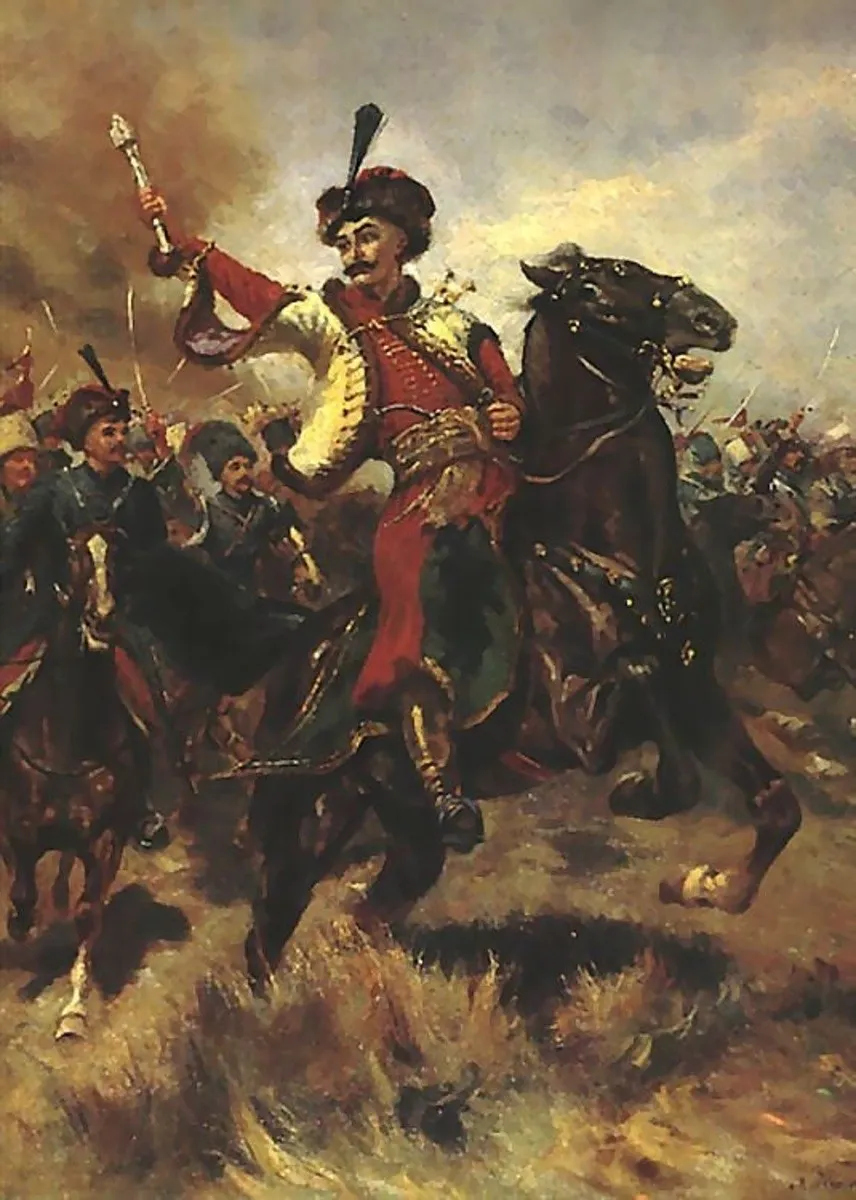
He started out as a captain in Prince Ostrozkyi’s army and fought the Turks in Moldavia; a year later the royal army was marching against him. Severyn Nalyvaiko led the Cossack uprising of 1594–1596, which spread across Podillia, Volhynia and Belarus. He was executed in Warsaw in 1597.
Key accomplishments
- Raised a force of 2,000 to defend Podillia against the Tatars (1594)
- Destroyed the Turkish fortress of Parkany, raided Bender, fought in Moldavia and Transylvania (1594–1595)
- Led the uprising of 1594–1596 across the Bratslav region, Volhynia, the Kyiv region and Belarus
- Elected hetman in the spring of 1596
From a prince’s service to an army of his own
Little is known about Severyn Nalyvaiko’s early life. He was probably born around 1560, in Husiatyn in Podillia or in Ostroh. As a young man he joined the Cossacks in Zaporizhzhia, then served as a captain in the private army of Prince Kostiantyn-Vasyl Ostrozkyi. Historians also know him as Semerii.
Against the Turks and the Tatars
Nalyvaiko first appears in the records in April 1594: in Podillia he gathered a band of 2,000 Cossacks to defend the land against the Tatars. In June his Cossacks destroyed the Turkish fortress of Parkany on the Dniester, and in August they raided Bender. Over the following months he campaigned in Moldavia alongside other Cossack leaders, Hryhorii Loboda and Matvii Shaula. In the spring of 1595 they fought the Turks in Moldavia and Transylvania and held back their advance on Austria, and that summer Nalyvaiko’s band was in Austrian service in Hungary.
The uprising
Soon, in the autumn of 1595, Nalyvaiko became the central figure in the Cossacks’ struggle, now against the order of the Polish-Lithuanian Commonwealth itself. His band raided from Lutsk through Slutsk, Babruisk and Mahiliou. Helped by the townspeople, the rebels took Bratslav, Bar, Lutsk, Kaniv, Cherkasy and other towns. The uprising was not without violence: in Bratslav the rebels and townspeople killed local noblemen, and in Terebovlia and Husiatyn Nalyvaiko laid waste to the estates of the nobleman Kalinowski, whom he blamed for his father’s death. By February 1596 he controlled most of Volhynia.
Solonytsia
The government sent Hetman Stanisław Żółkiewski with the royal army to put the uprising down. In April 1596, after a battle at Bila Tserkva, the Cossacks fell back to Pereiaslav and elected Nalyvaiko their hetman. On 26 May they were surrounded near Lubny, at a place called Solonytsia. After a two-week siege a mutiny broke out among the rebels: Loboda was killed, and on 7 July Nalyvaiko and Shaula were handed over to the Poles. During peace talks Żółkiewski’s army fell on the camp by surprise and killed several thousand Cossacks. Nalyvaiko was taken to Warsaw, where he was tortured and executed in the spring of 1597.
Why it matters today
Severyn Nalyvaiko rose from a captain in a prince’s service to a hetman chosen by the Cossacks themselves. His uprising brought Cossacks and townspeople together against the order of the Polish-Lithuanian Commonwealth and showed what a force the Cossacks could become for the Ukrainian lands. It was crushed, but not forgotten: folk legends and songs were made about him, Taras Shevchenko glorified him as a hero, and Mykola Vinhranovskyi considered his novel Severyn Nalyvaiko his finest work.