Ukraine's declaration of independence
Kyiv
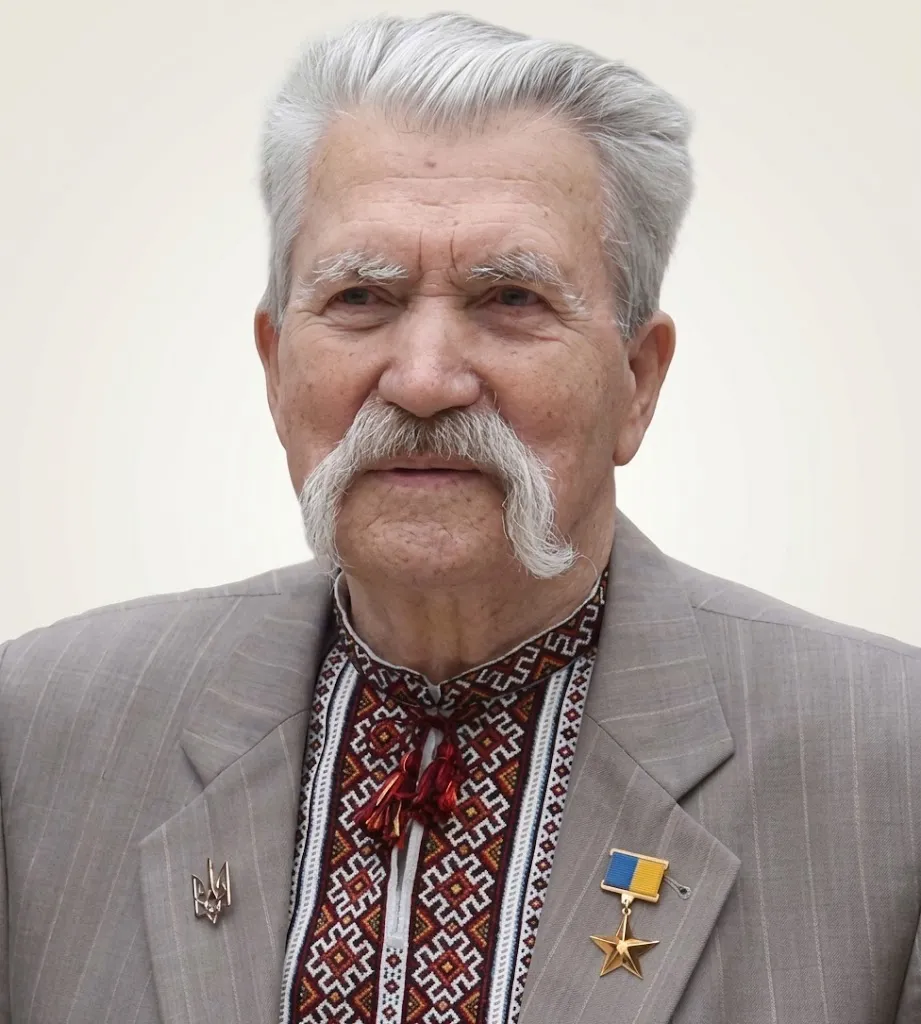
Ukraine declared its independence twice: on 24 August 1991 the Verkhovna Rada passed the Act written by Levko Lukianenko, and on 1 December more than 90% of those who voted in a nationwide referendum confirmed it. The next day the world began to recognise Ukraine.
Timeline
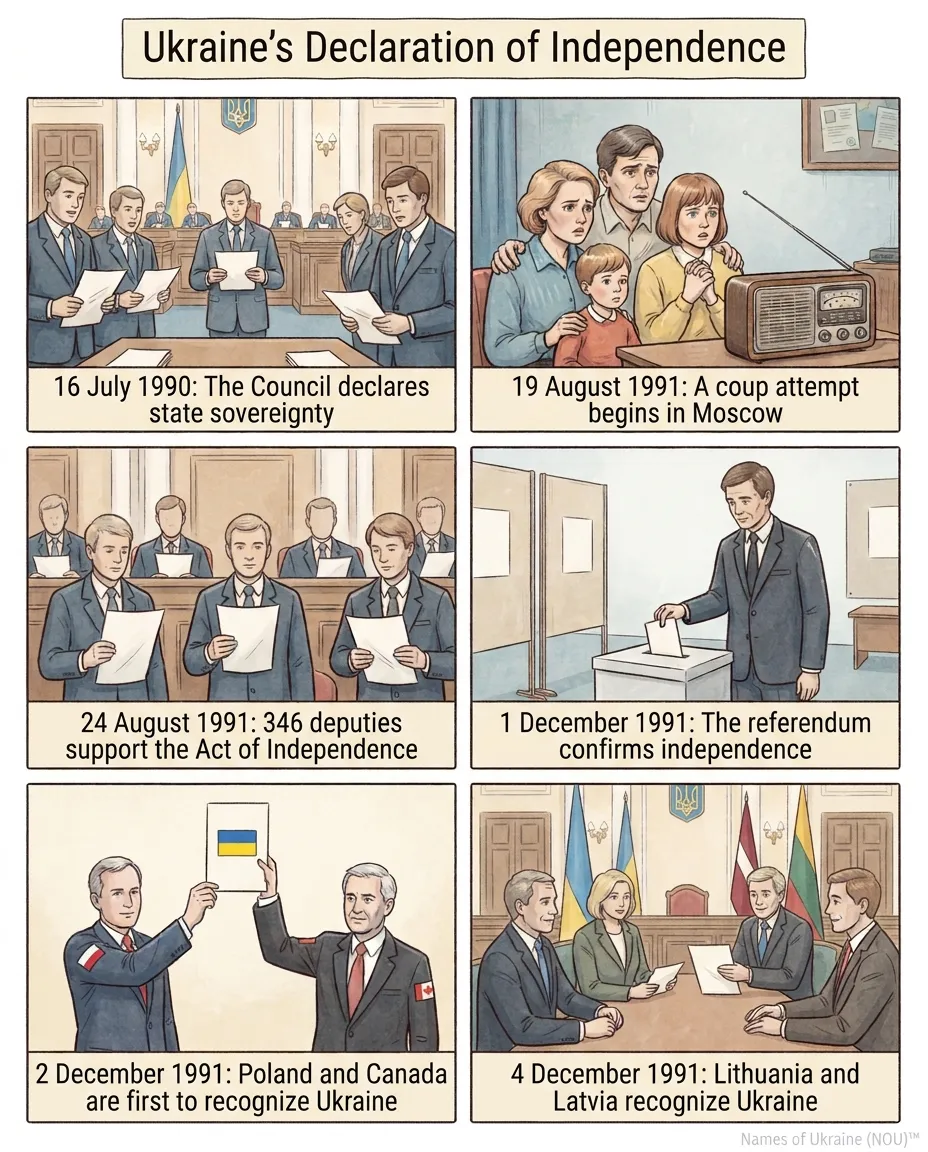
- 16 July 1990 The Verkhovna Rada of the Ukrainian SSR adopts the Declaration of State Sovereignty of Ukraine
- 19 August 1991 A coup attempt in Moscow; a state of emergency is declared
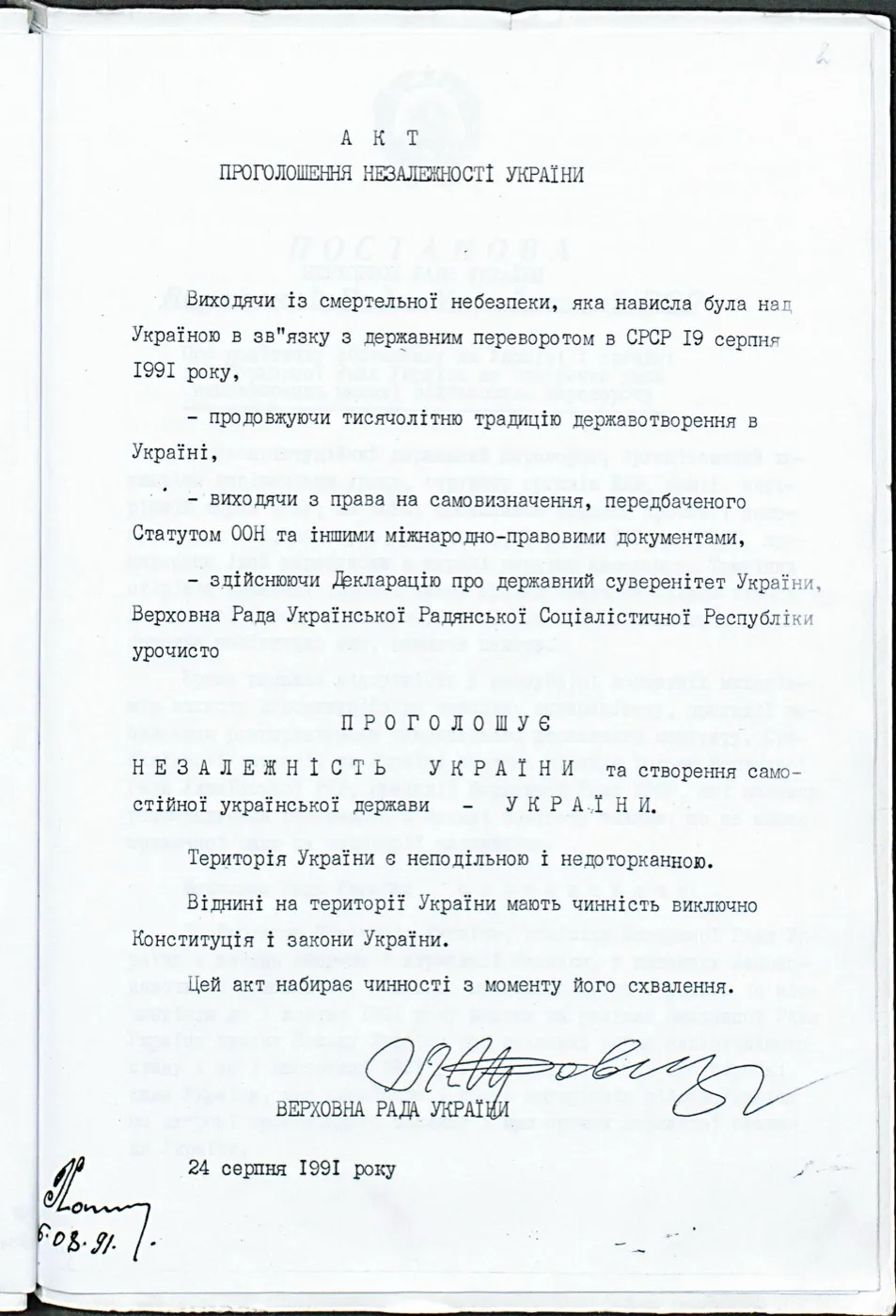
- 24 August 1991 The Verkhovna Rada passes the Act of Declaration of Independence of Ukraine, with 346 votes in favour
- 1 December 1991 A nationwide referendum confirms the Act; the first president is elected the same day
- 2 December 1991 Poland and Canada are the first to recognise Ukraine's independence
- 4 December 1991 Lithuania and Latvia recognise Ukraine's independence
Ukraine declared its independence twice. On 24 August 1991, 346 members of the Verkhovna Rada voted for it, and on 1 December more than 28 million citizens did so in a nationwide referendum. Between those two dates a Soviet republic became a state that the world began to recognise the very next day.
The first step: sovereignty
On 16 July 1990 the Verkhovna Rada of the Ukrainian SSR adopted the Declaration of State Sovereignty of Ukraine. Among its authors were the poet Dmytro Pavlychko and the former political prisoner Levko Lukianenko. The Declaration did not yet take Ukraine out of the USSR, but it laid the ground on which the Act of Independence stood a year later.
Three days in August
On 19 August 1991 a group of top officials in Moscow tried to remove Mikhail Gorbachev from power and declared a state of emergency. General Varennikov, speaking for the plotters, demanded that Ukraine submit to them. The opposition in parliament, the Narodna Rada led by Ihor Yukhnovskyi, decided to go to the people and to the factories and urge them not to obey the coup. Within days the coup collapsed.
24 August
The Narodna Rada came to the extraordinary session with a package of proposals ready. At its heart was the draft Act of Declaration of Independence, written by Levko Lukianenko. The final wording was polished in the corridors, and Pavlychko made one change to the preamble. The communist majority, shaken by the coup’s defeat, sat quietly. The Act proclaimed “the independence of Ukraine and the creation of an independent Ukrainian state – UKRAINE” and declared its territory indivisible and inviolable. 346 deputies voted in favour, and the opposition sang the national anthem in the chamber.
The same day parliament placed all troops on Ukrainian soil under its own command and decided to set up a Ministry of Defence. In September Kostiantyn Morozov became its head. Soon afterwards the Communist Party, whose leaders had backed the plotters, was banned in Ukraine.
The people have their say
Yukhnovskyi proposed that the whole people confirm the Act: a future parliament could undo a decision of this one, but not the will of the people. Many in the opposition were against it, but the resolution of 24 August set a referendum for 1 December. The ballot had one question: “Do you confirm the Act of Declaration of Independence of Ukraine?” Turnout was 84.18%, and 90.32% of those who voted said yes (some sources give up to 92.3%). Independence won in all 27 regions, including Crimea (54.19%) and Sevastopol (57.07%).
The first president was elected the same day. Leonid Kravchuk, the chairman of the Verkhovna Rada, won with 61.59% of the vote; Viacheslav Chornovil came second and Lukianenko third.
The world recognises Ukraine
On 2 December 1991 Poland and Canada recognised Ukraine’s independence. Poland points out that it was the first, on the same day as Canada. On 4 December Lithuania and Latvia followed.
Why it matters today
Ukraine’s independence did not fall from the sky: it was prepared by people who spent decades in the camps for it, and by those who found the right words and votes when the moment came. The referendum made it the decision not only of deputies but of citizens in every region of the country. That is why independence is neither a gift nor an accident, but a choice written into law and confirmed at the ballot box. Anyone who votes today, defends their country or builds it carries on what began in 1991.