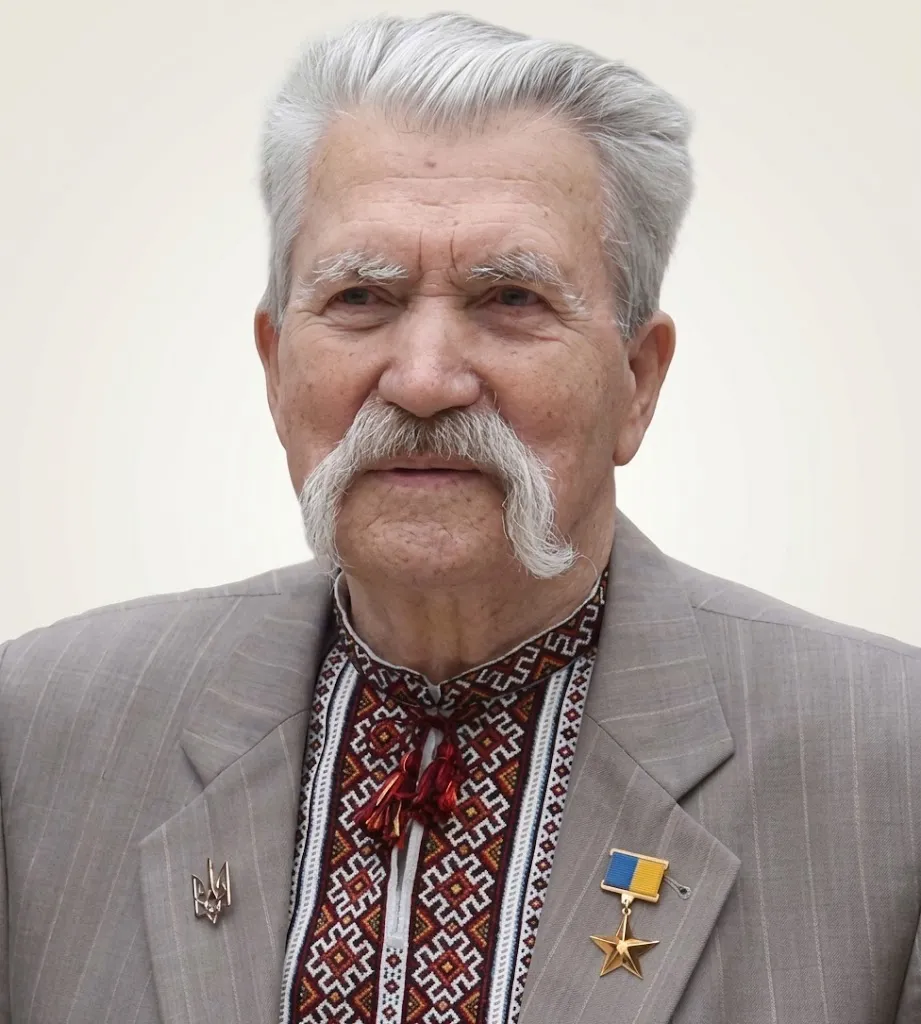
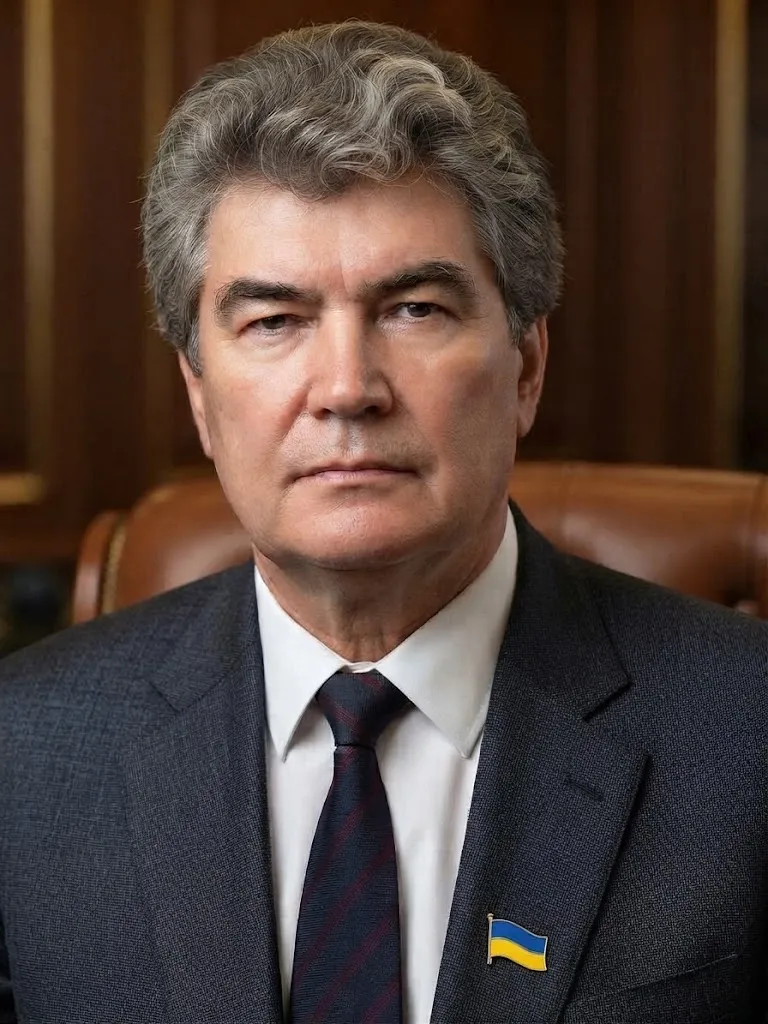
Ihor Yukhnovskyi
Physicist, head of the Narodna Rada
The idea of the referendum of 1 December 1991, which made independence irreversible, came from a theoretical physicist. Ihor Yukhnovskyi, founder of the Lviv school of statistical physics, led the opposition Narodna Rada in parliament and later the Institute of National Memory.
Key accomplishments
- Founder of the Lviv school of statistical physics; developed the method of collective variables
- Director of the Institute for Condensed Matter Physics of the National Academy of Sciences (1990–2006), academician
- Head of the opposition Narodna Rada (People's Council) in the Verkhovna Rada (1990–1991)
- Initiator of the all-Ukrainian referendum of 1 December 1991
- First Deputy Prime Minister of Ukraine (1992–1993); member of parliament for four terms (1990–2006)
- Head of the Ukrainian Institute of National Memory (2006–2010); one of the authors of the law on the Holodomor of 1932–1933 in Ukraine
- Hero of Ukraine (2005)
The physicist who proposed the referendum
Did you know that the idea of the nationwide referendum of 1 December 1991 came from a theoretical physicist? On 24 August 1991 the Verkhovna Rada passed the Act of Declaration of Independence, written by Levko Lukianenko. Ihor Yukhnovskyi, the leader of the parliamentary opposition, believed that a decision of parliament had to be confirmed by the whole people, and he proposed a referendum. On 1 December Ukrainians backed the Act, and independence became irreversible.
From the front to formulas
He went through the front of the Second World War as a young man. Yukhnovskyi was born on 1 September 1925 in the village of Kniahynyn in the Rivne region, into a religious family: until he was six he lived with his grandfather, a priest. After demobilisation he studied physics at Lviv University, graduating in 1951. He stayed on there and headed the department of theoretical physics from 1959 to 1969.
His field was statistical physics: how huge numbers of particles behave in liquids, solutions, metals and alloys. For such problems Yukhnovskyi developed the method of collective variables, and he founded the Lviv school of statistical physics. In 1990 he became director of the new Institute for Condensed Matter Physics in Lviv and led it until 2006. He also worked on the safety of the Shelter, the structure over the destroyed reactor at Chornobyl.
Head of the Narodna Rada
From the lab to public life: in the late 1980s the scientist headed the Lviv branch of the Memorial society and supported the People’s Movement of Ukraine (Rukh). In 1990 he was elected to parliament, where he led the Narodna Rada (People’s Council), the opposition alliance of democratic deputies. Ukraine’s first defence minister, Kostiantyn Morozov, recalled that the deputies of the Narodna Rada were his first and unconditional allies in parliament.
In the presidential election of 1 December 1991 Yukhnovskyi was a candidate too and won 1.74% of the vote; second place went to Viacheslav Chornovil. From October 1992 to March 1993 Yukhnovskyi was First Deputy Prime Minister, and among other things he backed the participation of Ukrainian scientists in the work of CERN, the European particle physics laboratory. He was elected to parliament four times in a row, serving until 2006.
Remembering the Holodomor
He became head of the newly created Ukrainian Institute of National Memory in 2006 and led it until 2010. One of the institute’s main tasks was research into the Holodomor of 1932–1933, the famine whose truth the communist regime had hidden and falsified for decades. Yukhnovskyi was one of the authors of the law on the Holodomor of 1932–1933 in Ukraine and presented it to the Verkhovna Rada before the vote. In 2008, on the institute’s initiative, work began on the National Book of Memory of the Victims of the Holodomor.
He was made a Hero of Ukraine in 2005. Ihor Yukhnovskyi died in Lviv on 26 March 2024, at the age of 98.
Why it matters today
Ihor Yukhnovskyi showed that a scientist can build a state as carefully as he solves a problem. He proposed that the independence declared by parliament be confirmed by the voice of the whole people, and it was that voice that made it irreversible. He led the opposition in a parliament that was still Soviet, and later pushed for the state to call the Holodomor by its name. Anyone who combines knowledge with civic courage carries on his work.