The Revolution on Granite
Maidan Nezalezhnosti (Independence Square), Kyiv
Can students with tents bring down a government? In October 1990 they went on hunger strike for two weeks on the granite of Kyiv’s main square, parliament gave in to their demands and Prime Minister Vitalii Masol resigned. The protest is known as the first Maidan.
Timeline
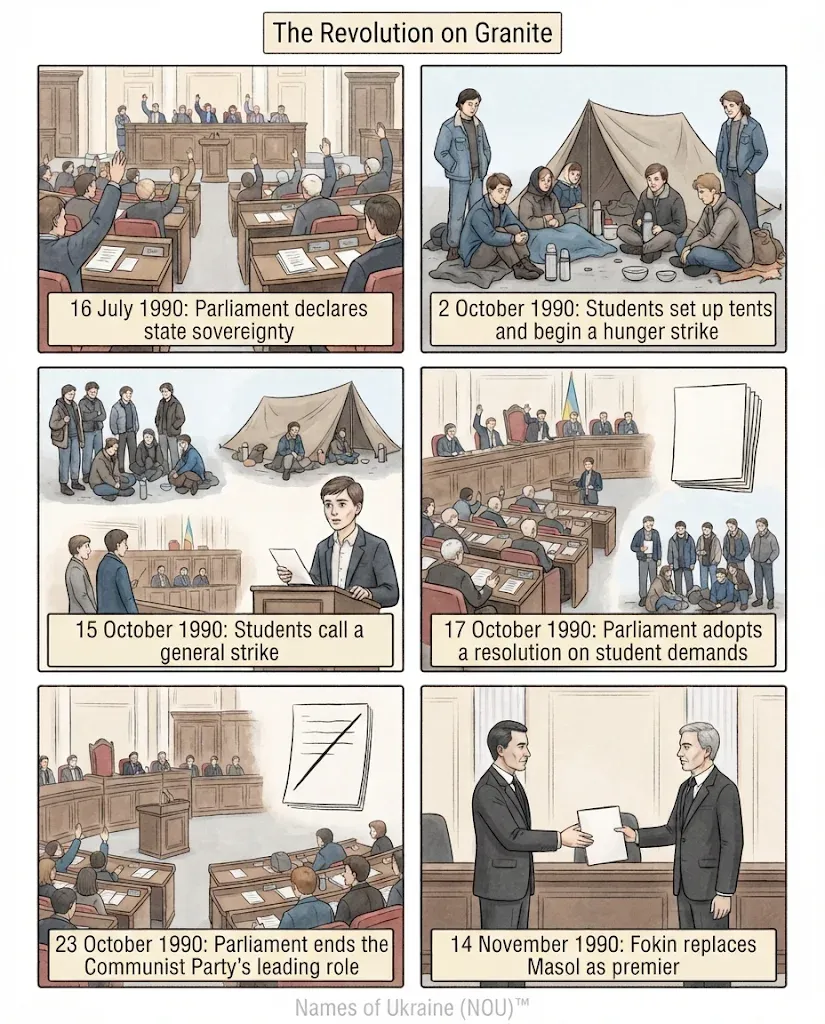
- 16 July 1990 The parliament of Soviet Ukraine adopts the Declaration of State Sovereignty of Ukraine
- 30 September – 1 October 1990 Despite a ban, 100,000 to 150,000 people join rallies of the People’s Movement (Rukh) in Kyiv
- 2 October 1990 Students pitch tents on October Revolution Square and begin a hunger strike
- 15 October 1990 A general student strike; a second tent camp outside parliament; Oles Donii addresses the chamber
- 17 October 1990 Parliament passes a resolution on the students’ demands by 314 votes; the hunger strike ends
- 23 October 1990 Parliament repeals Article 6 of the constitution on the leading role of the Communist Party
- 14 November 1990 Vitold Fokin replaces Masol as head of government
Why was it called the Revolution on Granite? The tents where students lived and went hungry for two weeks stood on the granite paving of what was then October Revolution Square in Kyiv, today’s Maidan Nezalezhnosti. From 2 to 17 October 1990 young people from Lviv, Kyiv and other cities refused food until the communist authorities of Soviet Ukraine gave way. And they did: it was the first successful nonviolent protest against communist rule in Ukraine. The next year Ukraine became independent.
Sovereignty on paper
On 16 July 1990 the parliament of Soviet Ukraine adopted the Declaration of State Sovereignty. But the Communist Party leadership and Vitalii Masol’s government followed Moscow, which was preparing a new Union Treaty to keep the republics inside the USSR. On 30 September and 1 October, despite a ban, 100,000 to 150,000 people joined rallies of the People’s Movement of Ukraine (Rukh) in Kyiv, and one of their demands was that Masol’s government go.
Five demands
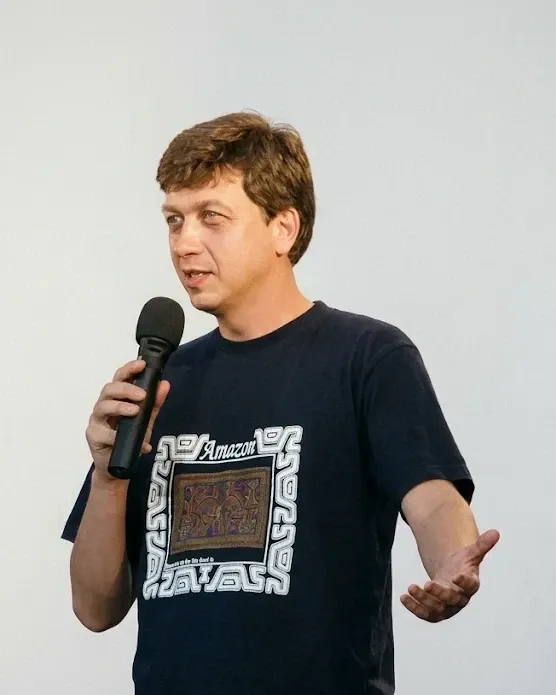
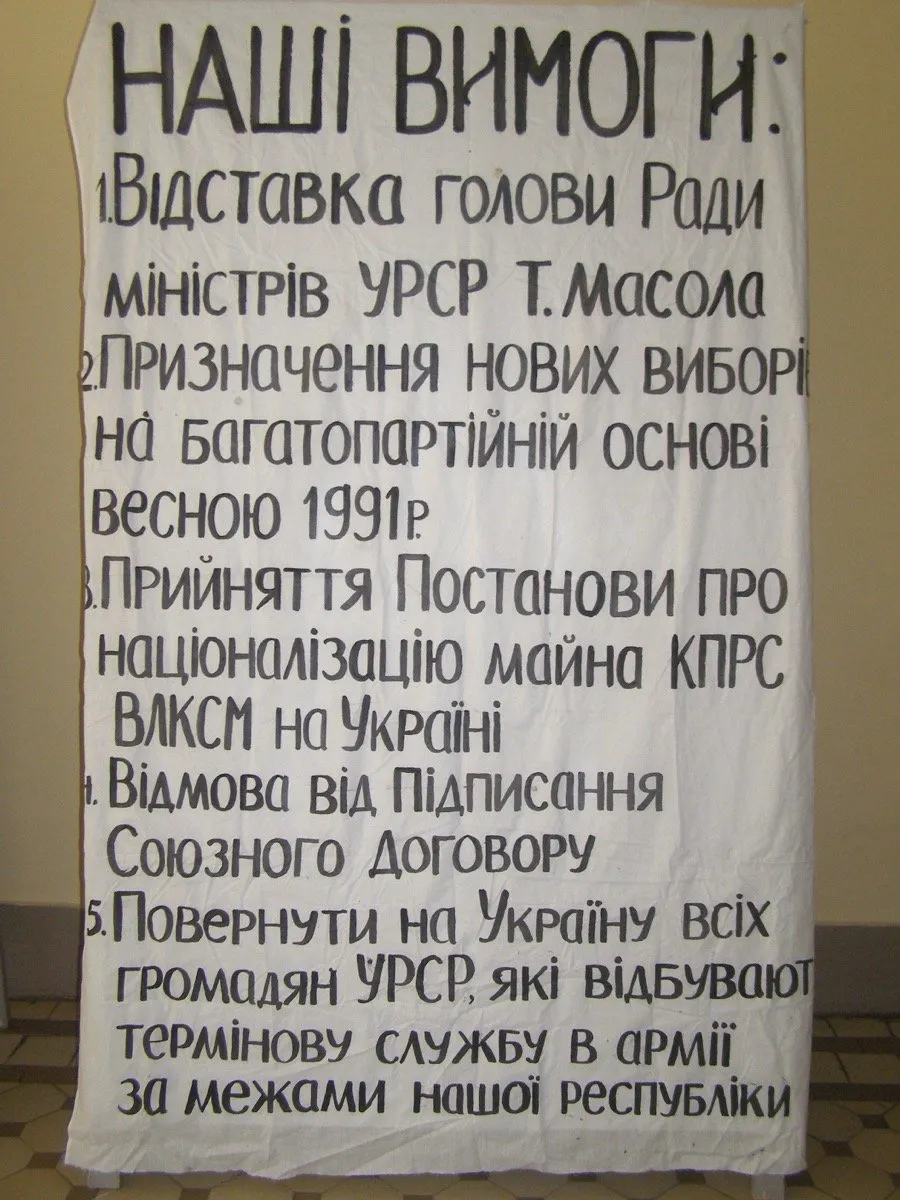
On 2 October the Ukrainian Student Union and the Lviv Student Brotherhood set up a tent camp in the middle of the square. The faces of the protest were Oles Donii, a Kyiv student, and Markiian Ivashchyshyn, leader of the Lviv brotherhood. The Kyiv students brought three demands and the Lviv students two more, and they merged them into one programme: Masol’s resignation; new multiparty elections in spring 1991; nationalisation of Communist Party and Komsomol property; no new Union Treaty; and all Ukrainian conscripts serving outside the republic to be brought home.
Sources give between 137 and 158 hunger strikers: some fasted for a day or two, others for up to 12 days. With those who lived in the camp and kept watch, several hundred people took part.
Kyiv takes the students’ side
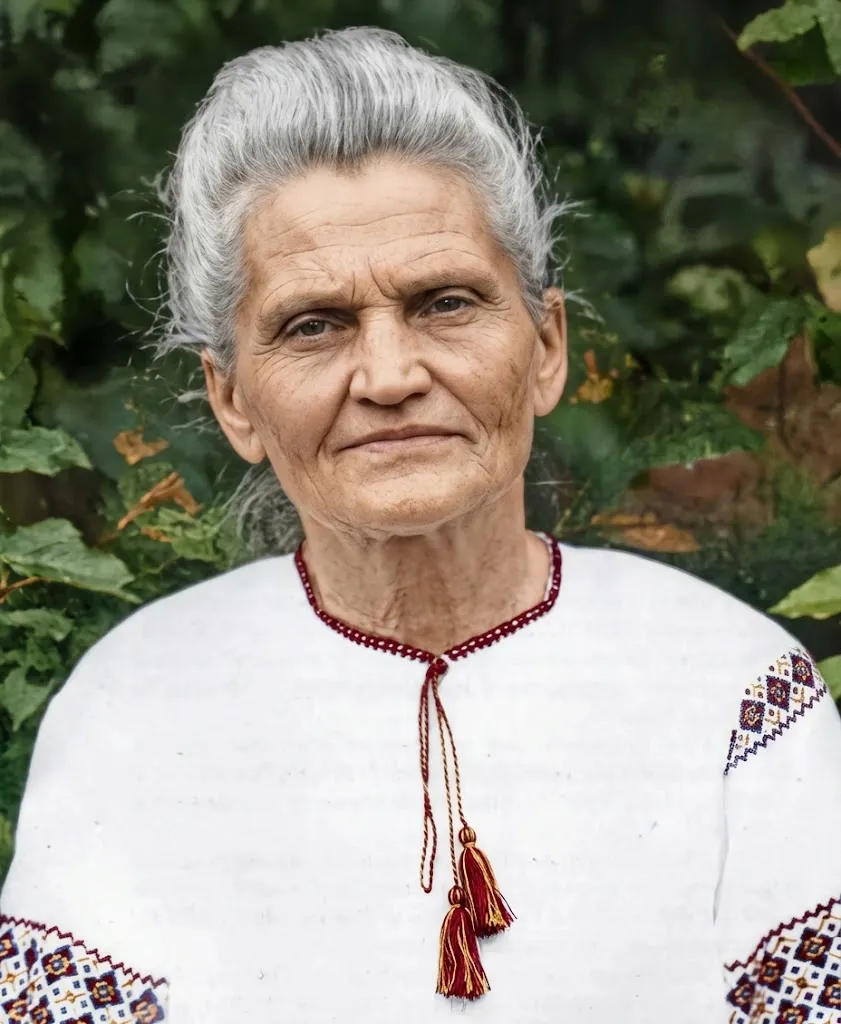
Every day thousands of Kyivans gathered by the tents, bringing the students warm clothes and hot tea. Opposition deputies backed them, among them Mykhailo Horyn, as did the former political prisoner Oksana Meshko, and the actress Nila Kriukova joined the hunger strike herself. The writer Oles Honchar left the Communist Party in solidarity. Leonid Kravchuk, the chairman of parliament, came to the tents too, and Donii addressed him not as “comrade” but as “Mister Leonid”. The authorities did not dare to use force.
Tents outside parliament
On 15 October Kyiv’s students declared a general strike. At Kyiv University they took over the main buildings and declared an occupation strike. The same day protesters broke through a police cordon and set up a second tent camp right at the entrance to parliament, and Donii spoke for the students from the parliamentary rostrum. Workers across the country began talking of strikes in the students’ support.
What parliament promised
On 17 October parliament passed a resolution on the students’ demands by 314 votes. It promised Masol’s dismissal, a law on multiparty elections by the end of the year and a referendum on confidence in parliament in early 1991, with new elections if confidence was lacking. Ukrainians were to do military service under Ukrainian law, a commission was to deal with Communist Party and Komsomol property, and the new Union Treaty was not to be signed until Ukraine adopted a new constitution. The students called off the hunger strike but warned they would resume it if the promises were broken. Masol resigned, and on 14 November Vitold Fokin became head of government. Later, though, criminal cases were opened against those who had occupied the university, and in November Donii was briefly detained.
Debates and assessments
Accounts differ on how many demands were met. Some scholars write that by the end of 1990 only one was, Masol’s resignation; others say three of the five, and most of them in time. Donii himself counted the refusal of the Union Treaty, the decision not to send Ukrainian soldiers outside the republic and the prime minister’s resignation as fully met, and the property commission and the referendum decision as partly met. The deputies did not hold early elections at the time. So participants remember the hunger strike both as a victory and as a missed chance to renew those in power, and some scholars write that it was not a revolution in the full sense.
Why it matters today
The Revolution on Granite showed that a few hundred unarmed students can make a powerful regime give way when society stands behind them. It is called the first Maidan. The tent camp on the main square, the peaceful discipline, the songs and poems came back in the “Ukraine without Kuchma” protests, the Orange Revolution and the Revolution of Dignity. Any young Ukrainian who stands up peacefully for their rights today carries on what the students began on the granite in 1990.