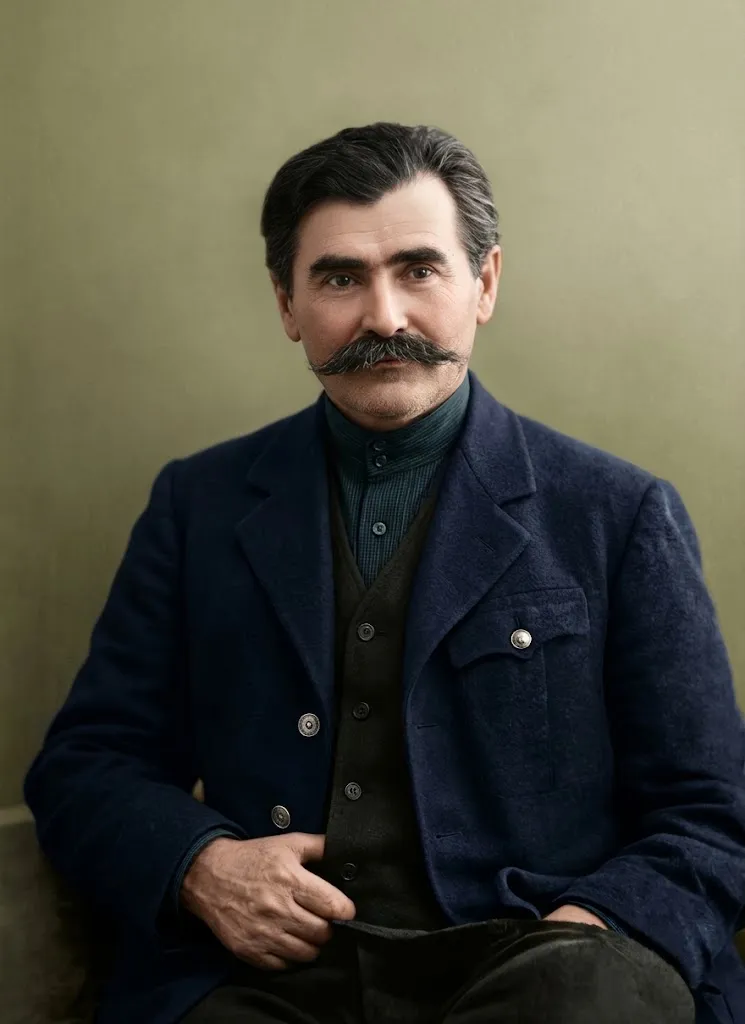
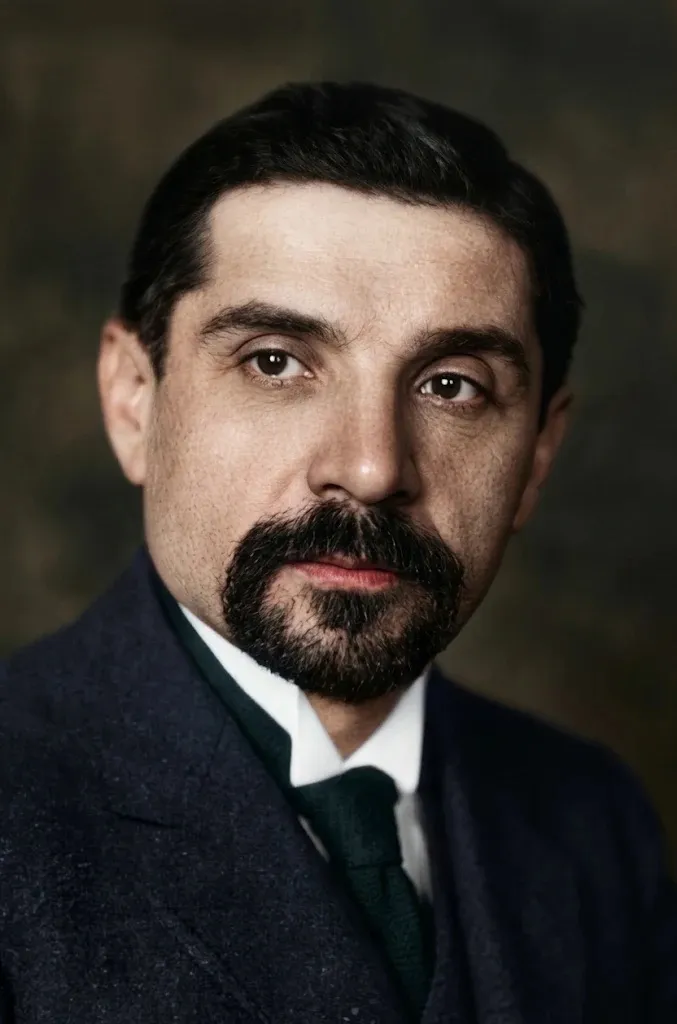
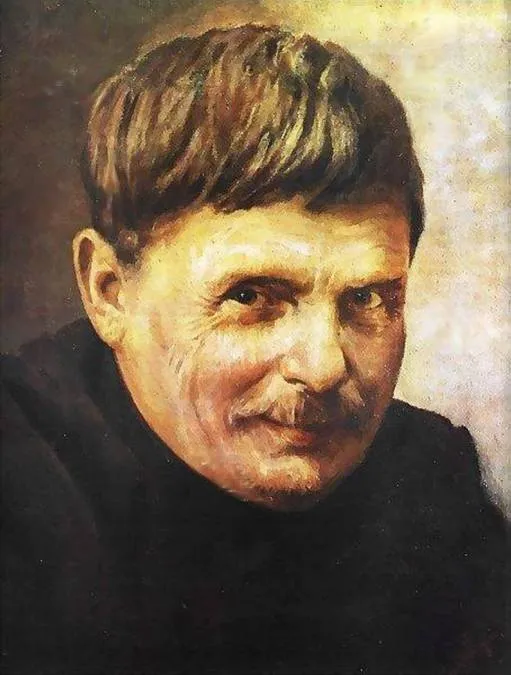
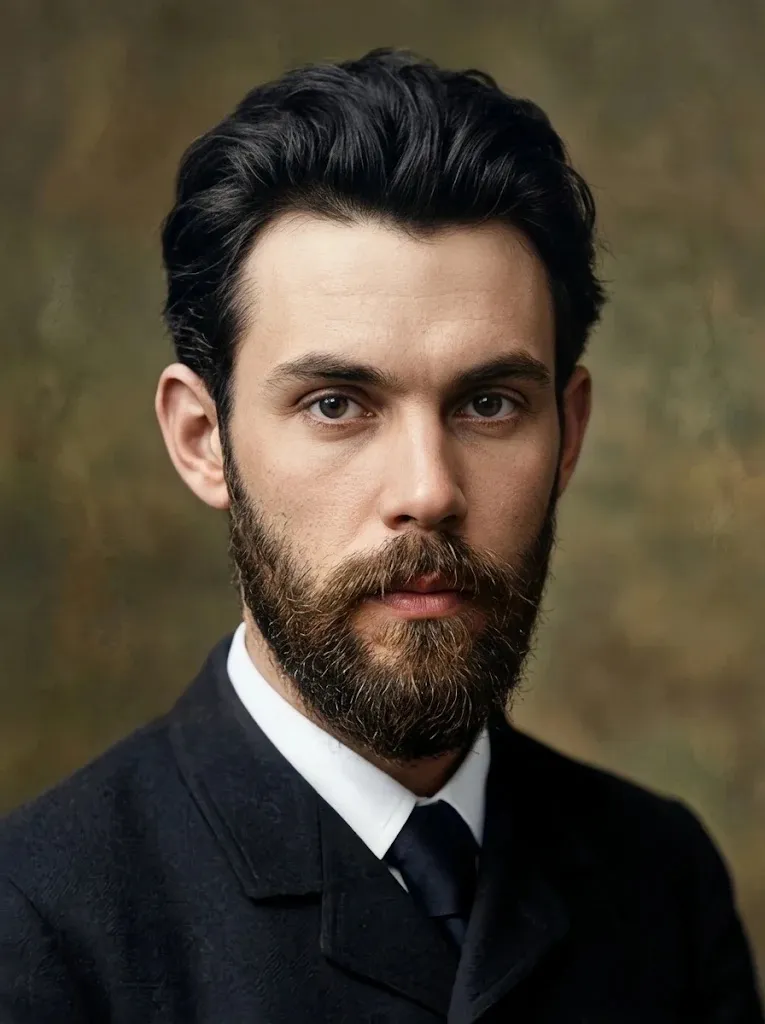
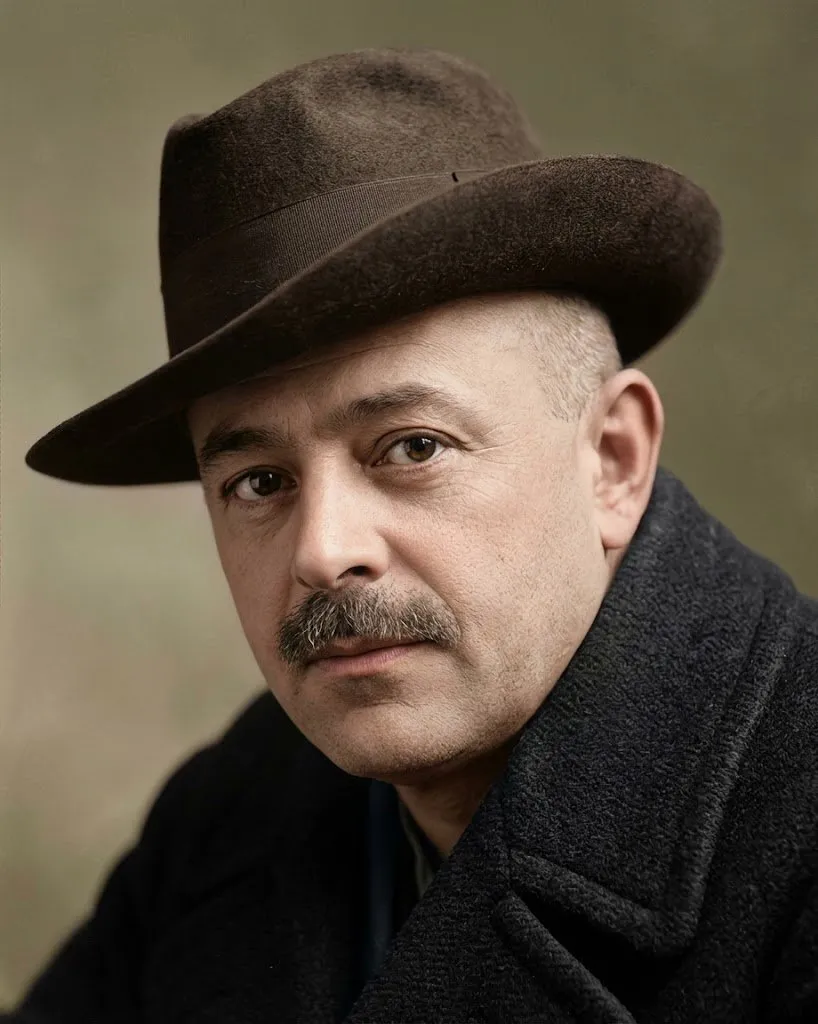
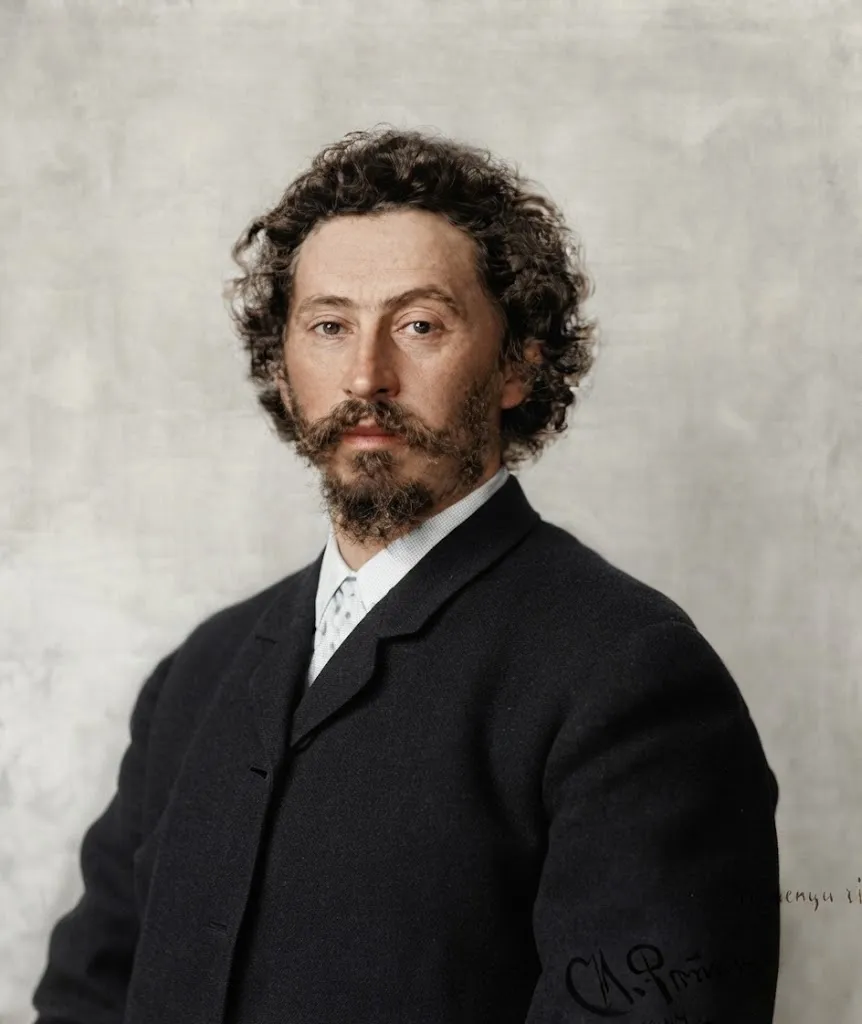
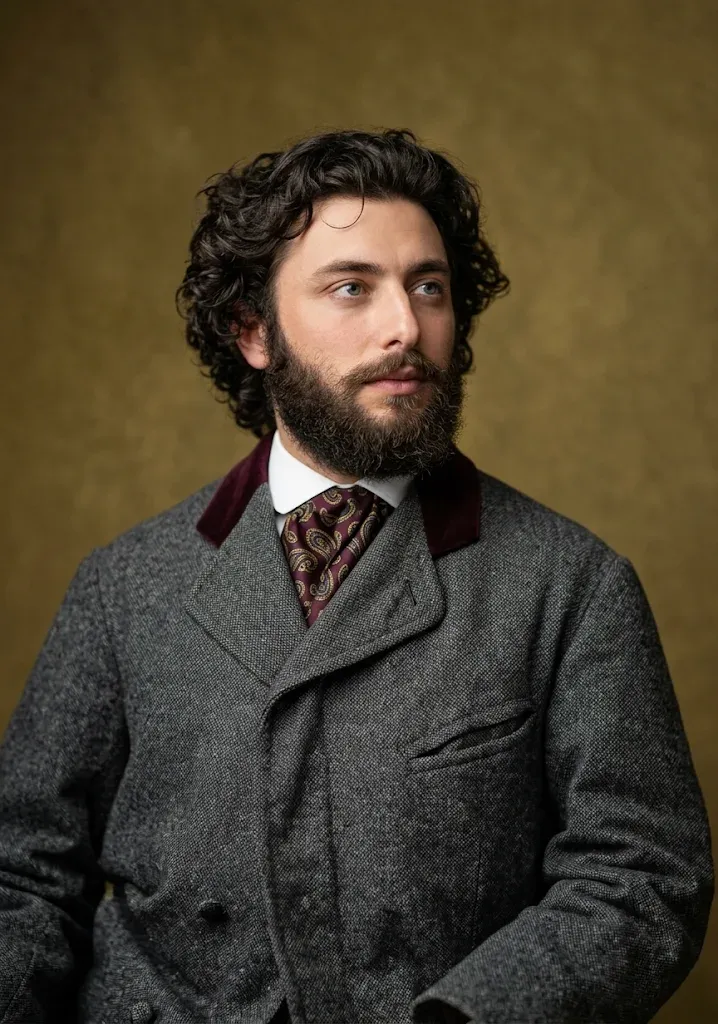
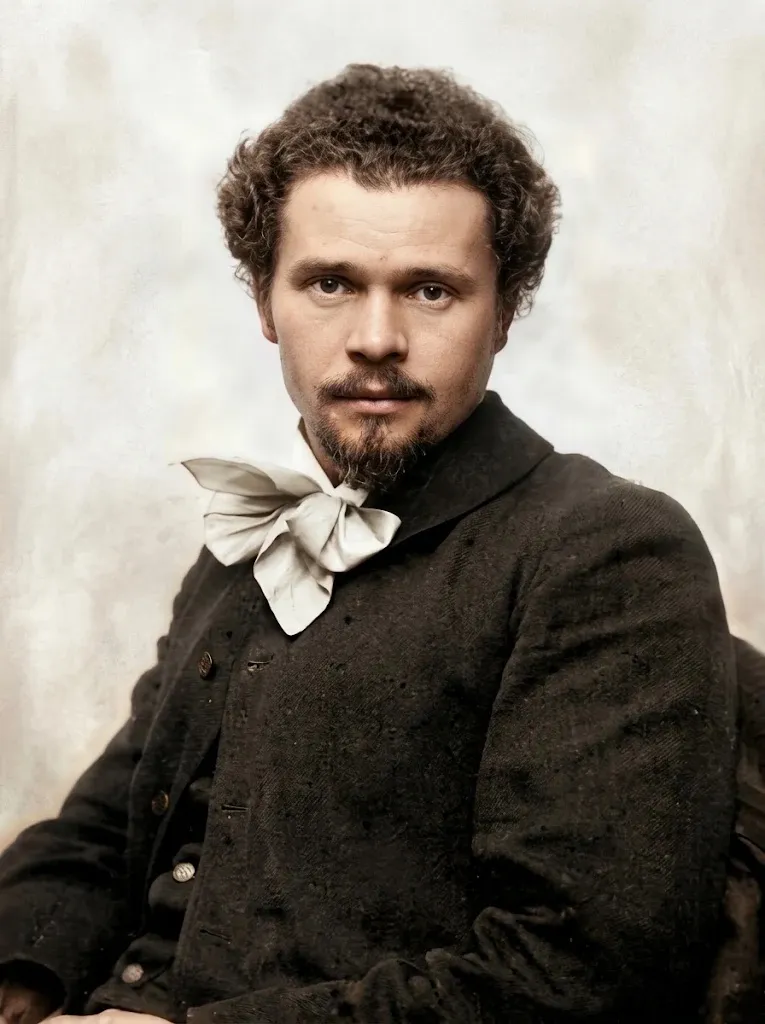
Opanas Slastion
Painter, architect, ethnographer
Village schools with little towers and hexagonal windows still stand in the Poltava region. They were designed by Opanas Slastion, an artist who illustrated Shevchenko's Haidamaky, drew kobzars for over fifty years and helped create the Ukrainian Art Nouveau style in architecture.
Key accomplishments
- 55 pen drawings for Taras Shevchenko's poem Haidamaky (1883–1885; published 1886)
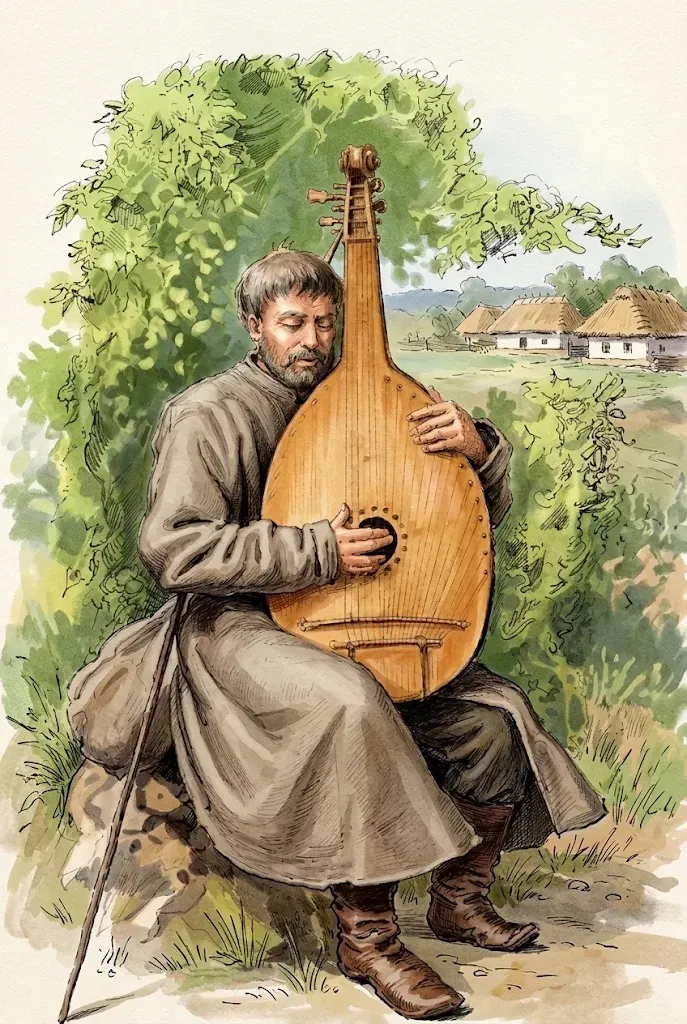
- A gallery of portraits of Ukrainian kobzars (1875–1928), published as a book in 1961
- One of the creators of Ukrainian Art Nouveau architecture; designs for the zemstvo schools of Lokhvytsia county (1910–1916)
- Wrote down dumy from kobzars and helped Filaret Kolessa record them on phonograph (1908)
- Teacher at the Myrhorod school of arts and crafts (1900–1928)
- Founder of the Myrhorod museum of science, art and crafts (1920), today the local history museum
A school with a tower
Picture a village school with a tall little tower over the door, hexagonal windows and a brick pattern on the walls that looks like embroidery. Schools like this went up in the Lokhvytsia area between 1910 and 1916, to designs by Opanas Slastion. Sources give anything from fifty to a hundred of them. Inside, the walls between classrooms slid open to make one large hall, and the teachers had rooms to live in.
Cossack history in the imperial capital
The son of an icon painter from Berdiansk, where he was born in 1855, Slastion studied at the St Petersburg Academy of Arts (1874–1882) and spent his summers travelling through Ukrainian villages, sketching people and writing down dumy, the long epic songs of the kobzars. He also began drawing the kobzars themselves, and kept adding to this gallery for more than fifty years, until 1928. On many portraits he noted where the singer came from, how old he was and what he sang.
In 1883–1885 Slastion made 55 pen drawings for Taras Shevchenko’s poem Haidamaky, which illustrated its 1886 edition. From 1887 to 1900 he designed military uniforms at the war ministry in St Petersburg, and used the job to study documents on the Ukrainian Cossacks.
Myrhorod and the kobzars’ voices
Slastion played the bandura and sang dumy himself. He moved to Myrhorod in 1900 and for almost thirty years taught at the local Mykola Gogol school of arts and crafts. He drew the kobzar Mykhailo Kravchenko several times and in 1902 published an article about him.
In 1908 Slastion helped Filaret Kolessa record the kobzars and lirnyks (hurdy-gurdy players) of the Myrhorod area on phonograph, and after Kolessa left he went on recording singers himself for two more years. That autumn Lesya Ukrainka and her husband, the musicologist Klyment Kvitka, joined the work.
Buildings in a Ukrainian style
When Vasyl Krychevskyi designed the provincial zemstvo building in Poltava in a folk spirit, Slastion backed the idea. Soon he became one of the creators of Ukrainian Art Nouveau architecture himself: besides schools, he designed buildings for credit cooperatives and a hydropathic clinic in Myrhorod.
In Soviet times most of the schools lost their towers, because such architecture was branded “bourgeois nationalist”. Nearly fifty of the schools survive, and in 2018 thirty of them were entered in the register of architectural monuments.
Saving the past
Slastion rescued works of art from the nobility’s estates in the Poltava region during the turbulent years of 1917–1920. In 1920 he used what he had gathered to open a museum in Myrhorod, which grew into today’s local history museum. Opanas Slastion died in Myrhorod on 24 September 1933.
Why it matters today
Opanas Slastion proved that being Ukrainian could also mean being modern: in his hands a peasant embroidery pattern became the brickwork of a new school. His portraits kept the faces of the kobzars, and his recordings kept their voices. His schools showed that a village child deserved a beautiful place to learn, built with love for people. Anyone who takes a folk tradition and makes something new of it carries on his work.