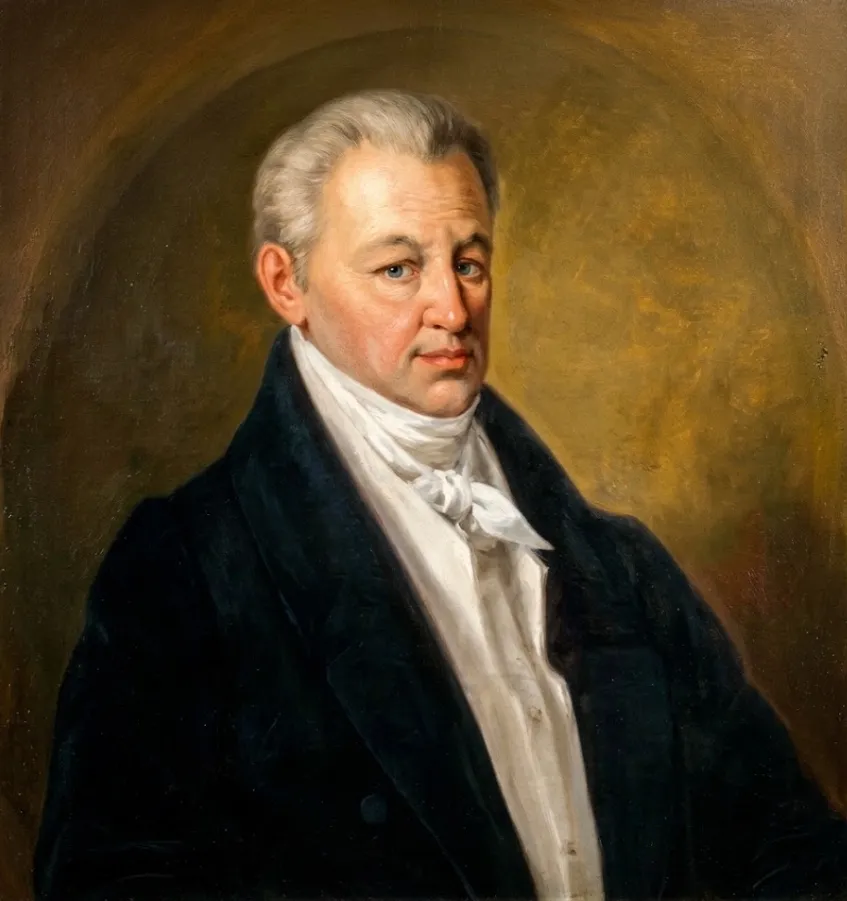
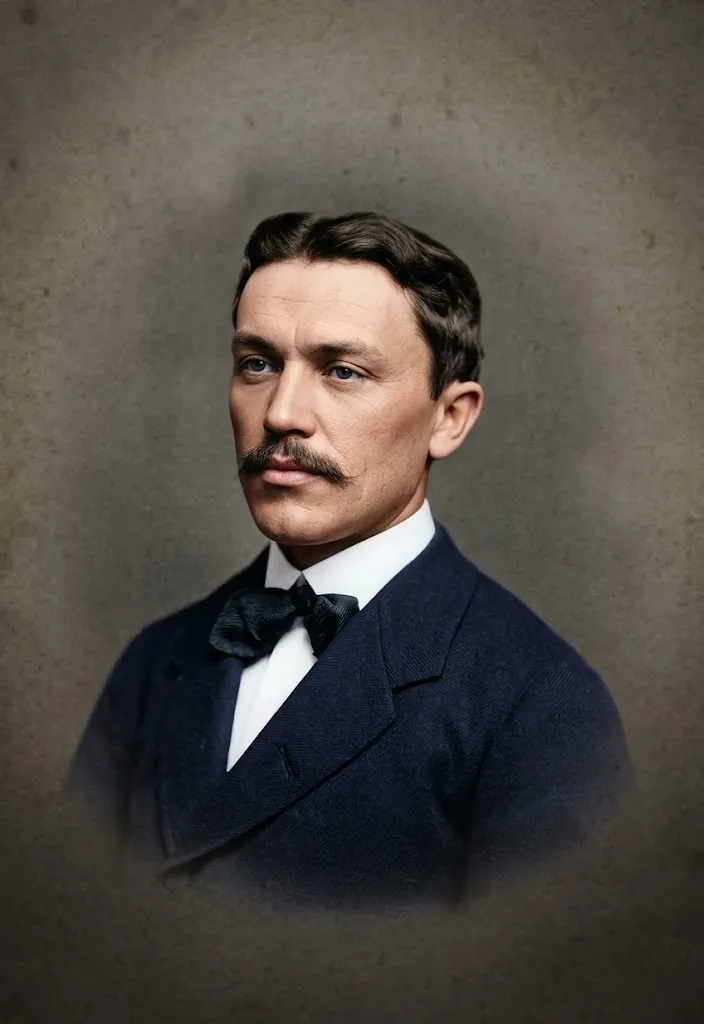
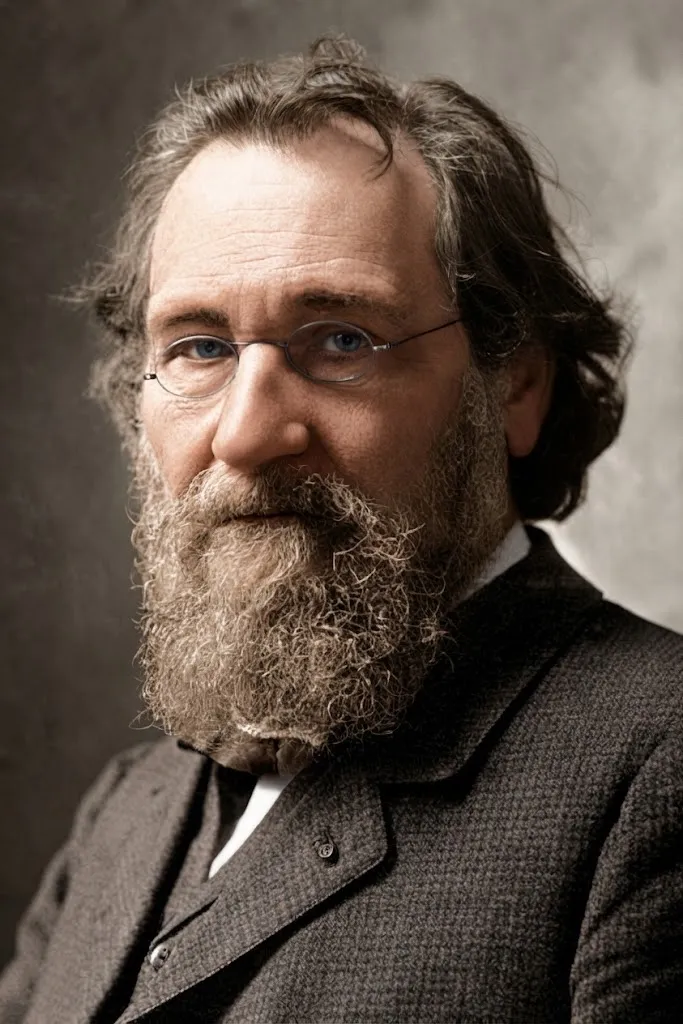
Mykhailo Ostrohradskyi
Mathematician, academician
A theorem often named after Gauss was first proved in its general form by a 24-year-old from Poltava, in Paris. Mykhailo Ostrohradskyi was refused his university degree and went on to become one of the finest mathematicians of the 19th century.
Key accomplishments
- The first general proof of the theorem that turns an integral over a volume into an integral over its surface (1826; the Gauss-Ostrogradsky or divergence theorem)
- Ostrogradsky’s method for integrating rational functions
- Work in theoretical mechanics, mathematical physics, analysis, ballistics, elasticity and heat conduction
- Member of the St Petersburg Academy of Sciences and of the academies of New York, Turin and Rome; corresponding member of the Paris Academy (1856)
- Chief inspector of mathematics teaching in military schools (from 1847); author of textbooks and founder of a school of mathematics
- Entered by UNESCO in its list of the world’s outstanding mathematicians (2001)
The boy who measured wells
As a child, Mykhailo Ostrohradskyi measured and counted everything. He was born in 1801 on the Pashenna farmstead in the Poltava region, into a poor branch of an old family of Cossack officers. In Poltava he lived in a boarding house for children of poor nobles, run by Ivan Kotliarevskyi, the author of the Eneida. He was an average pupil at the gymnasium and dreamed of the army, but his family talked him into going to Kharkiv University.
No degree
Can you become a great scientist after being sent away without a degree? In Kharkiv the young man fell in love with mathematics and in 1820 passed his final exams. But the ministry in charge of both the church and education refused to confirm his degree, blaming his “freethinking” and his missed lectures in theology. Ostrohradskyi refused to sit the exams again and was left without a diploma.
Paris and the formula
He went to Paris, then the capital of mathematics, in 1822, although his family was against it and he was robbed on the way. There he attended lectures by Laplace, Fourier, Cauchy and Poisson. When his father stopped sending money, Ostrohradskyi fell behind on his rent and was taken to court. His relatives said he even ended up in a debtors’ prison. The mathematician Augustin-Louis Cauchy paid his debts and found him a teaching job at the Collège Henri IV.
In 1826 Ostrohradskyi submitted a paper to the Paris Academy of Sciences that proved, in general form, the theorem linking an integral over a volume to an integral over the surface that bounds it. Carl Friedrich Gauss, unaware of this, proved special cases later, so the theorem is often named after him, or called the Gauss-Ostrogradsky theorem.
An academician from the Poltava region
Not by carriage, as befitted a nobleman, but on foot all the way from Frankfurt am Main: that is how Ostrohradskyi reached St Petersburg in 1828, hungry, nearly barefoot and robbed on the way. The police at first put him under watch, yet that December he was elected to the St Petersburg Academy of Sciences, and he later became a full academician. This heavy-set giant, 190 cm tall, has been called “the Gulliver of mathematics”. He taught at the city’s higher schools, and from 1847 oversaw the teaching of mathematics in all the empire’s military schools. He had lost his right eye after carelessly striking a match.
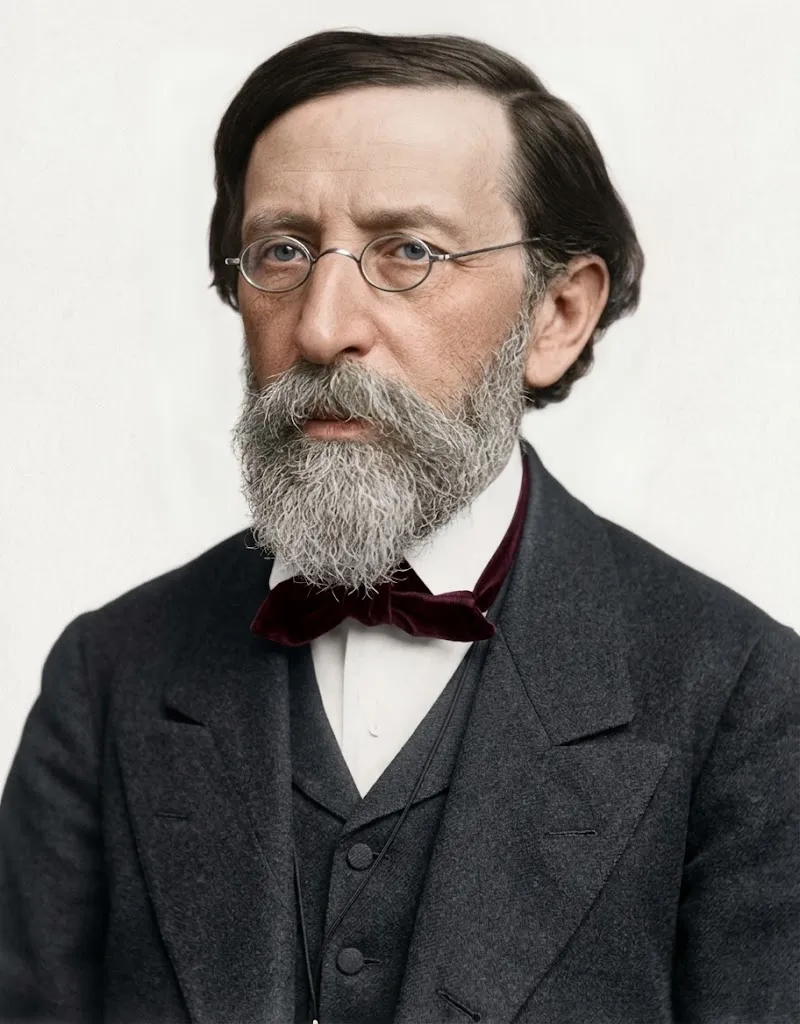
In 1832 the Academy asked Ostrohradskyi to review Nikolai Lobachevsky’s paper on non-Euclidean geometry. He wrote that he did not understand most of it and judged it unworthy of the Academy’s attention. When russia lost the right to a Black Sea fleet in 1856 and many staff were dismissed, Ostrohradskyi and fellow academician Bunyakovsky did the calculations for the Naval Department’s pension fund. Life insurance was then a novelty.
Shevchenko’s countryman
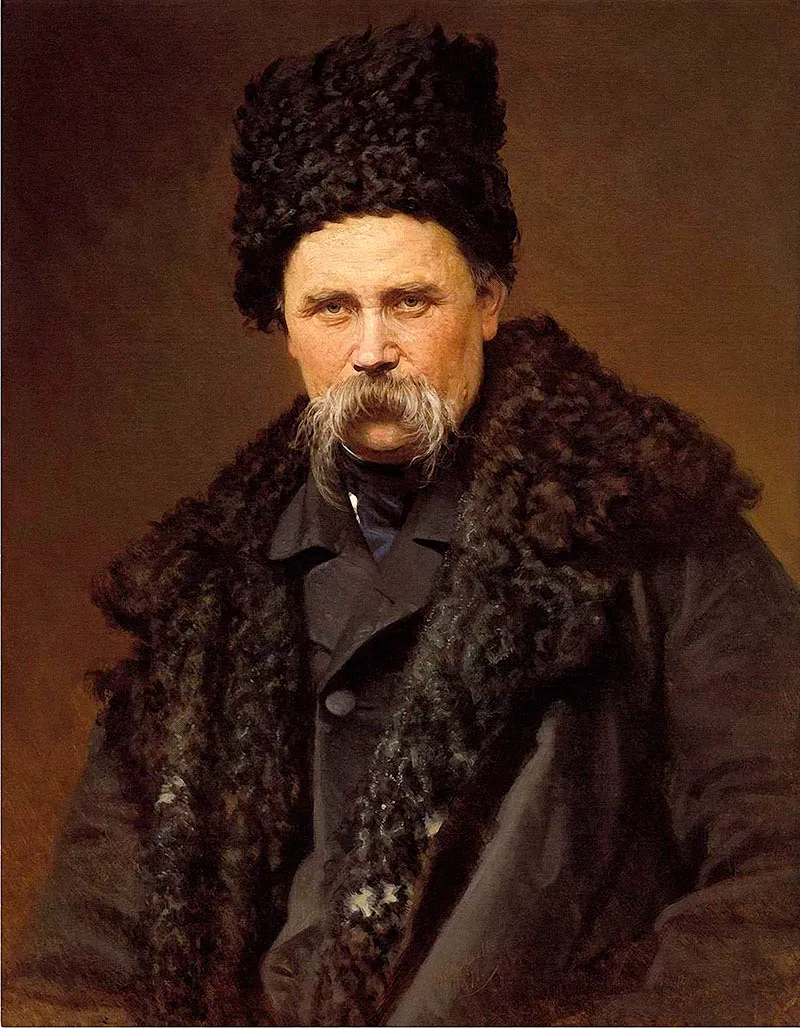
At home Ostrohradskyi spoke Ukrainian, and in his lectures he often used Ukrainian sayings. He was a friend of Taras Shevchenko: in 1858 the poet wrote in his diary that the great mathematician had greeted him as a countryman, and in his novel The Artist he called Ostrohradskyi a mathematical genius. He died on 1 January 1862 in Poltava and, as he had wished, was buried in the family vault at Pashenna.
Why it matters today
Mykhailo Ostrohradskyi showed that a boy from a Poltava farmstead, refused his degree, could stand alongside the best scientists in Europe. A formula, a method and the Hamilton-Ostrogradsky principle bear his name and are still at work in mathematics and physics. He trained students and laid the foundations of a school of mathematics, and all his life he stayed Ukrainian in language and spirit. Anyone who keeps going after knowledge in spite of obstacles is walking his road.