1845–1916
Ilya Mechnikov
Biologist, Nobel laureate
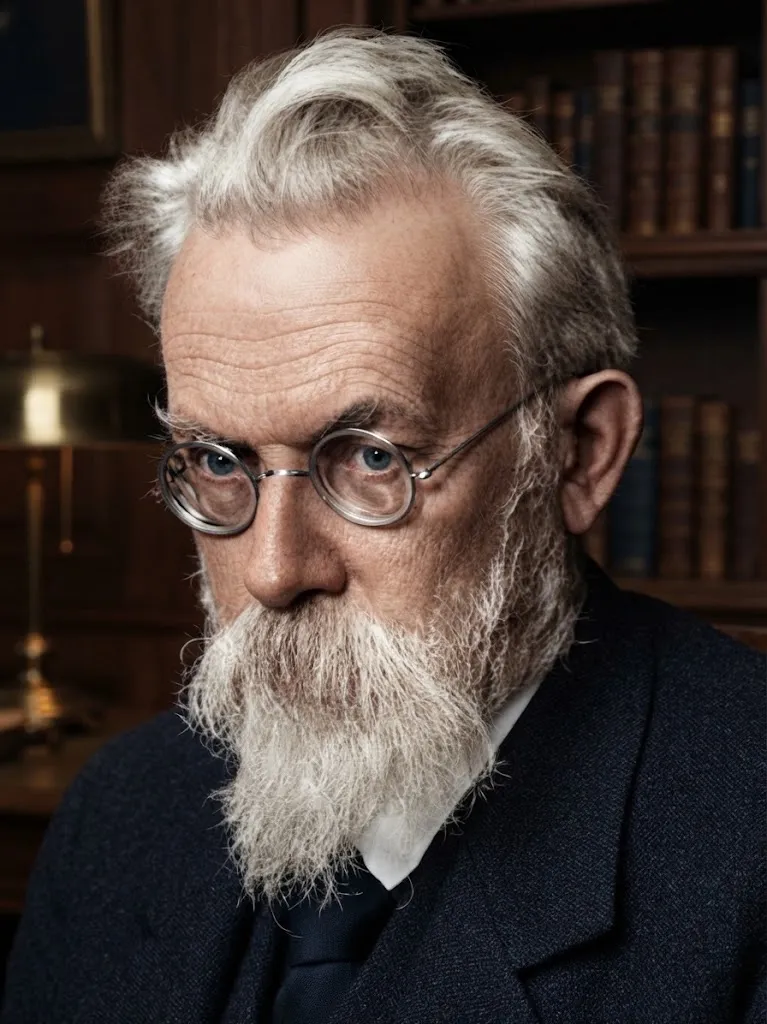
He saw the body’s cells “eating” microbes and worked out how immunity works. For that, Ilya Mechnikov, a biologist from the Kharkiv region, won the Nobel Prize in 1908. He worked in Odesa and later at the Pasteur Institute in Paris.
Key accomplishments
- Discovered phagocytosis (1882) and created the phagocytic theory of immunity
- Nobel Prize in Physiology or Medicine (1908, shared with Paul Ehrlich)
- With Mykola Hamaliia and Yakiv Bardakh, founded the first bacteriological station in the Russian Empire, in Odesa (1886)
- One of the founders of evolutionary embryology and scientific gerontology
Cells that eat microbes
Ilya Mechnikov was born in 1845 on the Panasivka estate in the Kharkiv region (now the village of Ivanivka in the Kupiansk district). He finished Kharkiv University as an external student in 1864, then trained in Germany and Italy, studying how the embryos of invertebrates develop. In 1868 he defended his doctoral dissertation in zoology in Saint Petersburg.
In 1882, while he was a professor at the university in Odesa, Mechnikov described phagocytosis: certain cells in the body engulf and digest microbes. On that discovery he built the phagocytic theory of immunity.
A station against epidemics
In 1886, together with Mykola Hamaliia and Yakiv Bardakh, Mechnikov founded in Odesa the first bacteriological station in the Russian Empire, and the second in the world, to fight infectious diseases. The very next year he was forced to leave Odesa.
A Nobel Prize in Paris
From 1888 Mechnikov worked at the Pasteur Institute in Paris. He headed a laboratory there for the rest of his life and from 1905 was deputy director. In 1908 he shared the Nobel Prize in Physiology or Medicine with Paul Ehrlich. He also studied ageing and recommended fermented milk products as a way to stay young for longer. Mechnikov died in Paris in 1916.
Why he is remembered
Mechnikov is regarded as one of the founders of immunology and microbiology. Odesa National University bears his name, as does a research institute in Odesa that grew out of his bacteriological station. In 2005 a monument to him was unveiled in Kharkiv.