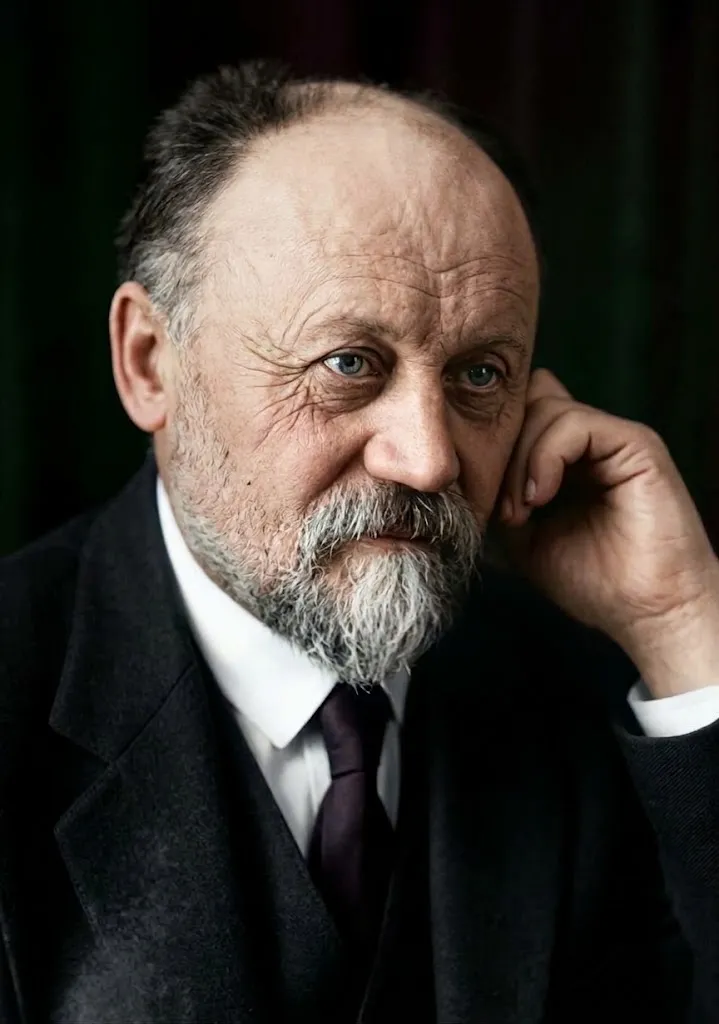
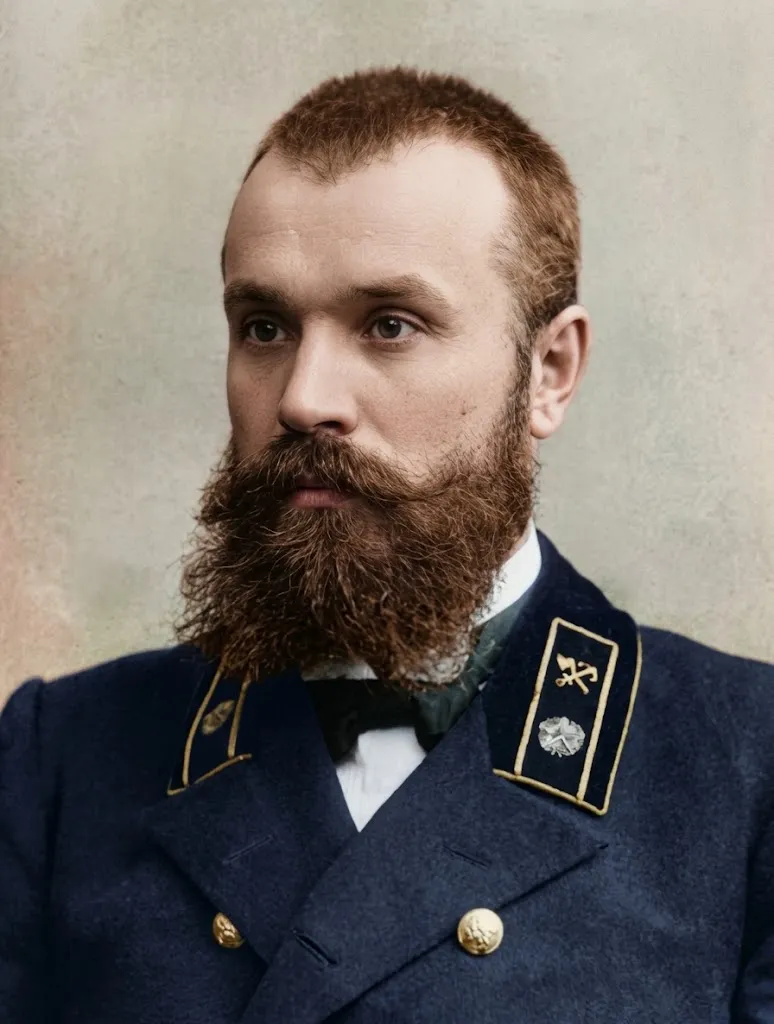
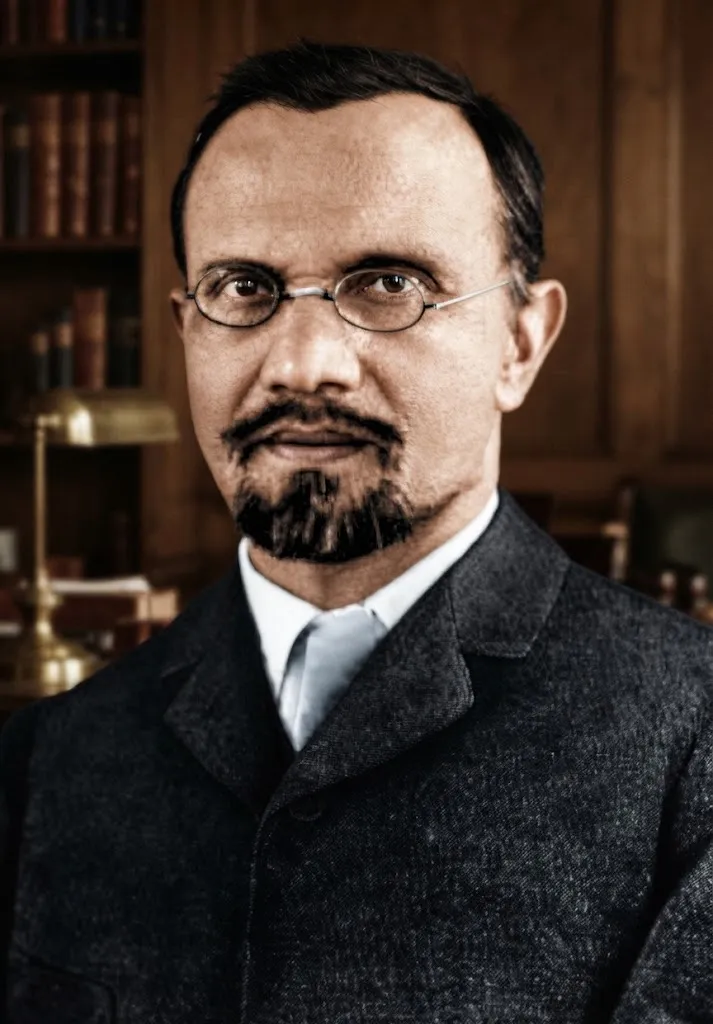
1845–1918
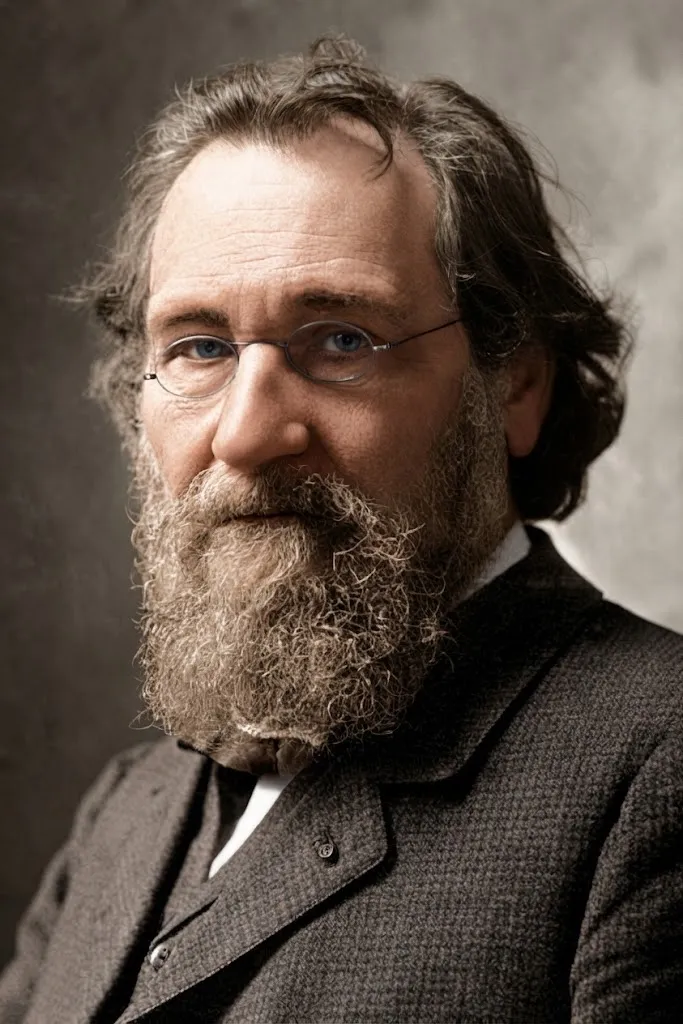
Ivan Puliui
Physicist, early X-ray researcher
A physicist who translated the Bible: Ivan Puliui from the Ternopil region taught in Prague for over 30 years and was the first dean of Europe’s first faculty of electrical engineering. His lamp was a forerunner of the X-ray tube; with Panteleimon Kulish he translated the Bible into Ukrainian.
Key accomplishments
- A phosphorescent lamp (1882), forerunner of the X-ray tube
- Papers on how X-rays arise and how they act on photographic plates (Vienna, 1896)
- First dean of Europe’s first faculty of electrical engineering (Prague, 1902)
- Translated the Bible into Ukrainian with Panteleimon Kulish and Ivan Nechui-Levytskyi
- Built an alternating-current power station in Prague
A physicist from the theology faculty
Ivan Puliui was born in 1845 in the small town of Hrymailiv in the Ternopil region; this part of Galicia then belonged to the Austrian Empire. In 1864 he finished the gymnasium in Ternopil with distinction and entered the theology faculty of the University of Vienna. But he never became a priest: after theology he studied physics and mathematics in Vienna, and in 1877 he defended a doctorate in Strasbourg on friction in gases.
A lamp with a cold glow
Puliui studied electrical discharges in thin gases. In 1882 he invented a phosphorescent lamp that is seen as a forerunner of the X-ray tube. His work on “cold light”, which we would now call neon light, was a highlight of the 1884 exhibition in Steyr, Austria. Earlier, in 1878, his device for measuring the mechanical equivalent of heat won an award at the World’s Fair in Paris.
When Wilhelm Röntgen announced the discovery of new rays, Puliui already had both the tubes and the experience. Early in 1896 he published two papers in Vienna on how these rays arise and how they act on photographic plates.
Professor in Prague
From 1884, for more than 30 years, Puliui was a professor at the German Polytechnic Institute in Prague. He was elected its rector, and in 1902 he became the first dean of Europe’s first faculty of electrical engineering. He built an alternating-current power station in Prague and served as an expert on electrical engineering in Bohemia. In 1916 he was offered the post of Austria-Hungary’s minister of education, but turned it down because of serious illness.
The Bible in Ukrainian
Puliui never forgot where he came from. In Vienna he was one of the founders, and for a time the head, of the Ukrainian student society Sich. With Panteleimon Kulish he translated the Gospels (1871) and the whole New Testament (1880) into Ukrainian, and with Ivan Nechui-Levytskyi the Old Testament. These translations went into the Ukrainian Bible published by the British Bible Society in 1903. Puliui also translated the first prayer book in everyday Ukrainian (Vienna, 1871), campaigned for a Ukrainian university in Lviv, and in Prague set up a fund for poor students from Ukraine. He died in Prague on 31 January 1918.
Why it matters today
Ivan Puliui helped open the way to X-rays, which no hospital today can do without, and to modern electrical engineering: he led Europe’s first faculty in the field. At the same time he made sure Ukrainians could read the Bible in their own language and that poor students from Ukraine could study. For him the two never clashed: world-class science and service to his own people were parts of one life. His path shows that a Ukrainian can move world science forward and still remember where he comes from.