Pavlo Virskyi
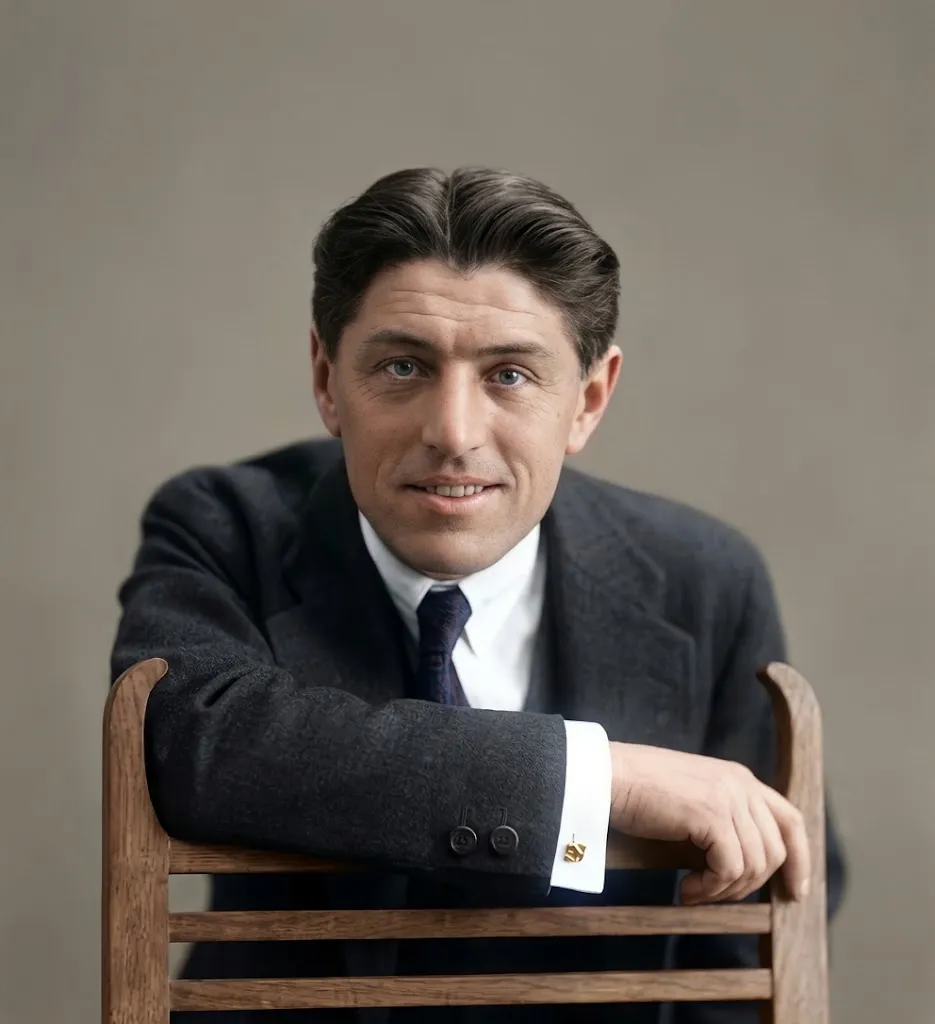
Choreographer, dance ensemble founder
He reworked his Zaporozhian Cossacks dance again and again, even pulling a finished version from the program, until he found its central idea. Pavlo Virskyi was the choreographer who, with Mykola Bolotov, founded in 1937 the folk dance ensemble that now bears his name.
Key accomplishments
- Co-founded with Mykola Bolotov a folk dance ensemble in Kyiv (1937), now the Pavlo Virskyi National Honored Academic Dance Ensemble of Ukraine
- Artistic director of the ensemble (1955–1975): more than five concert programs
- The dances Hopak, Povzunets, Zaporozhtsi (Zaporozhian Cossacks), Chumak Joys, Dolls, Sailors and What the Willow Weeps About
- A studio at the ensemble that trained generations of stage folk dancers (1962)
- The ensemble’s tour of the United States and Canada (1962)
- Staged Swan Lake (1927) and The Red Poppy (1928) with M. Bolotov at the Odesa Opera and Ballet Theater
- People’s Artist of the USSR (1960); Shevchenko State Prize of the Ukrainian SSR (1965) for a 1964 concert program
“With cold, outside eyes”
Imagine a choreographer who has spent a long time on a dance about the Zaporozhian Cossacks. The dancers know every step, and he pulls it from the program. “I looked at my brainchild with cold, ‘outside’ eyes and dropped this version from the program,” Pavlo Virskyi recalled. What was missing wasn’t steps but a central idea. He went back to Dmytro Yavornytskyi’s History of the Zaporozhian Cossacks and studied the people around him for Cossack traits: quick wits, courage, dignity, sly humor. The final Zaporozhtsi became a three-part piece, with costumes designed by Anatol Petrytskyi. Scholars call it a hymn to a free people that no one conquered.
From classical ballet to folk dance
Virskyi was born in Odesa in 1905. He came to ballet late: not at six, but after he turned eighteen. He graduated from the Odesa Music and Drama School and studied for another year in Moscow. From 1923 he danced solo roles and staged productions at the Odesa Opera and Ballet Theater. With the ballet master Mykola Bolotov he staged classical ballets such as Swan Lake, as well as the dances in Mykola Lysenko’s opera Taras Bulba. In the 1930s Virskyi worked as a ballet master at theaters in Kharkiv, Dnipro and Kyiv. He is counted among the followers of the folk-dance school of Vasyl Verkhovynets, the first to describe Ukrainian folk dance in textbooks.
The ensemble that bears his name
In 1937 Virskyi and Bolotov were the first in Ukraine to bring together a professional folk dance ensemble in Kyiv. During the war and after it, Virskyi staged dances for army ensembles. With one of them he toured the front lines, going as far as Stalingrad. In 1955 he came back to lead his company for twenty years. He created more than five concert programs, with dances such as Hopak, Povzunets, Chumak Joys, Dolls and Sailors. The hopak was then seen as a men’s dance, and Virskyi brought women into the stage Hopak. He didn’t simply move village dances onto the stage: he fused folk dance with the technique of classical ballet. In 1962 he opened a studio at the ensemble, and his dancers toured the United States and Canada. Virskyi died in Kyiv in 1975, and two years later the ensemble was officially named after him.
Why it matters today
Virskyi showed that Ukrainian folk dance can be great stage art, standing alongside ballet. In Zaporozhtsi he told the Cossack past as the story of free people with dignity. The ensemble he founded has performed in more than 60 countries. The Spanish painter Salvador Dalí, it is said, never missed one of its shows. The ensemble still carries Ukraine to the world through dance. Anyone who steps on stage to dance a hopak today follows the road Virskyi took from the Odesa opera house to an ensemble of his own.