1905–1987
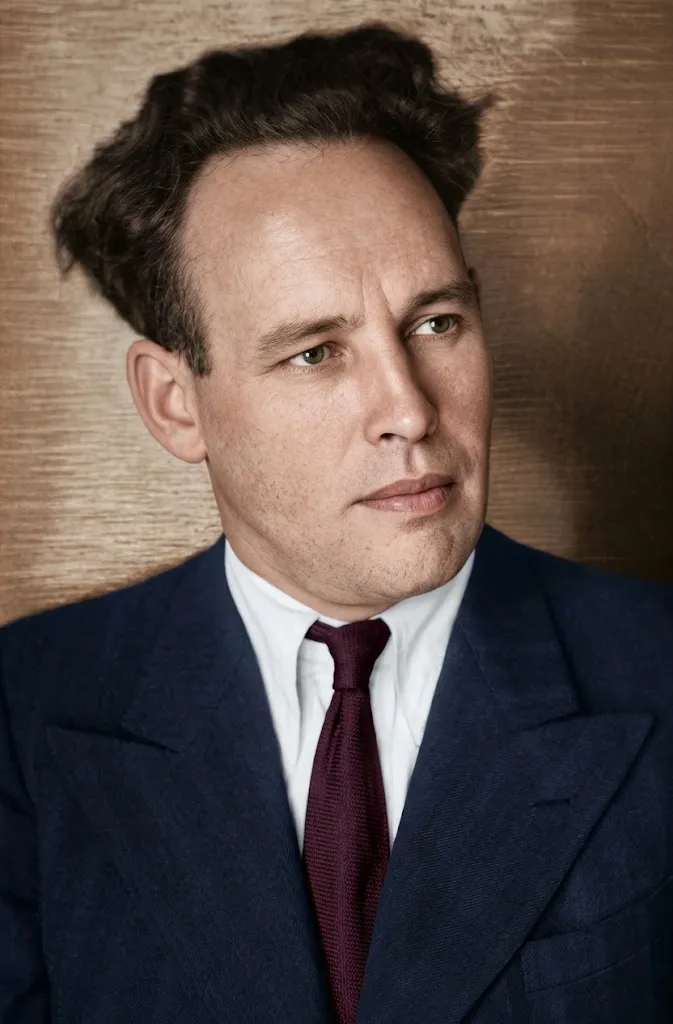
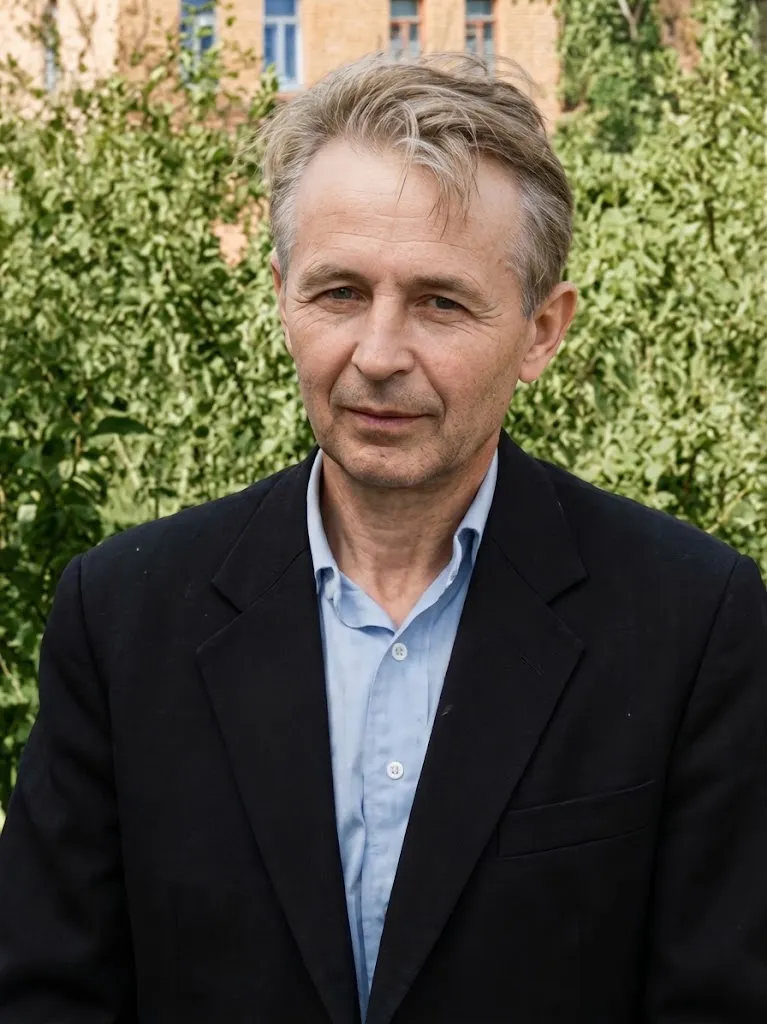
Ulas Samchuk
Author of Maria, a Holodomor novel
The first novel about the Holodomor was written not in Ukraine but in Prague. Its author, Ulas Samchuk, a peasant’s son from Volhynia, deserted the Polish army, spent only 22 of his 82 years in Ukraine and wrote the epic Volhynia in exile. His wartime journalism is still debated.
Key accomplishments
- The novel Maria (Lviv, 1934), the first work of fiction about the Holodomor of 1932–1933
- The Volhynia trilogy (1932–1937), translated into several languages
- The novels The Mountains Speak! (1934), Kulak (1937), The Youth of Vasyl Sheremeta (1946–1947), What Fire Does Not Heal (1959) and On Solid Ground (1967); the Ost trilogy (1948–1982)
- The memoirs Five Past Twelve, On a White Horse, On a Black Horse and Planet DP
- Founder and editor-in-chief of the newspaper Volyn in Rivne (1941–1942)
- Head of the Ukrainian Art Movement (MUR) in Germany (1945–1948); a co-founder of the Slovo writers’ association (1954)
A novel written abroad
Did you know that the first novel about the Holodomor came out not in Soviet Ukraine but in Lviv, which then belonged to Poland? In 1933, while people in the villages of central Ukraine were dying of hunger, a young writer from Volhynia, Ulas Samchuk, was writing Maria in Prague. It is the story of a peasant woman, and he dedicated it to the mothers who starved to death. The book came out in 1934, and Samchuk became one of the first to tell the world about the tragedy.
Escape from the barracks
Ulas Samchuk was born in 1905 in the village of Derman in Volhynia, into a peasant family. He studied at a Ukrainian gymnasium in Kremenets, took Vasyl Avramenko’s dance course there, and in 1926 opened his own school of “national dance” in Derman. Later he was called up into the Polish army. In the summer of 1927 Samchuk deserted and made his way to Germany. He attended literature lectures at the university in Breslau (now Wrocław), then studied at the Ukrainian Free University in Prague.
In Prague he became friends with the poet Olena Teliha and began working with the Organization of Ukrainian Nationalists (OUN). In these years Samchuk wrote the Volhynia trilogy (1932–1937) about his native land, and it made his name. In 1938–1939 he was in Carpathian Ukraine as a reporter, and after its defeat the Hungarians held him in a camp.
The article that got him arrested
In 1941 Samchuk returned with an OUN group to Nazi-occupied Ukraine. In Rivne he founded the newspaper Volyn and became its editor-in-chief; the first issue came out on 1 September 1941. In February 1942 the Nazis executed Olena Teliha at Babyn Yar in Kyiv. In March Samchuk printed an article, “So It Was, So It Will Be”, that sharply challenged the occupiers. He was arrested, and the whole print run of that issue, 21,000 copies, was destroyed. A few weeks later the writer was released at the request of his childhood friend Hermann Blume, a German whose mother had once helped Samchuk learn German. But he was barred from editing the paper.
Twenty-two years out of eighty-two
In 1944 Samchuk left for the West again. In the displaced persons’ camps in Germany he headed the Ukrainian Art Movement (MUR), which brought émigré writers together. Its main organizer was Yurii Shevelov, and Ivan Bahrianyi was among its members. Samchuk called on them to create “great literature”.
In 1948 the writer moved to Toronto. There he wrote What Fire Does Not Heal, a novel about the UPA, On Solid Ground, a novel about Ukrainians in Canada, and several volumes of memoirs. In 1957 his novel Darkness came out, the second volume of his Ost trilogy; it is believed to be the first work of fiction in world literature about the Gulag. In 1980 Samchuk was nominated for the Nobel Prize in Literature, but he did not receive it. Ulas Samchuk died in Toronto on 9 July 1987. Of his 82 years, he had spent only 22 in Ukraine.
Debates and assessments
The most debated part of his life is Volyn, the newspaper Samchuk edited in occupied Rivne. The historian Roman Mykhalchuk counted antisemitic material in more than 80% of its issues from 1941 to 1944. From September 1941 to March 1942 Samchuk published 30 leading articles in the paper. By Mykhalchuk’s account, more than fifteen of his editorials, reports and feuilletons from this period contain antisemitic statements, though the editor’s tone was more restrained than that of other writers in the paper. Other scholars stress that the Nazis arrested Samchuk for an anti-German article and that his editorial work is considered to have helped lay the ground for the resistance movement in Volhynia in 1942–1943. How to judge this period of his life remains a matter of debate.
Why it matters today
Ulas Samchuk was one of the first to tell the world about the Holodomor, at a time when Soviet Ukraine stayed silent about it. His Maria gave a voice to millions of victims whom the regime wanted erased from memory. His Volhynia trilogy made the Volhynian village the hero of major prose. And in the refugee camps and in Canada he gathered émigré writers so that Ukrainian literature would not fall silent outside Ukraine.