1904–1937
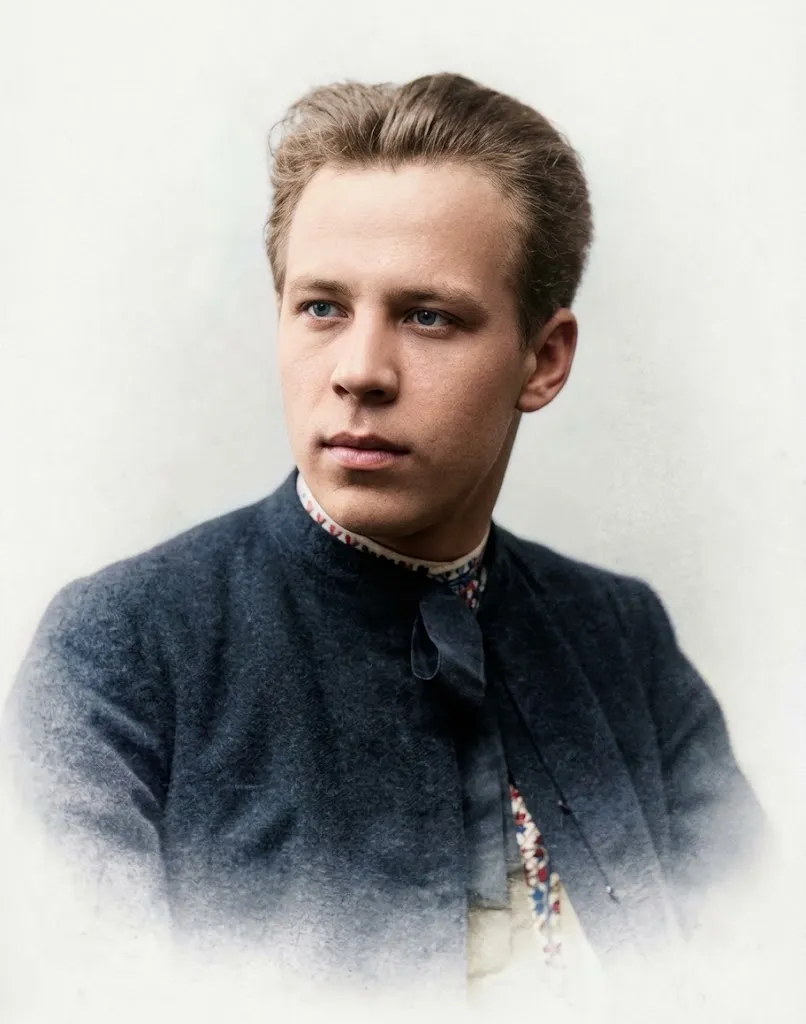
Marko Voronyi
Poet, translator, children’s author
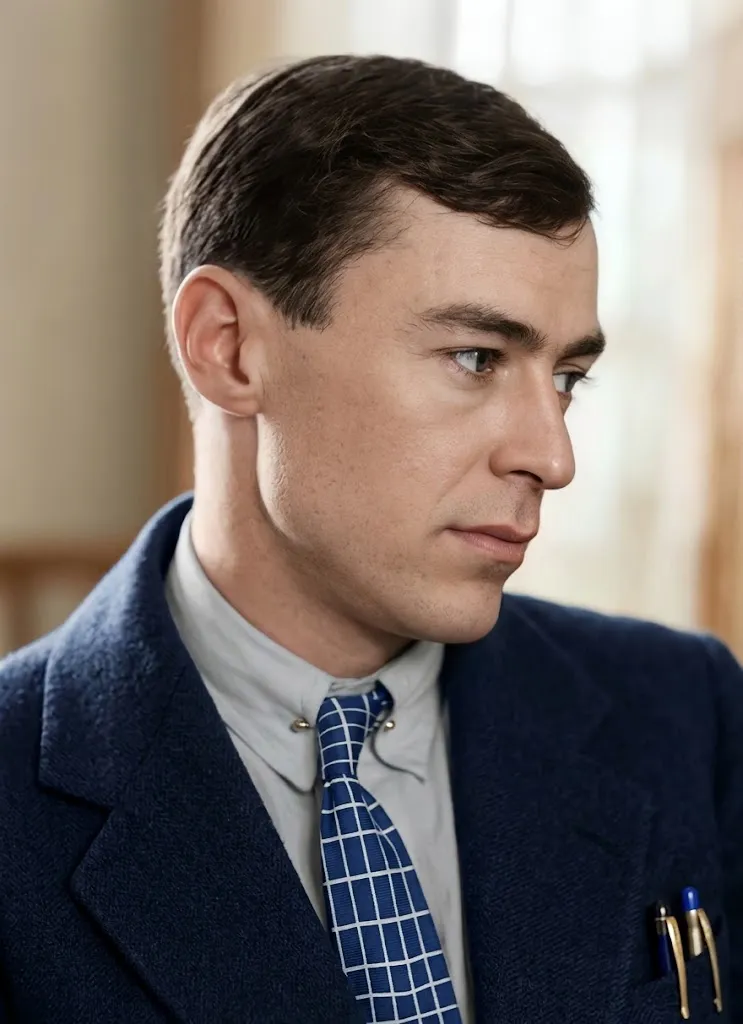
Why did a young poet sign his work “Antiokh”? It was a tribute to his grandfather, the poet Mykola Verbytskyi-Antiokh. The son of Mykola Voronyi, Marko wrote sonnets, children’s verse and religious poems and translated Rilke and Baudelaire. He was shot at Sandarmokh in 1937.
Key accomplishments
- Poems in the magazines Chervonyi shliakh, Hlobus and Zhyttia i revoliutsiia; the cycle Turkestan Sonnets (1926)
- The poetry collection Forward (1932)
- The children’s books Red Neckties, The Builders, Little Horses, The Rhinoceros and The Pond (all 1930)
- Religious poems (Prayer, The Church, Christmas Elegy, Fatherland), included in an anthology of Ukrainian religious literature (1988)
- Translations of Rilke, Georg Heym, Baudelaire, Sully Prudhomme, Boccaccio and David Hofstein
His grandfather’s name
Why did a young poet sign his work “Antiokh”? It was a tribute to his grandfather, the poet Mykola Verbytskyi-Antiokh. Marko was born in 1904 in Chernihiv. His father was the poet Mykola Voronyi, and his mother, Vira, was Verbytskyi’s daughter. The boy’s godfather was his father’s friend, the writer Mykhailo Kotsiubynskyi. Soon his parents’ marriage broke up, and Marko grew up in his mother’s family; his grandmother taught him to read from Shevchenko’s primer.
At the Chernihiv gymnasium Marko was top of his class. As a teenager he hid his age and volunteered for Denikin’s army, but the truth came out and he was turned away. In 1920 he came back to Chernihiv, where he barely managed to find work as a porter at the docks on the Desna. That same year his first poems came out in Holod (Famine), a collection published in Chernihiv, and from 1925 his father, then living in Lviv, placed his son’s poems in Lviv magazines.
Film, sonnets and Rilke
In 1926 his father came back to Soviet Ukraine and took Marko to Kharkiv. There Marko got to know Mykola Bazhan, Volodymyr Sosiura and Maksym Rylskyi; later father and son moved to Kyiv. Marko studied directing at the Lysenko Music and Drama Institute and at the Institute of People’s Education, and worked as an editor at the Kyiv film studio. From then on he published under his own name, in the magazines Chervonyi shliakh, Hlobus and Zhyttia i revoliutsiia; his cycle Turkestan Sonnets appeared there in 1926. He translated Rilke and Georg Heym from German, Baudelaire and Sully Prudhomme from French, and Boccaccio from Italian.
Children’s verse and prayers
In 1929 his sister was arrested. To keep clear of repression, Marko turned to children’s books: in 1930 he published Red Neckties, The Builders, Little Horses, The Rhinoceros and The Pond. He put out the collection Forward (1932) to show that he had become a conscious builder of communism. Yet his religious poems are considered his deepest: Prayer, The Church, Christmas Elegy, Fatherland. In 1988 they were included in an anthology of Ukrainian religious literature published in Munich and London.
Solovky and Sandarmokh
In 1933, trying to escape repression, Marko moved to Moscow and worked for almost a year at a magazine. In 1934 his father was arrested, and Marko came back to Ukraine to press for a review of his father’s case. In 1935, on his very birthday, the NKVD arrested him too, in a fabricated case of a “counter-revolutionary nationalist” organization that also named Mykola Zerov, Pavlo Fylypovych and Ananii Lebid. After a forced “confession” he was sentenced to eight years in the camps, which he served on the Solovetsky Islands. In 1937 the NKVD reviewed his case and sentenced him to death. Marko Voronyi was shot in the Sandarmokh forest in Karelia on 3 November 1937, aged 33. His sentence was quashed in 1958.
Why it matters today
Marko Voronyi carried on his father’s work: by translating Rilke and Baudelaire, he brought Ukrainian poetry into conversation with Europe. He wrote for children in Ukrainian and gave films a Ukrainian voice at a time when that culture was only gaining strength. Even under pressure from the regime he wrote searching poems about faith and homeland, and they outlived both him and the regime that killed him. His fate is a reminder of how much talent Ukraine lost in the 1930s, and of why it is worth reading those the regime tried to erase.