1904–1996
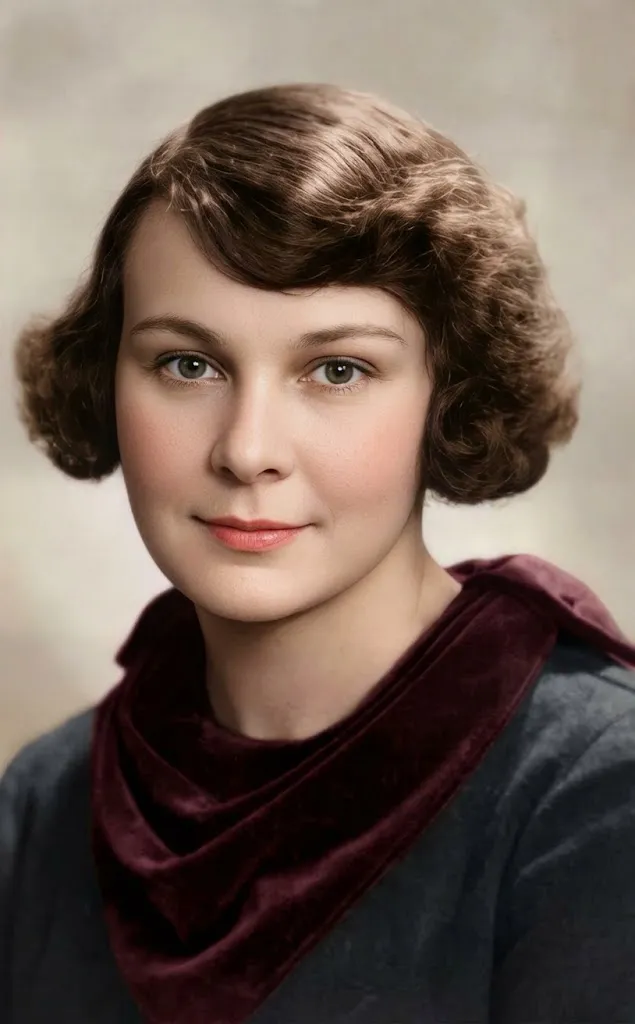
Dokiia Humenna
Author of Children of the Milky Way
Soviet critics branded her a “kulak writer” and silenced her for years. Dokiia Humenna dug up Trypillian settlements, lived through the occupation of Kyiv, and in exile wrote Children of the Milky Way, four novels on how the Bolsheviks crushed the Ukrainian village and its culture.
Key accomplishments
- The tetralogy Children of the Milky Way (1948–1951), on collectivization and the destruction of Ukrainian culture
- Khreshchatyi Yar (1956), a chronicle of occupied Kyiv, and the novel The Golden Plough (1968)
- A cycle of works on Ukraine’s ancient past, among them The Great Tsabe (1952) and The Past Flows into the Future: A Story of Trypillia (1978)
- The memoir Evdoteia’s Gift: A Test of Memory (1990)
- A co-founder of Slovo, the Association of Ukrainian Writers in Exile, in New York
A writer with a spade
Did you know that one of the most prolific Ukrainian women writers went on archaeological digs? In the 1930s Dokiia Humenna worked on an expedition excavating a Trypillian settlement near the village of Khalepia, outside Kyiv. She was both an archaeologist and the dig’s draftswoman, working beside the archaeologist Tetiana Passek, the artist Yevhen Krychevskyi and the scholar Viktor Petrov. What she saw in the ground later came to life in her books about Ukraine’s earliest inhabitants.
The “kulak writer”
Dokiia was born in 1904 in the small town of Zhashkiv, now in Cherkasy Oblast, into a peasant family. The poet Dmytro Zahul encouraged her at teacher-training school, and in 1922 she entered the Kyiv Institute of People’s Education and joined Pluh, the union of peasant writers.
In the late 1920s Humenna travelled round the collective farms of the Dnipropetrovsk and Zaporizhzhia regions and the Kuban and wrote honestly about what she saw. The censors refused to let her Letters from Steppe Ukraine come out as a book, she was expelled from Pluh, and critics branded her a “kulak writer”. The terror forced her into silence. The archaeological dig brought her back to writing: stories and essays about the distant past followed, such as The Mystery of the Potsherd. Only in 1939, with support from Maksym Rylskyi and other writers, did she appear in print again, but her novelette Virus (1940) was savaged as a slander on Soviet reality.
Occupation and the road west
In August 1941 Humenna tried to escape east on her own, but ran into German troops and ended up in occupied Kyiv. There she worked at the Museum-Archive of the Transitional Era and wrote for the newspaper Ukrainske Slovo, where Olena Teliha also worked. In 1943 she left for the West: Lviv, Slovakia, Austria, and displaced persons camps in Germany. In 1946 her collection of stories The Kulaks’ Christmas Eve, about village life in the first years of Bolshevik rule, came out in Salzburg.
A novel read on the radio
In the camps Humenna began the tetralogy Children of the Milky Way. Its four books came out in Munich and New York between 1948 and 1951. Yurii Shevelov wrote that the novel shows Bolshevism’s assault on the Ukrainian people on two fronts: the collectivization of the village and the destruction of Ukrainian culture. The Ukrainian service of the Voice of America read it on air, along with The Eternal Fires of Alberta, her essays on travels in Canada, so her books could be heard on the far side of the Iron Curtain.
In 1950 the writer settled in New York and became a co-founder of Slovo, the Association of Ukrainian Writers in Exile. She never earned a fee for any book published in exile: she paid for all of them, about twenty, out of her own modest savings. She wrote Khreshchatyi Yar (1956), a chronicle of occupied Kyiv; The Golden Plough (1968), about how a totalitarian state grinds creative people down to sameness; and a cycle of works about Trypillia and Ukraine’s distant past. Dokiia Humenna died in New York on 4 April 1996, leaving more than 30 volumes of work.
Why it matters today
Dokiia Humenna wrote the truth about the village when that got writers expelled and hounded in the press, and she kept writing when she had to leave home. In exile she preserved for readers what the Soviet Union tried to erase: collectivization, the destruction of a culture, life under occupation. Her books about Trypillia remind us that the history of Ukraine’s lands reaches back thousands of years. Anyone who has to choose between a comfortable silence and an honest word can find an example in her life.