1925–1990
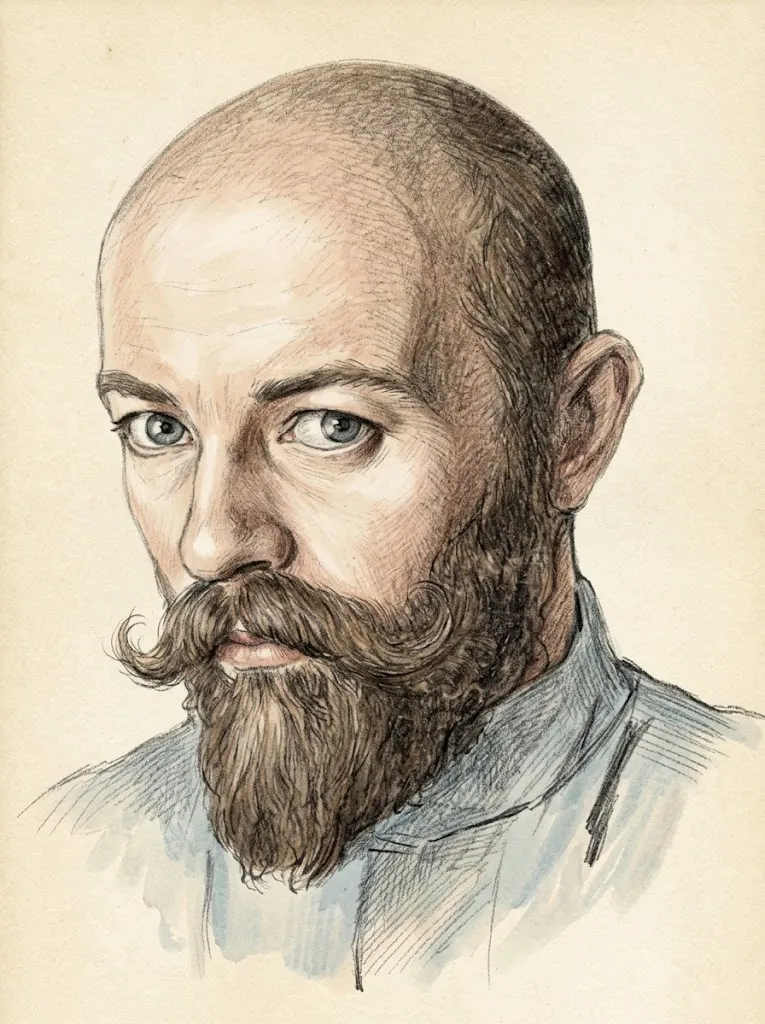
Viktor Zaretskyi
Painter of the Sixtiers
They called him the Ukrainian Klimt. Viktor Zaretskyi, a painter of the Sixtiers and Alla Horska’s husband, led Kyiv’s Club of Creative Youth, made mosaics with her in Donetsk and Mariupol, and later opened his own studio, where more than 200 students learned to paint.
Key accomplishments
- One of the leaders of the Club of Creative Youth “Suchasnyk” in Kyiv, and its head from 1963
- With Alla Horska and other artists, mosaics in Donetsk and Mariupol (1960s)
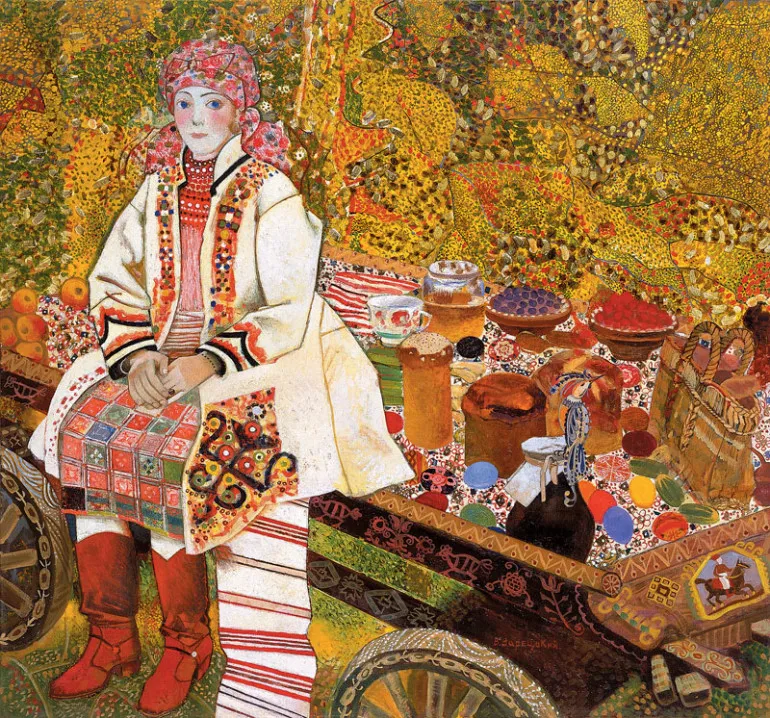
- His own style, “Ukrainian neo-Secession”: Natalka, Angels, Golden Skull. Bells of Chornobyl, Ploughman (V. Stus)
- A private art studio (from 1978) and the teaching method Thinking at the Canvas
- Shevchenko National Prize (1994, posthumously)
The Ukrainian Klimt
Why would a Ukrainian painter be named after the Austrian Gustav Klimt? From the 1970s Viktor Zaretskyi painted in an art nouveau manner, and in the 1980s he discovered Klimt and found a style of his own, which he called “Ukrainian neo-Secession”. Women and nature became his favourite subjects. But it took him a lifetime to get there.
A boy from the Donbas
Zaretskyi was born in 1925 in Bilopillia, in the Sumy region, and grew up in the Donbas, where he lived through the famine of 1932–1933. He was born deaf, so in the army he never fought and painted posters instead. After the war he entered the Kyiv Art Institute, graduated in 1953 and taught there for a few years. His early paintings show miners and village life.
Mosaics and Suchasnyk
With his wife, Alla Horska, Zaretskyi became the heart of Kyiv’s Club of Creative Youth “Suchasnyk” (The Contemporary), and from 1963 he led it. The couple and their artist friends covered buildings in Donetsk and Mariupol with mosaics. When the arrests began in 1965, Zaretskyi signed a protest against the political trials, and later the “letter of 139”. The Communist Party reprimanded him, and the Union of Artists shut him out.
After 1970
In November 1970 Alla Horska was found killed in the house of Zaretskyi’s father, and the father was found dead by a railway line. His son later recalled that from then on Zaretskyi lived in fear of being killed too. He stepped away from the dissidents, and until 1984 his work was never shown and the press never mentioned it. In 1978 he opened his own art studio, where more than 200 students learned, and wrote a teaching method for it, Thinking at the Canvas.
His later paintings carry a fear for the planet: Ozone Hole, Atomic Winter, Golden Skull. Bells of Chornobyl. One of the last, Ploughman, is a portrait of Vasyl Stus. Zaretskyi’s only solo exhibition in his lifetime opened in Kyiv in December 1989; he died on 23 August 1990, leaving about a thousand oil paintings and drawings. In 1994 he was awarded the Shevchenko Prize posthumously.
Why it matters today
With Alla Horska, Viktor Zaretskyi made Suchasnyk a place where young people in the 1960s discovered Ukrainian culture for themselves. He travelled from Soviet pictures of miners to a style of his own, in which Ukrainian painting spoke the language of European modernism. Even after his wife’s death, living in fear, he kept painting and passed his craft on to hundreds of students. His life shows that an artist can find his own voice even when everything around him is frightening.