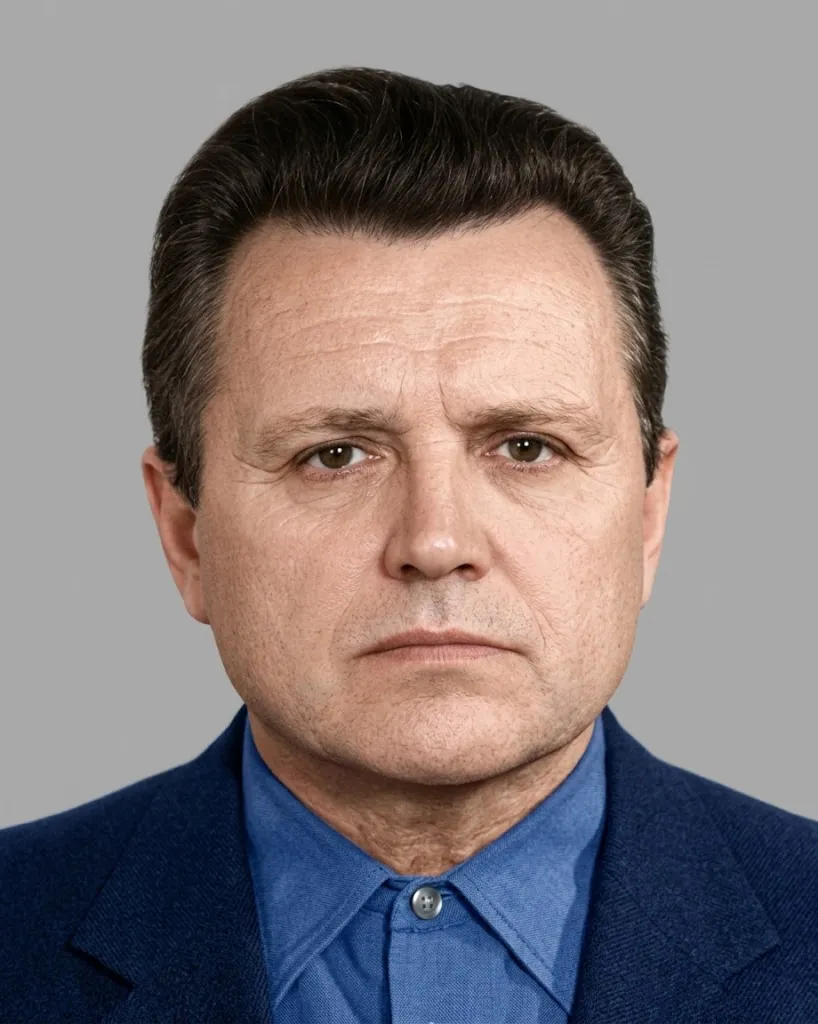
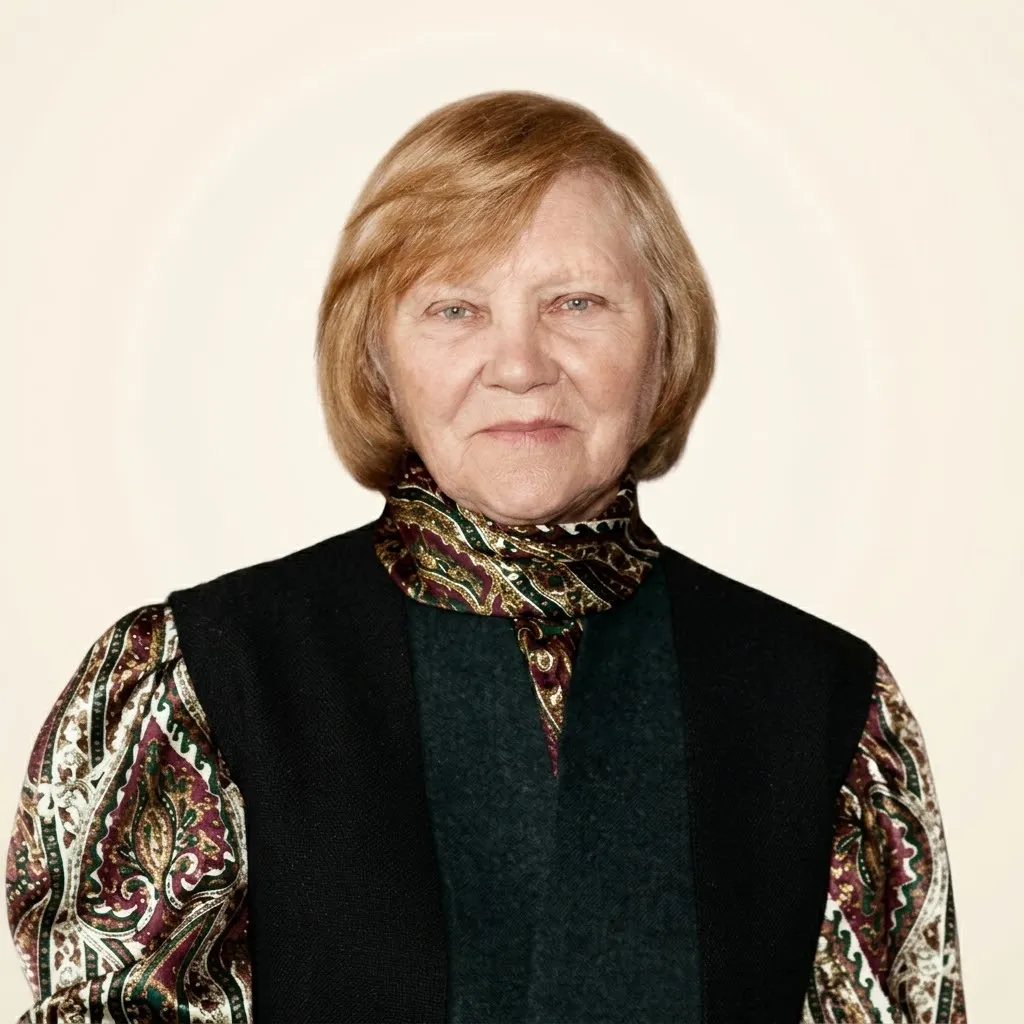
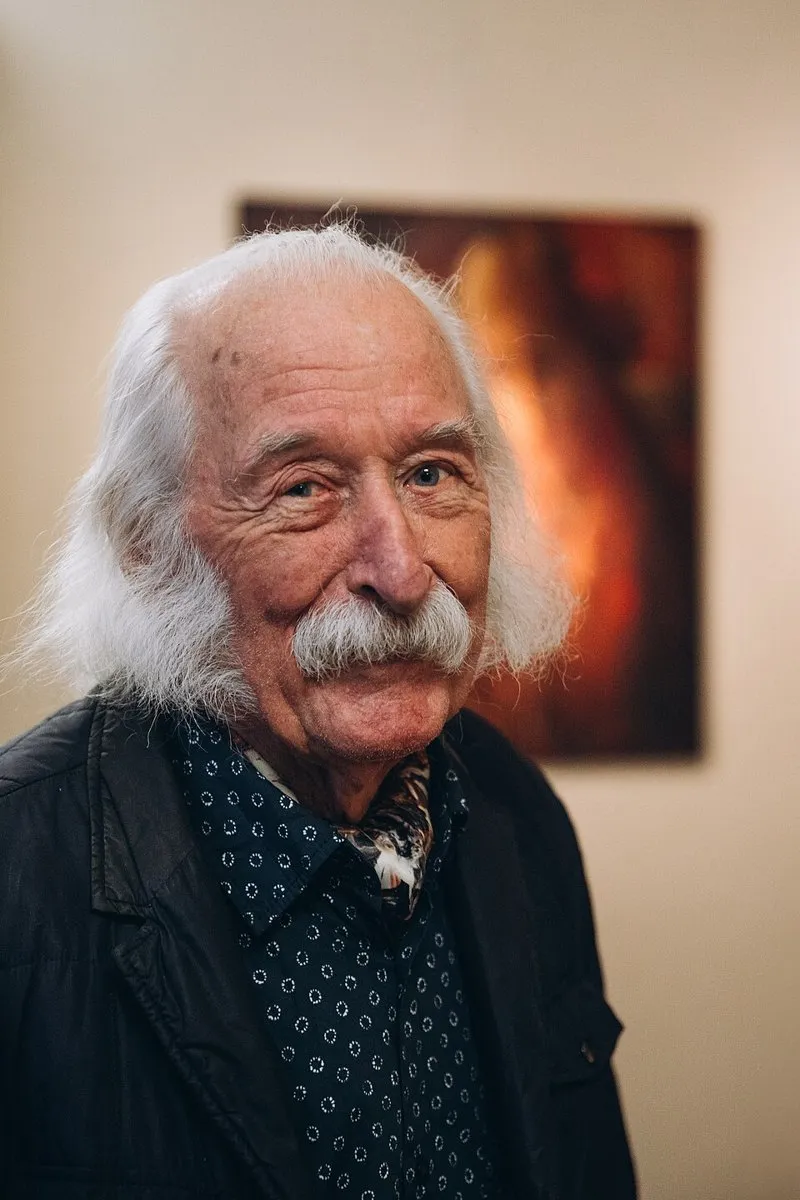
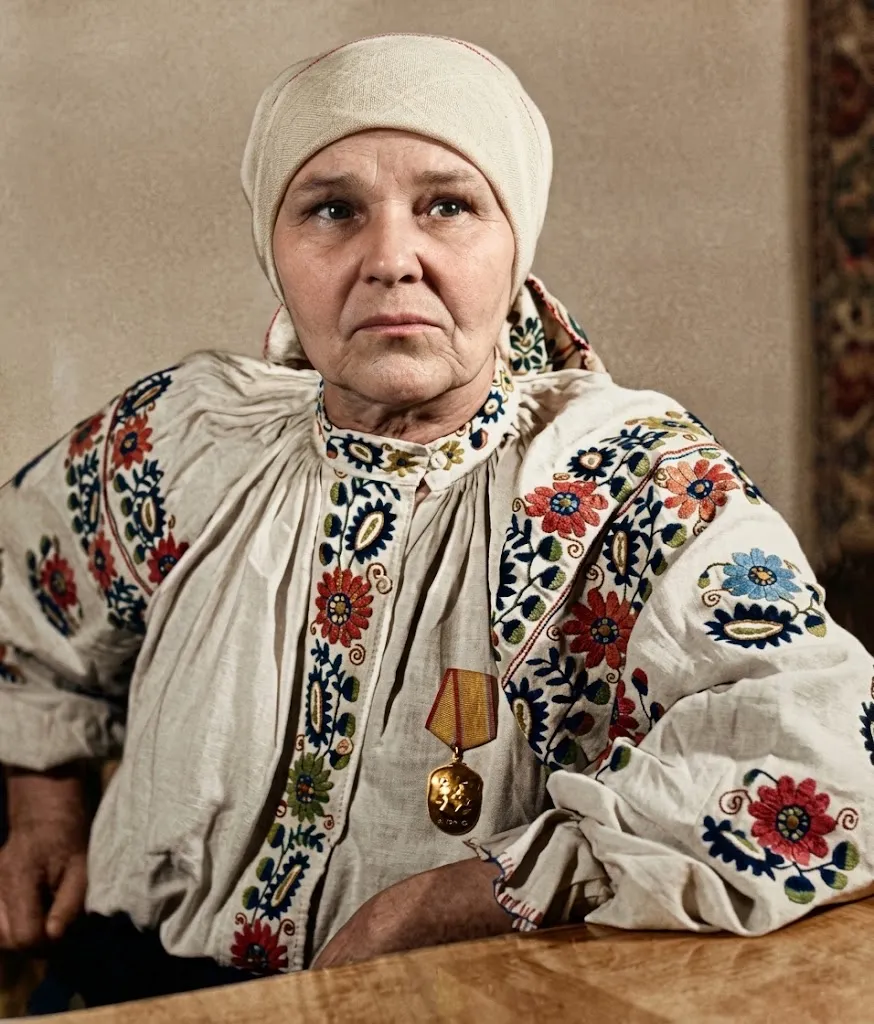
1929–1970
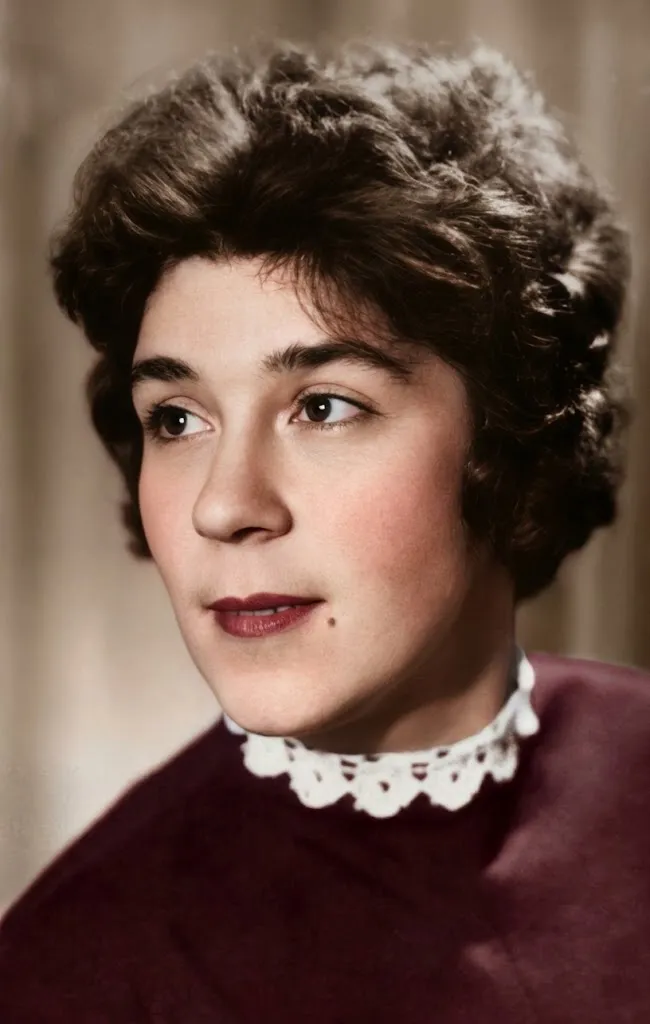
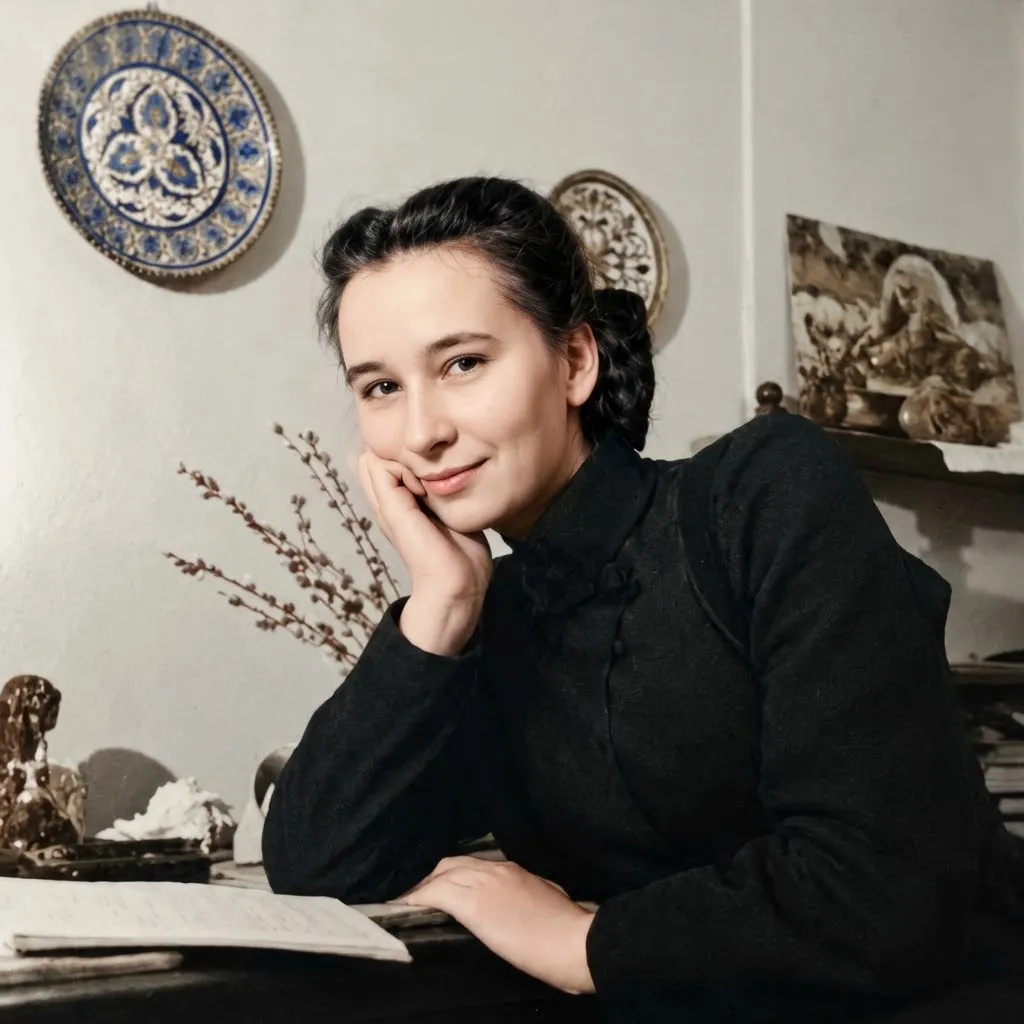
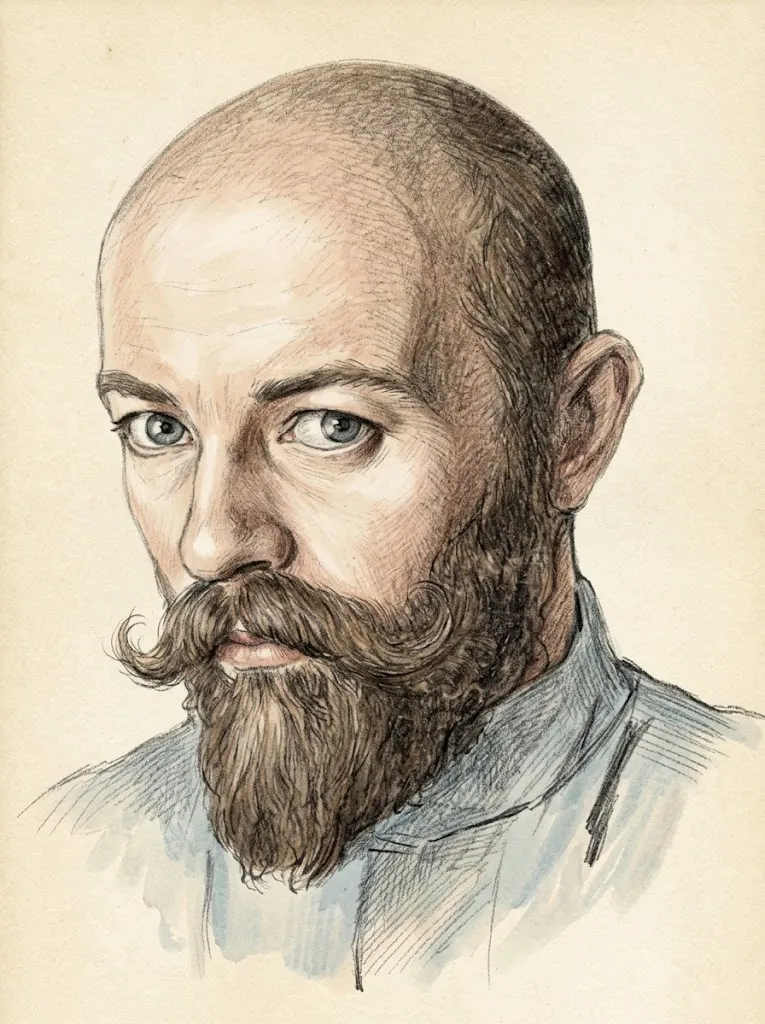
Alla Horska
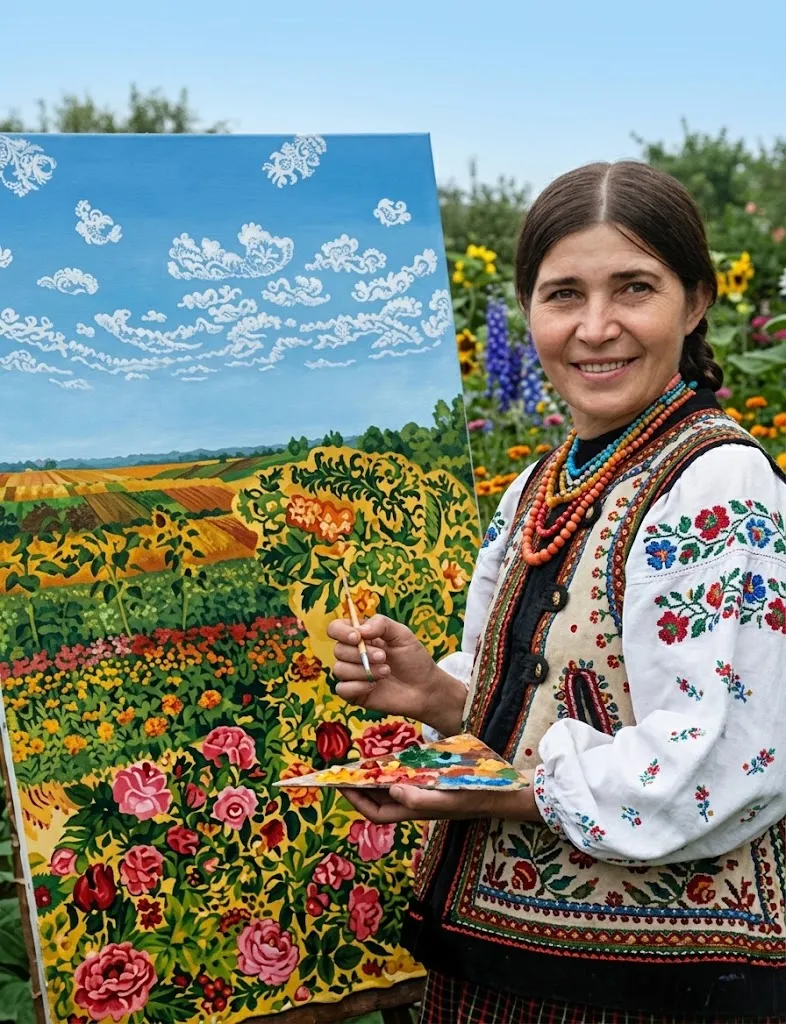
Painter of the Sixtiers
She learned Ukrainian as an adult, from her poet friends’ verse. Alla Horska, a monumental artist and a co-founder of the Club of Creative Youth, searched for the graves of NKVD victims and stood by political prisoners. In 1970 she was killed in circumstances never cleared up.
Key accomplishments
- A co-founder of the Club of Creative Youth “Suchasnyk” in Kyiv (early 1960s)
- With Vasyl Symonenko and Les Taniuk, found the burial sites of people shot by the NKVD at Bykivnia and the Lukianivka and Vasylkiv cemeteries (1962–1963)
- Co-author of the stained-glass window Shevchenko. Mother at Kyiv University (1964), destroyed by the administration
- Monumental mosaics in Donetsk, Mariupol (Kestrel, 1967) and Kyiv (Wind, 1967)
A language learned from friends’ poems
Did you know that one of the brightest figures of the Ukrainian Sixtiers didn’t speak Ukrainian as a child? Alla Horska was born in 1929 in Yalta, into the family of a senior Soviet official. She took up Ukrainian as an adult, by her own choice: she read her friends’ poems, by Mykola Vinhranovskyi, Ivan Drach and Vasyl Symonenko, and wrote dictations that they checked for her.
The club where the Sixtiers began
Horska graduated from the Kyiv Art Institute and often worked together with her husband, the artist Viktor Zaretskyi. In the early 1960s she and Ivan Svitlychnyi, among other friends, set up the Club of Creative Youth “Suchasnyk” (The Contemporary) in Kyiv. Ivan Drach, Mykola Vinhranovskyi, Mykhailyna Kotsiubynska, Ivan Dziuba and others joined it. Horska also designed for the stage: she made the sets for Mykola Kulish’s play Thus Perished Huska at the Lviv Ukrainian Drama Theatre, but its premiere was banned.
In 1962–1963 Horska, Vasyl Symonenko and Les Taniuk tracked down the places where the NKVD, the Soviet secret police, had secretly buried people it shot: at Bykivnia and at the Lukianivka and Vasylkiv cemeteries. They reported it to the Kyiv city council.
A window that was smashed
For Kyiv University in 1964, Horska and other artists made the stained-glass window Shevchenko. Mother, designed by Opanas Zalyvakha: an angry Shevchenko with his arm around a wronged woman, an image of Ukraine. The administration called it “ideologically hostile” and destroyed it, and Horska was expelled from the Union of Artists.
A mosaic behind a brick wall
In the 1960s Horska’s mosaics went up in Donetsk, Mariupol and Kyiv, among them on School No. 5 in Donetsk. In 1967 a team of artists she led decorated the Ukraina restaurant in Mariupol with the mosaics Kestrel and Tree of Life. Kestrel even contains pieces of stainless-steel spoons. Later Horska’s name was struck from the lists of authors, and a Party order called for the mosaics to be knocked down. Instead, local artists hid them behind a brick wall, and they were uncovered only in 2008, during a renovation. In 2022 russian shelling badly damaged Kestrel. Present-day artists recreated the mosaic, and in 2025 Oleksandr Usyk unveiled the copy in Trafalgar Square, London.
Beside those on trial
When her friends began to be arrested in 1965, Horska wrote protests, helped political prisoners’ families and wrote to prisoners. In 1967 she went to Lviv for the trial of Viacheslav Chornovil, and in 1968 she signed the “letter of 139” against unlawful trials and lost her Union membership a second time. In 1970 she was summoned for questioning in the case of the historian Valentyn Moroz but refused to testify, and a few days before her death she sent the Supreme Court of the Ukrainian SSR a protest against his sentence.
On 28 November 1970 Alla Horska was killed in Vasylkiv, near Kyiv. She was 41. The investigation named her father-in-law as the killer; according to that version he died too, and the case was closed. Her friends did not believe an elderly man could have struck such a blow, and scholars see circumstantial evidence pointing to the KGB, which had long kept her under surveillance. After the fall of the USSR, an analysis of the case file found it incomplete, full of contradictions and in effect falsified. The circumstances have never been cleared up, and after 1991 Ukraine’s prosecutors and security service, despite public calls, did not release information about her death.
Yevhen Sverstiuk, Vasyl Stus and others spoke at her funeral. Stus dedicated the poem “In Memory of A. H.” to her: “Rage, my soul. Rage, and do not weep.” It speaks of “the red shadow of the viburnum”, and the book of her letters and memoirs about her, published in 1996, is called The Red Shadow of the Viburnum.
Why it matters today
Alla Horska showed that being Ukrainian can be a choice: as an adult she learned the language no one had taught her as a child and made it her own. The Suchasnyk club she helped found became a home for the Sixtiers. She sought the truth about the people the NKVD had shot, and she did not stay silent when her friends were put on trial. She believed colour was “the soul, the history of a people”, and she made her art a voice for that history. Anyone who chooses Ukrainian today, even after growing up without it, follows her path.