1924–1990
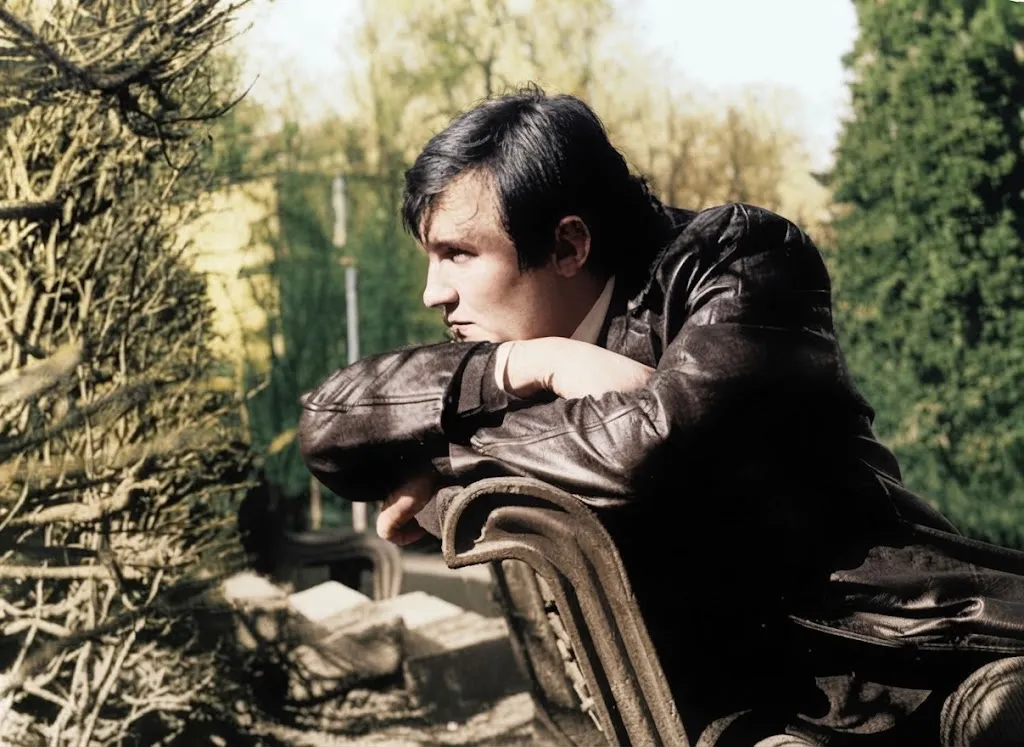
Sergei Parajanov
Visionary film director
Fellini, Truffaut and Godard signed a petition for his release. In Kyiv Sergei Parajanov made Shadows of Forgotten Ancestors, a film that won 16 awards at international festivals, and for backing persecuted artists the Soviet authorities jailed him on fabricated charges.
Key accomplishments
- The film Shadows of Forgotten Ancestors (1964): 16 awards at international film festivals
- The film The Color of Pomegranates (1969)
- A distinctive “poetic cinema” style that influenced filmmaking
An Armenian from Tbilisi at a Kyiv film studio
Sergei Parajanov was born in 1924 in Tbilisi into an Armenian family. He studied at the All-Union State Institute of Cinematography in Moscow, and from the 1950s he worked in Kyiv at the Oleksandr Dovzhenko Film Studio. It was in Ukraine that he made the film that brought him world fame.
A love story in the Carpathians
Shadows of Forgotten Ancestors (1964), based on the novella by Mykhailo Kotsiubynskyi, is a love story set against the Hutsul culture of the Carpathians. The film was shot in Ukrainian with the Hutsul dialect, and with folk rituals, songs and costumes. It won 16 awards at international film festivals.
Why Fellini and Truffaut stood up for him
At the film’s Kyiv premiere in 1965 there were protests against the arrests of the Ukrainian intelligentsia. Parajanov supported persecuted artists, and the authorities took revenge: at the end of 1973 he was arrested, and in 1974 he was convicted on fabricated charges and sent to a labor camp. Well-known European directors spoke up for him, among them François Truffaut, Jean-Luc Godard and Federico Fellini, and at the end of 1977 Parajanov was released. In 1982 he was arrested again.
Why it matters today
Parajanov showed the world that Ukrainian culture is deep, distinctive and beautiful. His Shadows of Forgotten Ancestors still appears on lists of the best films in the history of cinema.