1932–1999
Anatolii Solovianenko
Operatic tenor of the Kyiv Opera
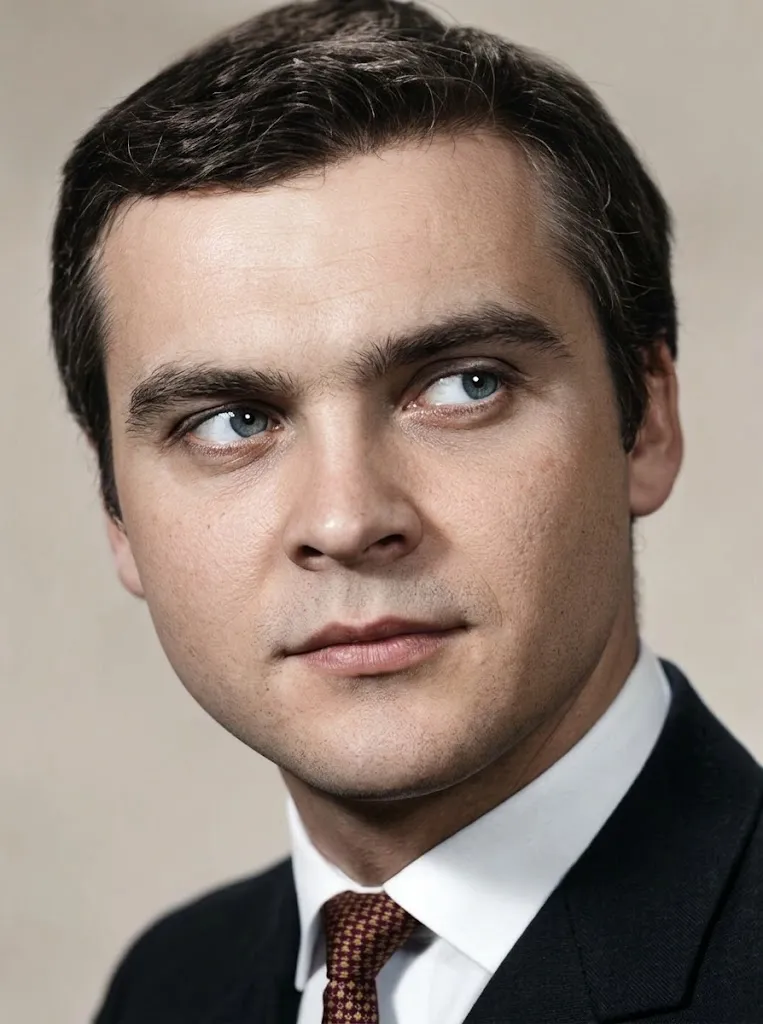
Until he was 30 he taught descriptive geometry at a Donetsk institute and took private singing lessons. Then came the Kyiv Opera, La Scala and the Metropolitan Opera. Anatolii Solovianenko is one of the best-known Ukrainian tenors and a Hero of Ukraine (posthumously).
Key accomplishments
- Soloist of the Shevchenko Kyiv Theatre of Opera and Ballet (1962–1992)
- Trainee at La Scala (1963–1965); soloist of the Metropolitan Opera in New York (1977–1978)
- Roles including the Duke (Rigoletto), Alfredo (La Traviata), Rodolfo (La Bohème), Lensky (Eugene Onegin) and Andrii (Zaporozhian Cossack beyond the Danube)
- People’s Artist of the USSR (1975), Shevchenko Prize (1997), Hero of Ukraine (2008, posthumously, Decree No. 615/2008)
The engineer who sang
Anatolii Solovianenko was born in 1932 in Stalino (now Donetsk) into a coal miner’s family. As a boy he loved the singing of Ivan Kozlovsky, but he went to study at the mining faculty of the Donetsk Polytechnic Institute. He stayed on there, teaching technical drawing and descriptive geometry, and took private singing lessons from O. Korobeichenko, a soloist of the Donetsk opera.
From amateur stage to La Scala
In 1962 he came to Kyiv with a showcase concert of amateur performers from the Donetsk region, and that same year he was taken on by the Kyiv Theatre of Opera and Ballet. Winning an all-Union competition for young performers opened the road to Milan: in 1963–1965 he trained at La Scala with maestro G. Barra.
The world’s stages followed. At the opening of Expo 67 in Montreal he sang arias by Tchaikovsky, Verdi and Puccini, and alongside them the Ukrainian songs “Povii, Vitre, na Vkrainu” (Blow, Wind, to Ukraine) and “Dyvlius Ya na Nebo” (I Look at the Sky). In 1977–1978 he was a soloist of the Metropolitan Opera in New York. In Kyiv Solovianenko sang the Duke in Rigoletto, Alfredo, Rodolfo, Lensky, Andrii in Zaporozhian Cossack beyond the Danube and Petro in Mykola Lysenko’s Natalka Poltavka. In 1992, after a conflict with the theatre’s management, he left the company and concentrated on concerts.
Anatolii Solovianenko died in 1999 in the settlement of Kozyn near Kyiv and is buried there.
How he is remembered
All his life he also sang Ukrainian songs and romances, and he recorded 18 LPs. In 1999 the Donetsk Theatre of Opera and Ballet was named after him, in 2001 a museum opened in Kozyn, and in 2008 he was posthumously made a Hero of Ukraine. The minor planet 6755 bears his name too.