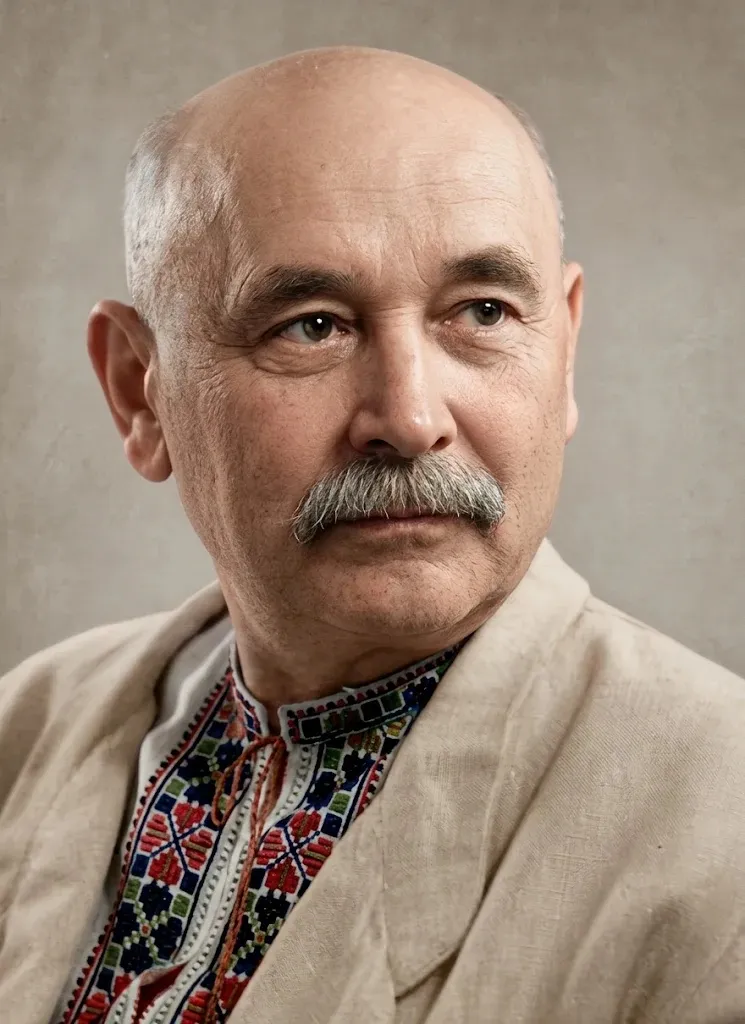
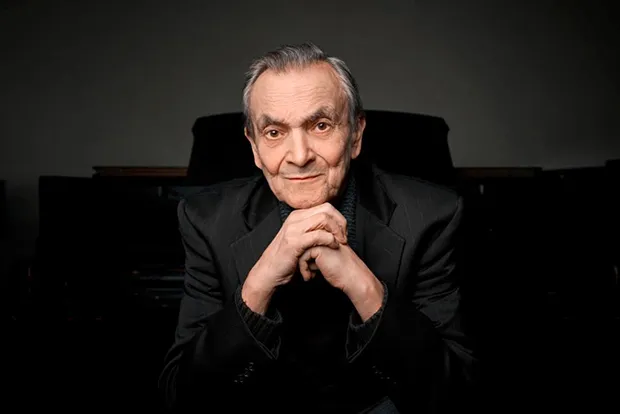
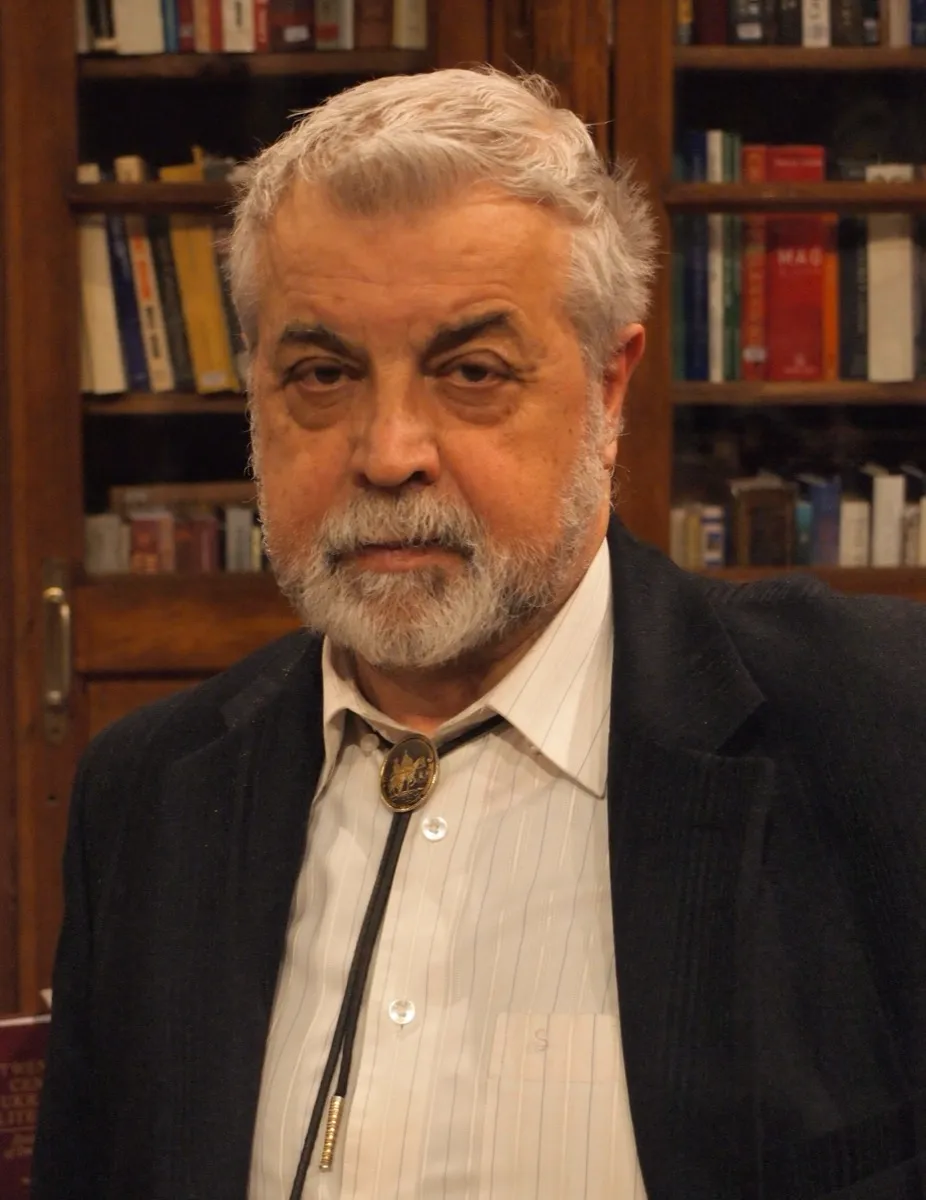
Anatolii Avdiievskyi
Conductor of the Verovka Choir
In Mexico his singers were asked to show their throats: people were looking for the secret of their sound. Anatolii Avdiievskyi led the Verovka Choir for half a century and blended folk singing with academic voices. Hero of Ukraine.
Key accomplishments
- Led the Hryhorii Verovka Ukrainian Folk Choir from 1966 to 2016
- Brought academic voices into the folk choir, so it could sing Leontovych, Revutskyi and Liatoshynskyi
- Initiated Yevhen Stankovych’s folk opera The Fern Flower
- Founded the Polissia song and dance ensemble Lonok in Zhytomyr (1958)
- Professor (1986) at the Kyiv Pedagogical Institute, now Drahomanov University
- Shevchenko Prize (1968, with Hryhorii Verovka, posthumously), People’s Artist of Ukraine (1975) and of the USSR (1983), Hero of Ukraine (2003)
- A star on the Alley of Stars in Kyiv (2013)
A secret in the throat?
In Mexico, the singers of the Verovka Choir were asked to show their throats: people wanted to be sure there was no hidden trick behind the sound. A French newspaper was amazed that the choir could sing in the open air without microphones. Under Anatolii Avdiievskyi the choir combined what seemed impossible: full-chested folk singing and the academic style.
From Fedvar to a great choir
Avdiievskyi was born in 1933 in the village of Fedvar (now Pidlisne) in the Kirovohrad region. In 1958 he graduated from the Odesa Conservatory and that same year founded the Polissia song and dance ensemble Lonok in Zhytomyr. He then spent three years leading the Cherkasy folk choir. In 1966 he took over the choir founded by Hryhorii Verovka and led it for half a century, until 2016. In that time he and the choir toured more than 60 countries and gave more than a thousand concerts.
Sopranos in a folk choir
Avdiievskyi filled the choir’s programmes with authentic folklore and, at the same time, brought in academic sopranos. That is how a folk choir came to sing the classics: works by Mykola Leontovych and Borys Liatoshynskyi, and Levko Revutskyi’s “Khustyna” with a symphony orchestra. In 1968 he and Verovka (posthumously) received the Shevchenko Prize for the choir’s concert programmes.
The opera that was banned
In the late 1970s a French firm commissioned a large staged concert from the choir. Avdiievskyi asked Yevhen Stankovych to write a folk opera, The Fern Flower. The French offered 25 concerts at the Paris Opéra and a five-year contract. The premiere was planned for 1979 at the Palace “Ukraine”, but the show was banned, accused of nationalist tendencies. Yet its choruses were later sung in France, Germany, the US and Canada, and in 2003 Avdiievskyi brought its second act, “Kupalo”, back to the stage.
A teacher of conductors
From 1980 Avdiievskyi trained future conductors at the Kyiv Pedagogical Institute (now Drahomanov University), as a professor from 1986. He headed the All-Ukrainian Music Union and, from 1995, Ukraine’s National Music Committee at the UNESCO International Music Council. On 16 August 2003, his 70th birthday, he was named a Hero of Ukraine. He died in Kyiv on 24 March 2016.
Why it matters today
Anatolii Avdiievskyi proved that a folk song can stand beside the classics and a symphony orchestra without losing its own voice. He backed new Ukrainian music even when it was banned, and lived to bring it back to the stage. For half a century his choir carried Ukrainian song to stages around the world, from Mexico to France. Anyone who sings a Ukrainian song on a big stage today carries on the work he protected.