1751–1825
Dmytro Bortnianskyi
Composer and choral conductor
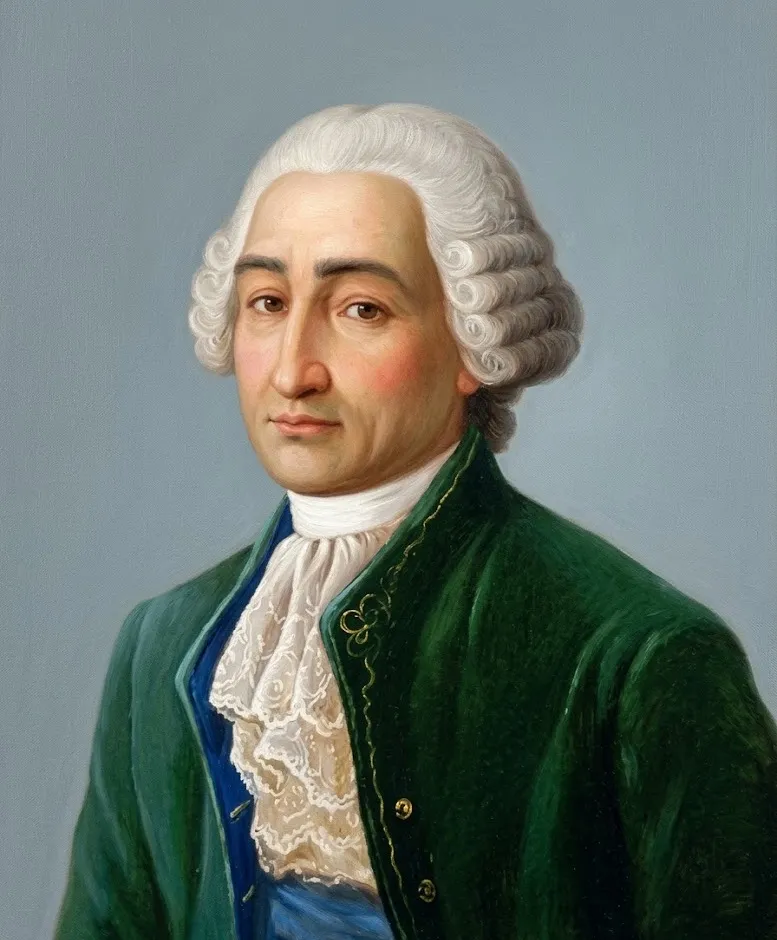
In 1776 his opera Creonte ran for a whole season in Venice, yet Ukraine first heard it only in 2024. Dmytro Bortnianskyi of Hlukhiv was a composer and conductor who wrote more than a hundred choral works and from 1796 directed the court choir in St Petersburg.
Key accomplishments
- Italian operas for the theatres of Venice and Modena, among them Creonte (1776)
- Kapellmeister at the heir's court in Gatchina and Pavlovsk (1779–1796)
- Director of the court choir (Court Capella) in St Petersburg from 1796
- More than 100 sacred and secular choral works, including choral concertos
- In 1882 Pyotr Tchaikovsky edited a ten-volume edition of his works
A voice from Hlukhiv
Where did the name Bortnianskyi come from? By tradition, the composer’s father, Stefan Shkurat, came from the Lemko village of Bortne and moved to the Cossack Hetmanate so that he would not be made Catholic. He took his new surname in memory of his home village. Dmytro was born in Hlukhiv in 1751 and learned to sing at the Hlukhiv singing school. In the summer of 1758, aged seven, the boy with the strong treble voice was picked as one of the ten most gifted children and taken to the court choir in St Petersburg. He never saw his parents or the Hetmanate again. An older singer from the same town, Maksym Berezovskyi, had taken the same road.
Ten years in Italy
In 1769 the young man was sent to Italy to study with the Venetian composer Baldassare Galuppi. He stayed about ten years and wrote operas in Italian that were staged in Venice and Modena. Creonte was a hit: in 1776 it ran for a whole season at the Teatro San Benedetto in Venice. Bortnianskyi was 25.
Master of the choir
Back from Italy in 1779, Bortnianskyi became kapellmeister at the court of the heir to the throne in Gatchina and Pavlovsk, where he wrote songs and operas in French. His Concerto-Symphony of 1790 was long considered the first symphonic work composed in the russian empire. In 1796 he took charge of the court choir, whose singers were mostly Ukrainians, and raised it to a high standard. He wrote more than a hundred choral works, sacred and secular. In them he joined the old traditions of Ukrainian choral singing with the European music of his day, and he made wide use of Ukrainian folk melodies. Bortnianskyi died in St Petersburg in 1825. One of his tunes lives on: in the 19th century Prussian soldiers took it for the prayer “Ich bete an die Macht der Liebe” (“I worship the power of love”), which is still played at the German army’s solemn ceremony, the Großer Zapfenstreich.
The opera that came back from Lisbon
Imagine an opera that went missing for a very long time. The score of Creonte ended up in Lisbon, probably carried there by a singer who had performed in the Venice production. In 2023 the musicologist Olha Shumilina tracked the manuscript down. In November 2024 Creonte was performed in Ukraine for the first time, in Kyiv, and in 2025 it was staged in Chernivtsi. Bortnianskyi had changed the ending of the old libretto, too: in his version the people rise against the tyrant, and Antigone becomes queen.
Why it matters today
Bortnianskyi showed that the old Ukrainian choral tradition and its folk melodies could speak the same language as the European music of his day. His choral works helped spread choral art in Ukraine and shaped choral singing in western Ukraine, and echoes of his concertos can be heard in the choral music of Mykola Lysenko and the sacred music of Mykola Leontovych. Mykhailo Verbytskyi, who wrote the music of Ukraine’s national anthem, called Bortnianskyi “our Mozart”. His success in Venice at 25 is a reminder that musicians from Ukraine were at home on Europe’s stages long ago. And the return of Creonte, in which the people rise against a tyrant, shows that a forgotten legacy can be heard again when someone sets out to find it.