1778–1843
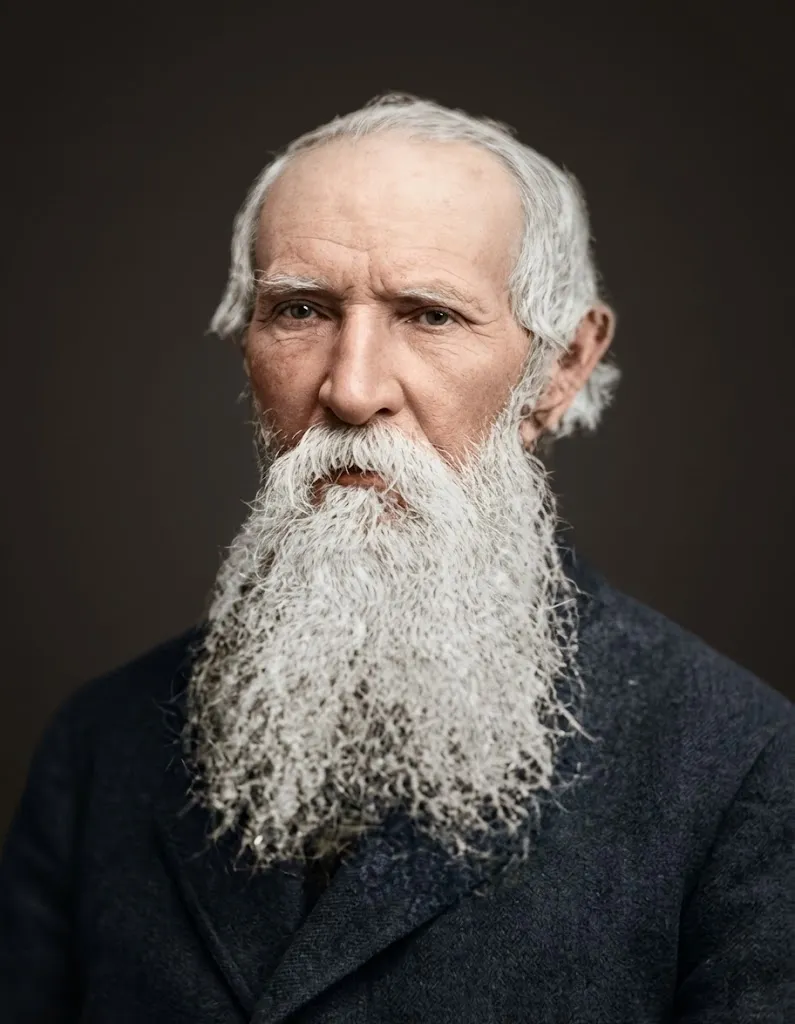
Hryhorii Kvitka-Osnovianenko
Writer, father of Ukrainian prose
He went blind at five, and as a grown man he lost an eye to a homemade firework. Yet it was Hryhorii Kvitka-Osnovianenko, already past fifty, who wrote Marusia and proved that Ukrainian could move readers, not just make them laugh. He is called the father of Ukrainian prose.
Key accomplishments
- The novella Marusia and the collection Little Russian Tales (1834, 1837), where Ukrainian literary prose begins
- The novella The Witch of Konotop (written 1833, published 1837)
- The comedies Matchmaking at Honcharivka (1836) and Shelmenko the Orderly (1837)
- Co-founder and first director of the Kharkiv Theatre (1812)
- Co-founder of the Society of Benevolence, which helped poor children, and of Ukraine’s first institute for girls of noble birth (both 1812)
- Curator of Kharkiv’s first public library
The boy who went blind
At five, Hryhorii Kvitka lost his sight after an illness. His mother took him to the Kuriazh Monastery outside Kharkiv, home to the Ozeriany icon, which people believed could work miracles. In time the boy’s sight came back. He had been born in 1778 at Osnova, his family’s estate outside Kharkiv (today part of the city), and later took his pen name from it: Osnovianenko.
Skovoroda at the table, theatre at home
Kvitka’s parents loved books and folk customs. They set up a theatre at home, and Hryhorii was happy to play the leading parts. The philosopher Hryhorii Skovoroda was a frequent guest, so the boy knew him from childhood. From the age of fifteen Kvitka served in the army, and after he retired he spent ten months as a novice at the same Kuriazh Monastery. He never became a monk.
A builder of Kharkiv
In 1812 Kvitka was among the founders of the Kharkiv Theatre and became its first director. The same year he helped found the Society of Benevolence and the Institute for Girls of Noble Birth, the first school of its kind in Ukraine. He picked the teachers himself, bought the pupils’ clothes and gave the institute almost all his money. One of its class mistresses, Anna Vulf, later became his wife. He also served as a district marshal of the nobility, presided over the criminal court chamber and was curator of Kharkiv’s first public library.
He loved fireworks, too. Once, while preparing a display at home, he was caught by a gunpowder blast that burned his face and cost him his left eye.
The argument that started a literature
He began writing in russian, but in the 1830s he turned more and more to Ukrainian. His story A Soldier’s Portrait (1833) follows in the footsteps of Ivan Kotliarevskyi. The story goes that Petro Hulak-Artemovskyi, a Kharkiv professor, didn’t believe anything tender or moving could be written in Ukrainian. Kvitka, by then past fifty, answered with the novella Marusia.
It came out in 1834 in his collection Little Russian Tales. The second volume, in 1837, brought The Witch of Konotop, which he had written back in 1833. And in 1854 his Poor Oksana appeared in French in Paris. These tales are why Kvitka is called the father of Ukrainian prose.
Laughter on stage
Kvitka also wrote comedies: Shelmenko the District Clerk (1831), Matchmaking at Honcharivka (1836) and Shelmenko the Orderly (1837). Shelmenko played to full houses in Kharkiv. Some critics see his russian comedy The Visitor from the Capital as a forerunner of Nikolai Gogol’s The Government Inspector. In 1839 Taras Shevchenko dedicated a poem to him, To Osnovianenko.
Kvitka-Osnovianenko died in Kharkiv in 1843.
Why it matters today
Kvitka-Osnovianenko proved that Ukrainian could move readers, not only amuse them, and Ukrainian literary prose began there. His tales and comedies brought the real lives of the people of Sloboda Ukraine onto the page and the stage. He didn’t just write: he built Kharkiv, from the theatre to a school for girls to a library. Anyone writing Ukrainian prose today walks the road he opened.