c. 1691–1803
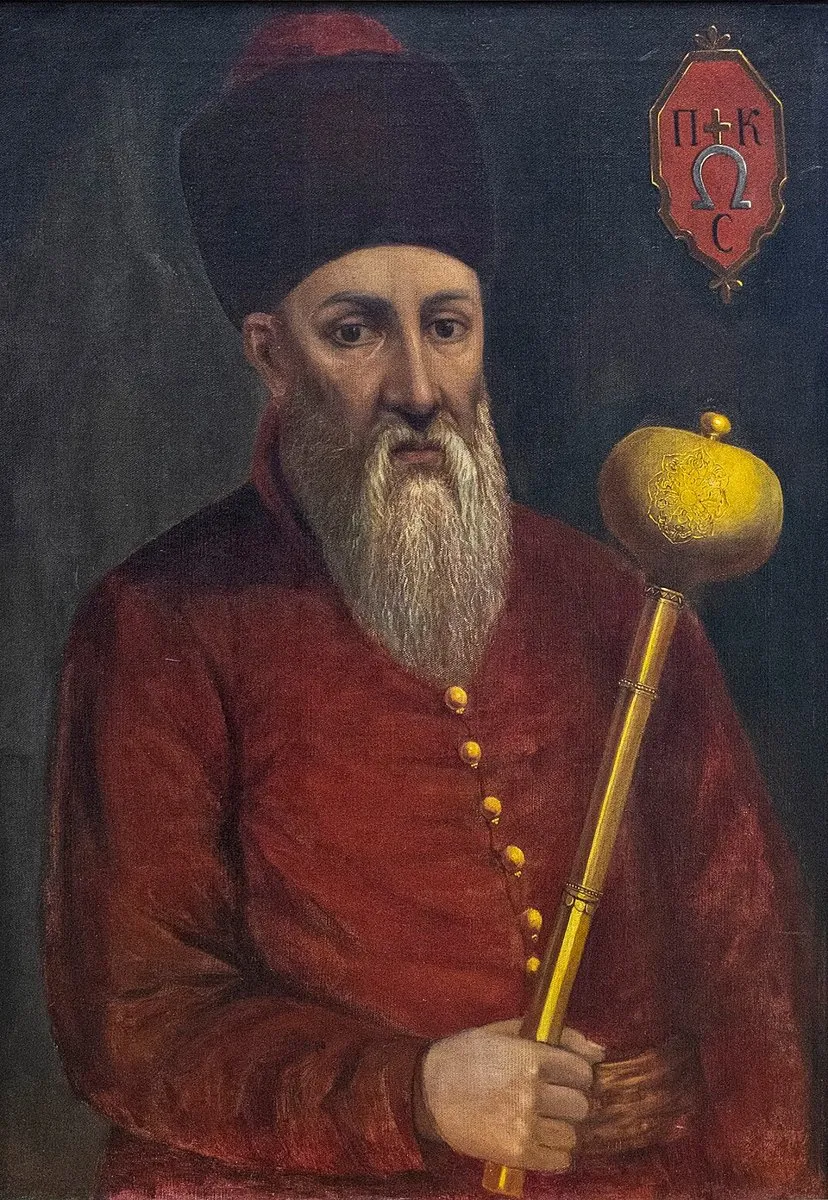
Petro Kalnyshevskyi
Last otaman of the Zaporozhian Sich
In 1765 the Zaporozhians elected him otaman against Catherine II’s wishes and kept re-electing him for ten years. After the Sich was destroyed in 1775, the last otaman, Petro Kalnyshevskyi, was sent to the Solovetsky Islands, where he spent 25 years in captivity.
Key accomplishments
- Otaman of the Zaporozhian Sich in 1762 and continuously in 1765–1775
- Encouraged settlement of the Zaporozhian lands, farming and trade
- Traveled to St. Petersburg several times to defend Zaporizhzhia’s rights to its lands
- Distinguished himself in the Russo-Turkish War of 1768–1774
- Canonized by the Ukrainian Orthodox Church of the Kyiv Patriarchate as the Righteous Petro the Long-Suffering (2008)
Otaman in defiance of an empress
In January 1765 the Zaporozhians elected Petro Kalnyshevskyi otaman, the head of the Sich, even though Catherine II did not want him. Then they kept re-electing him for ten years, until the end of the Sich.
Kalnyshevskyi was born in the village of Pustoviitivka (now in the Sumy region); the Encyclopedia of the History of Ukraine gives 1691, other sources 1690. According to tradition, he came to the Sich as a child and rose from dzhura (an officer’s attendant) to military judge, and in 1762 he first became otaman.
Administrator and diplomat
Kalnyshevskyi’s first concern was the Zaporozhian lands. He encouraged settlers to move there and promoted farming and trade: by 1770 the lands of the Sich had 45 villages and some 4,000 farmsteads. Several times he traveled to St. Petersburg to defend those lands from the empire’s encroachment. In the Russo-Turkish War of 1768–1774 he distinguished himself so much that Catherine II awarded him a gold medal with diamonds.
25 years on the Solovetsky Islands
Once the Ottoman Empire was defeated, the empire no longer needed the Sich. In 1775 Russian troops destroyed the New Sich, and Kalnyshevskyi was arrested and, on Catherine II’s orders, sent to the prison of the Solovetsky Monastery on the White Sea. He spent 25 years there in harsh conditions. He died in 1803; sources put his age at 112 or 113.
Why it matters today
Kalnyshevskyi became a symbol of resilience and of the last days of Zaporozhian freedom. In 2008 the Ukrainian Orthodox Church of the Kyiv Patriarchate canonized him as the Righteous Petro the Long-Suffering. Streets in many Ukrainian cities bear his name.