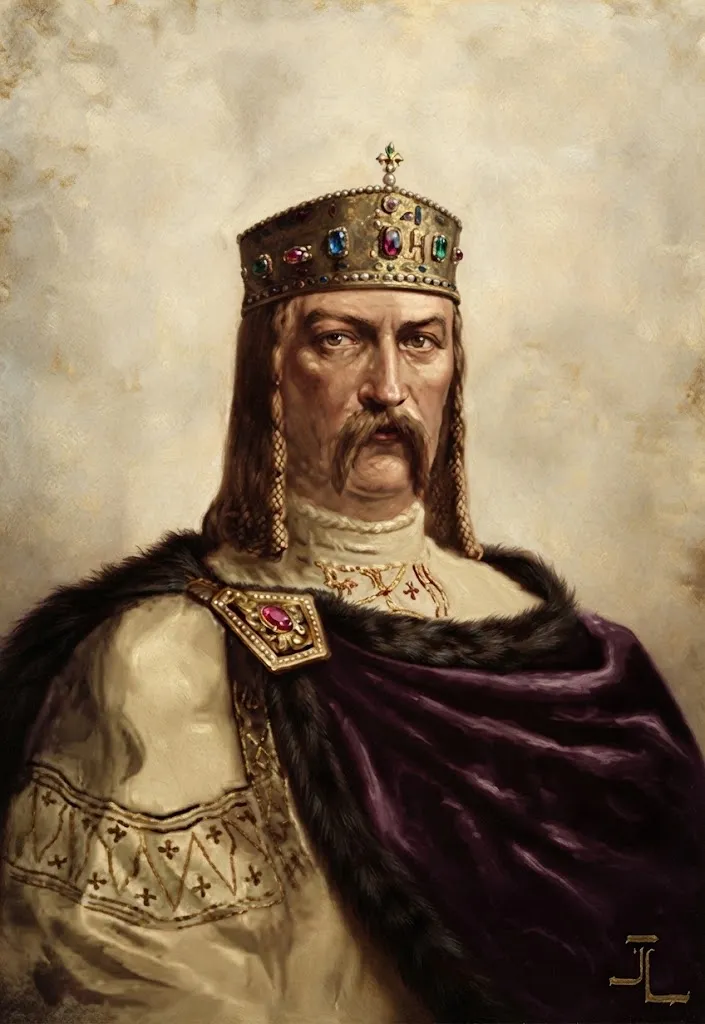
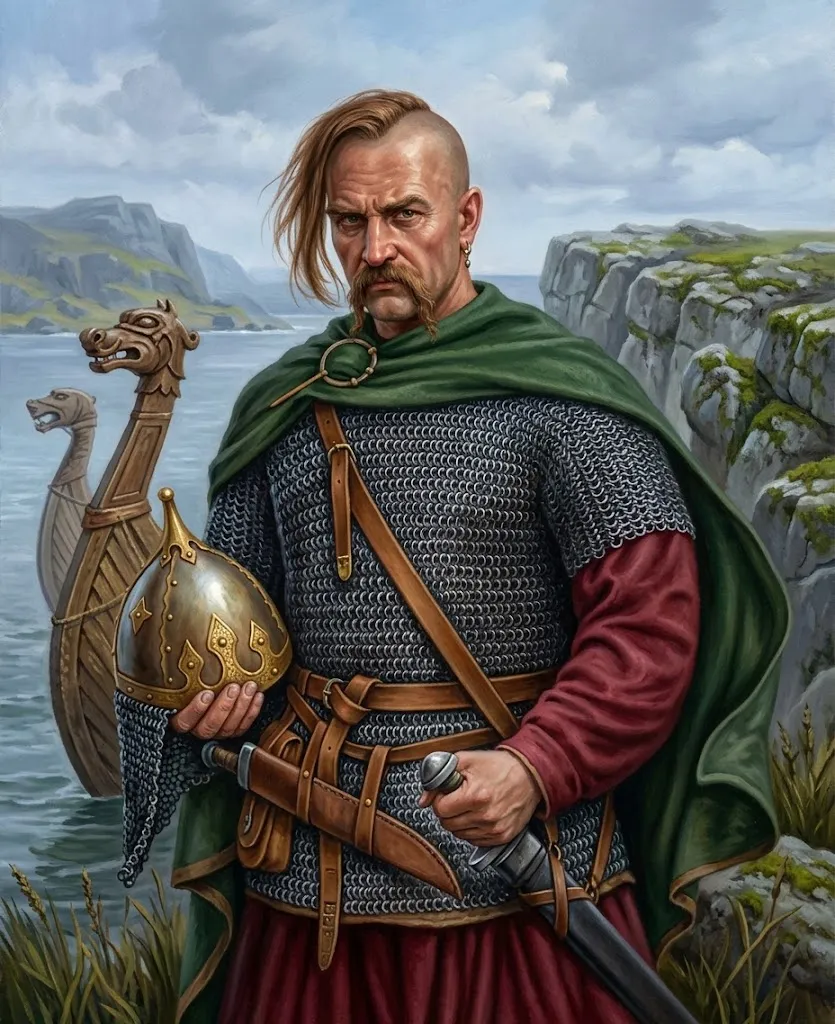
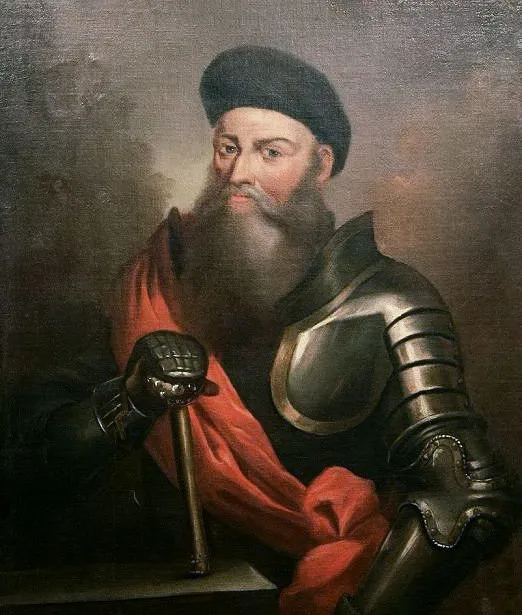
Roman Mstyslavych
Founder of the Galician-Volhynian state
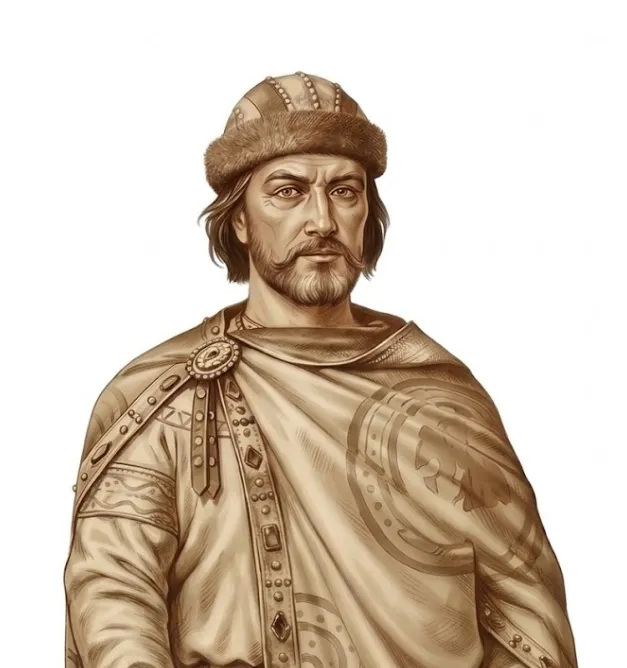
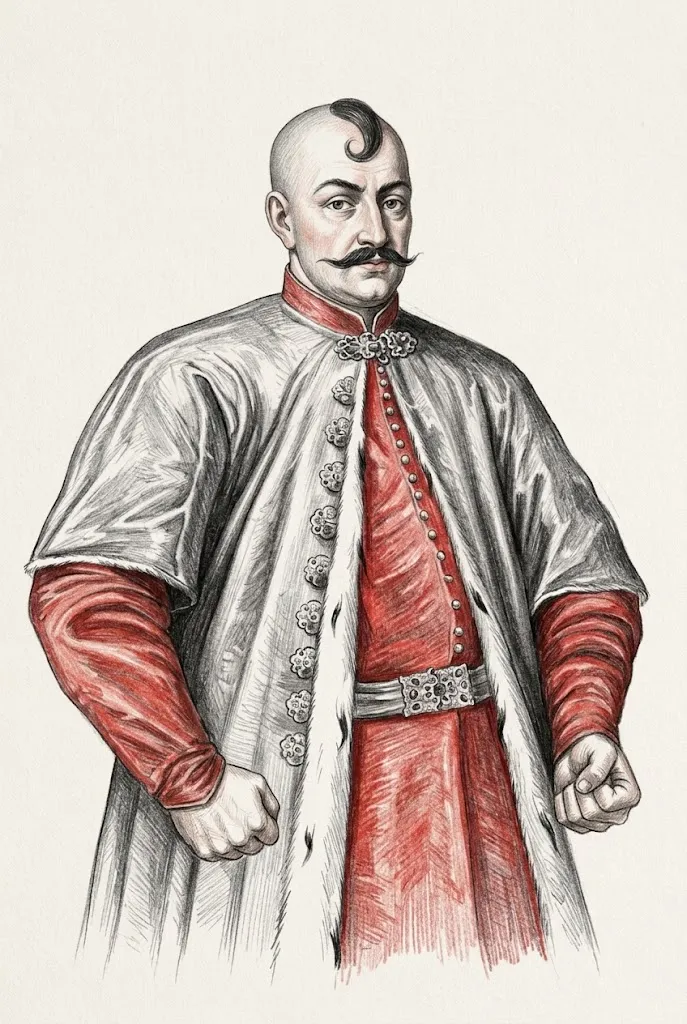
A chronicler compared him to a lion, a lynx, an eagle and even a crocodile. In 1199 Roman Mstyslavych first united Galicia and Volhynia into one state; he also took Kyiv and fought the Cumans. He was killed in Poland in 1205, and his son Danylo carried on his work.
Key accomplishments
- United Volhynia and Galicia into one state (1199)
- Founder of the Romanovych dynasty, which ruled the Galician-Volhynian state until 1340
- Took Kyiv (1201) and kept it in his sphere of influence until 1205
- Successful campaigns against the Cumans (1201–1202, 1203–1204), bringing back many freed captives
- A campaign into the steppe at the request of the Byzantine emperor Alexios III Angelos
- As a young prince, defended Novgorod against the army of Andrei Bogoliubsky (1170)
A lion, a lynx and a crocodile
How do you describe a prince every neighbor feared? The chronicler found the words: Roman “rushed upon the pagans like a lion, was fierce like a lynx, and destroyed them like a crocodile,” and crossed their land “like an eagle.” He was a great-great-grandson of Volodymyr Monomakh, the son of the Kyiv prince Mstyslav Iziaslavych and the Polish princess Agnieszka. Sources place his birth in the 1150s or 1160s. As the young prince of Novgorod he drove Andrei Bogoliubsky’s army back from the city in February 1170, and that autumn he took his father’s throne in Volodymyr, in Volhynia.
Two roads to Halych
The Galician boyars invited Roman to rule them in 1188, but the Hungarian king Béla III drove him out. In 1199, when the last prince of the old Galician line died, Roman took Halych with the backing of the Polish prince Leszek the White. For the first time, Volhynia and Galicia were one state. Roman brought the unruly boyars to heel and relied on the townspeople.
Kyiv, the steppe and Byzantium
The people of Kyiv opened the gates of the Podil quarter to Roman themselves in 1201, and he put his own man on the Kyiv throne. In the winters of 1201/02 and 1203/04 he campaigned against the Cumans and came back with many freed captives. The Byzantine historian Niketas Choniates wrote about his campaign into the steppe at the request of Emperor Alexios III. In 1204 Roman forced his father-in-law, the Kyiv prince Rurik, to become a monk, and his own first wife, Predslava, to take the veil. His second wife, Anna, may have come from the Byzantine imperial family.
Zawichost, 1205
Roman marched into Poland in the summer of 1205 against his former allies, the princes Leszek the White and Konrad of Masovia; historians still debate why. On 19 June, near Zawichost on the Vistula, he was killed: by one account, he rode out to scout with a small detachment and was ambushed. His sons Danylo and Vasylko were four and two. The Galician-Volhynian Chronicle begins with his death, calling Roman “grand prince” and “sole ruler of all Rus’.”
Debates and assessments
Some scholars see Roman as a founder of Ukrainian statehood; others think the role is exaggerated, since the chronicler wrote a eulogy and later retellings added inventions. Roman’s “constitutional project” of 1203, a plan to reorganize the Rus’ state, is known only from an 18th-century work, and its authenticity is doubted. The Polish chronicler Wincenty Kadłubek wrote that Roman fought the opposition Galician boyars with mass terror; scholars treat this report with caution.
Why it matters today
Roman was the first to bring Volhynia and Galicia together in one state, and after Kyiv’s decline that state kept Rus’ statehood alive in the west for almost a century and a half. The Romanovych dynasty took its name from him, and his son Danylo restored his father’s state and accepted a royal crown. Roman showed that scattered Rus’ lands could be gathered into one strong state, one that Poland, Hungary and Byzantium had to reckon with.