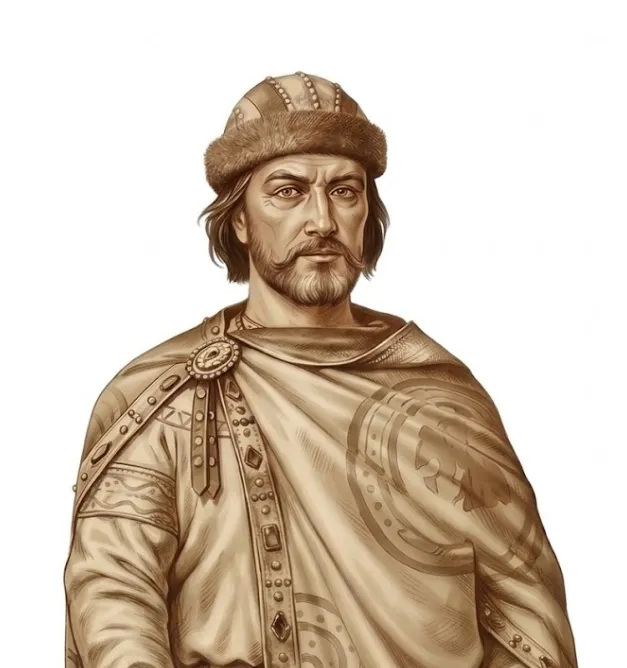
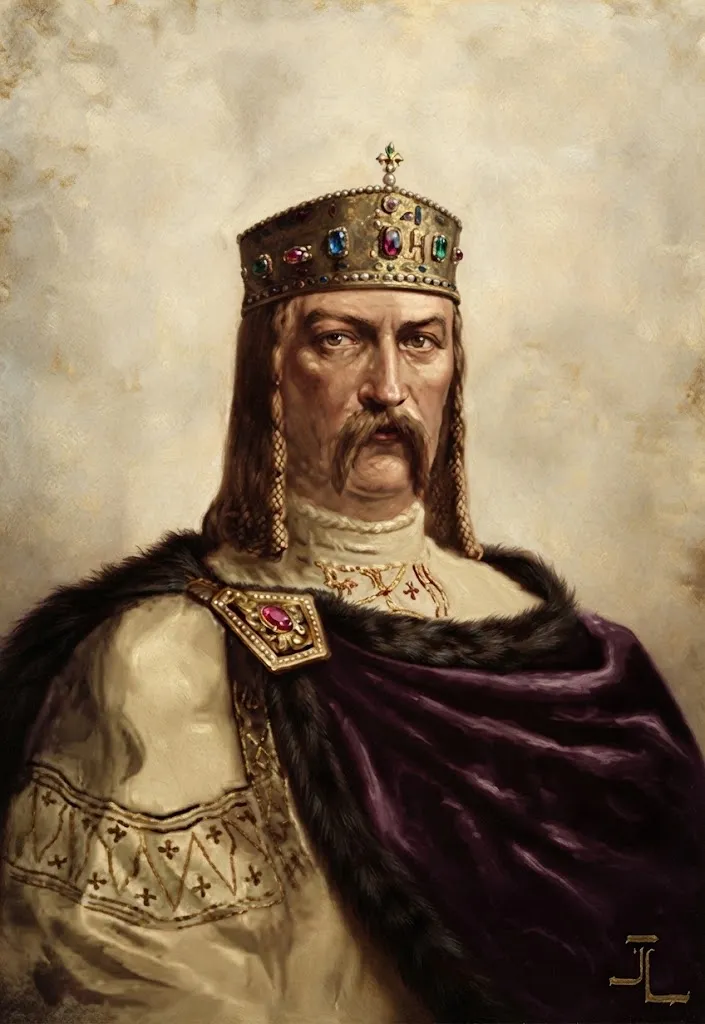
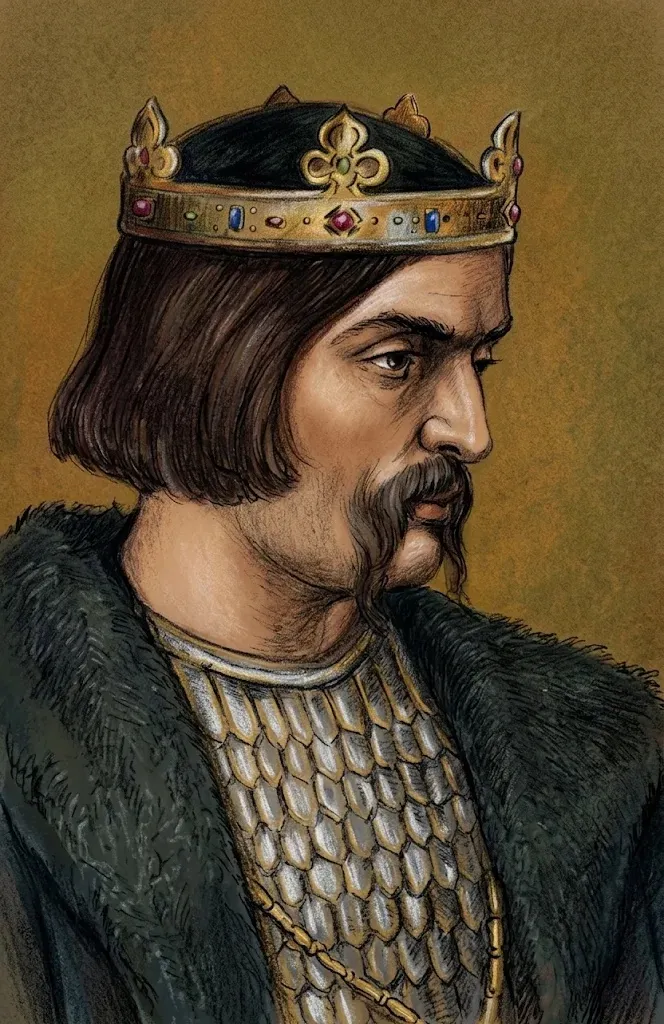
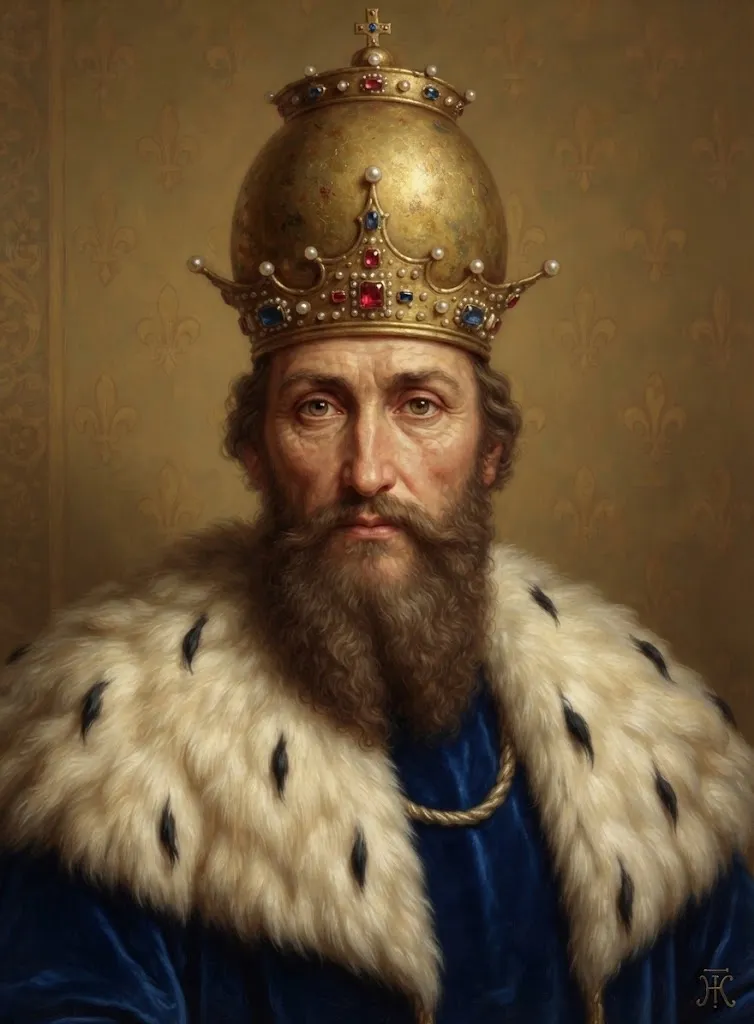
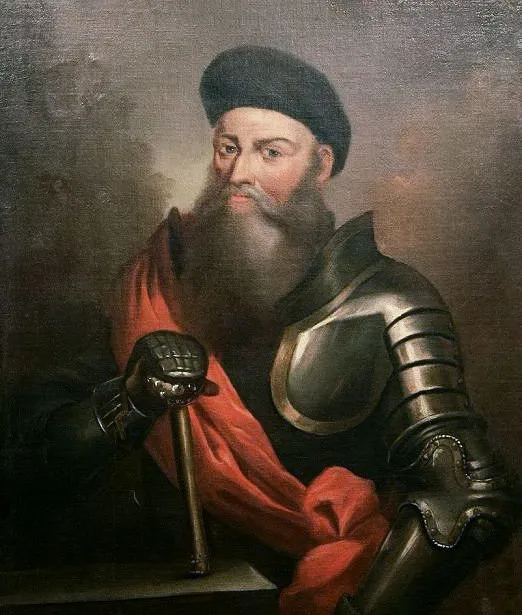
Volodymyr Monomakh
Grand Prince, author of the Instruction
The people of Kyiv had to ask him twice, and he took the throne at 60. Volodymyr Monomakh, grandson of Yaroslav the Wise, made peace among the princes, drove the Cumans beyond the Don, capped moneylenders’ interest and wrote the Instruction for My Children, telling them not to fight one another.
Key accomplishments
- Grand Prince of Kyiv (1113–1125); the last to unite the lands of Rus’ under Kyiv
- Initiated the Liubech congress of princes (1097); the congresses of Vytychiv (1100) and Dolobsk (1103) agreed on joint campaigns against the Cumans
- Victorious campaigns into the Cuman steppe in 1103, 1107, 1109 and 1111
- Volodymyr Monomakh’s Statute in the Ruska Pravda law code: capped interest on loans and ended servitude as a way of paying off debt
- The Instruction for My Children and a letter to Prince Oleh Sviatoslavych, preserved in the Laurentian Chronicle
The prince they had to ask twice
When Prince Sviatopolk Iziaslavych of Kyiv died in 1113, the townspeople rose up, angry at moneylenders and at profiteering in salt. The town assembly, gathered in St Sophia’s Cathedral, invited Volodymyr Monomakh to take the throne. He refused, perhaps because princes senior to him in the family were still alive. But the uprising went on, and at the second invitation Monomakh agreed. He was 60 years old.
Grandson of Yaroslav the Wise
The name Monomakh came from his mother, a daughter of the Byzantine emperor Constantine IX Monomachos (her origin is still debated). His father, Vsevolod, was a son of Yaroslav the Wise. Volodymyr was born in 1053. He grew up in Pereiaslav, where his father ruled under Yaroslav’s will. At 12 or 13 Volodymyr was already helping his father in war and politics, and over his life he led more than 80 campaigns.
The man who gave up Kyiv
When his father died in 1093, Monomakh could have taken Kyiv. Instead he yielded the throne to his cousin Sviatopolk, the senior in the family. The next year he gave Chernihiv to another cousin, Oleh Sviatoslavych, and moved to his father’s Pereiaslav. The chronicler explains that Monomakh did not want the princes to go to war with each other.
Peace among princes, war with the Cumans
The nomadic Cumans raided the southern lands of Rus’ almost every year, and the Pereiaslav principality, jutting out into the steppe, suffered most. Monomakh tried to unite the princes against them. In 1097, at his initiative, the princes met at Liubech and agreed on a new order of holding lands, and at the congresses of 1100 and 1103 they agreed on joint campaigns. After the campaigns of 1103, 1107, 1109 and 1111 the Cumans were pushed back beyond the Don, and one of their hordes moved all the way to Georgia.
A law for debtors
Once Grand Prince of Kyiv, Monomakh turned to the causes of the uprising. His Statute, added to the Ruska Pravda law code, capped interest on loans and stopped debtors from being turned into bondsmen. He again gathered power over all the lands of Rus’ into his own hands and was the last prince under whom Rus’ was a single state.
A letter to his children
Late in life Monomakh wrote the Instruction for My Children: he told the story of his life and campaigns, condemned the princes’ feuds and called for unity. The chronicle also preserves his letter to Oleh Sviatoslavych, written after Monomakh’s son was killed in a war with Oleh.
Monomakh died in Kyiv on 19 May 1125 and was buried in St Sophia’s Cathedral.
Why it matters today
Volodymyr Monomakh showed that a ruler’s strength is not only in campaigns. He was ready to give up what was his for the sake of peace among his own, and he called the princes together to defend their land against the Cumans. Once Grand Prince of Kyiv, he went after what hurt people most: moneylenders and bondage for debt. And in the Instruction for My Children he left advice still worth hearing: “do not let the strong destroy a person.”