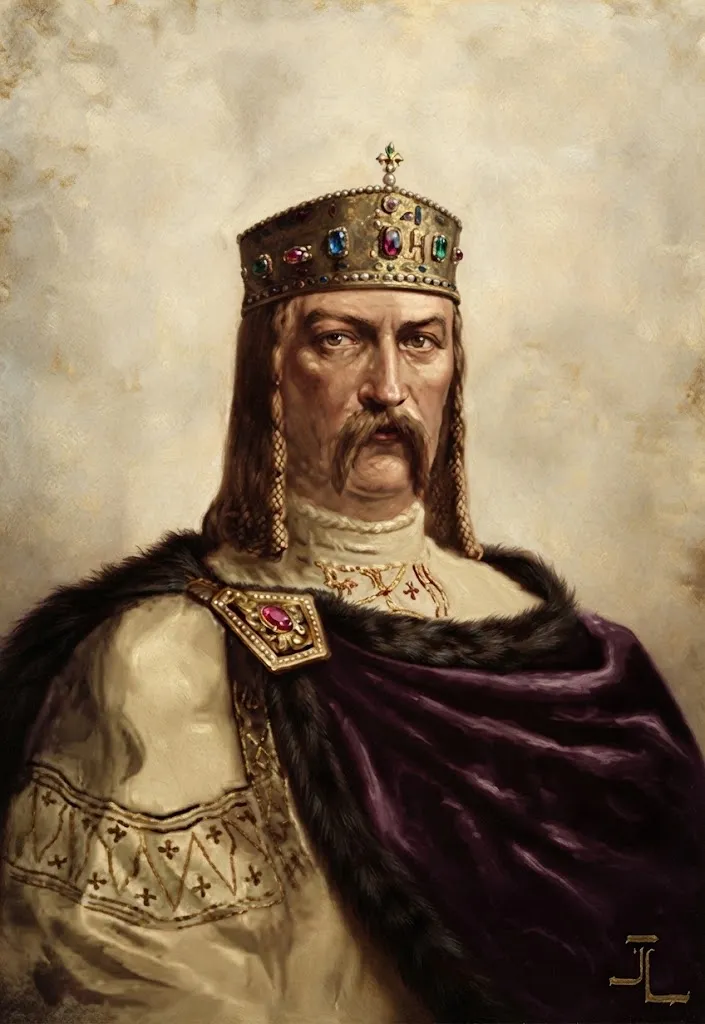
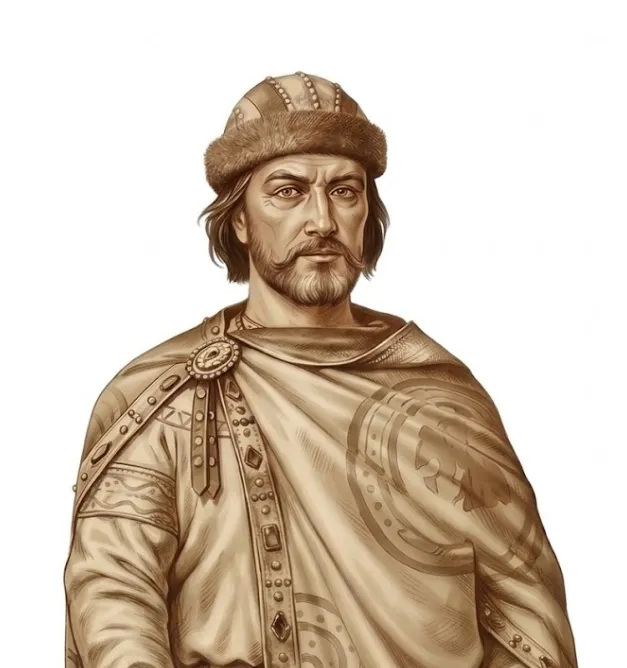
Sviatoslav the Brave
Warrior prince: “I am coming at you”
Before he attacked, he warned his enemies: “I am coming at you.” Sviatoslav the Brave, son of Princess Olha and father of Volodymyr the Great, crushed the Khazar Khaganate, fought Byzantium on the Danube and dreamed of moving the capital of Rus’ from Kyiv to the Danube.
Key accomplishments
- Subdued the Viatichians and crushed the Khazar Khaganate (964–966)
- Campaigns against the Volga Bulgars and the Yasians and Kasogians of the North Caucasus
- The Balkan campaigns of 967–971: took Pereiaslavets on the Danube and the Bulgarian capital, Preslav
- Divided Rus’ among his sons: Yaropolk in Kyiv, Oleh in the Derevlianian land, Volodymyr in Novgorod
“I am coming at you”
The Tale of Bygone Years, the old chronicle of Rus’, remembers one habit of Sviatoslav’s: before an attack he sent his enemies a short warning, “I am coming at you.” The chronicler paints him as a hero, and history remembers him as Sviatoslav the Brave.
Olha’s son
Sviatoslav was the son of Prince Ihor and Princess Olha. The chronicle says he was born in 942; like all its early dates this one is approximate, but historians consider it likely. When his father was killed in 945, Sviatoslav was still a child, so his mother ruled Rus’ and the boy was raised by his tutor, Asmud. He began leading his own campaigns in 964.
Marching east
First Sviatoslav turned east: in 964–966 he subdued the Viatichians and crushed the Khazar Khaganate, a powerful state on the Volga. He also fought the Volga Bulgars and made the Yasians and Kasogians of the North Caucasus pay tribute. That opened the way to the Caspian Sea for the merchants of Rus’.
A capital on the Danube
The Byzantine emperor Nikephoros II Phokas asked Sviatoslav for help in a war against Bulgaria. In 967–968 the prince swept through the Danube lands; the chronicle says he took 80 towns. He liked Pereiaslavets on the Danube best of all and wanted to make it his capital. While he was away, the Pechenegs, nomads of the steppe, came up to Kyiv, and he had to return. After Olha died in 969, Sviatoslav divided Rus’ among his sons: Yaropolk in Kyiv, Oleh in the Derevlianian land and Volodymyr in Novgorod.
The siege of Dorostolon
Back in the Balkans, Sviatoslav took the Bulgarian capital, Preslav. But a new emperor, John I Tzimiskes, marched against him with a large army in 971. For about three months the Rus’ held out in Dorostolon (now Silistra in Bulgaria); then the prince made peace. His army could go home, but he gave up the Danube lands. On the way back the Pechenegs blocked his path. After wintering at Biloberezhzhia (probably near the Dnieper-Buh estuary), Sviatoslav was killed fighting the Pechenegs at the Dnieper rapids in the spring of 972. According to the chronicle, the Pecheneg khan Kuria had a cup made from his skull.
Why it matters today
Sviatoslav crushed the powerful Khazar Khaganate and opened the way to the Caspian for Rus’ merchants: under him Rus’ became a power that both the steppe and Byzantium had to reckon with. His short “I am coming at you”, the words of a warrior who doesn’t strike by surprise, made him a hero in the chronicle, and history remembers him as Sviatoslav the Brave. The state he enlarged was later strengthened and brought to Christianity by his son Volodymyr.