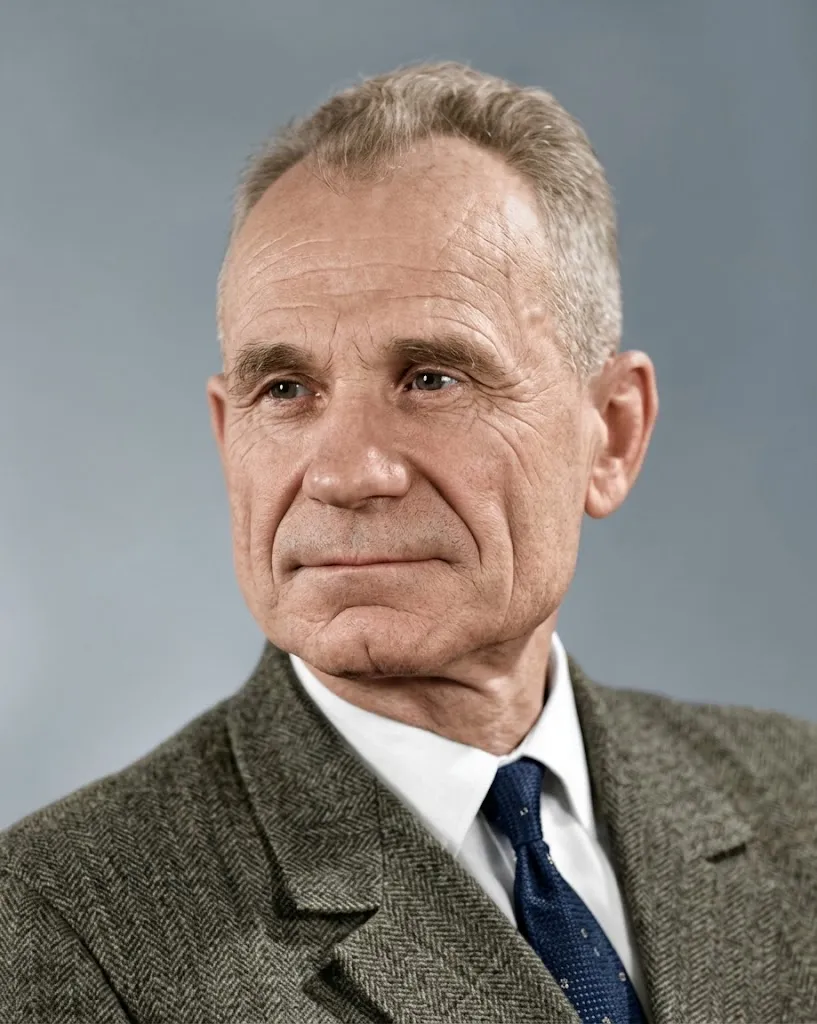
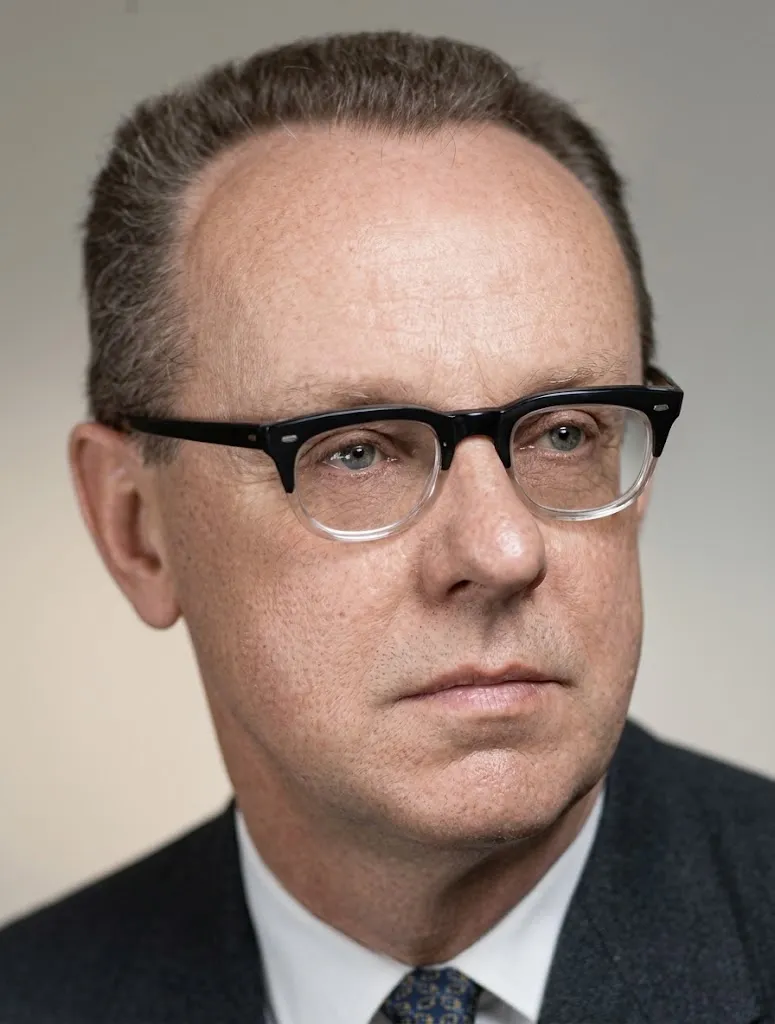
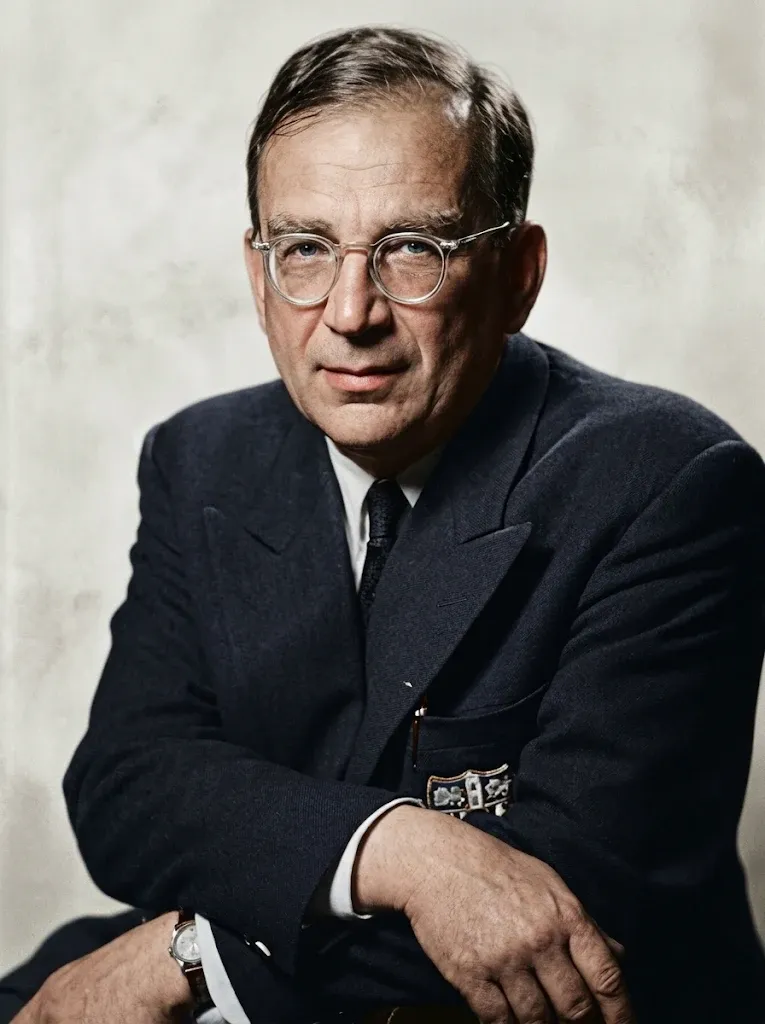
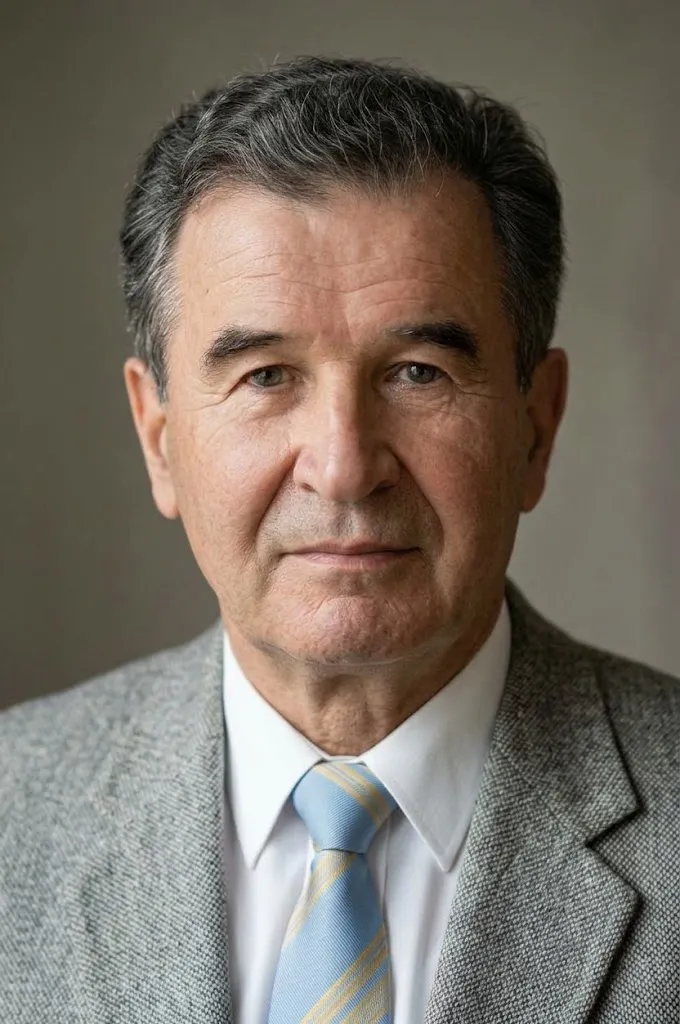
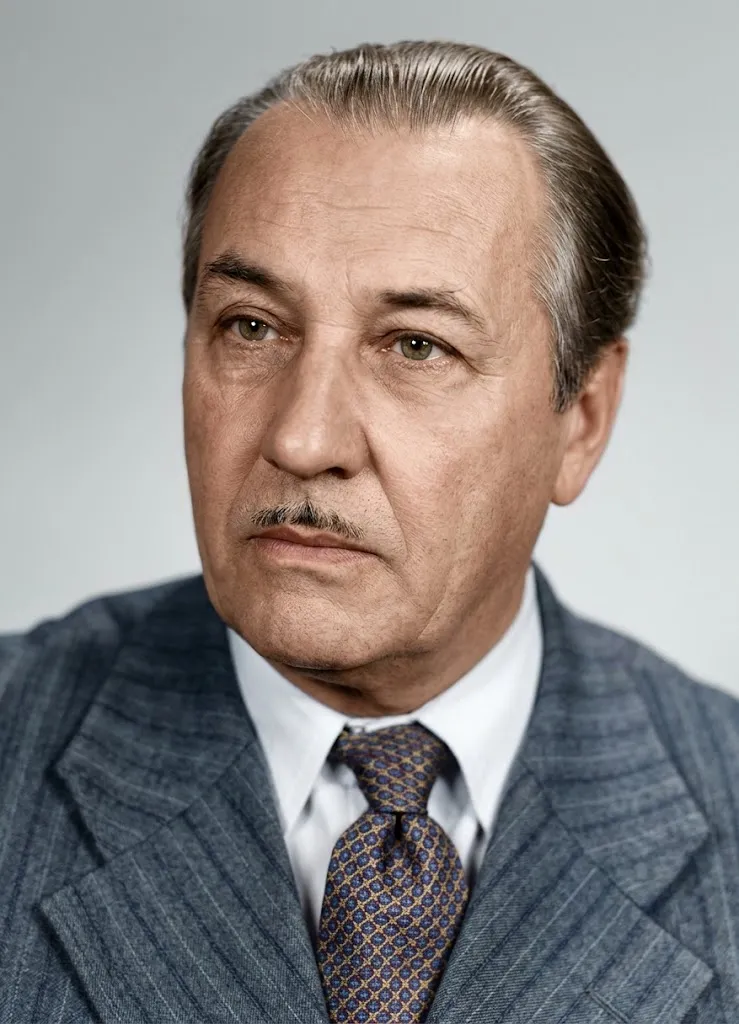
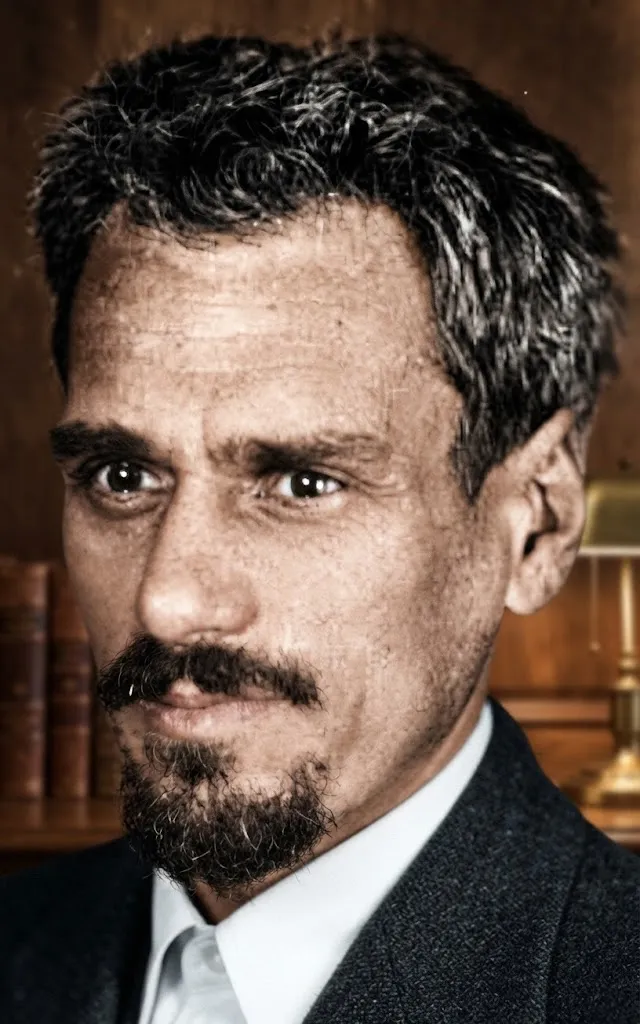
Serhii Korolov
Chief Designer of the space age
He sent Gagarin into space two decades after being thrown into a labor camp in Kolyma. Serhii Korolov, a rocket designer from Zhytomyr, led the launches of the first Earth satellite and the first human in space.
Key accomplishments
- Led the development of the R-7, the first intercontinental ballistic missile
- Launch of the first artificial Earth satellite (4 October 1957)
- First human spaceflight, by Yuri Gagarin (12 April 1961)
- First spacewalk (1965)
From Kolyma to space
The first human flew into space under Serhii Korolov’s leadership. Two decades earlier, in 1938, during Stalin’s terror, he had been arrested without grounds and sentenced to 10 years. He went through interrogations and a labor camp in Kolyma, then worked in a prison design bureau.
A boy hooked on rockets
Korolov fell for gliders and rockets as a young man. He was born in 1907 in Zhytomyr and spent his childhood in Nizhyn, Kyiv and Odesa. At 17 he designed his first glider, the K-5, which was officially recommended for construction. In 1924–1926 he studied in the aviation department of the Kyiv Polytechnic Institute, then graduated from the Moscow Higher Technical School with a diploma project for a light two-seat plane, the SK-4, supervised by Andrei Tupolev. In 1931 Korolov co-founded the Group for the Study of Reactive Motion, and later led it. In 1933 the group launched one of the first Soviet liquid-fuel rockets.
Sputnik and Gagarin
Korolov became chief designer of long-range ballistic missiles after his release in 1944, and later headed the leading rocket and space center. Under his leadership the R-7 rocket was built. It put the first artificial Earth satellite into orbit (1957) and then the Vostok spacecraft with Yuri Gagarin (1961). During a paired flight in 1962, a Ukrainian song, “Dyvlius ia na nebo” (I Look at the Sky), was sung in orbit for Korolov by cosmonaut Pavlo Popovych, a moment often called the first song in space. In 1965 a human stepped out of the Voskhod spacecraft into open space for the first time. And two weeks after Korolov’s death, the Luna 9 probe, from a programme his bureau had begun, made the first soft landing on the Moon. The world learned who Korolov was only after his death in 1966.
Why it matters today
Serhii Korolov, a man born in Ukraine, led the work that opened the way to space: the first satellite and the first human in orbit. His fate shows something else too: a totalitarian state threw him into a labor camp, then used his talent and hid his name. Since 1970 a museum of cosmonautics named after him has been open in Zhytomyr, and his name is carried by minor planet No. 1855 and a large crater on the far side of the Moon. Today that name can, and should, be spoken aloud, and Ukraine can be proud that the road to the stars was laid by a boy from Zhytomyr. For anyone fascinated by machines, he is proof that a young man’s love of gliders can open a new road for all of humankind.