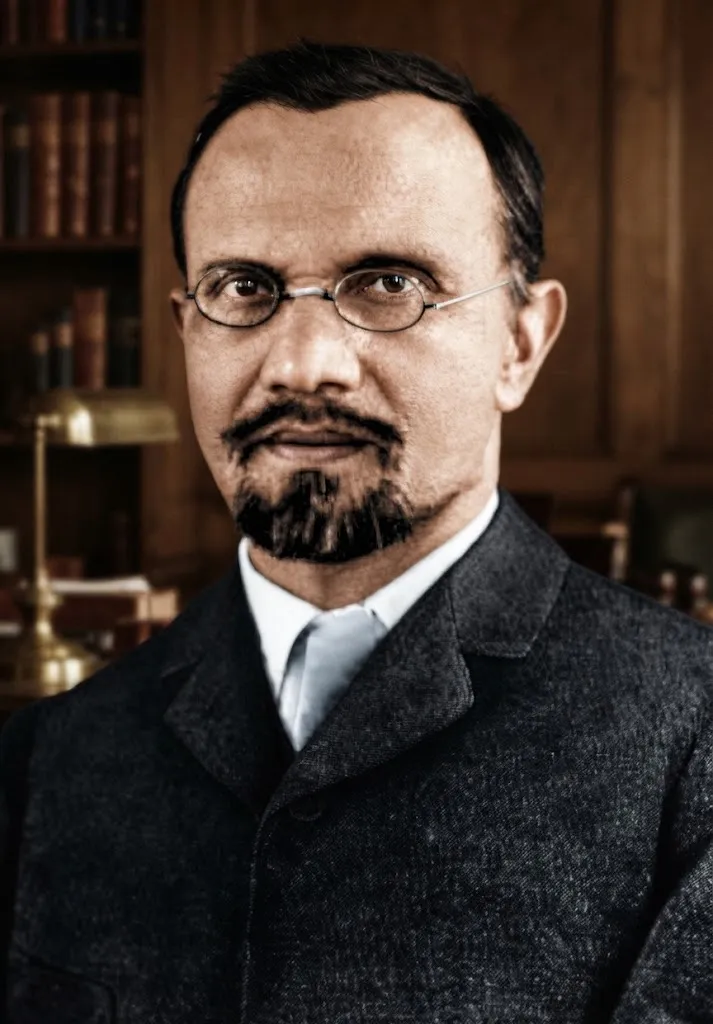
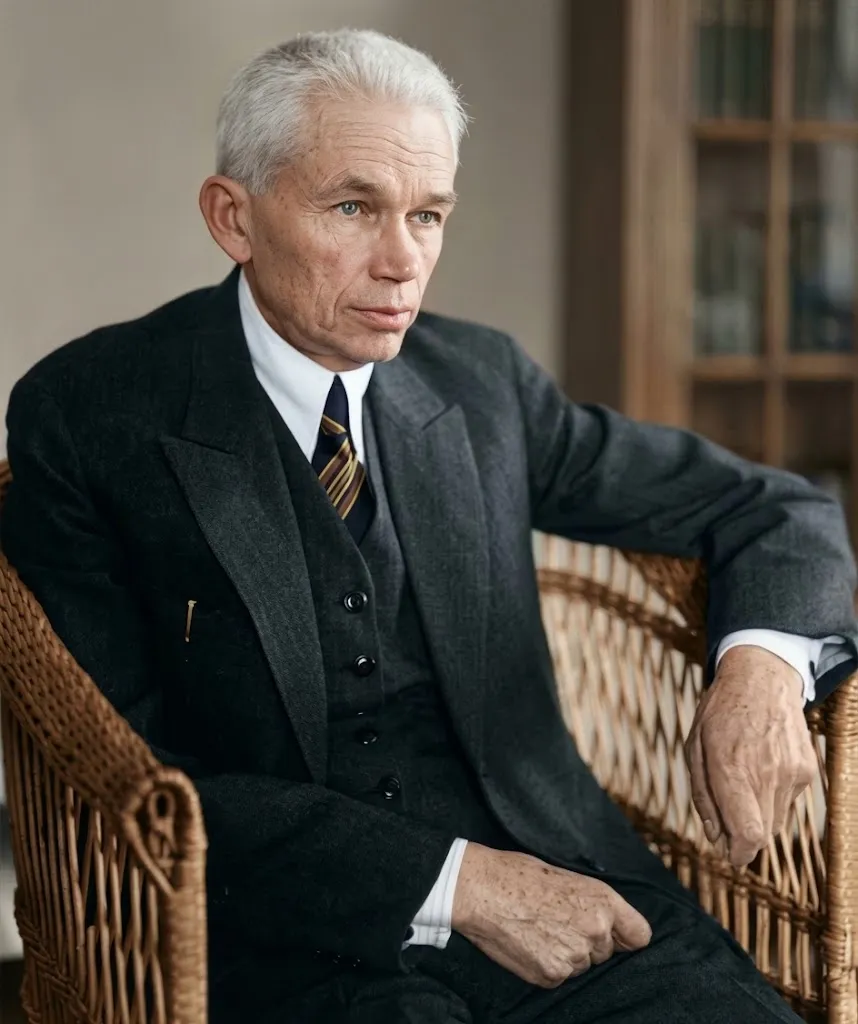
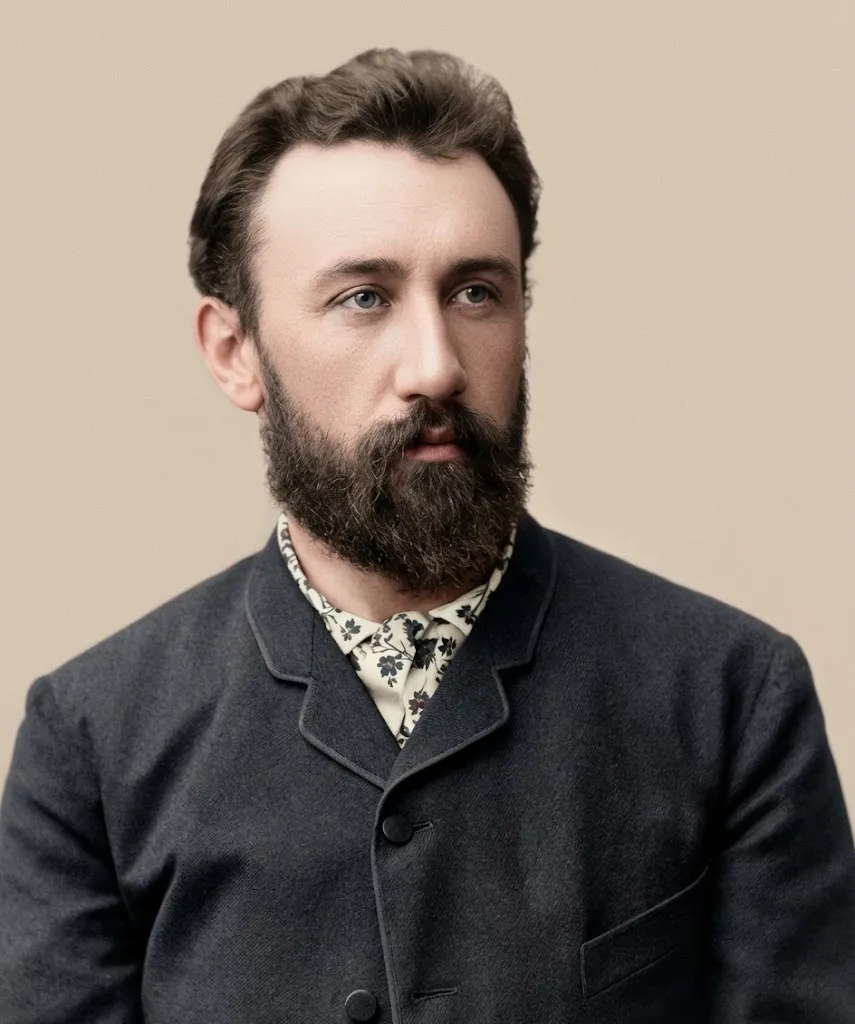
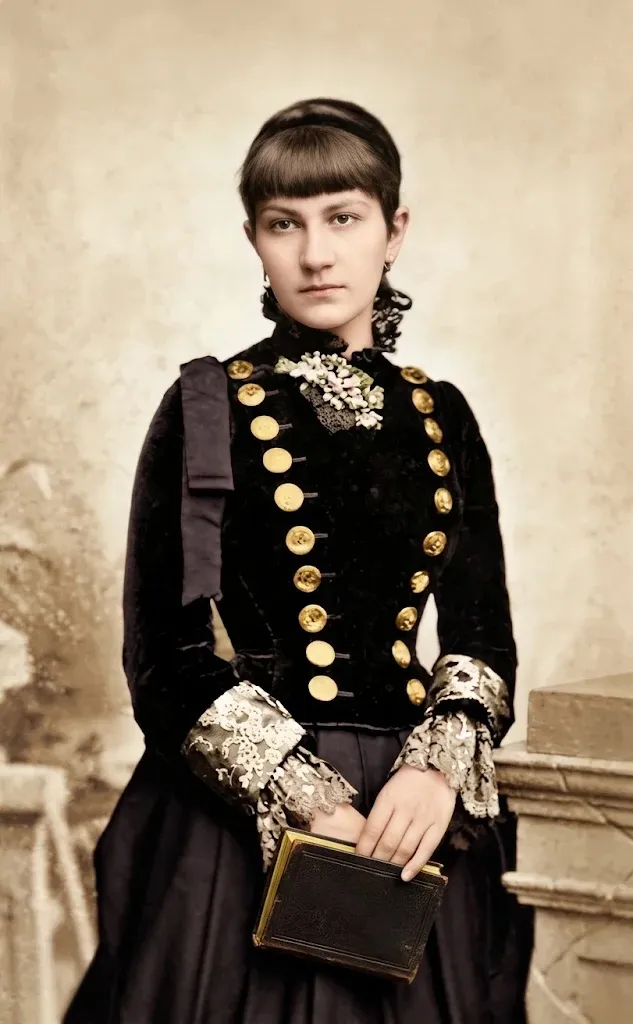
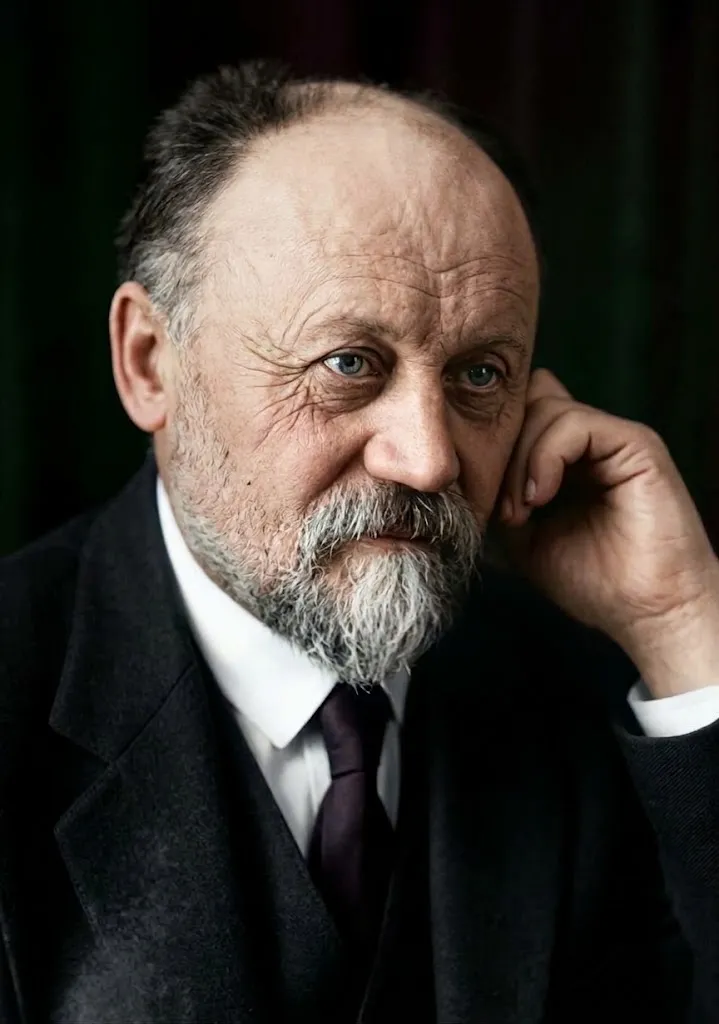
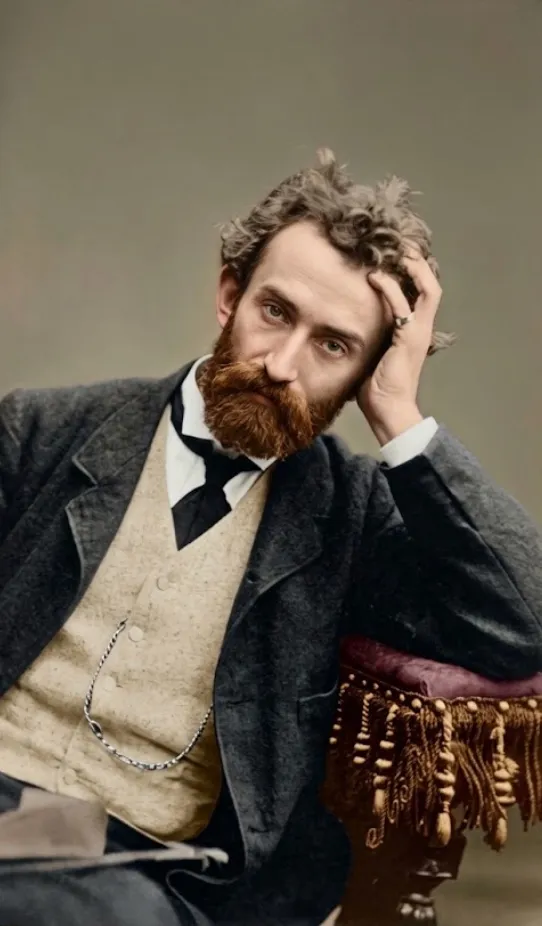
Volodymyr Vernadskyi
Author of the noosphere theory
Can life change a whole planet? Volodymyr Vernadskyi was one of the first to see that it can, and he built the theory of the biosphere and the noosphere. A founder of geochemistry, in 1918 he became the first president of the Ukrainian Academy of Sciences.
Key accomplishments
- First president of the Ukrainian Academy of Sciences (1918)
- Founder of genetic mineralogy, one of the founders of geochemistry and biogeochemistry; developed radiogeology
- The Biosphere (1926) and the theory of the noosphere
- A co-founder of the National Library of Ukraine (1918)
A fifteen-year-old’s diary
In 1878, 15-year-old Volodymyr Vernadskyi wrote in his diary that Ukrainians were “terribly oppressed” and that printing books in his native language was completely banned in russia. He was born in 1863 in Saint Petersburg into a family with Ukrainian Cossack roots: both his parents were from Kyiv, and, as the scientist recalled, Ukrainian national traditions were alive in both families. His father, Ivan Vernadskyi, was an economist. Volodymyr spent his childhood in Ukraine: in 1868 the family moved to Kharkiv, and in 1873 he started first grade at the Kharkiv classical gymnasium.
The professor who walked out in protest
Vernadskyi studied at Saint Petersburg University, became a professor at Moscow University and an academician. In 1886 he married Nataliia Starytska, who translated and edited his articles; they were together for almost 56 years. Much tied him to Ukraine: from 1889 to 1918 he spent almost every summer in the Poltava region. And in 1911 Vernadskyi resigned from Moscow University in protest against the oppression of students and the violation of university autonomy.
An academy for a new state
In 1918, under the Ukrainian State of Hetman Pavlo Skoropadskyi, Vernadskyi headed the commission to establish the Ukrainian Academy of Sciences and became its first president. That same year he was among the founders of the National Library of Ukraine, which bears his name today, as does the highest award of the National Academy of Sciences, the Vernadskyi Gold Medal. He later returned to Petrograd. In July 1921 the Cheka jailed the first president of the Ukrainian Academy of Sciences, but he was released soon after.
Life as a geological force
Vernadskyi founded genetic mineralogy and was one of the founders of new sciences, geochemistry and biogeochemistry, and he developed radiogeology. He was one of the first to understand that life on Earth is a geological force. In his book The Biosphere (1926) he described the Earth’s envelope that life creates and changes. Later he developed the theory of the noosphere: a stage when human reason becomes the main force changing the planet. The word “noosphere” itself was not his: it came from the Frenchmen Édouard Le Roy and Pierre Teilhard de Chardin, who attended Vernadskyi’s geochemistry lectures at the Sorbonne in 1922–1923, and those lectures inspired their new theory.
Ideas that outlived the censors
Vernadskyi wrote more than 400 scientific works. The totalitarian state left his most important ones unpublished in his lifetime, calling his philosophical ideas “anti-scientific”. But censorship could only delay them: his summing-up work on the biosphere came out in 1965, 20 years after his death, though still with cuts.
Debates and assessments
Vernadskyi’s views on the Ukrainian question were moderate: he was a liberal, a supporter of “Russian” unity and of federalist prospects for Ukraine, and he criticized the Bolsheviks, the Whites and the Directorate of the Ukrainian People’s Republic (UNR) alike. Despite this, it was he who led the creation of the Ukrainian Academy of Sciences and became its first president.
Why it matters today
Vernadskyi helped the world see that life is a force that changes a whole planet, and that human reason has itself become such a force. He did as much for Ukraine: in 1918, as the country was building its own state, he became the first president of the Ukrainian Academy of Sciences and helped found the National Library, so it is fitting that his portrait is on the 1000-hryvnia banknote today. As a teenager he wrote down that Ukrainians were oppressed, and as an adult he answered with deeds, like many Ukrainians before and after him: protest against injustice, and a science of his country’s own. Late in life he wrote: “I believe in the enormous future of both Ukraine and the Ukrainian Academy of Sciences.” His words about the future still read like a task for each of us: “It is in our hands.”