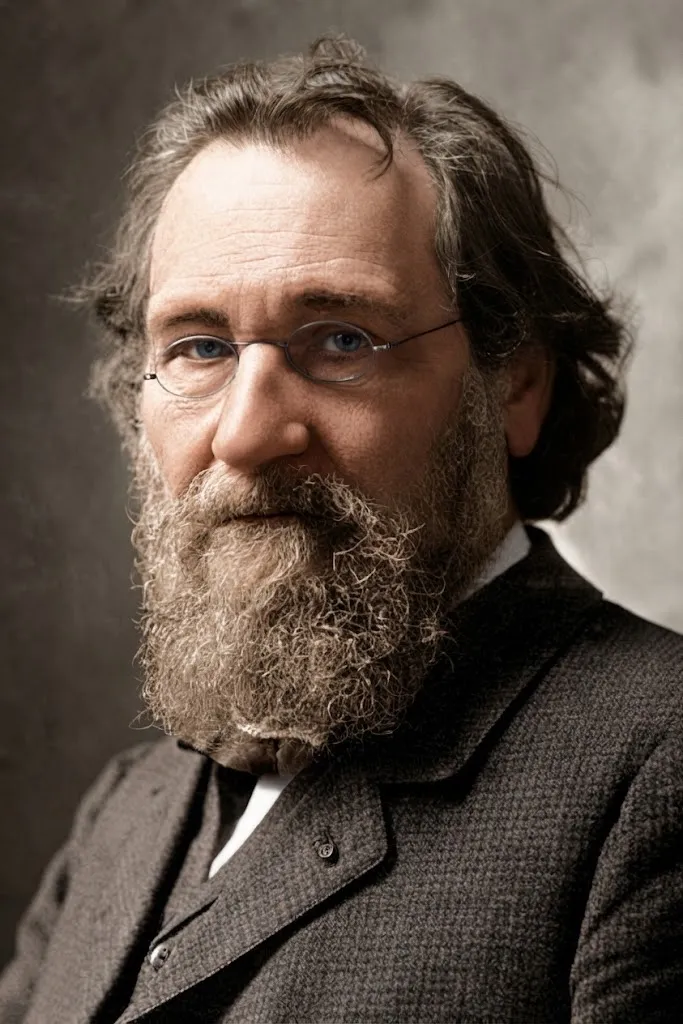
1889–1972
Igor Sikorsky
Pioneer of aviation and helicopters
He started building a helicopter as a student, before his first airplane. Kyiv-born Igor Sikorsky built the world’s first multi-engine heavy aircraft and, in the US, where he began as a schoolteacher, the world’s first mass-produced helicopter.
Key accomplishments
- The world’s first multi-engine heavy aircraft, the Russky Vityaz (1913) and the Ilya Muromets
- S-42 flying boats that opened passenger routes across the Pacific and Atlantic
- The VS-300 helicopter (1939) and the R-4 (first flight 1942), the world’s first mass-produced helicopter
- Founded an aircraft company in the US in 1923 (today’s Sikorsky)
Helicopter first, airplane second
Igor Sikorsky was born in Kyiv in 1889 into the family of a professor of psychiatry. He studied at the Kyiv Polytechnic Institute, and in 1909, while still a student, he set out to build a helicopter. His first biplanes followed the next year, and he set several records in airplanes of his own design.
From 1912 to 1917 Sikorsky was chief designer of the aviation department of a factory in Saint Petersburg. There he created the Russky Vityaz (1913) and the Ilya Muromets, the world’s first multi-engine heavy aircraft. In the First World War the Ilya Muromets became the world’s first four-engine bomber.
Starting over in America
After the revolution of 1917 Sikorsky emigrated: to France in 1918 and to the United States in 1919. In America he first worked as a schoolteacher and lecturer. In 1923 he founded his own aircraft company, and his S-42 flying boats later opened passenger routes across the Pacific and the Atlantic.
The dream that took off
In 1939 Sikorsky flew the VS-300, a helicopter with a single main rotor and a tail rotor. Most helicopters are still built that way. His R-4 of 1942 became the world’s first mass-produced helicopter, and Sikorsky’s company became the world leader in making helicopters.
Why it matters today
Sikorsky kept going even when he had to start all over again in a foreign country. The Kyiv Polytechnic Institute, where he once studied, and Kyiv’s Zhuliany airport both bear his name.